Rare Original WWII April 25, 1945 USS Colorado (BB 45) Battle of Okinawa United States Navy Pacific Fleet Shipboard Combat News Bulletin
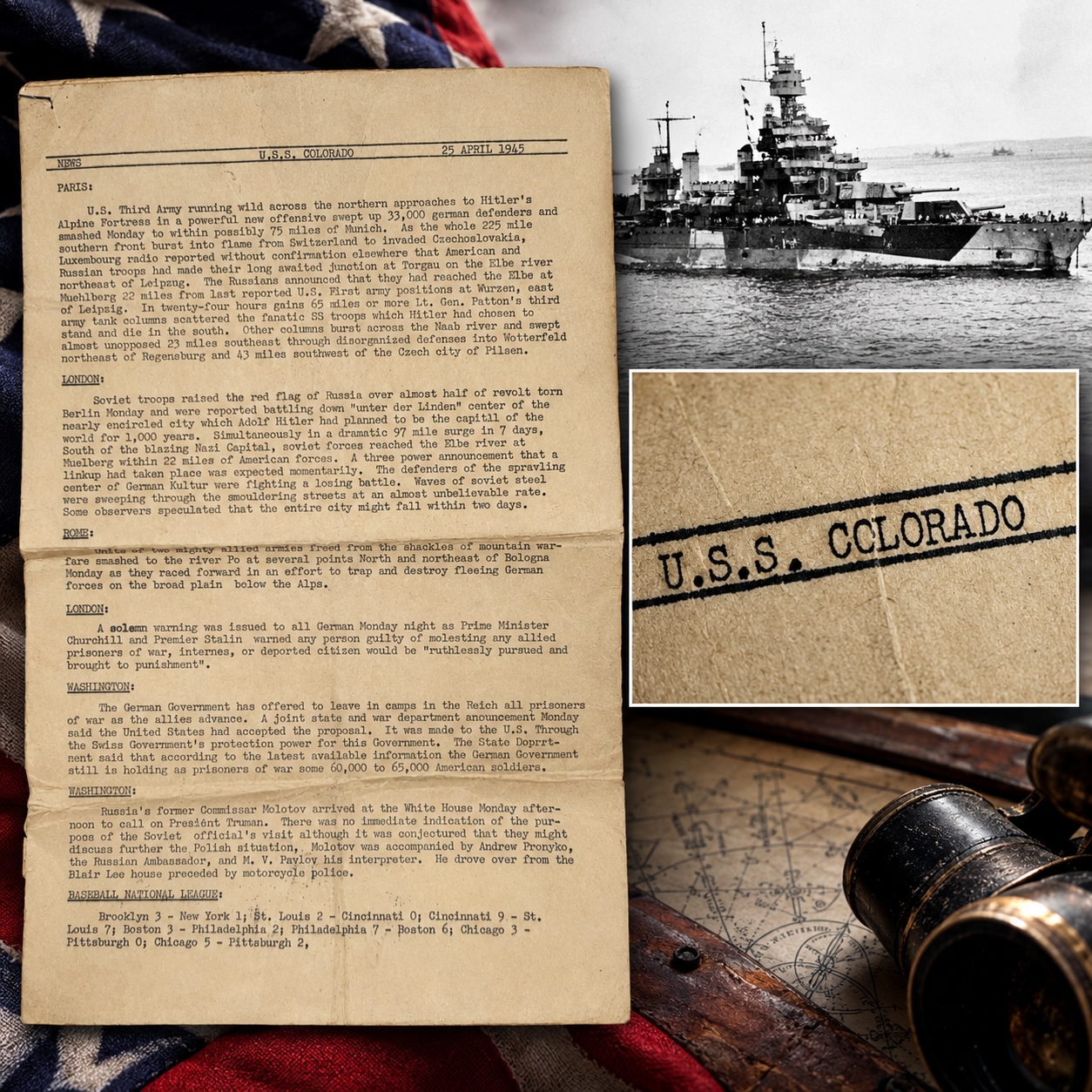
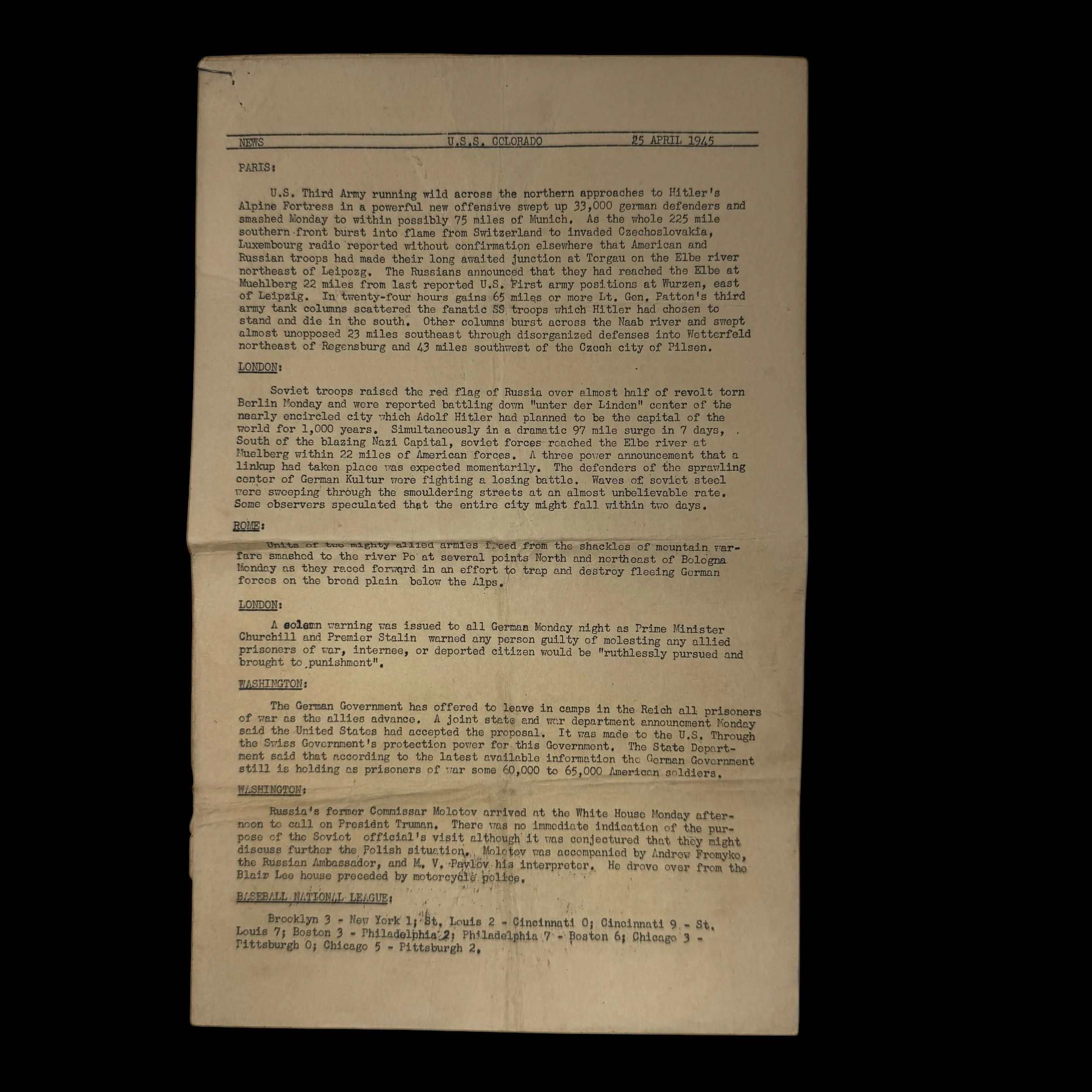
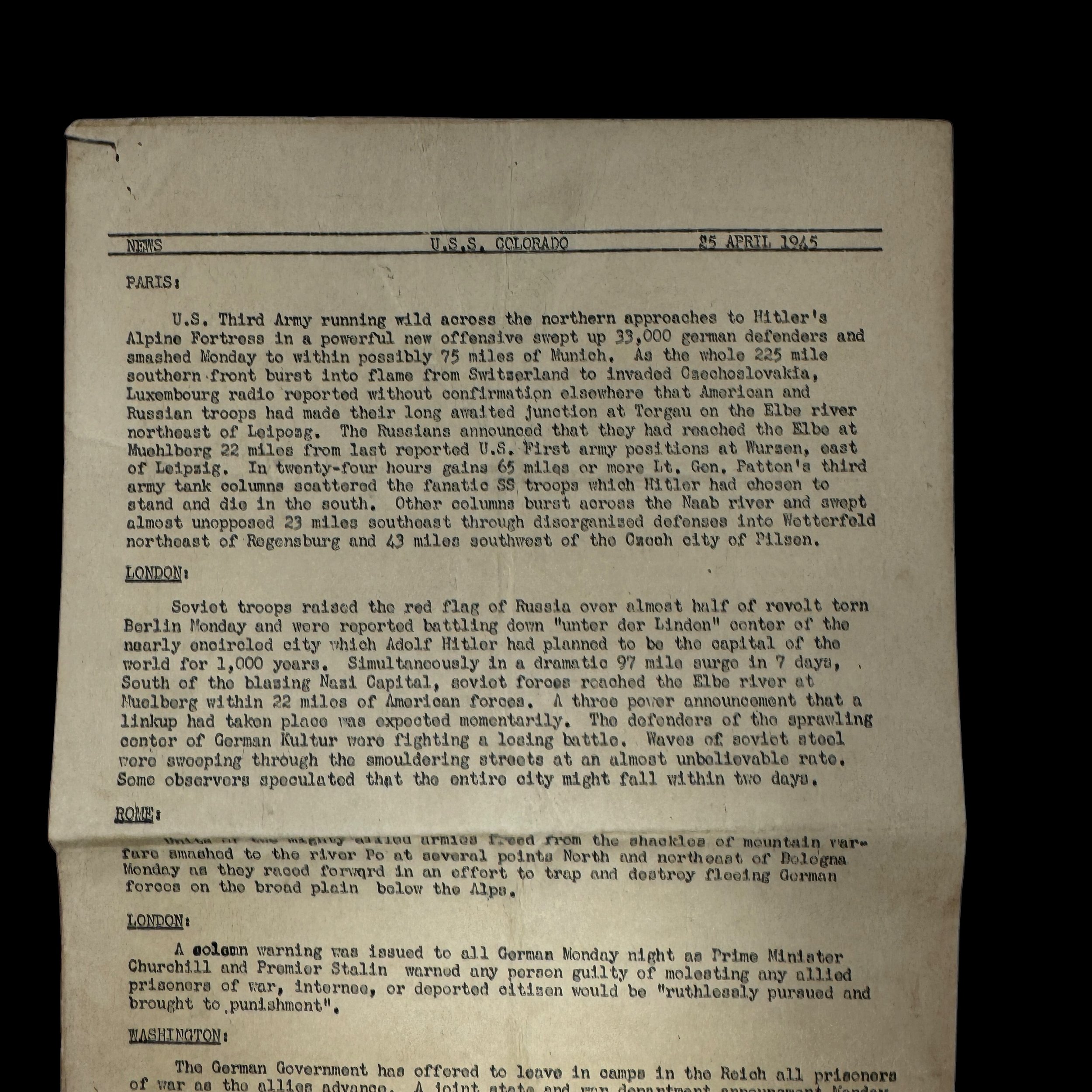
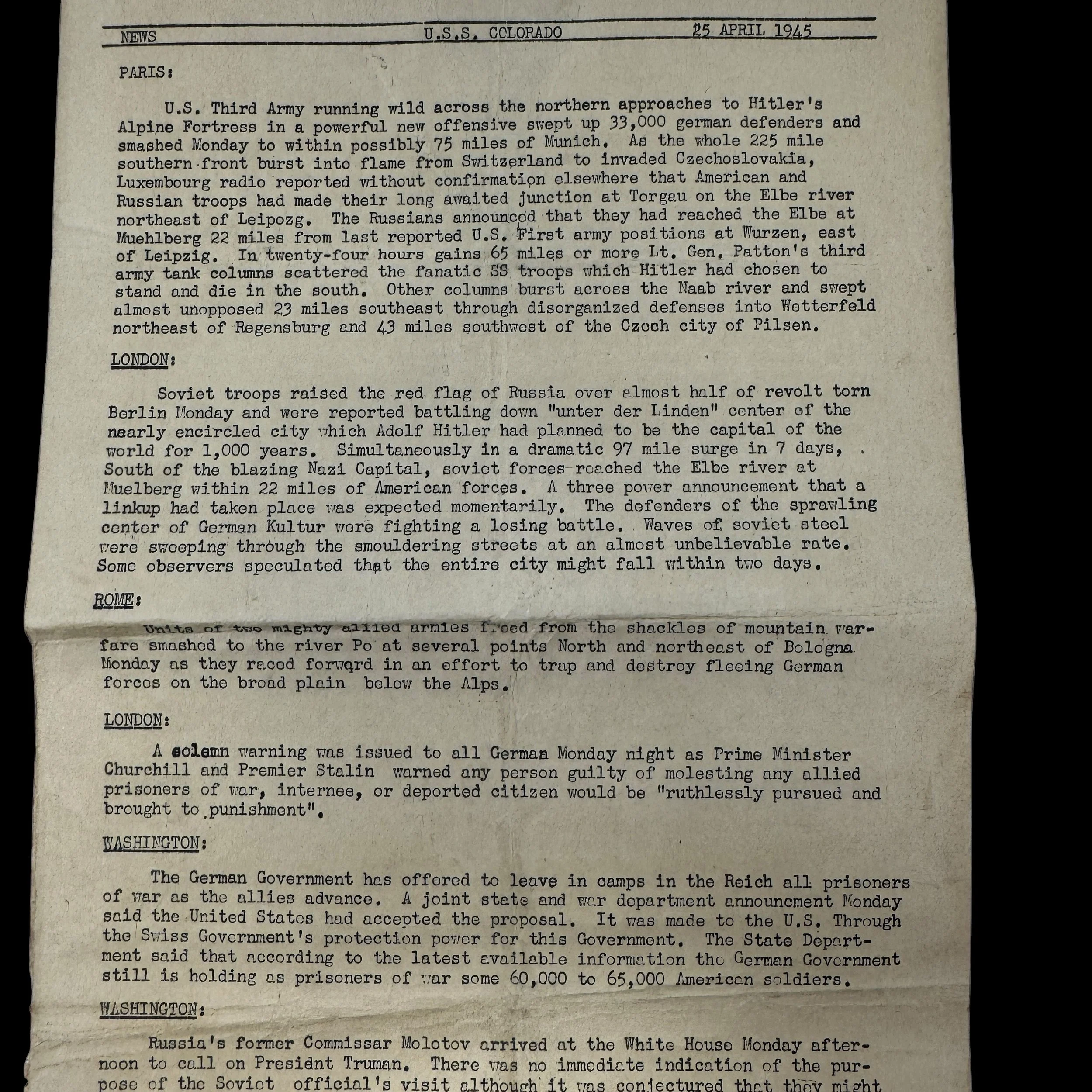
Rare Original WWII April 25, 1945 USS Colorado (BB 45) Battle of Okinawa United States Navy Pacific Fleet Shipboard Combat News Bulletin
Comes with a hand-signed C.O.A.
April 25, 1945 | Battle of Okinawa | United States Navy Pacific Fleet
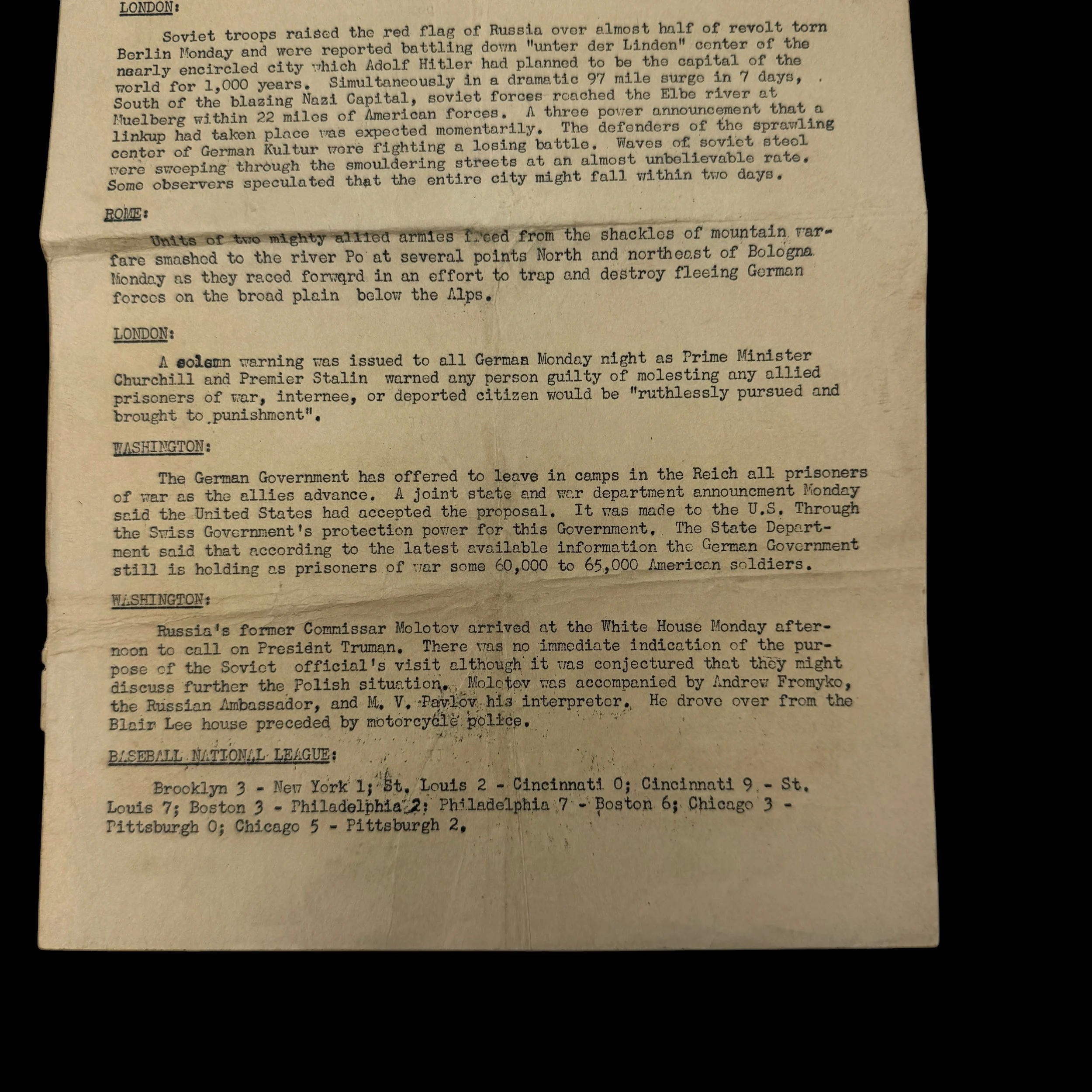
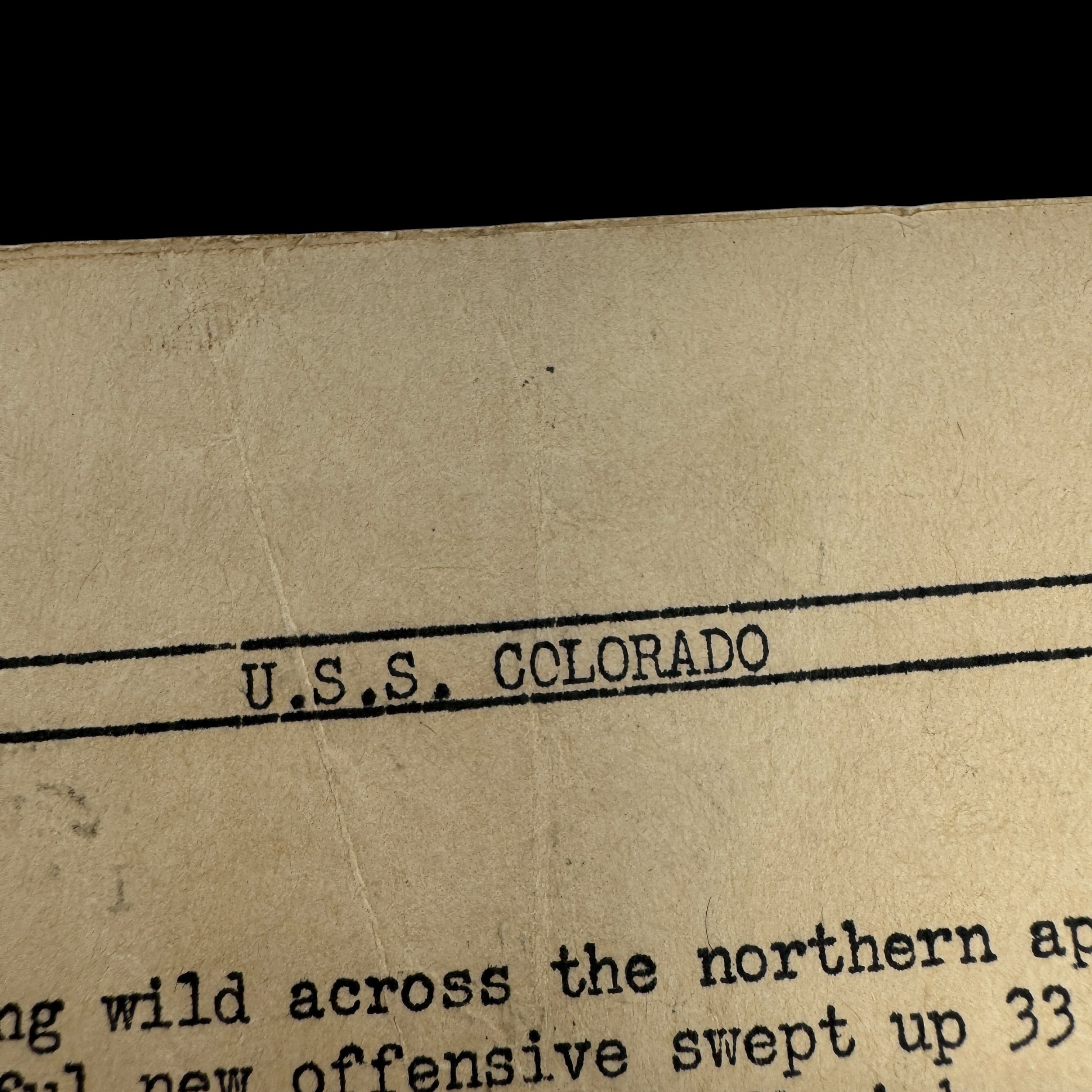
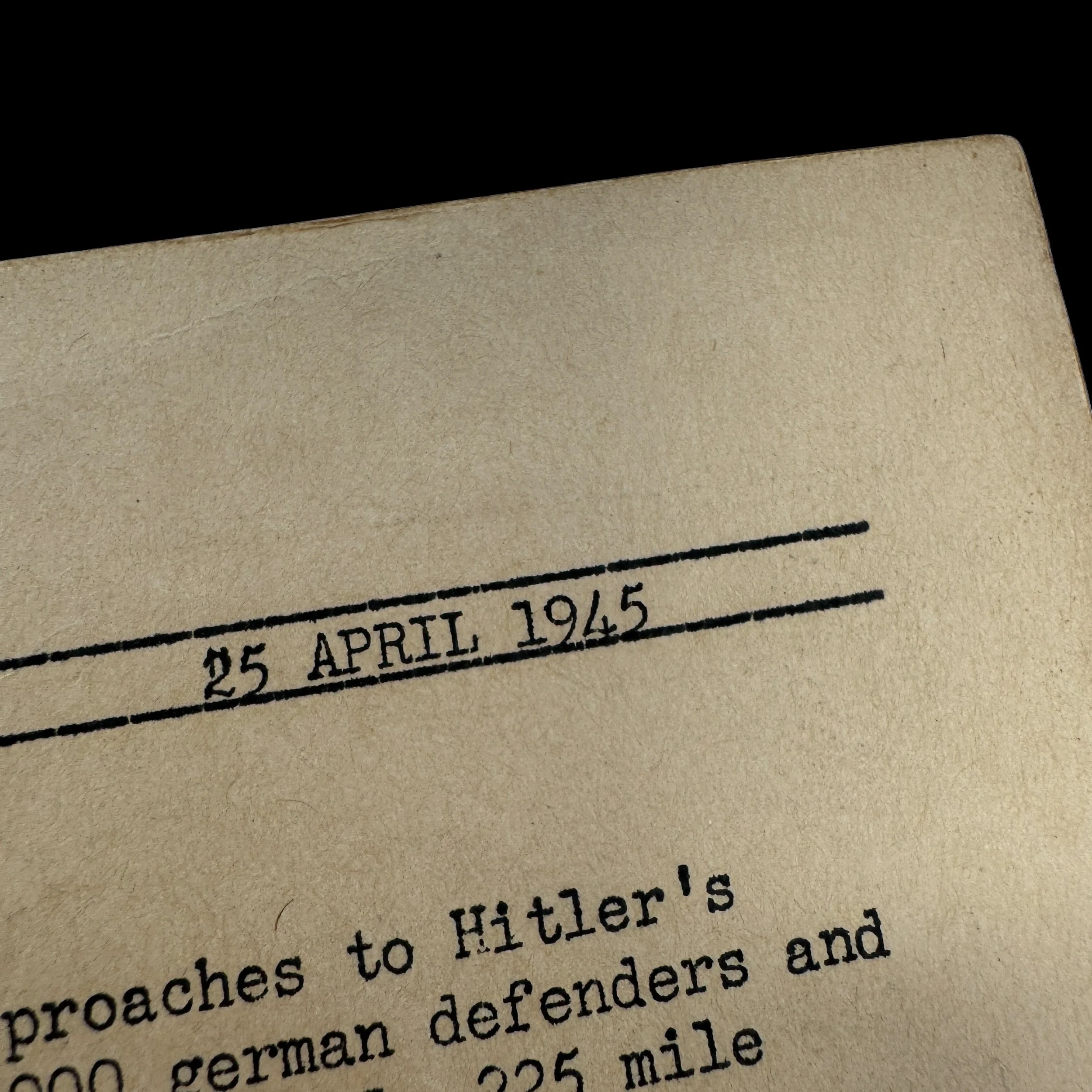
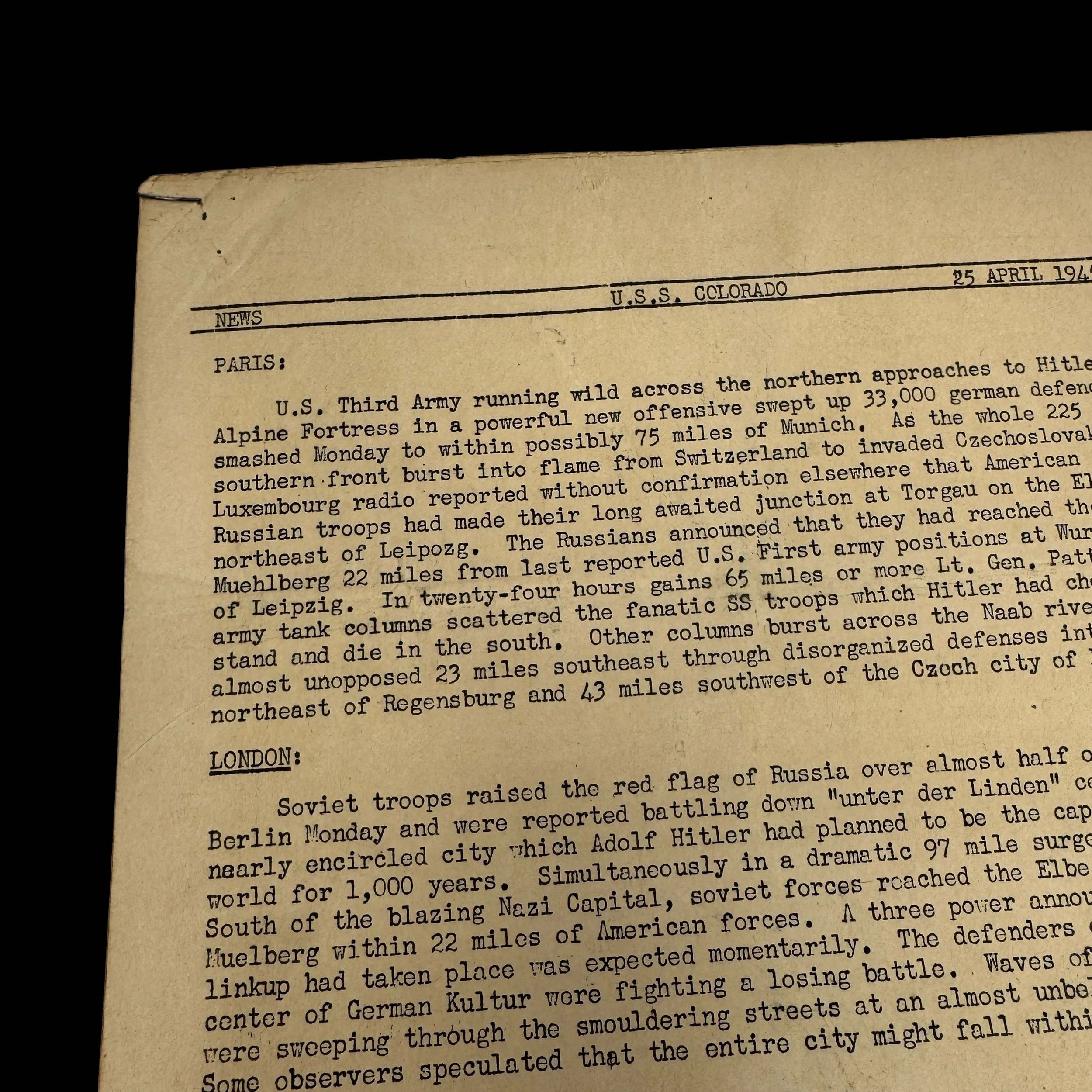
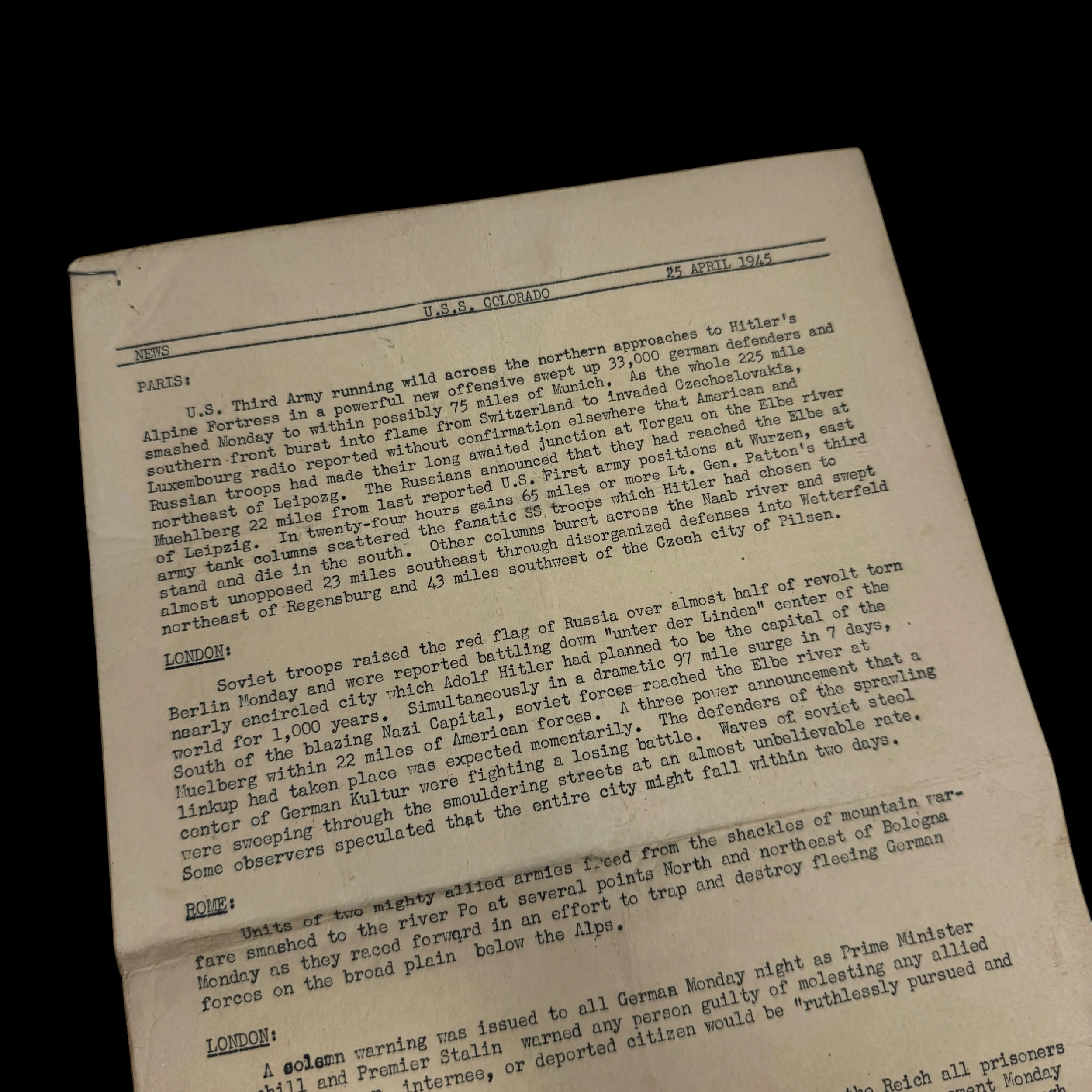
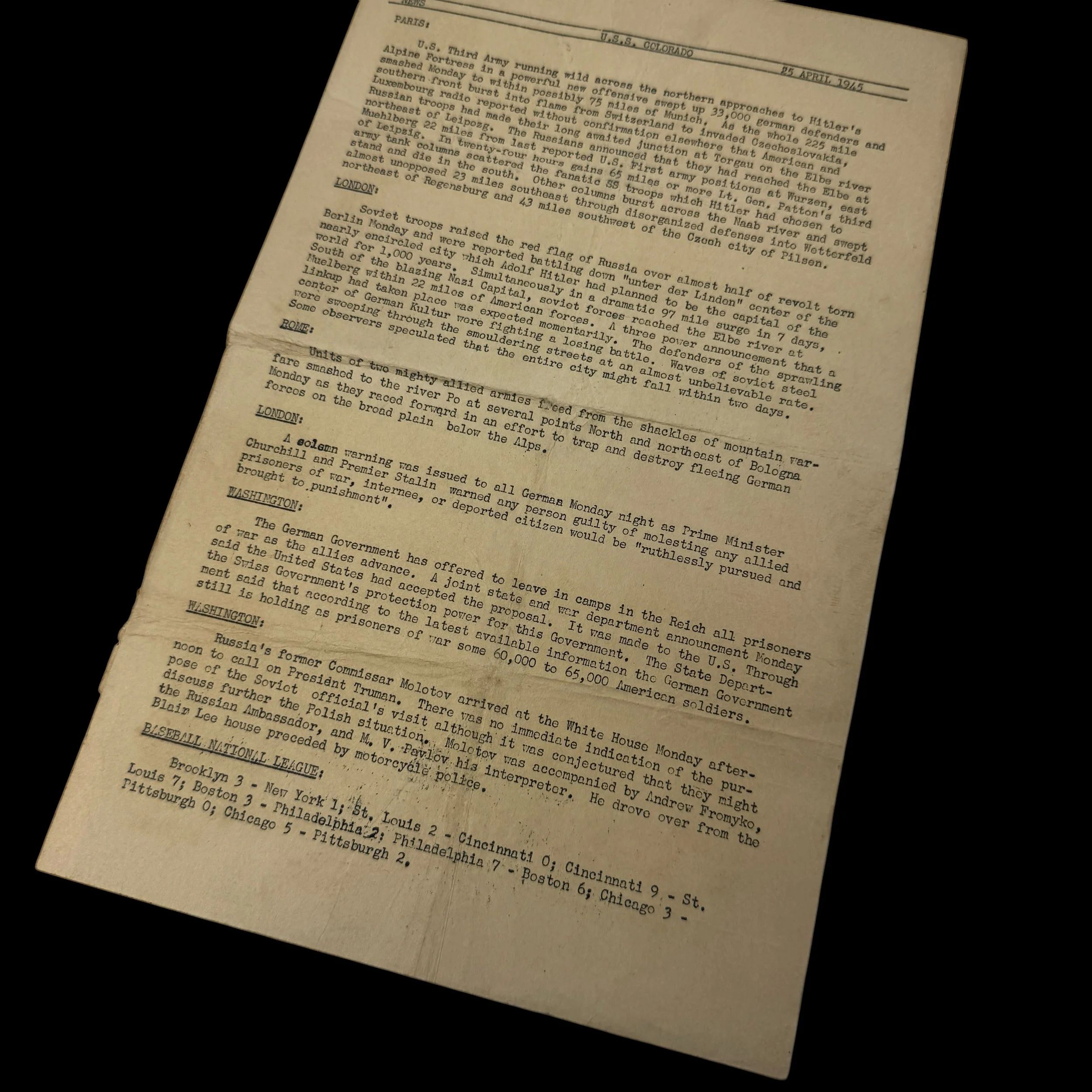
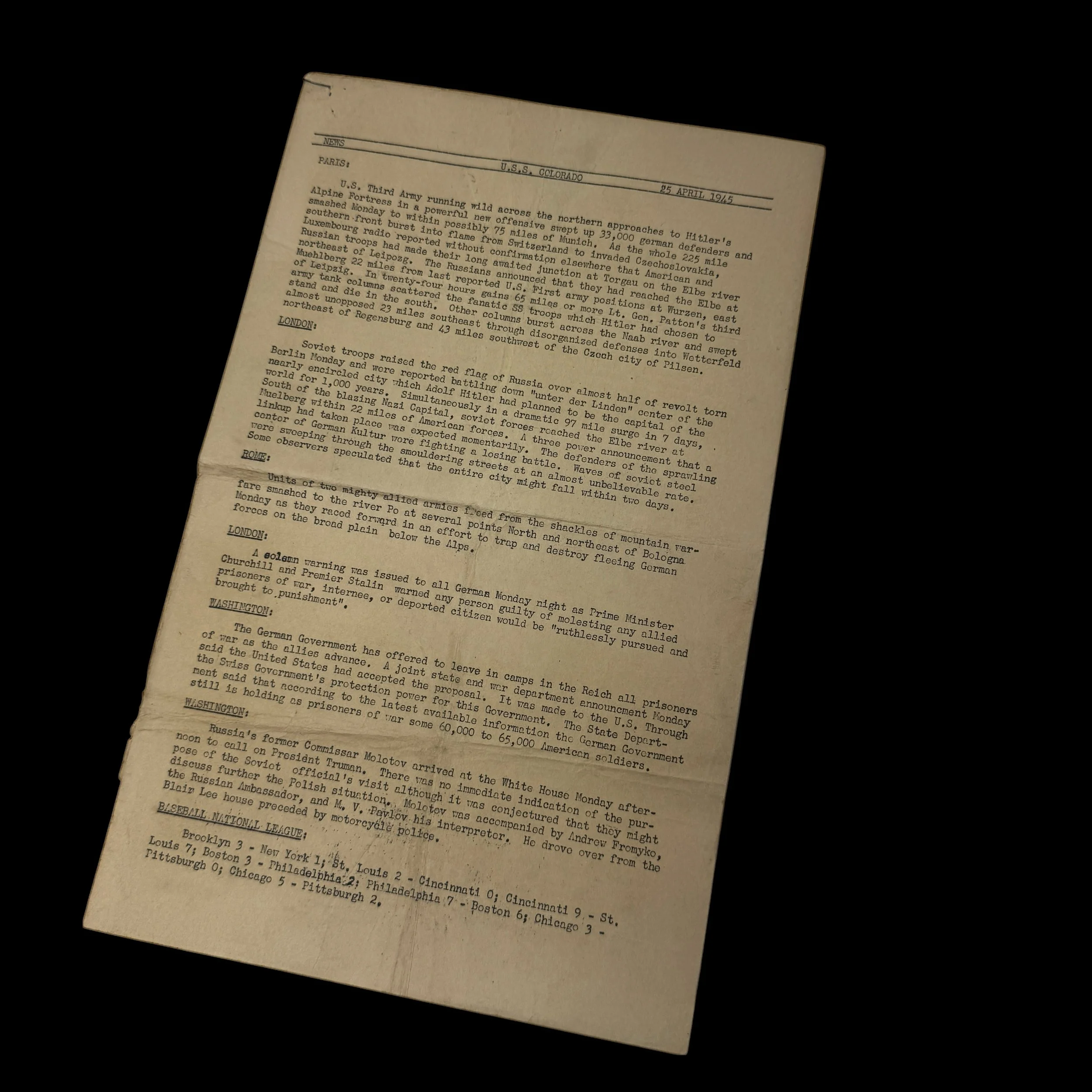
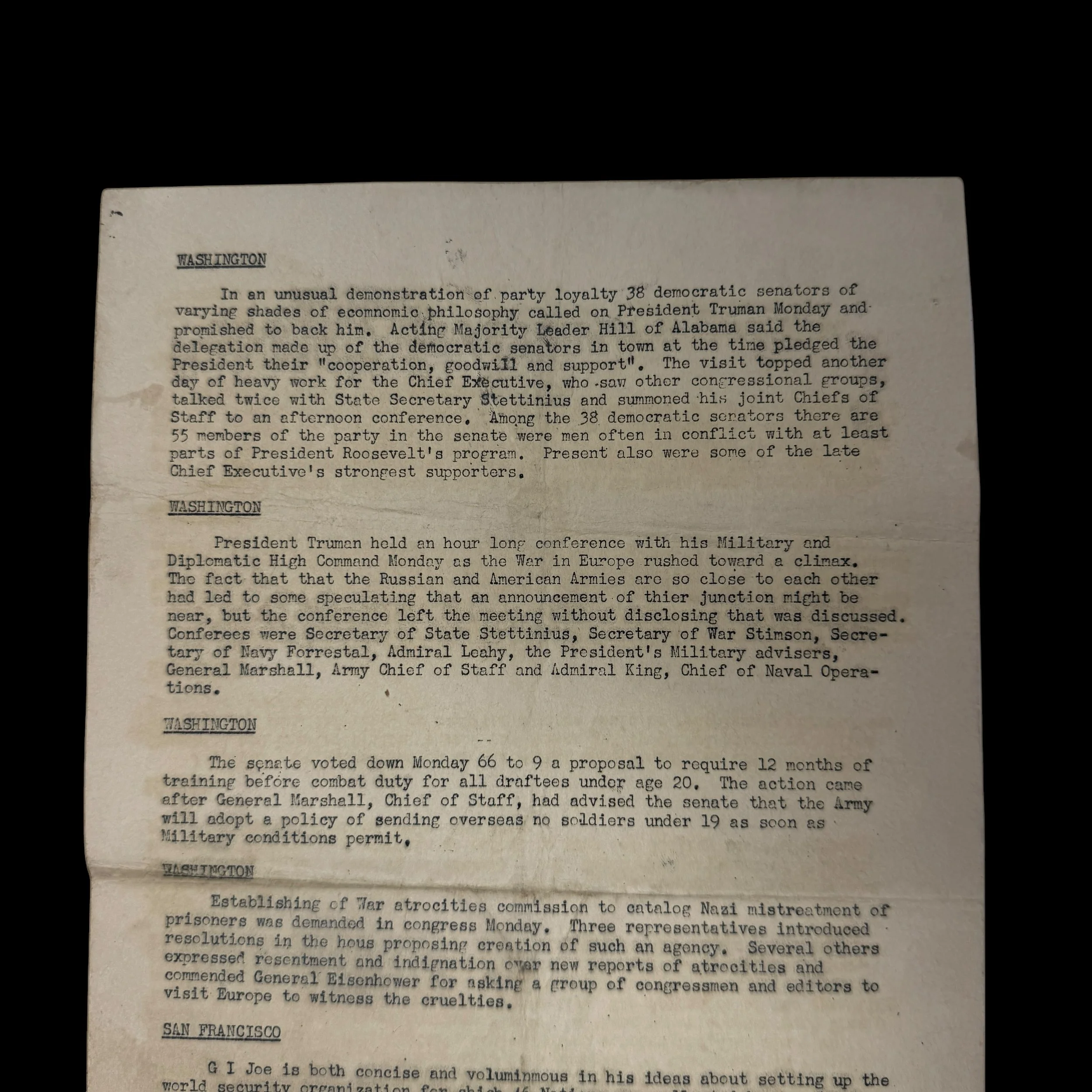
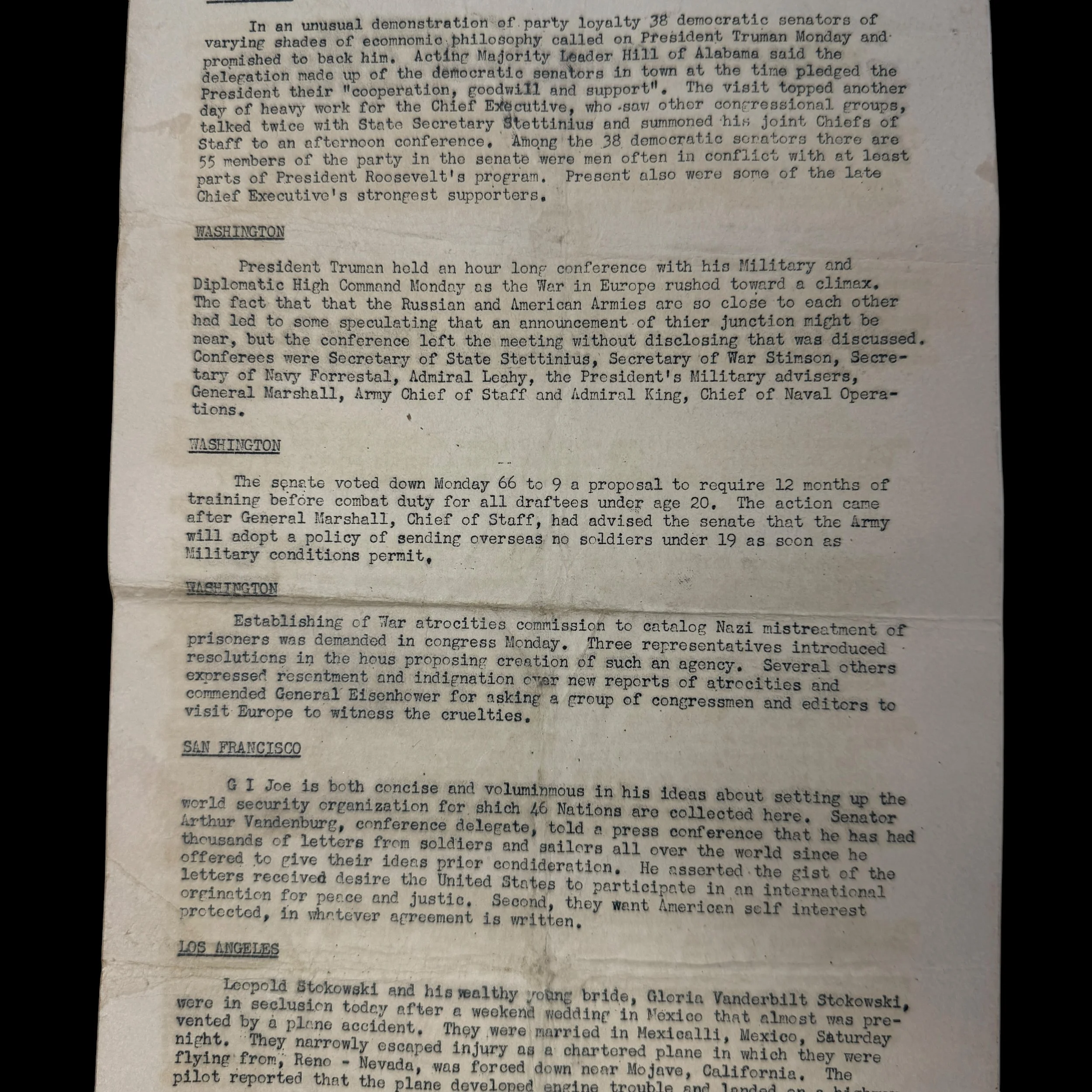
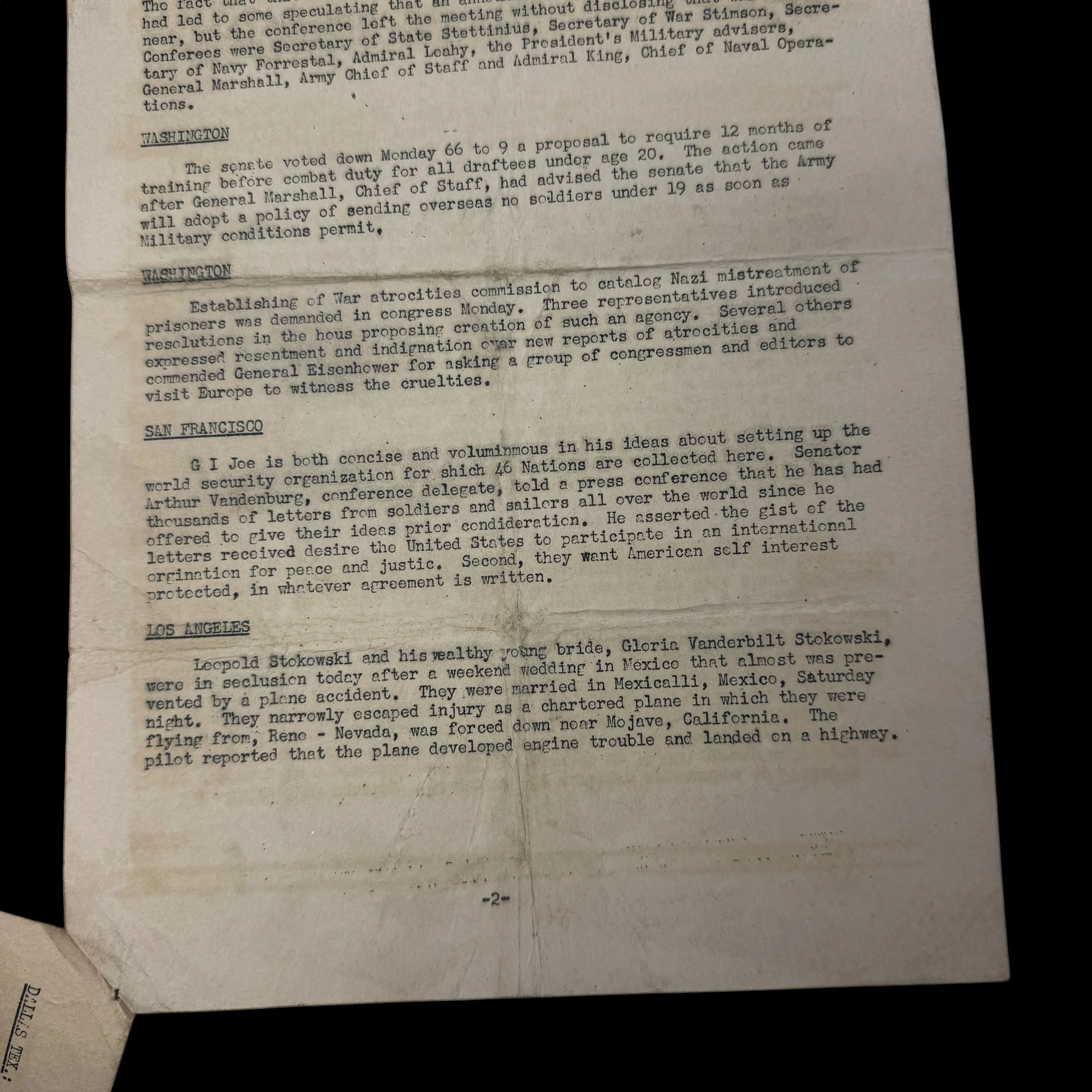
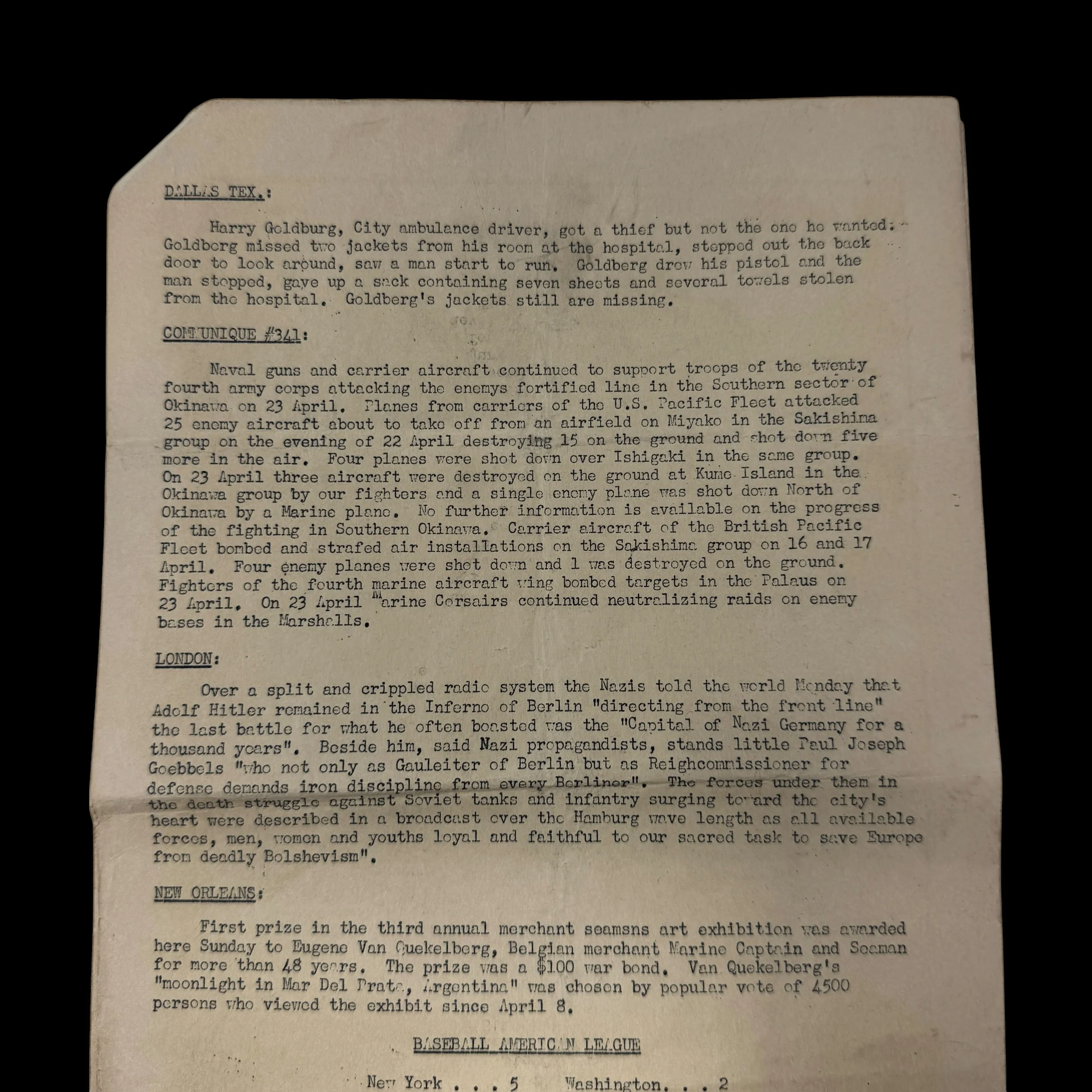
This original World War II shipboard news bulletin was produced aboard the United States Navy battleship USS Colorado (BB 45) on April 25, 1945, during the Battle of Okinawa and the final months of World War II. Prepared and reproduced aboard the battleship for distribution among its officers and enlisted sailors, this wartime publication provided current military reports, Pacific Fleet combat updates, Allied battlefield developments, and international news. Its contents preserve the information American sailors received while actively participating in one of the largest and bloodiest amphibious campaigns of the Pacific War.
Commissioned in 1923, USS Colorado was the lead ship of the Colorado class of battleships, armed with eight powerful 16 inch naval guns. During World War II, Colorado participated in numerous major Pacific operations, including Tarawa (1943), the Marshall Islands (1944), Saipan, Guam, and Tinian (1944), Leyte (1944), Lingayen Gulf (1945), and Okinawa (1945). During the Battle of Tinian in July 1944, the battleship sustained devastating hits from Japanese coastal artillery, resulting in substantial casualties among its crew. By April 1945, Colorado was supporting the invasion of Okinawa, which began April 1, 1945. Its heavy naval artillery bombarded Japanese defensive positions, fortifications, and troop concentrations in support of American ground forces. The bulletin's April 25 date places its production during these active combat operations, when the battleship and its sailors faced the continuing dangers of Japanese aircraft, kamikaze attacks, and enemy coastal defenses.
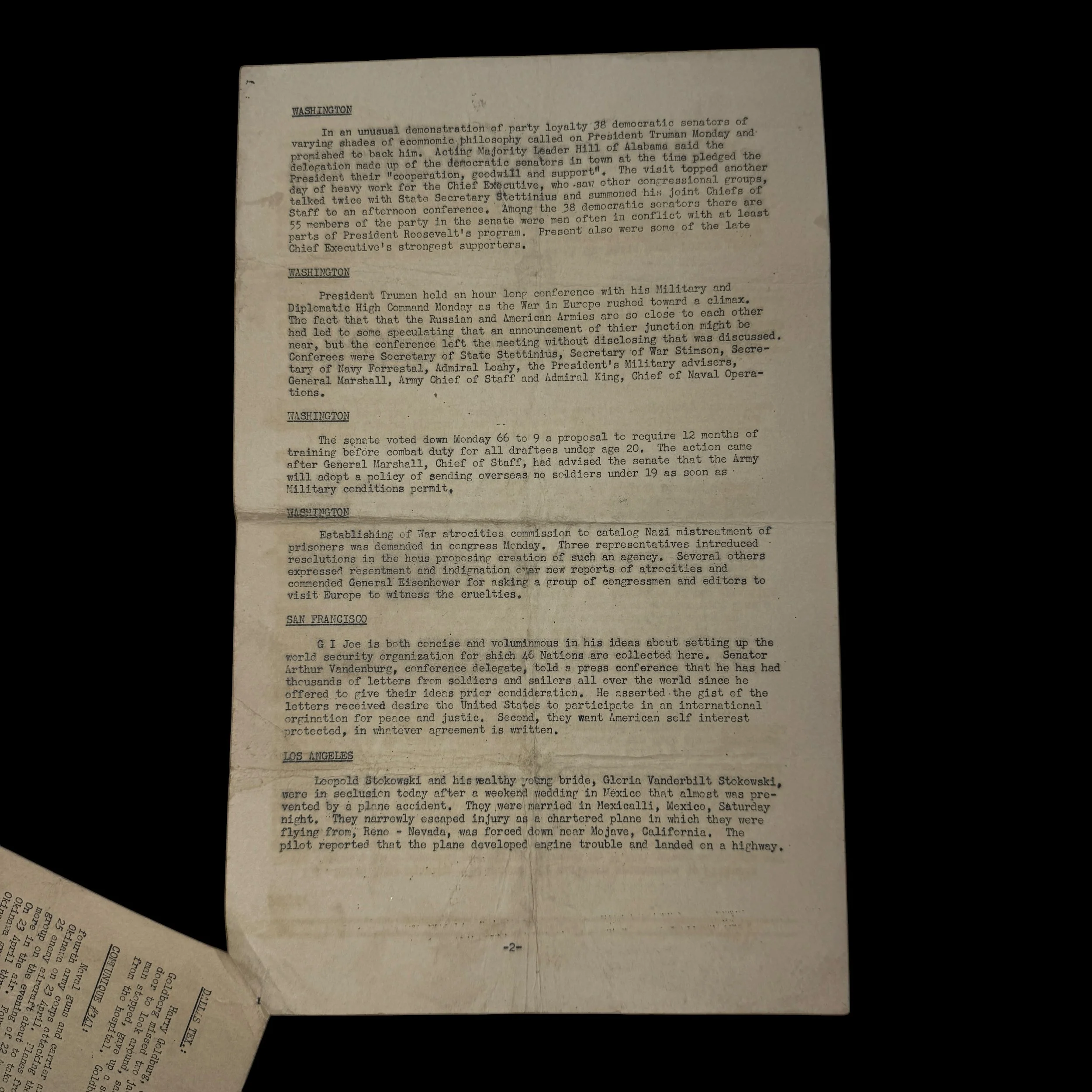
The bulletin documents some of the most consequential developments of the war in Europe. Its reports describe General George S. Patton's U.S. Third Army advancing toward Munich, Soviet forces fighting through Berlin during the Battle of Berlin (April 16 to May 2, 1945), and American and Soviet armies approaching their historic junction along the Elbe River at Torgau on April 25, 1945. Additional articles describe Allied advances into northern Italy, the collapse of German resistance, the treatment of Allied prisoners of war, and diplomatic developments involving President Harry S. Truman following President Franklin D. Roosevelt's death on April 12, 1945. These reports capture the final days of Nazi Germany as American sailors continued fighting across the Pacific.
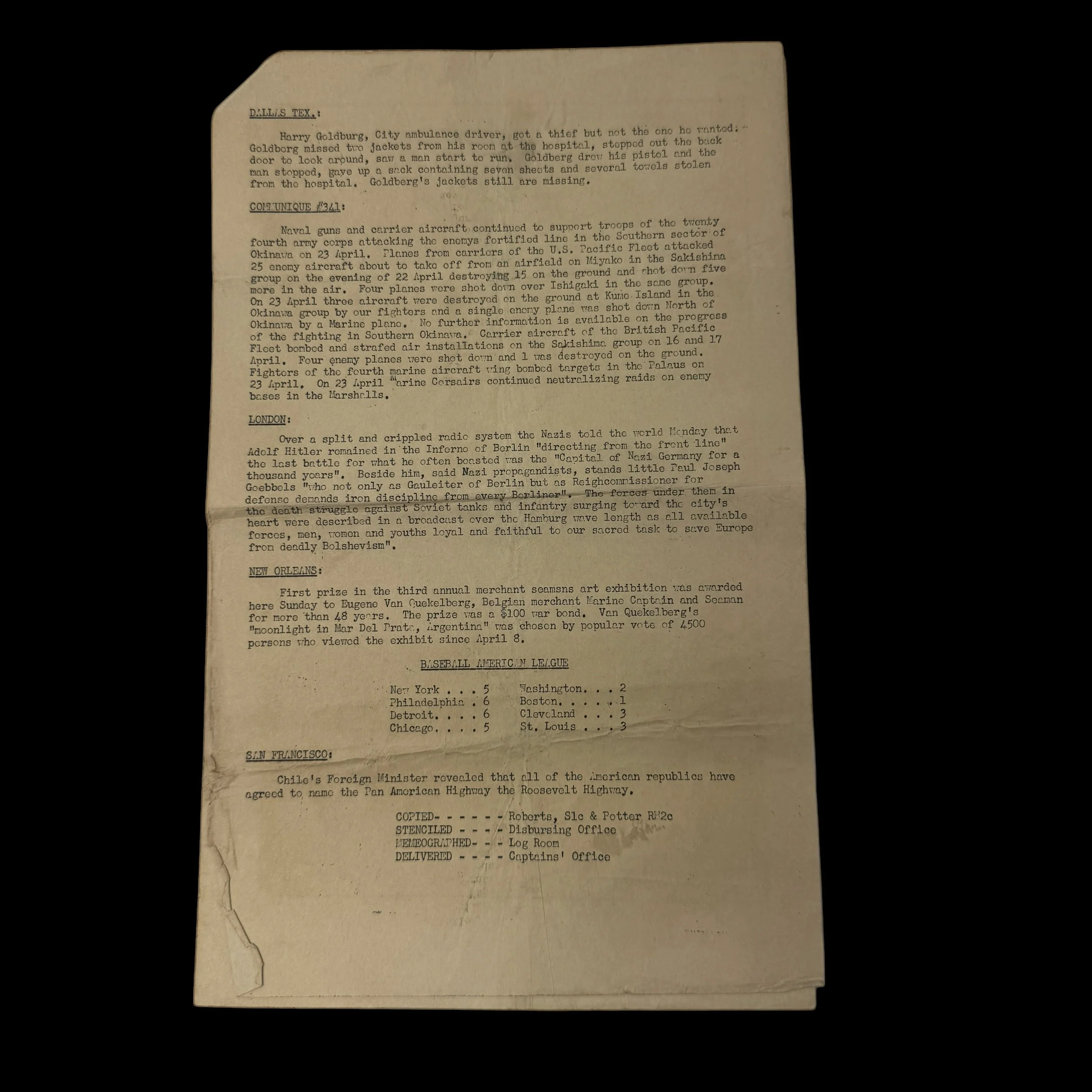
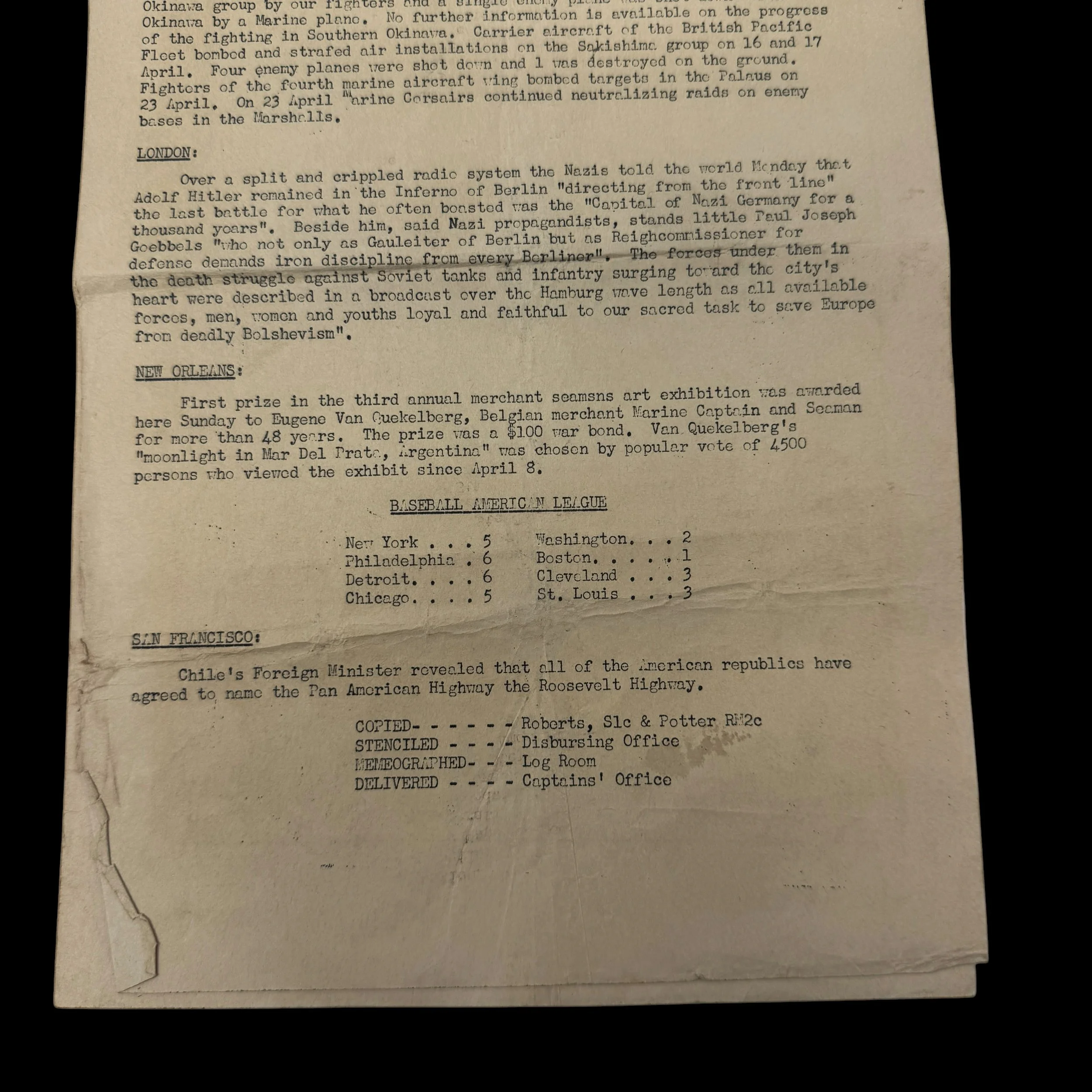
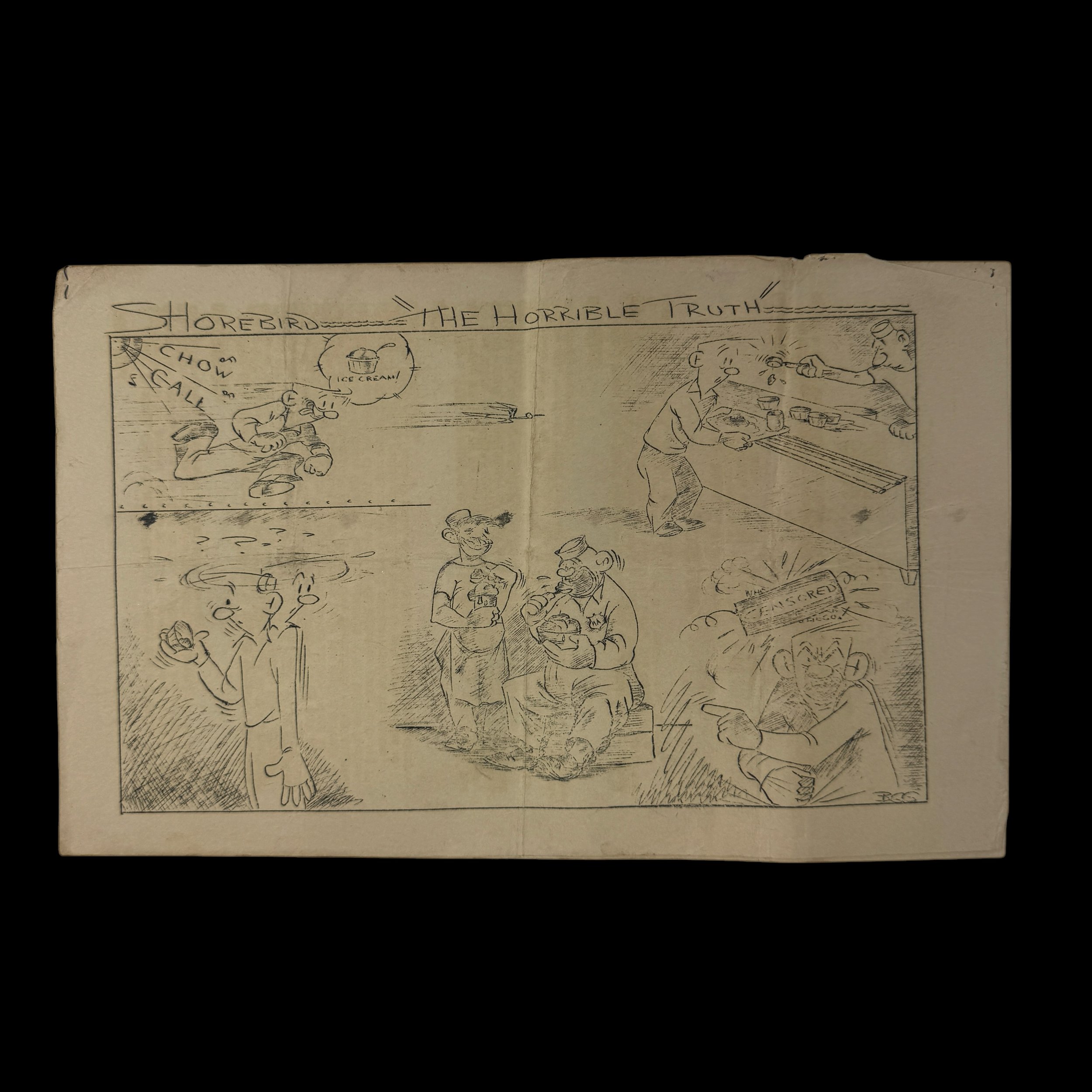
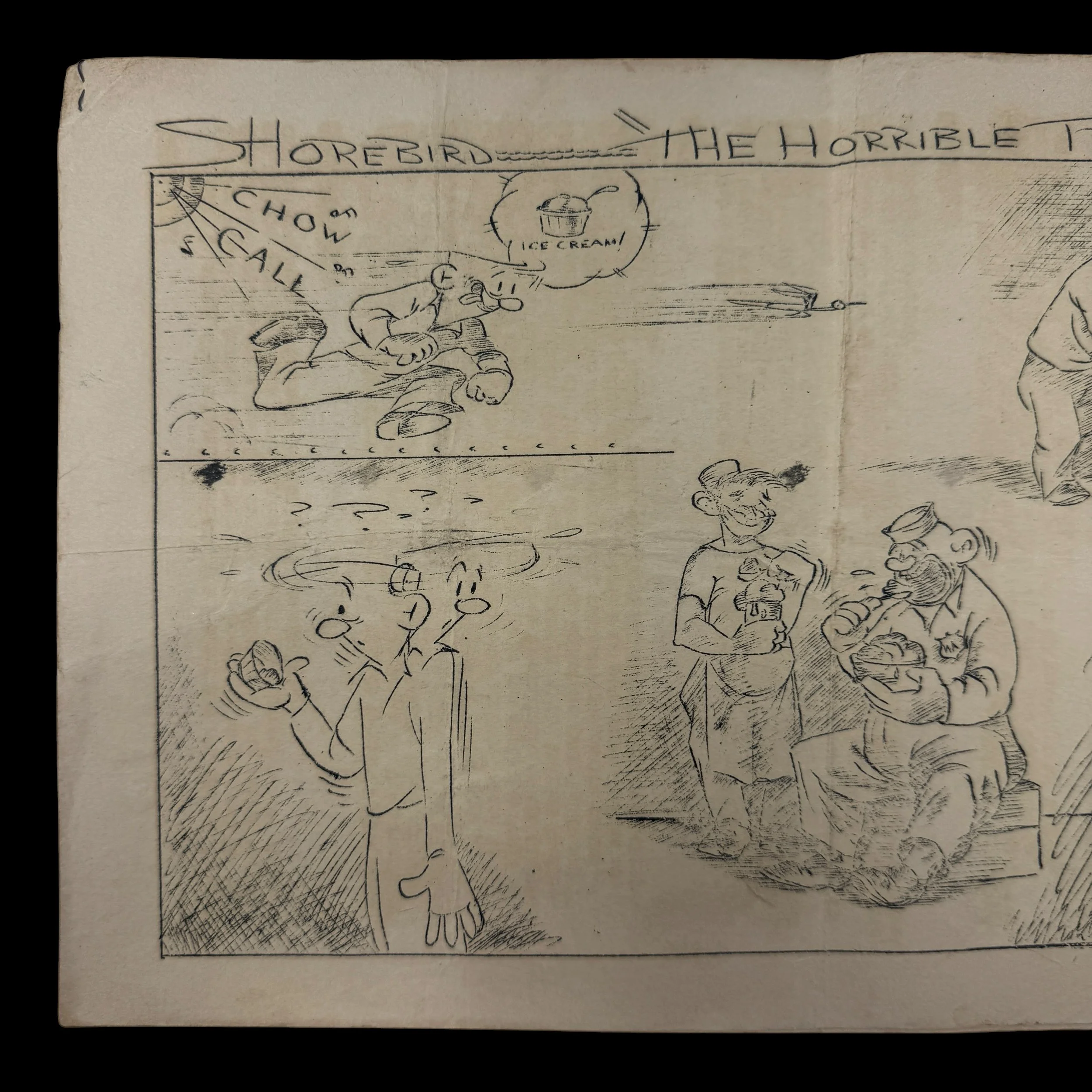
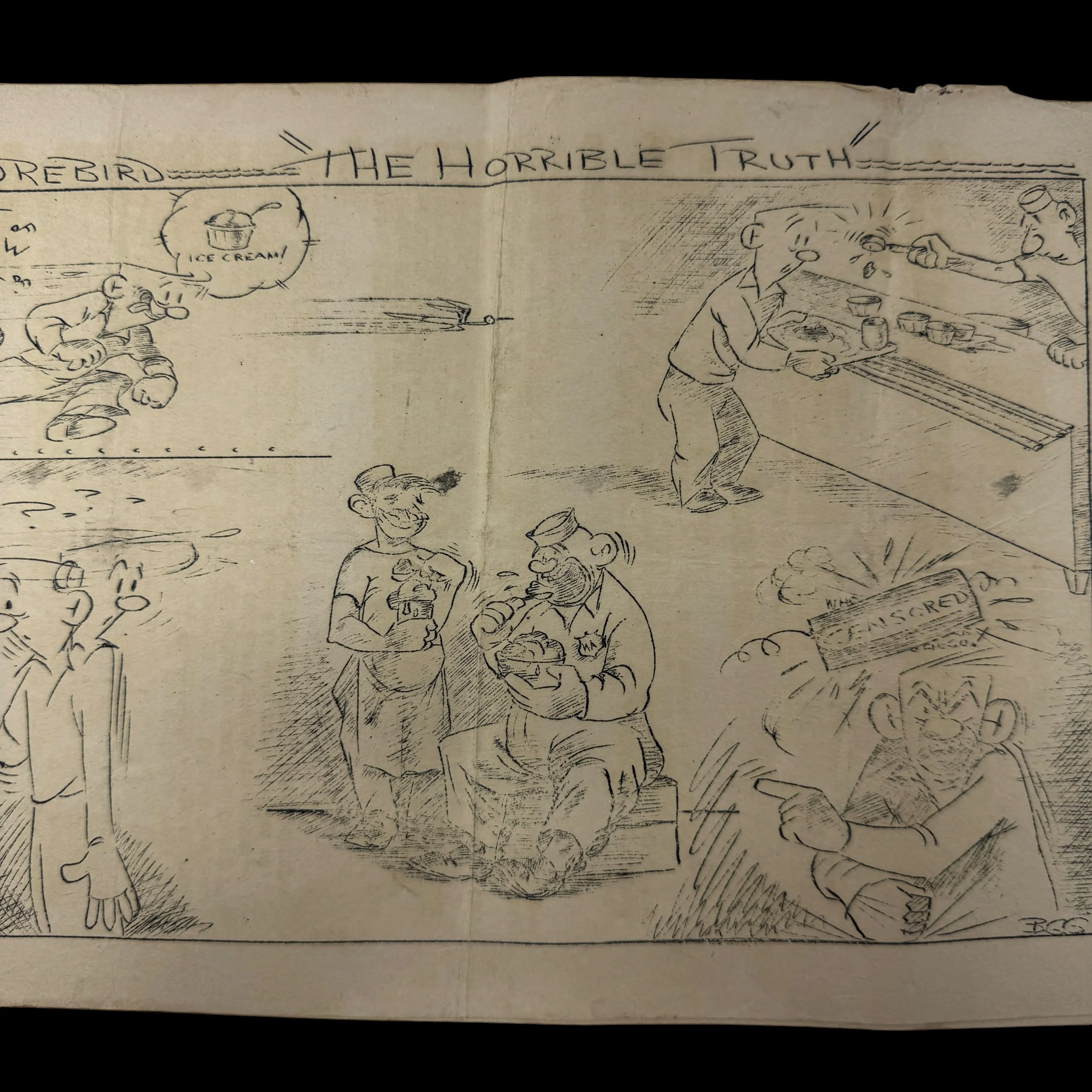
Of particular historical importance, the bulletin includes U.S. Navy Pacific Fleet Communiqué No. 341, reporting naval gunfire support and American carrier and Marine aircraft operations during the Battle of Okinawa. It details attacks against Japanese positions, enemy aircraft destroyed, and continued operations throughout the Ryukyu Islands and surrounding Pacific territories. This section directly connects the bulletin to the ongoing military campaign in which USS Colorado was participating. Additional reporting covers Nazi war atrocities, the formation of the United Nations at the San Francisco Conference, American political developments, baseball scores, and a shipboard cartoon titled Shorebird: The Horrible Truth, illustrating the combination of combat information and everyday news distributed to American servicemen.
The bulletin also preserves its original shipboard production and distribution information, identifying the personnel and departments responsible for copying, stenciling, mimeographing, and delivering the publication. These details establish its character as a locally produced naval news bulletin, rather than a commercially distributed newspaper or classified operational intelligence document. Such publications were important sources of information and morale for sailors deployed far from home, providing news of the global conflict while they remained engaged in dangerous naval operations.