WWI St. Mihiel Offensive 310th Ambulance Company (78th Infantry Division) AEF Soldier's Western Front Combat Bible


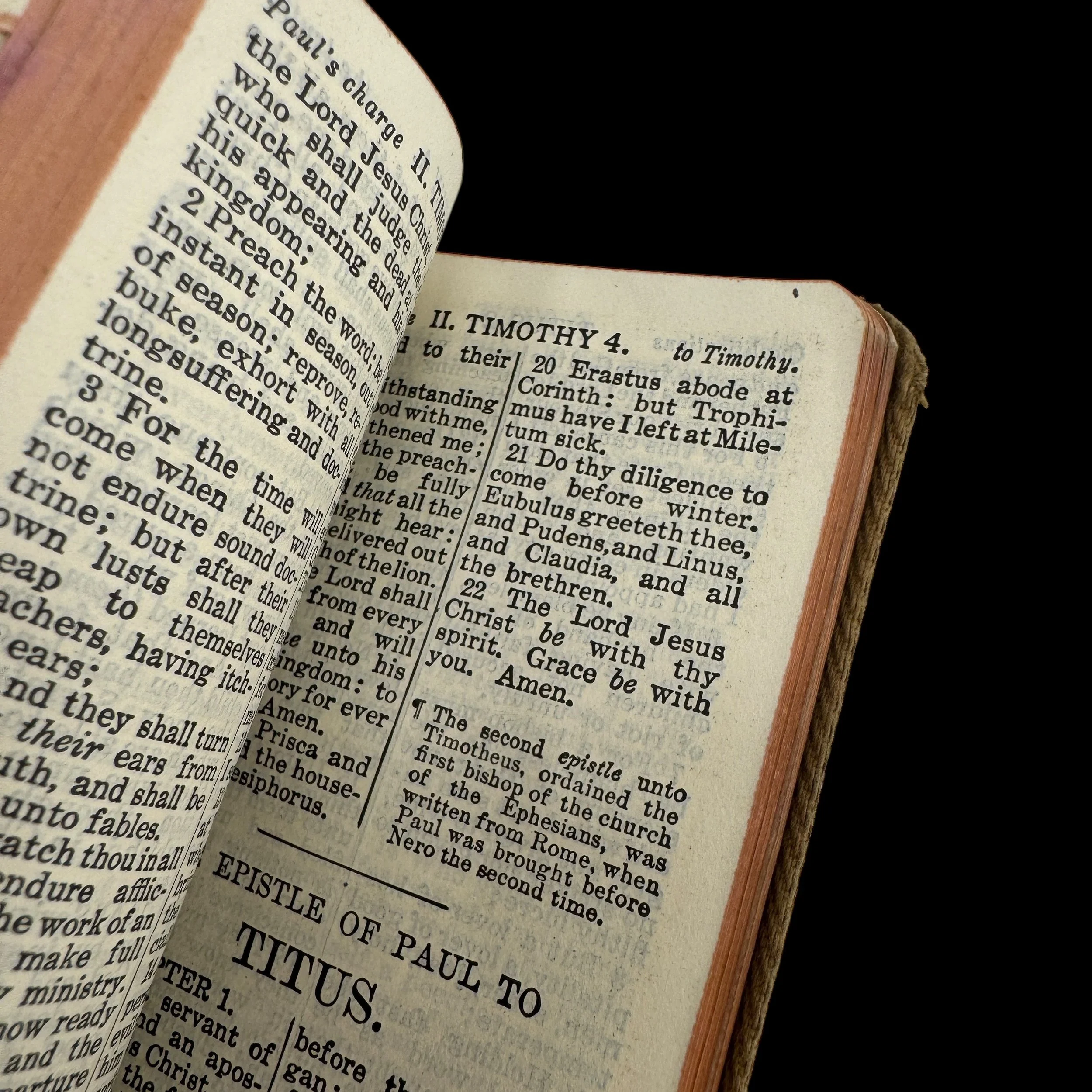
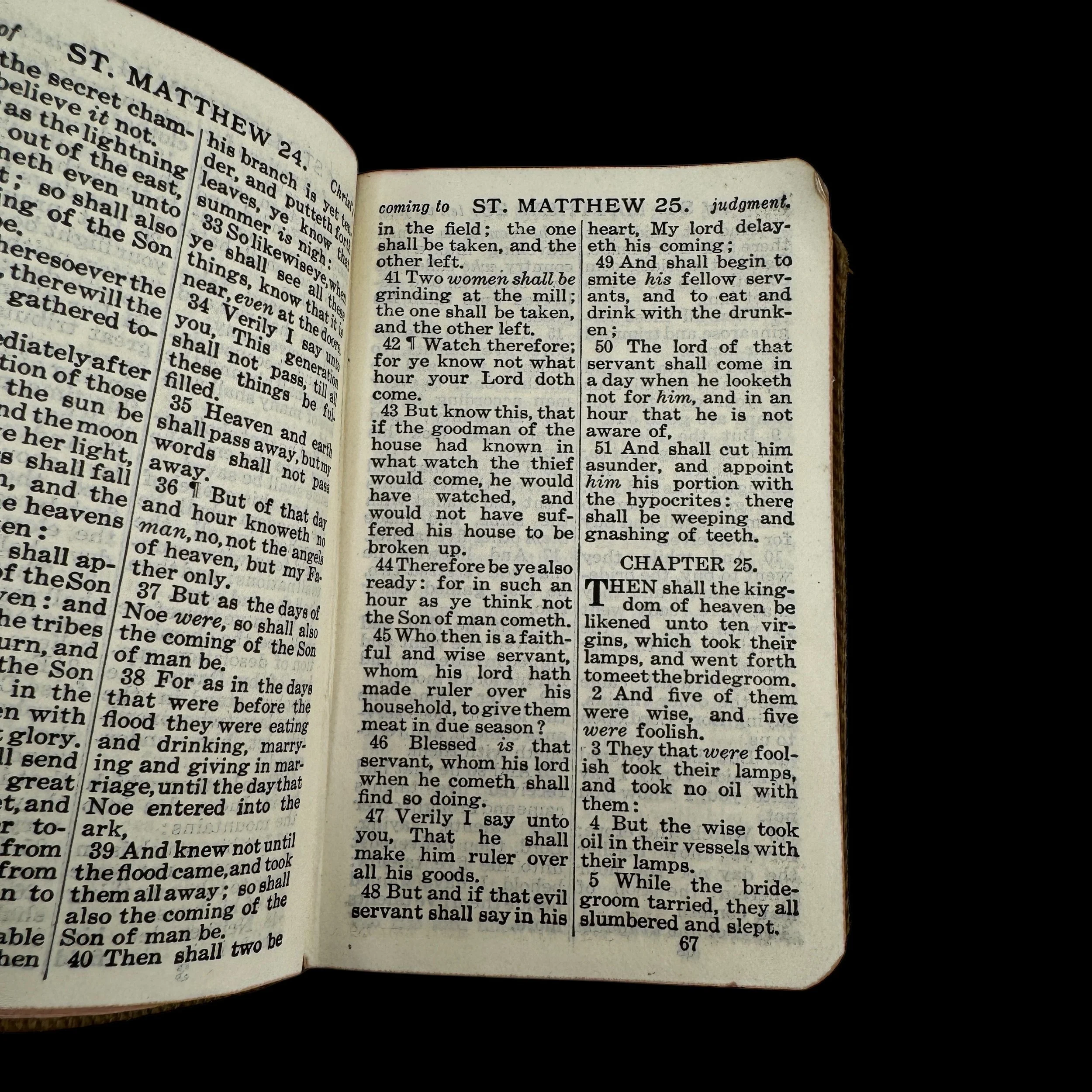
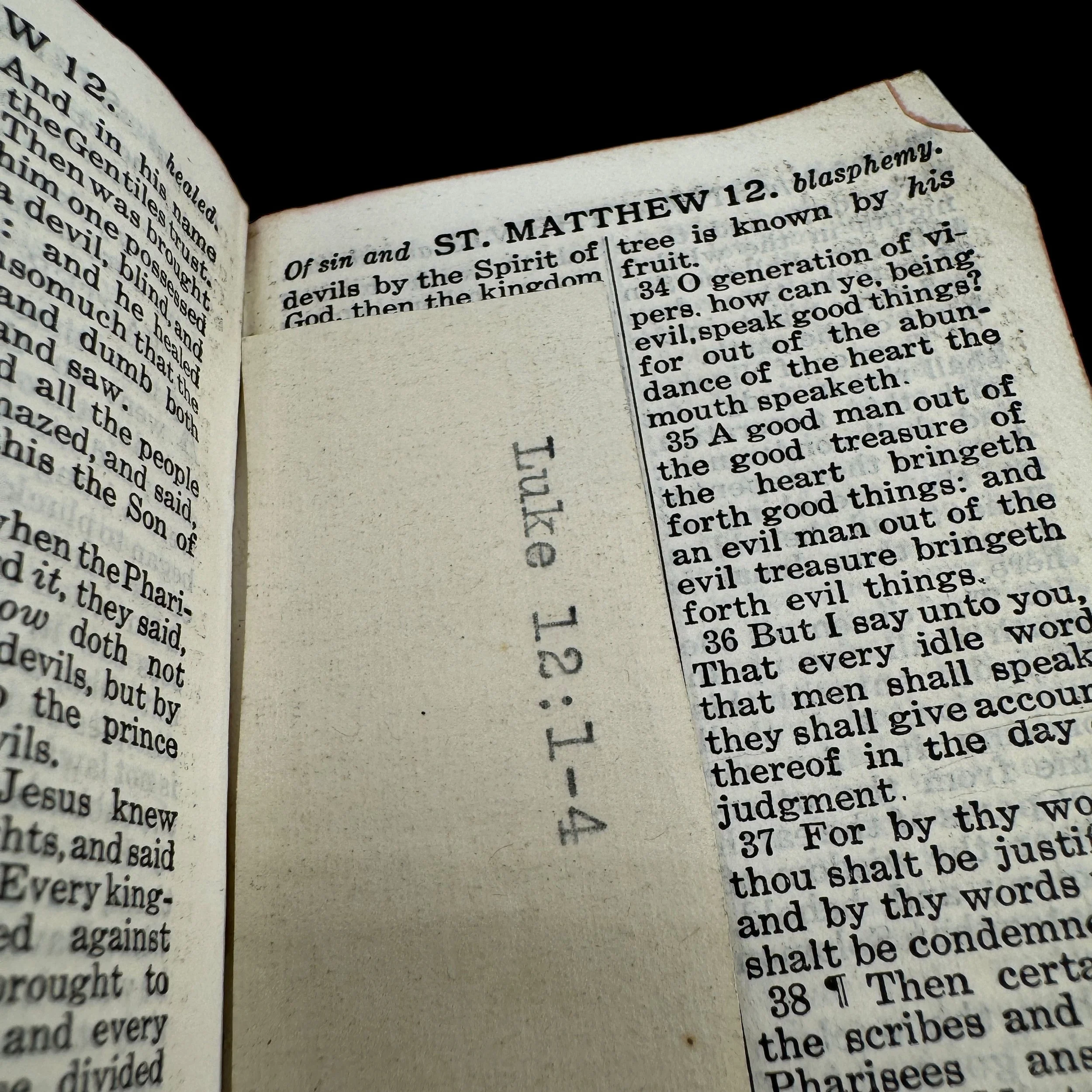
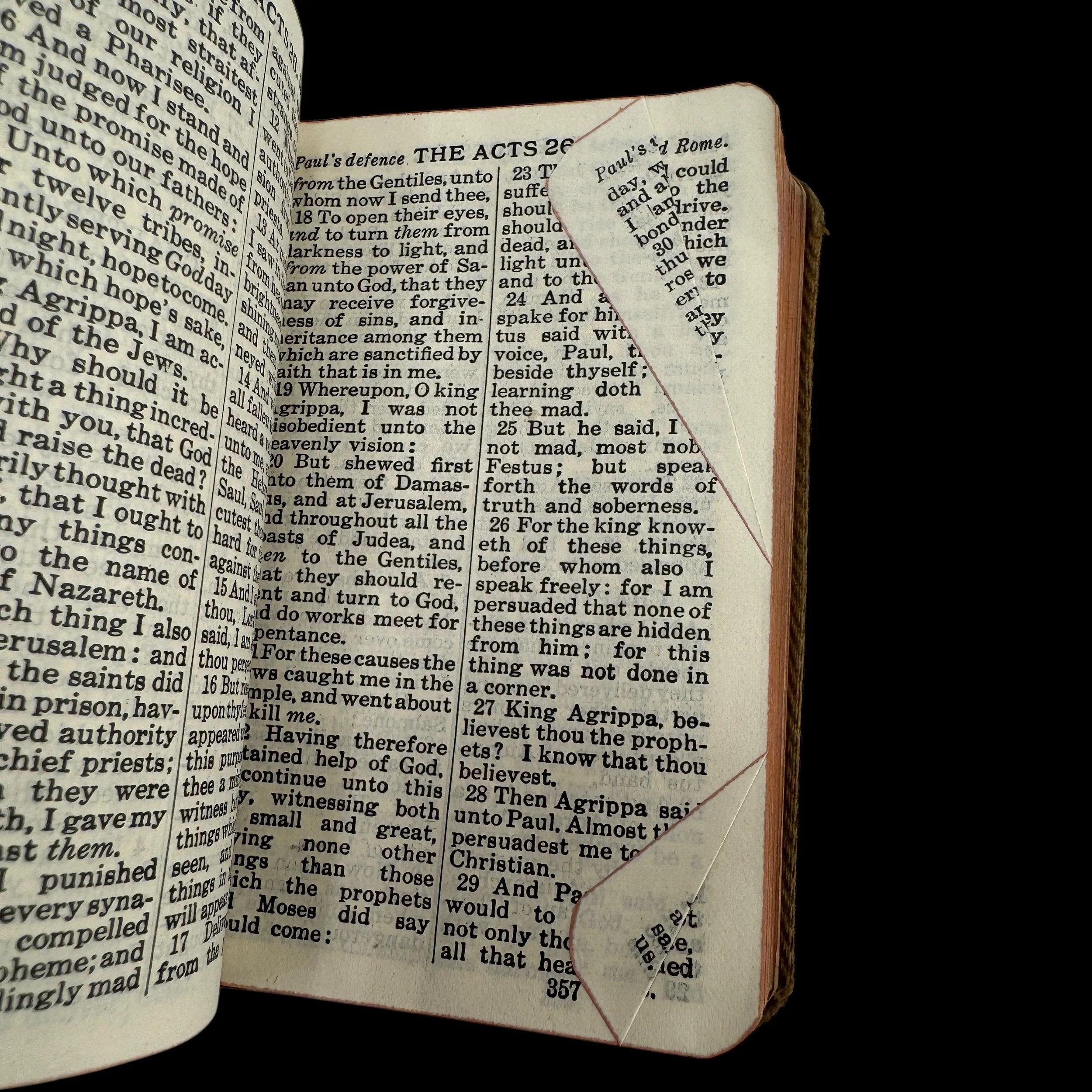
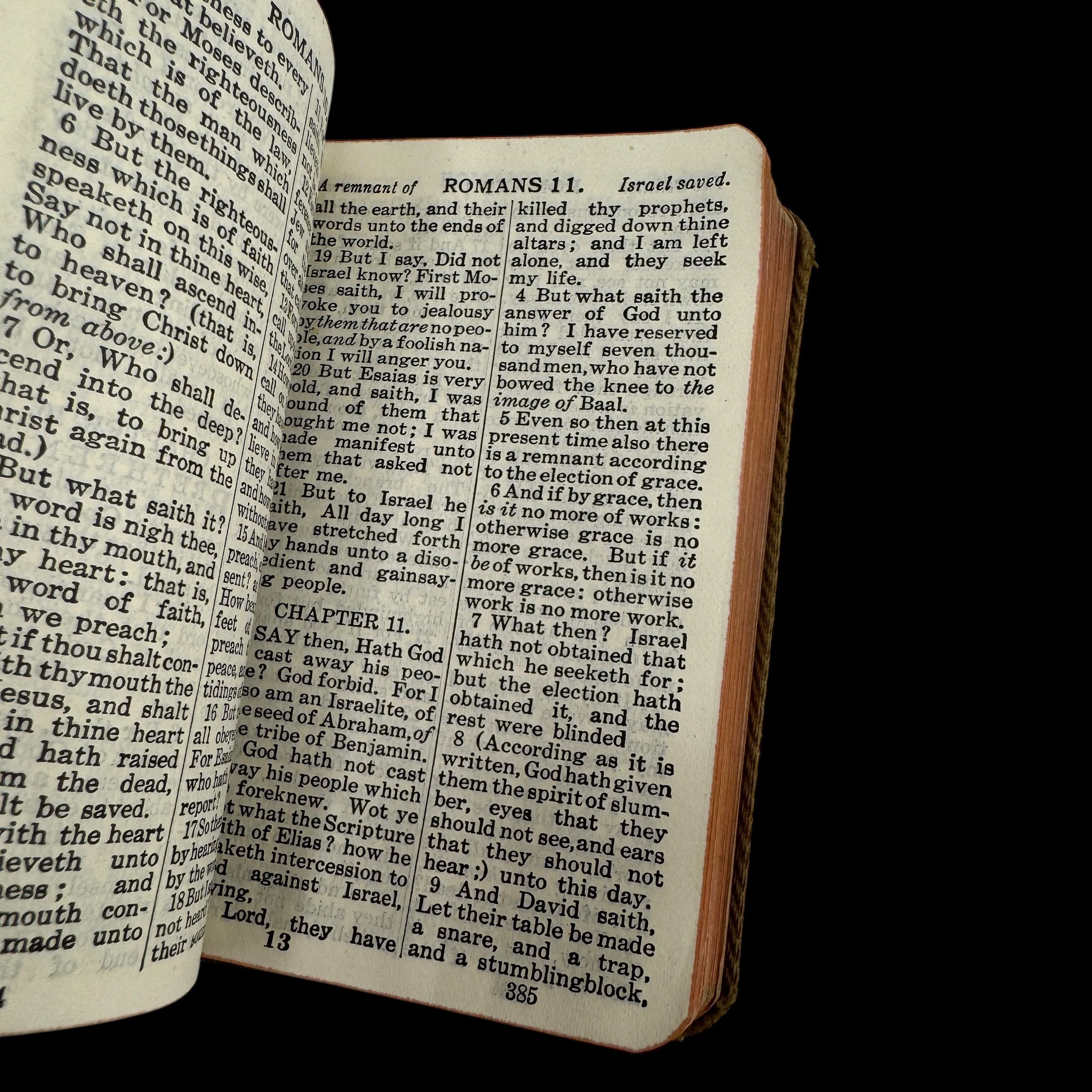
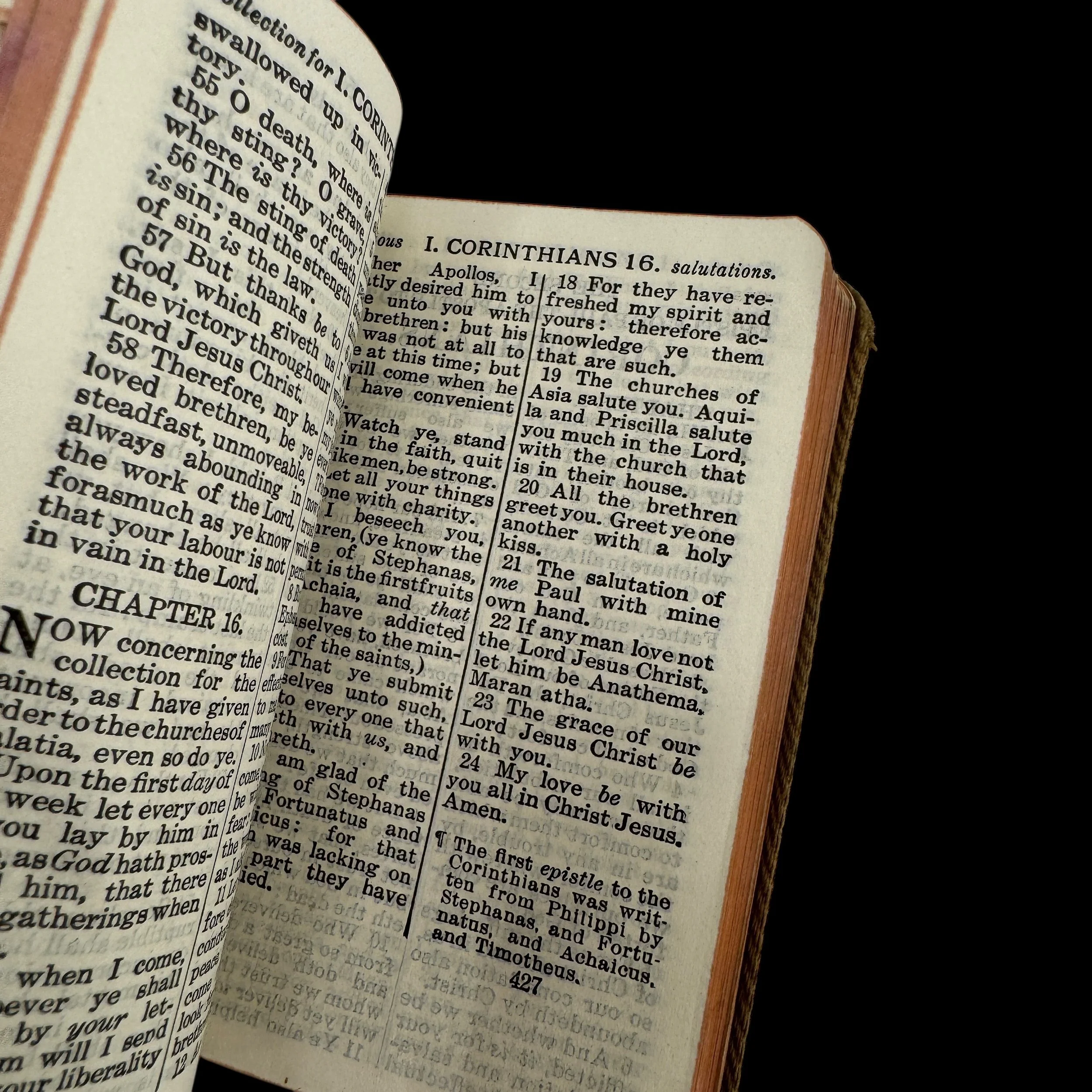
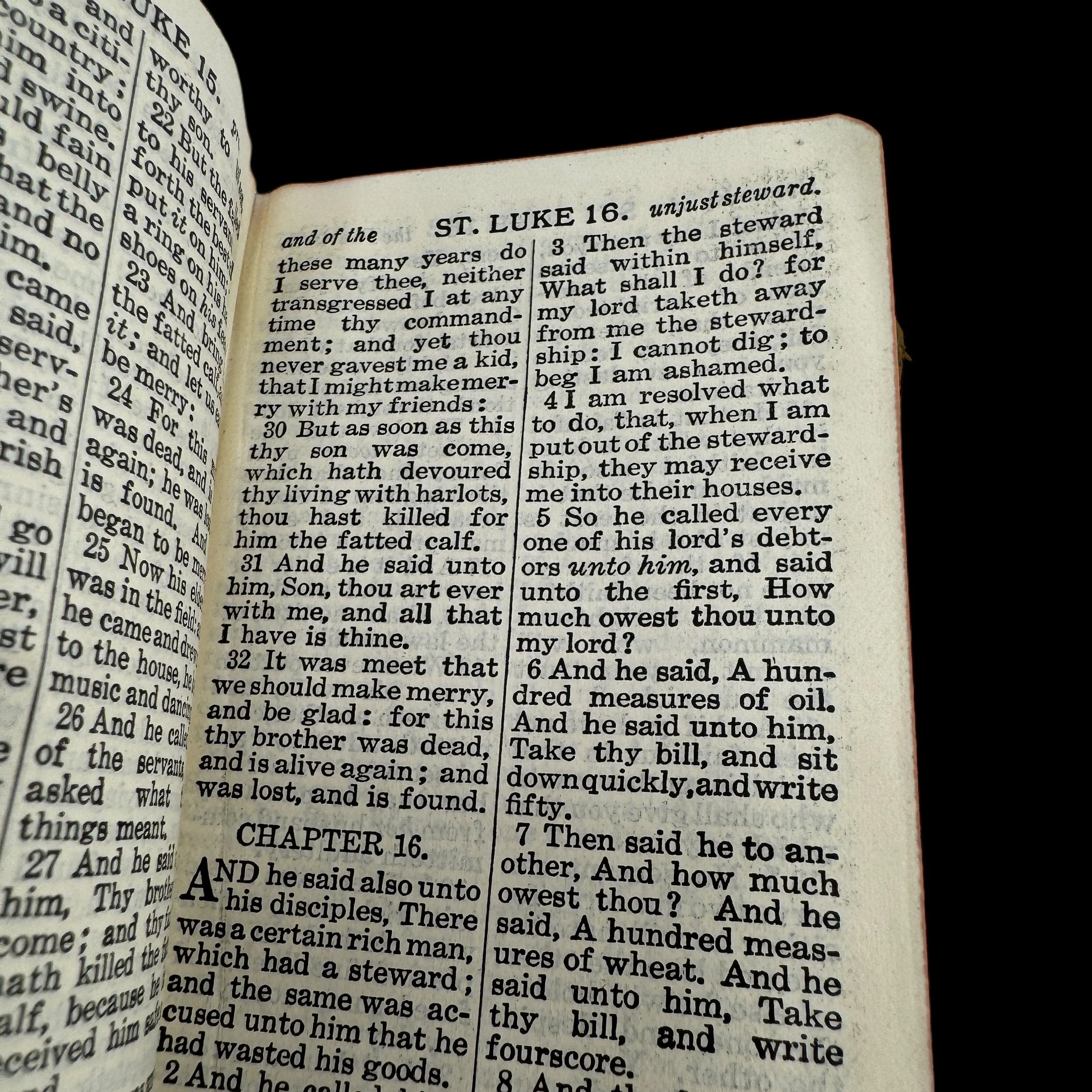
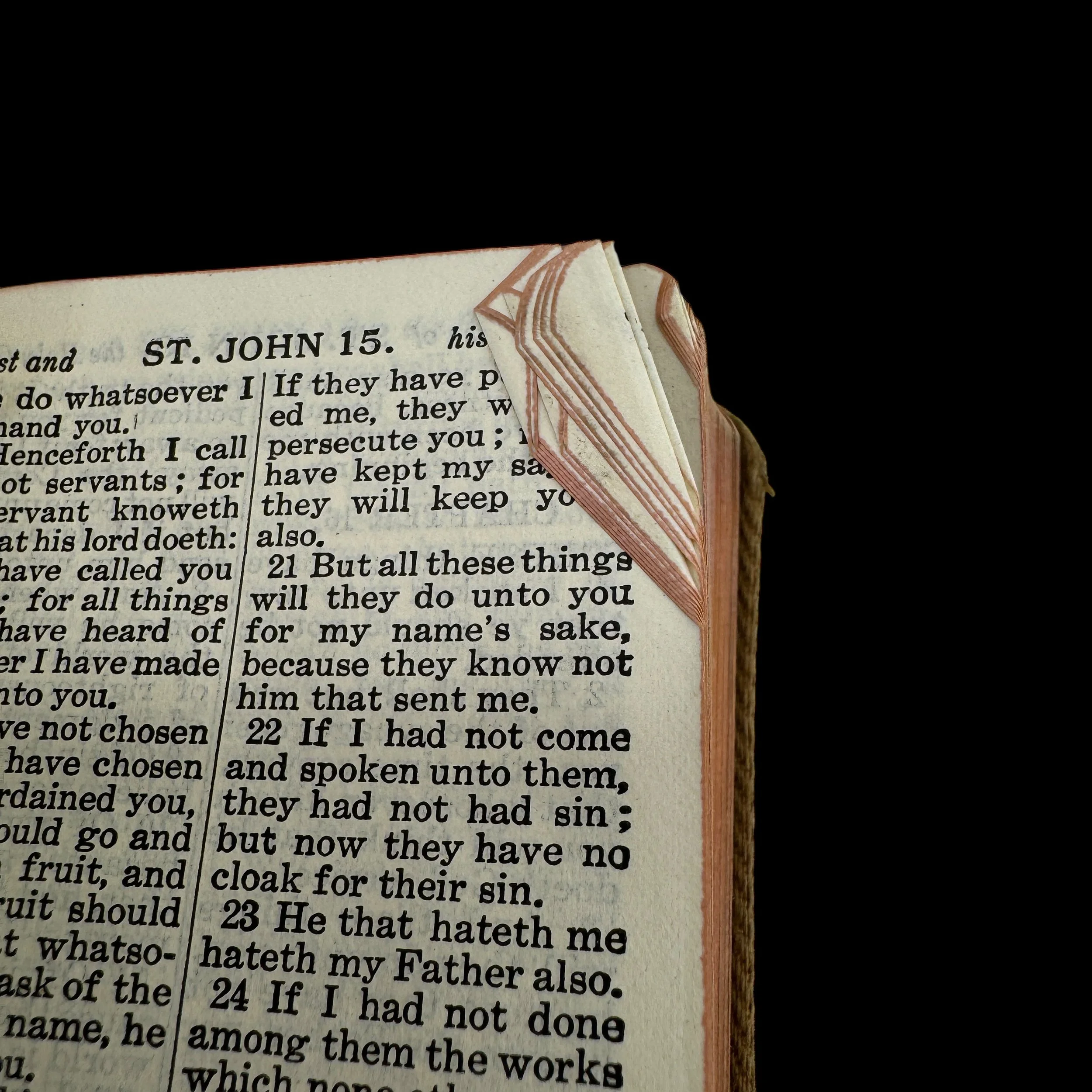
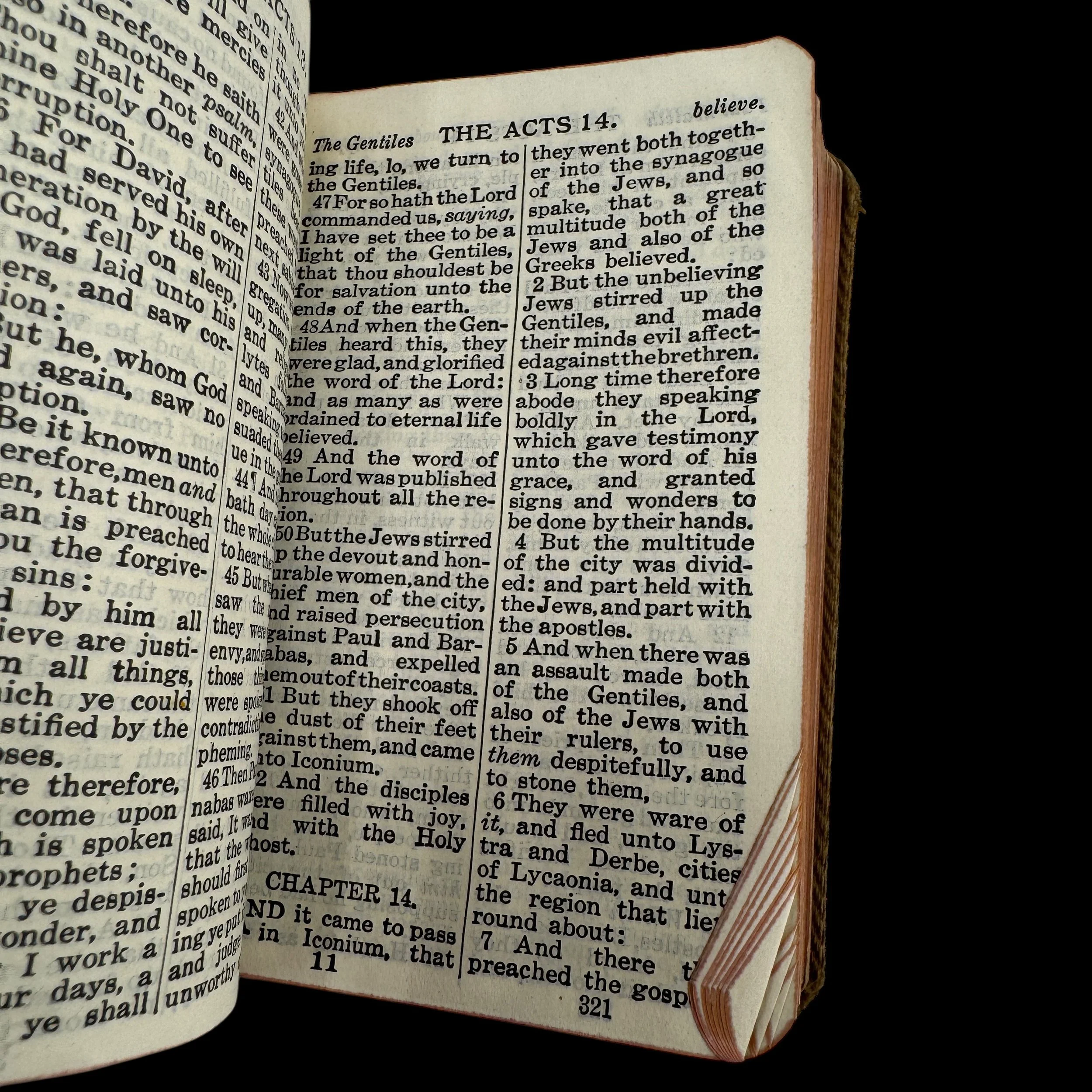
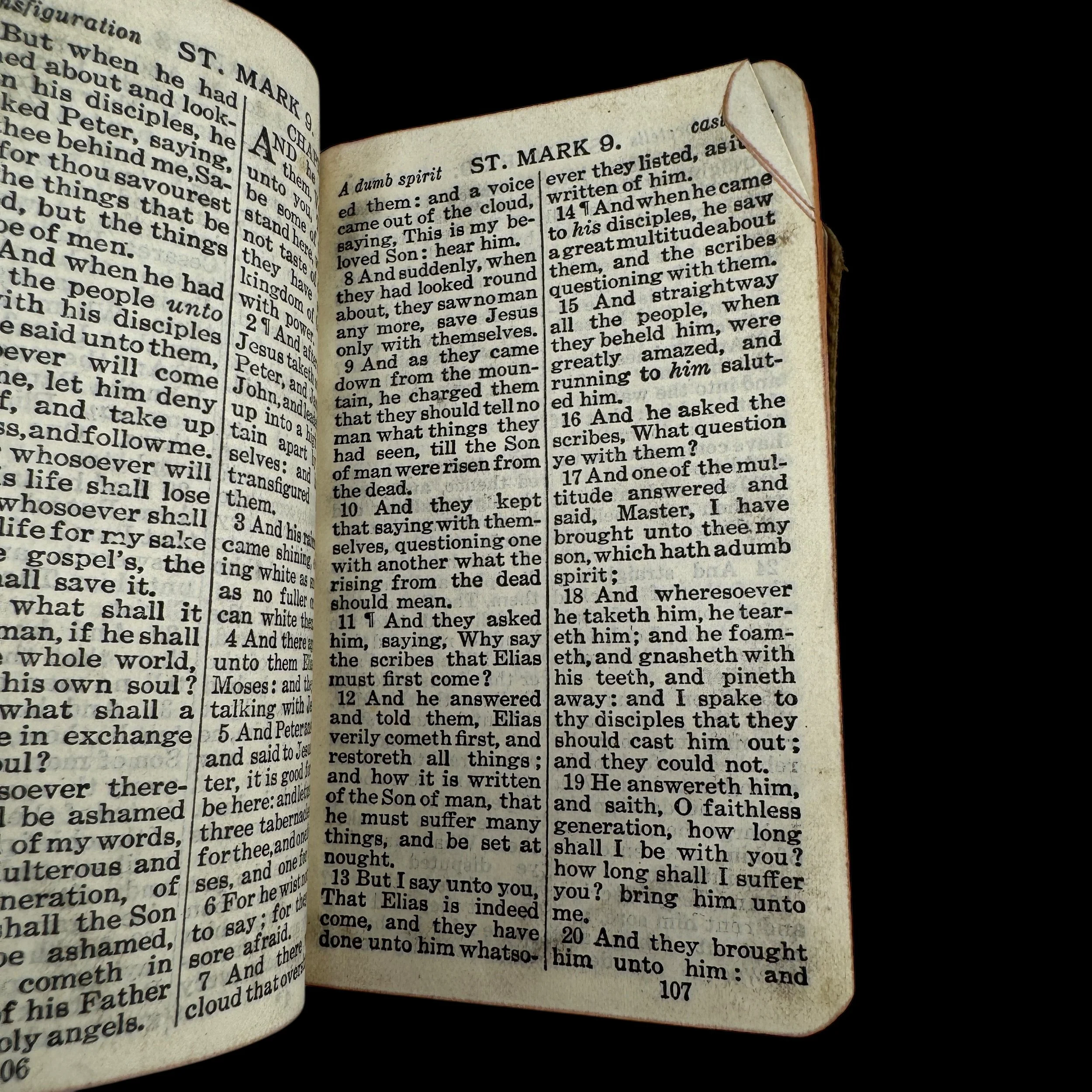
WWI St. Mihiel Offensive 310th Ambulance Company (78th Infantry Division) AEF Soldier's Western Front Combat Bible
Comes with a hand-signed C.O.A.
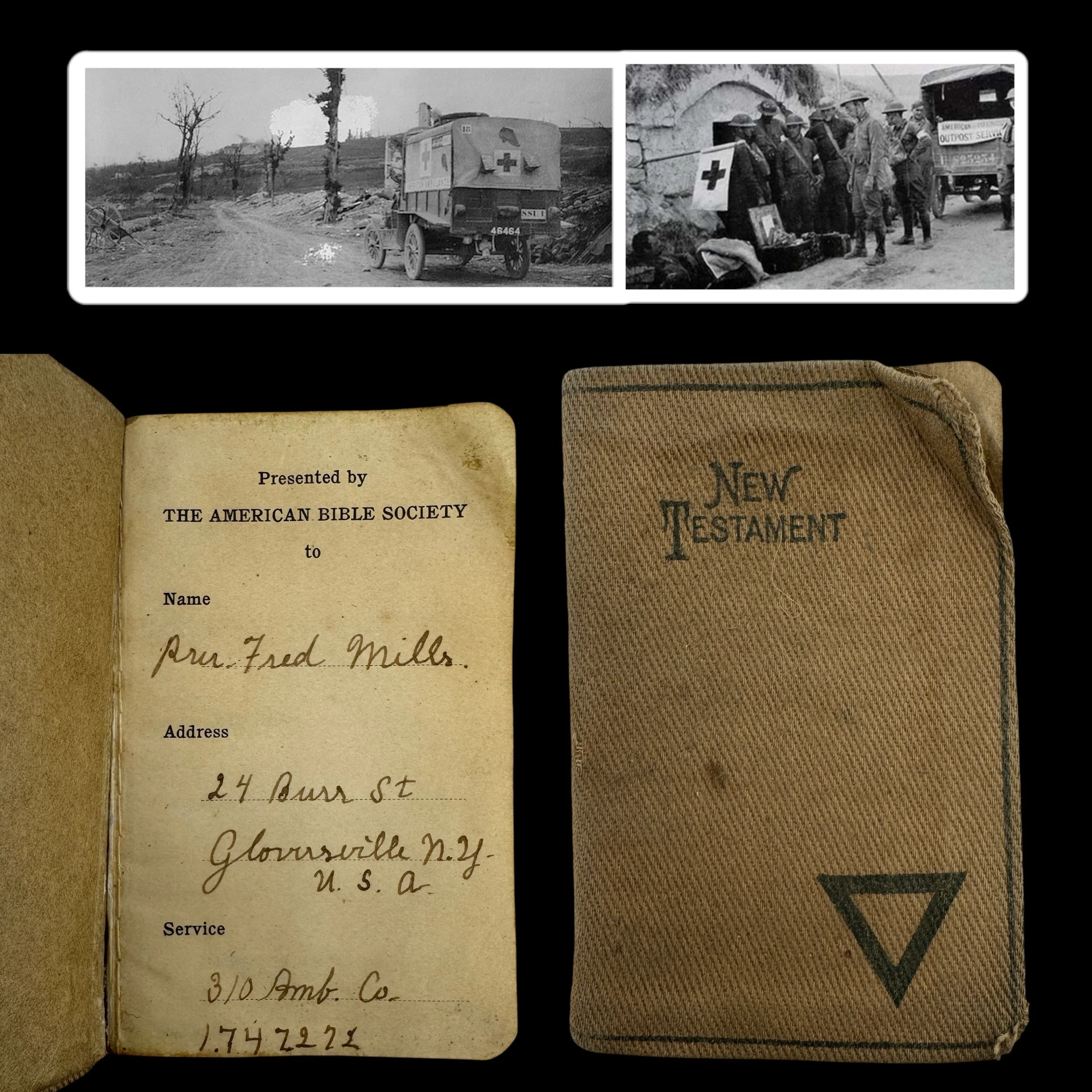
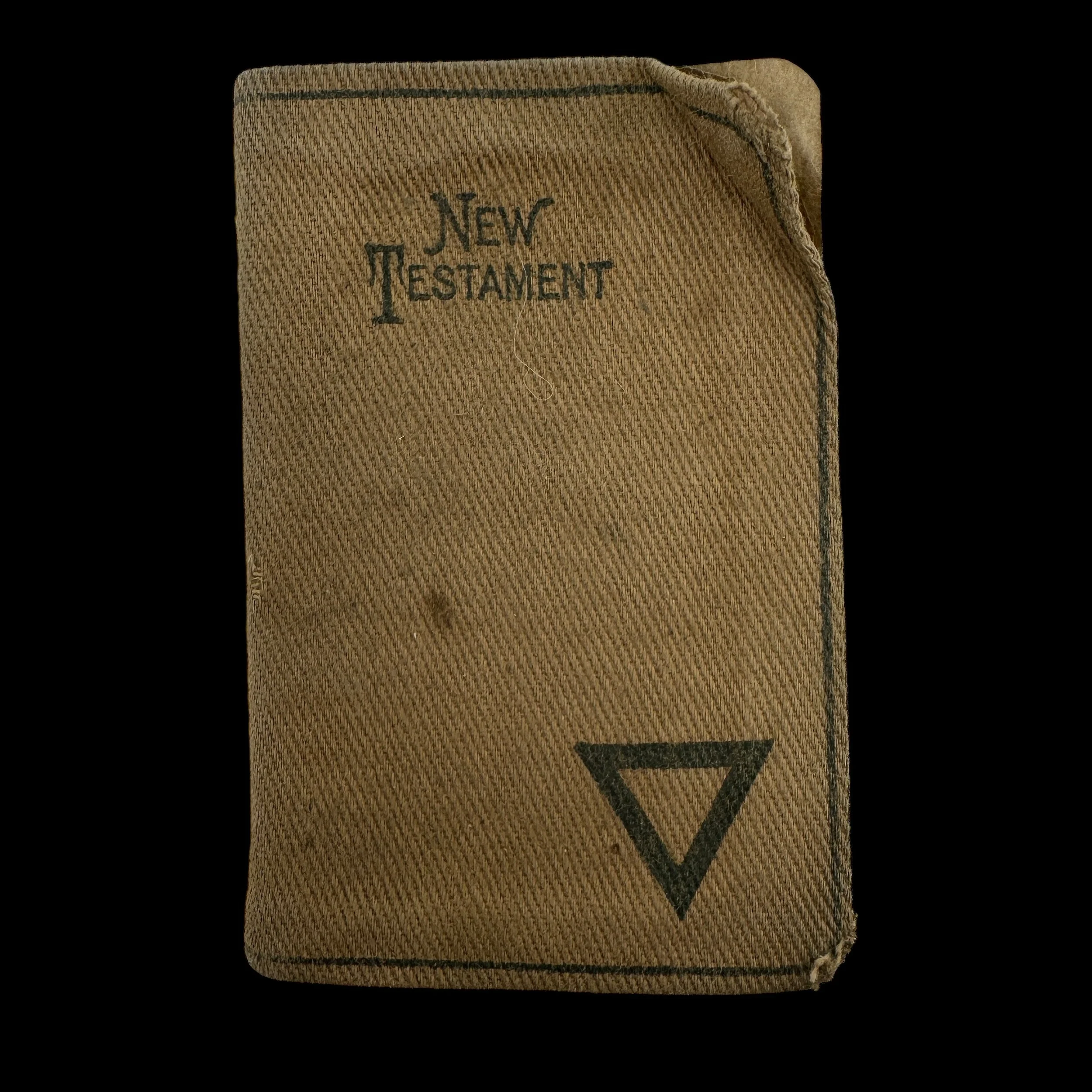
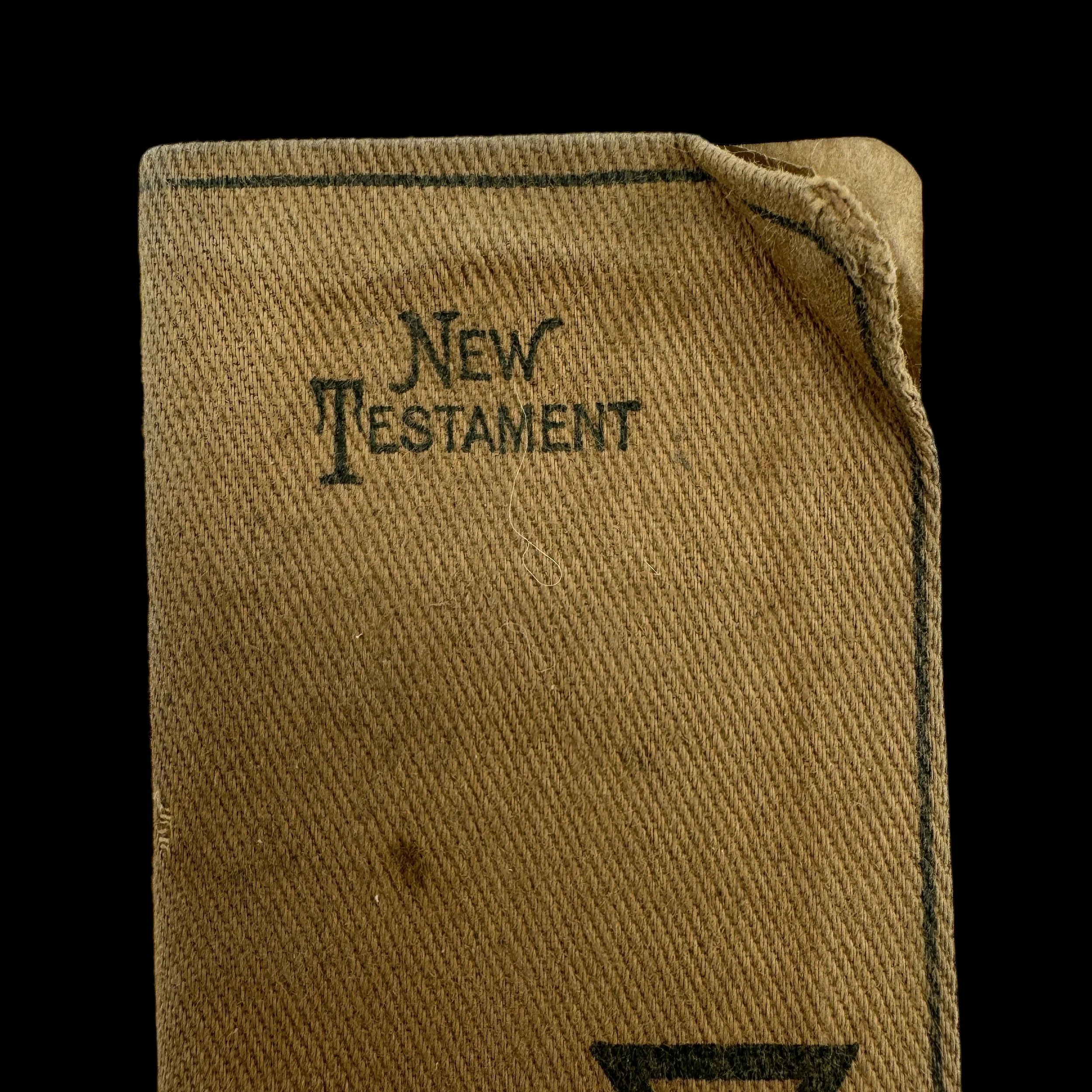
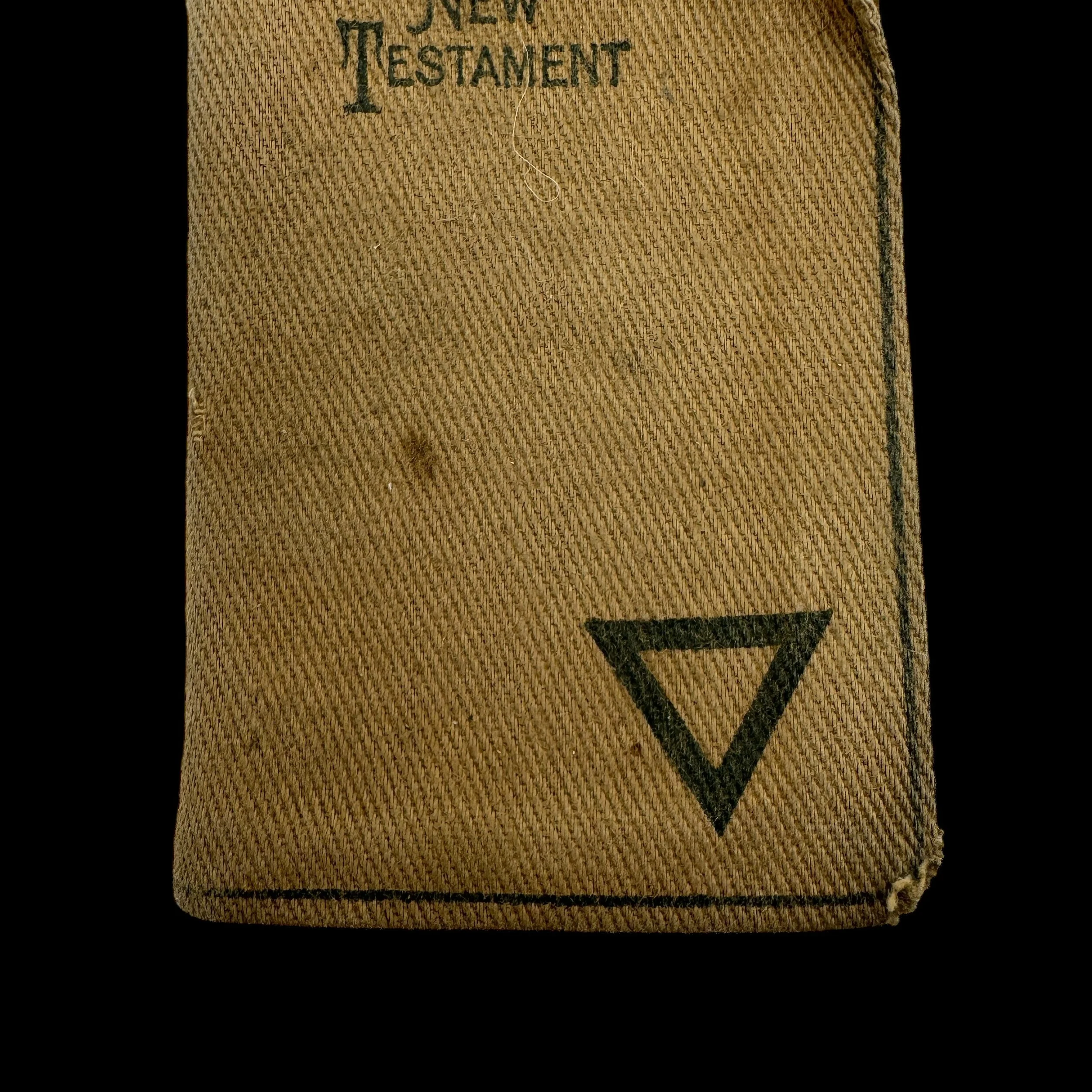
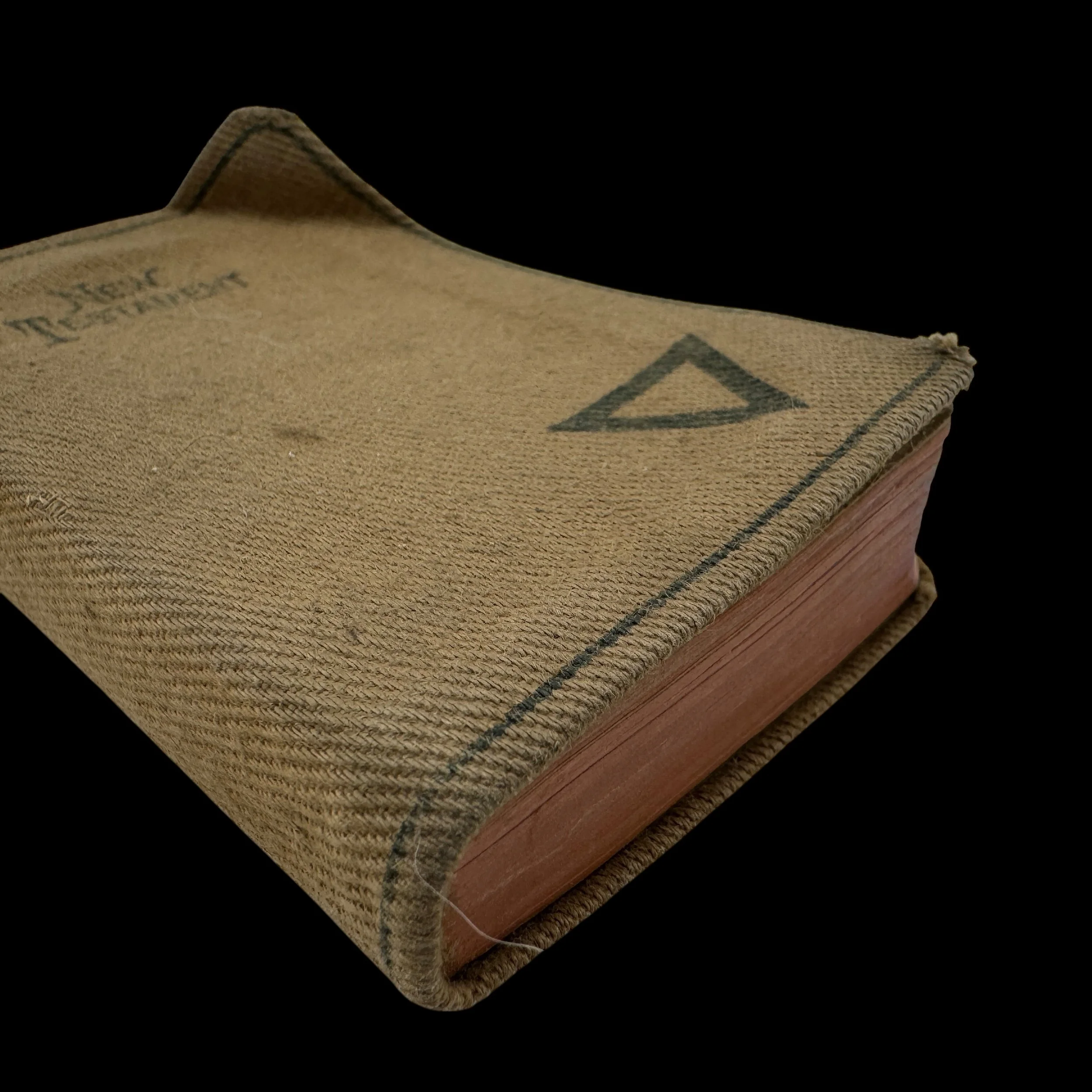
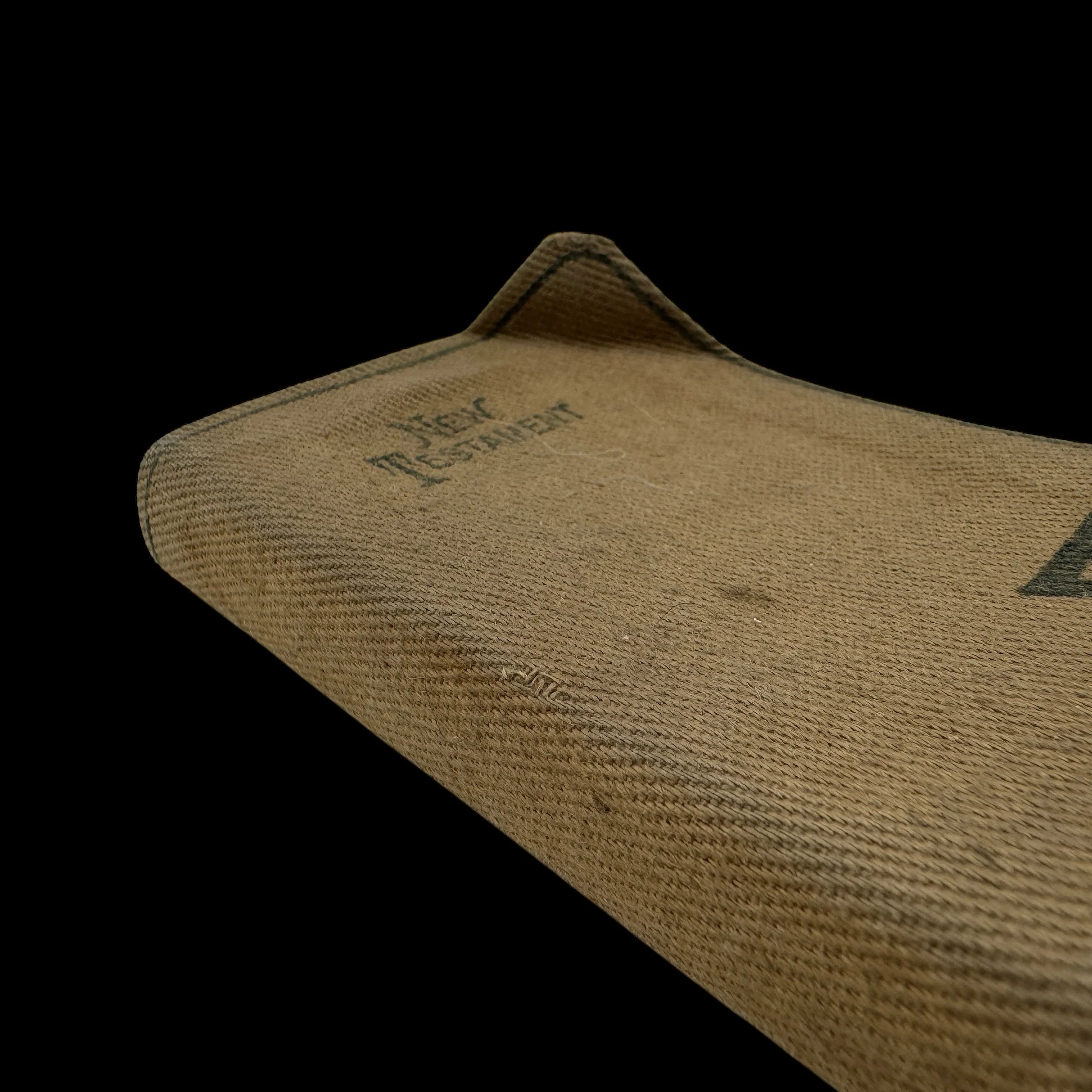
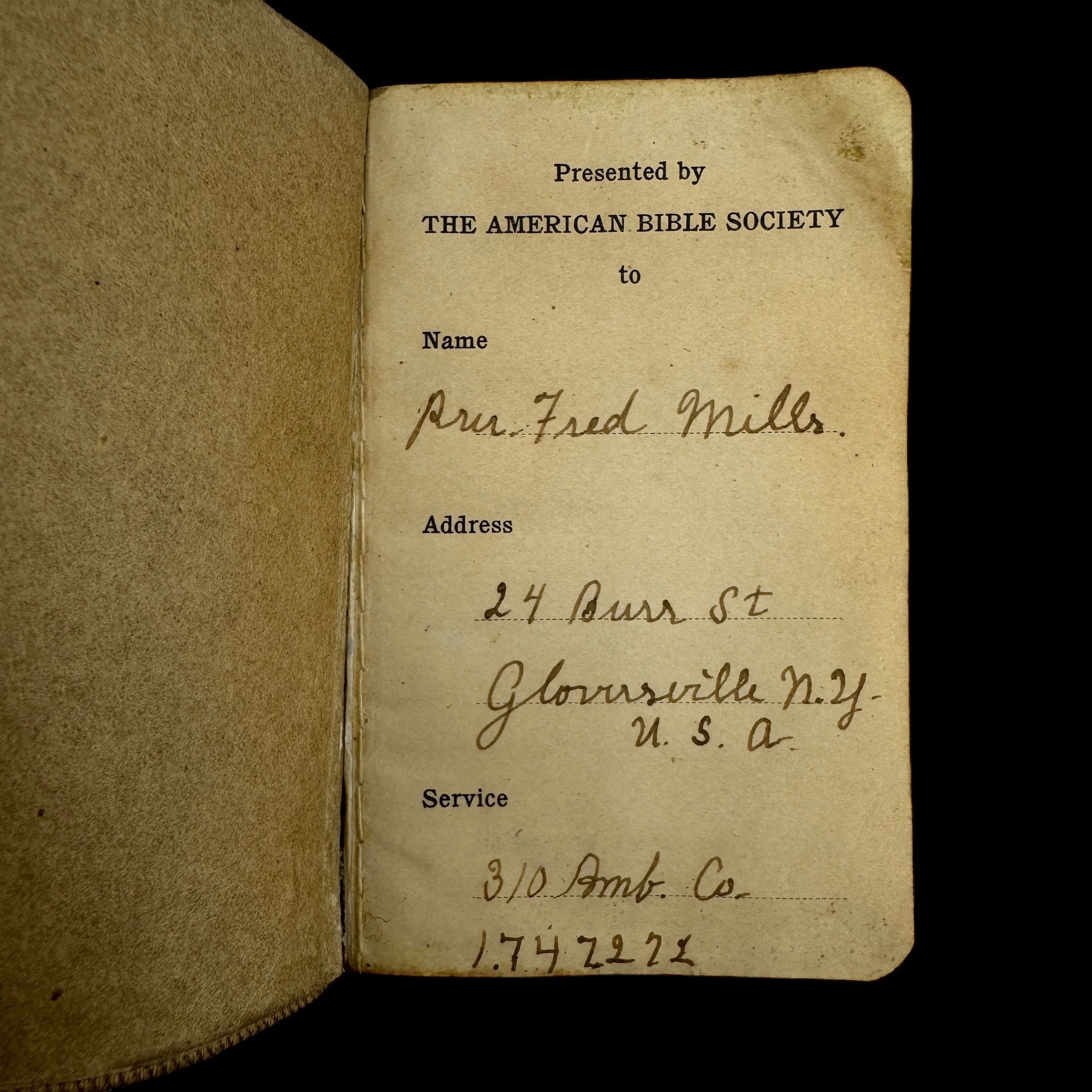
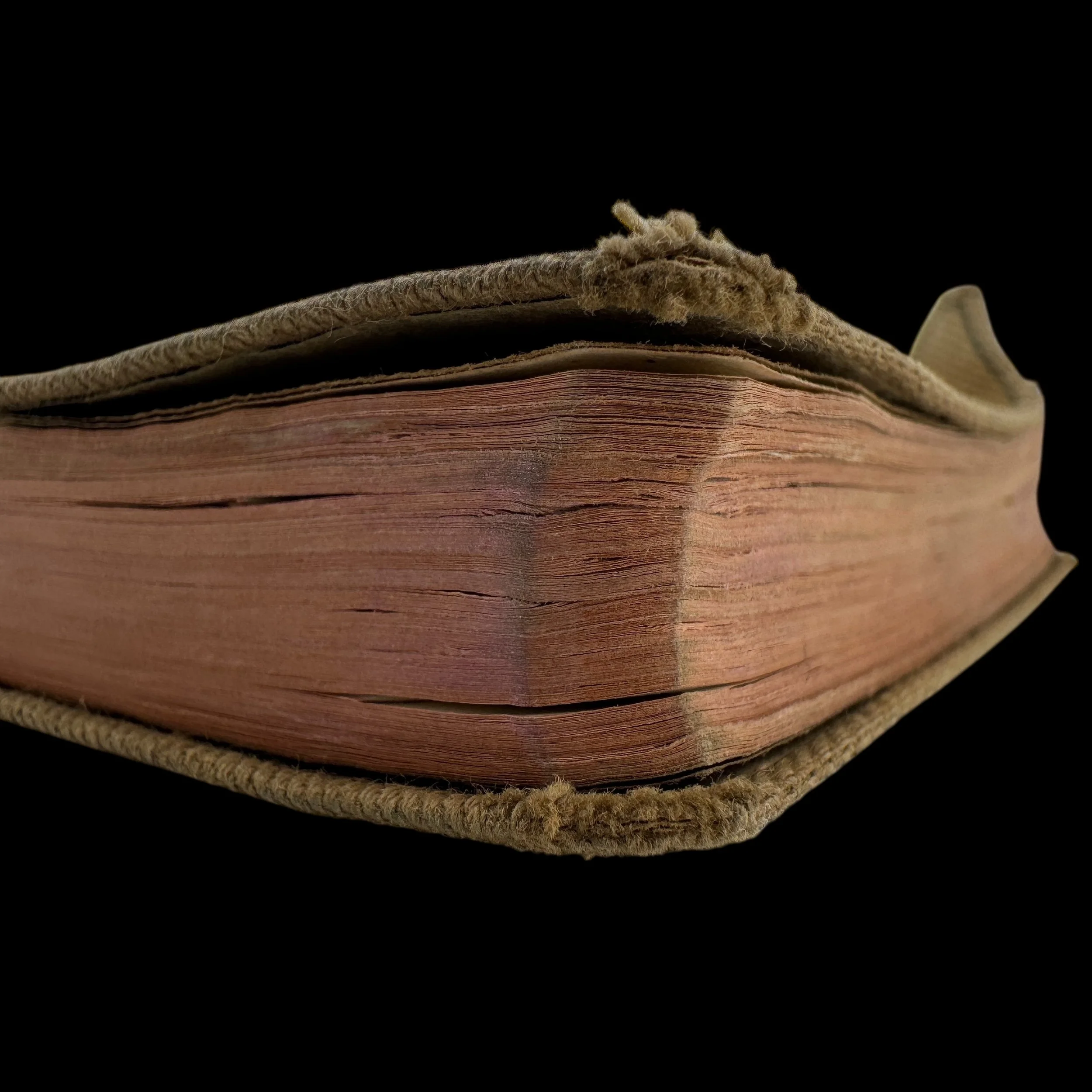
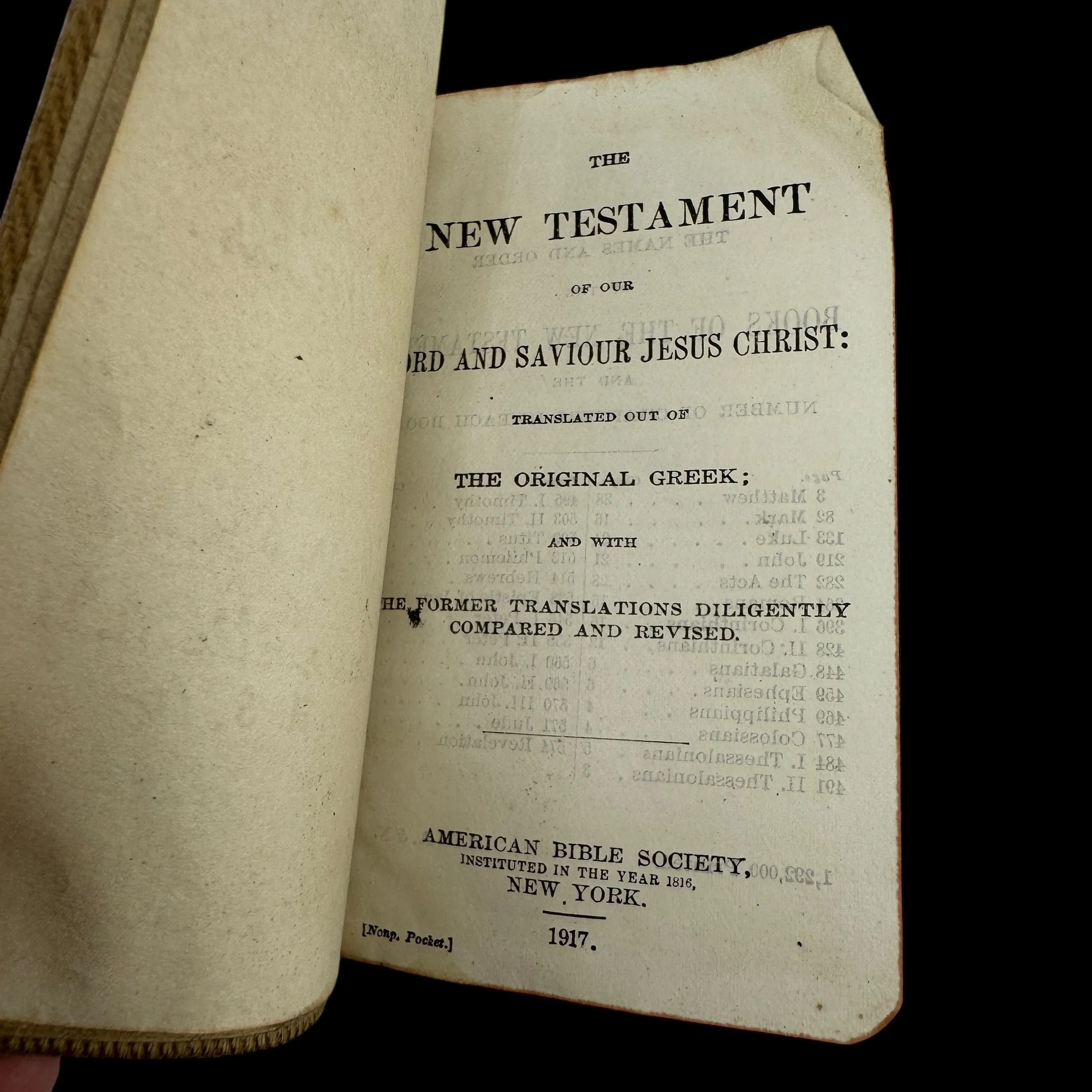
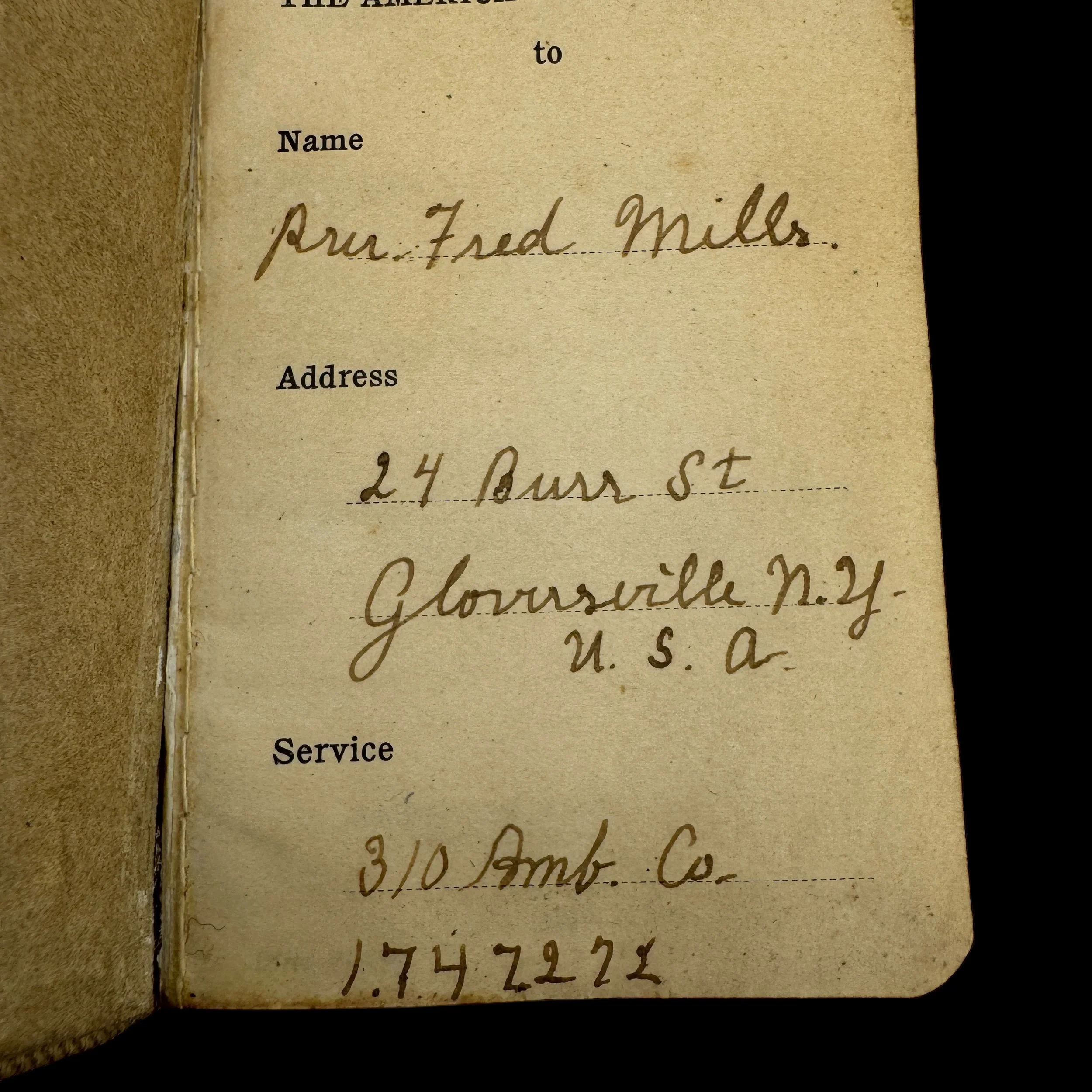
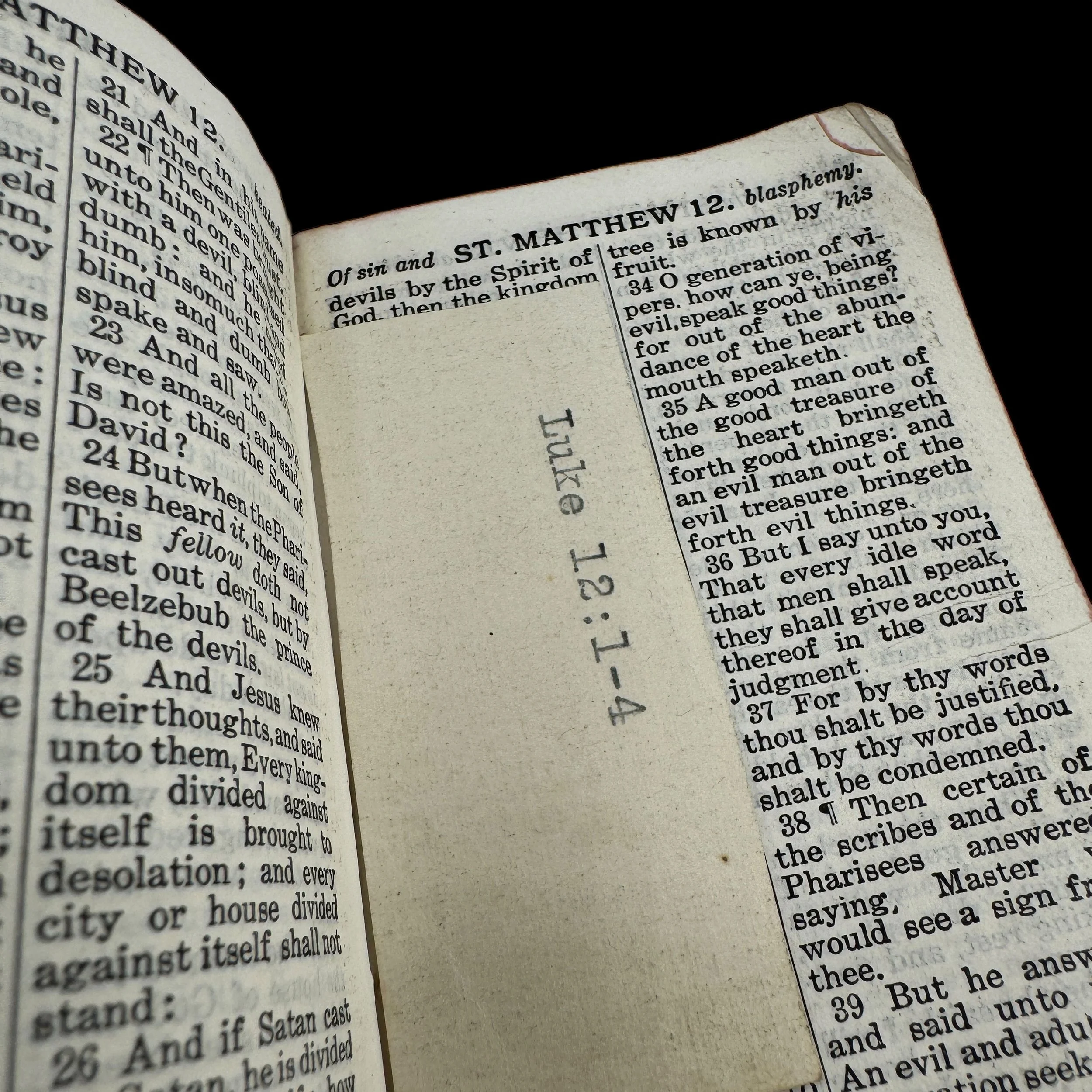
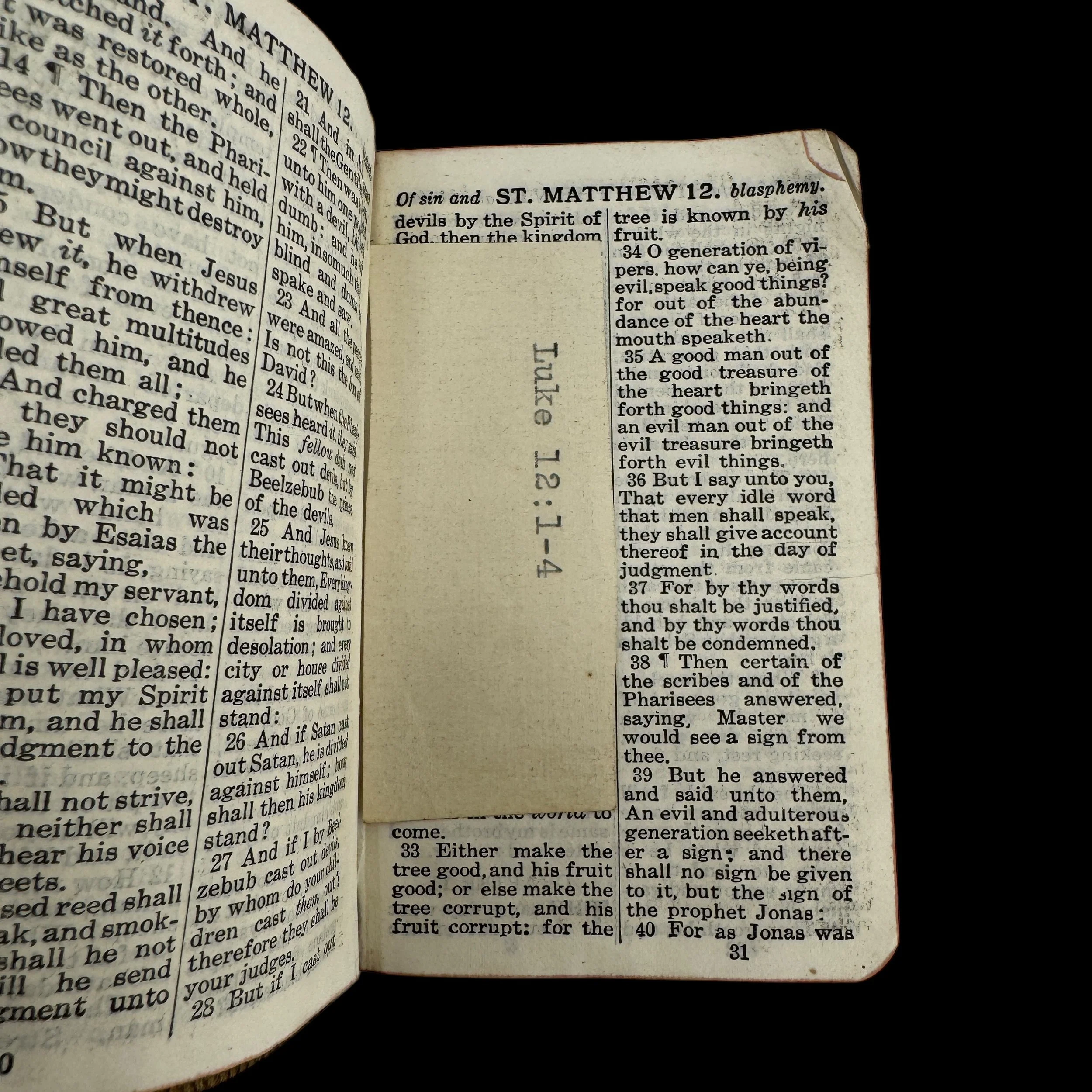
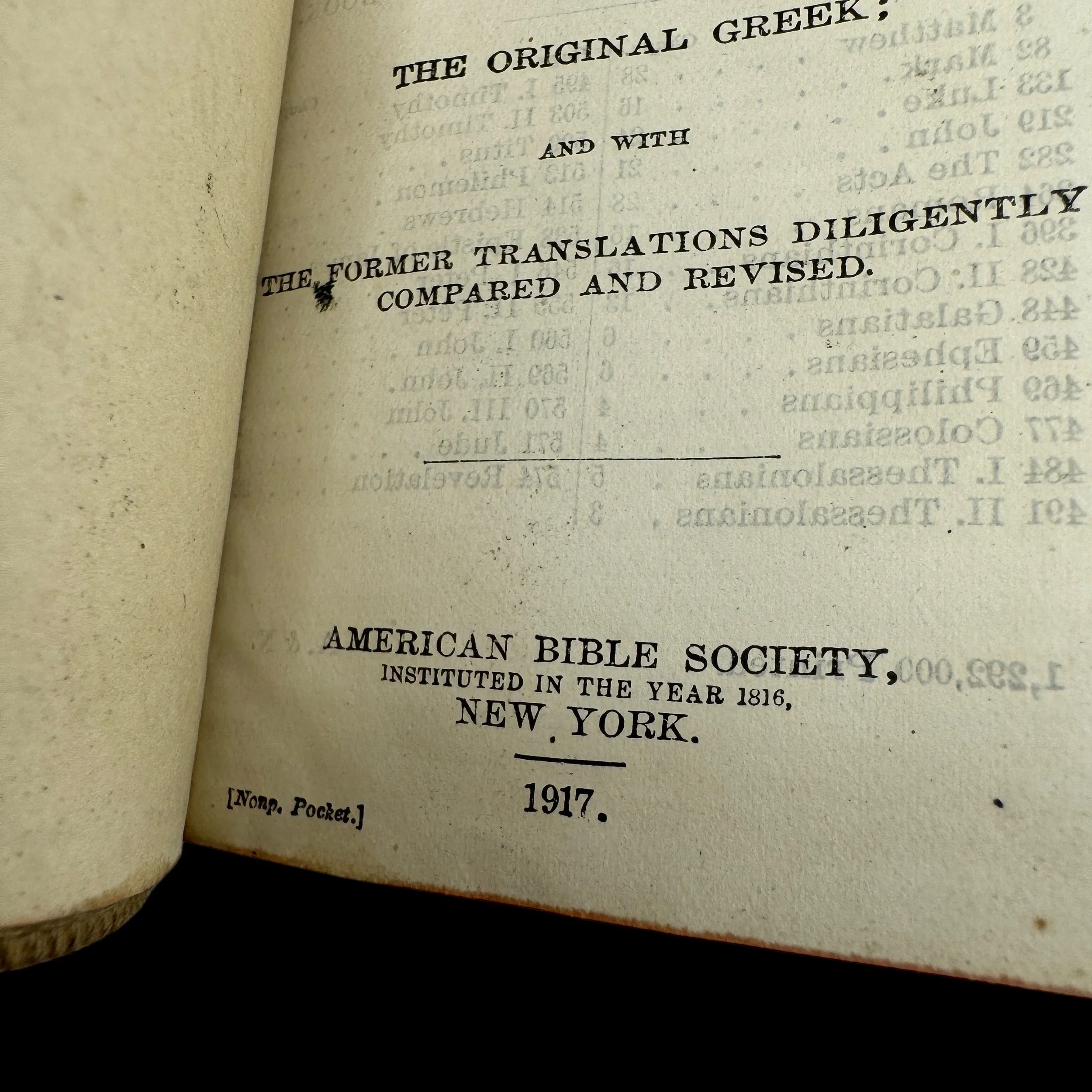
This exceptional World War I artifact stands as a deeply personal witness to the human experience of the Great War. It is an original 1917 American Expeditionary Force New Testament Bible that was carried into active combat on the Western Front during the St. Mihiel Offensive.
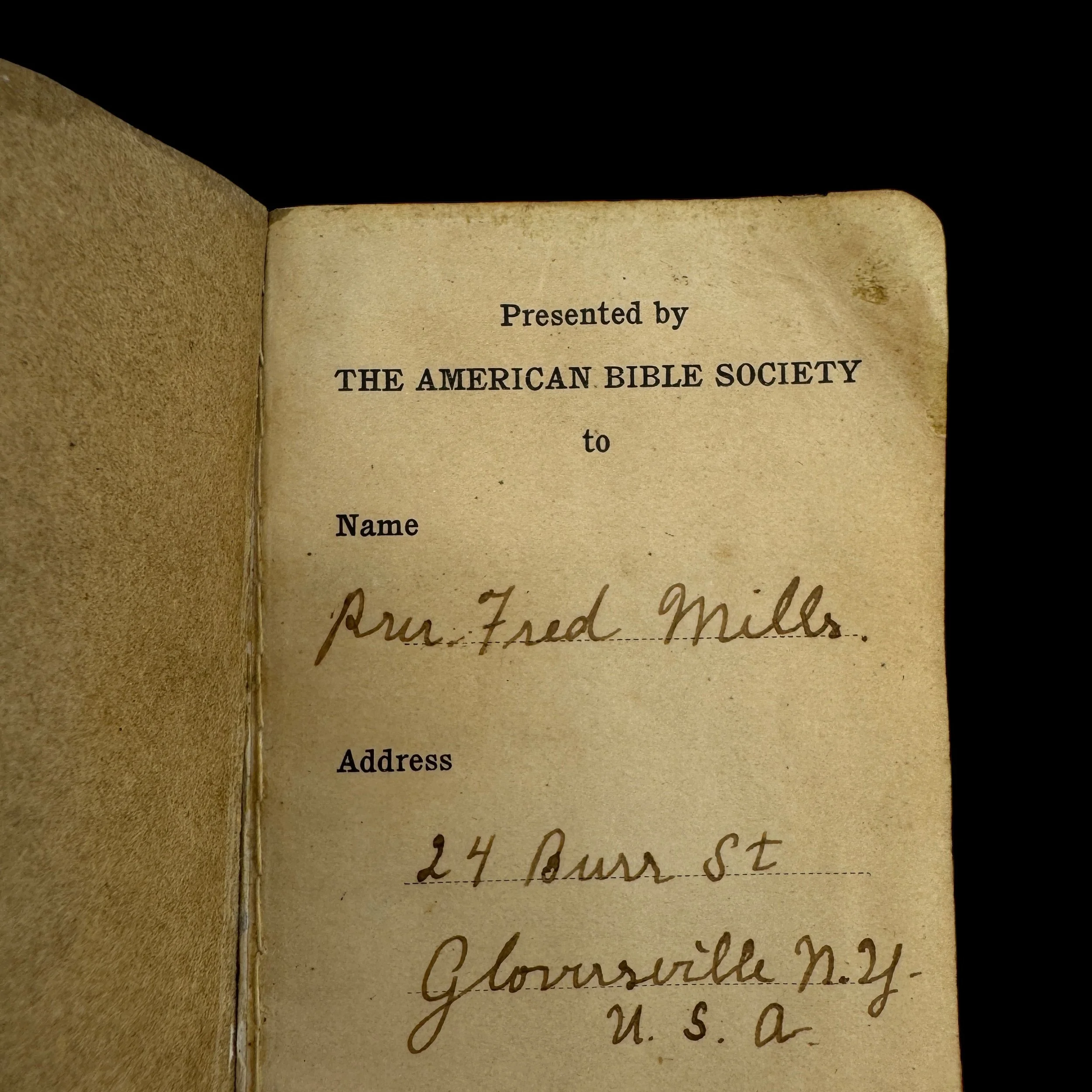
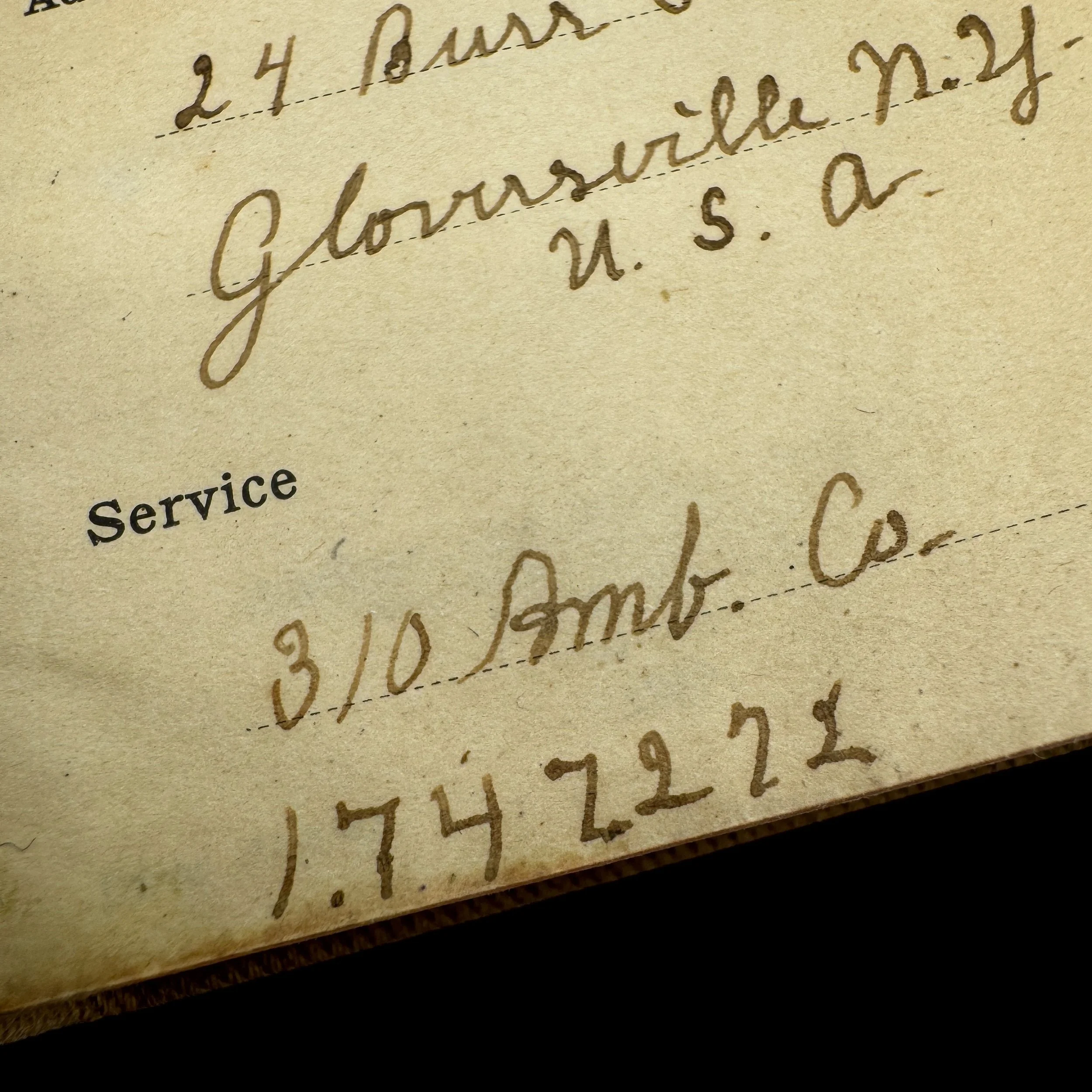
Worn by time and service, this Bible accompanied U.S. Army soldier Fred Mill of the 78th Infantry Division, assigned to the 310th Ambulance Company (famously known during the Great War for evacuating 6,000 men near Villers-Daucourt during the St. Mihiel Offensive.) It was present in the trenches, along shell torn roads, and amid the chaos of battlefield evacuations where survival often depended on minutes and courage. Issued in 1917, this New Testament reflects the spiritual lifeline carried by countless American soldiers deployed overseas with the American Expeditionary Force. Such Bibles were compact, intentionally designed to be carried in a tunic pocket, pack, or medical satchel. They offered solace during long nights under bombardment and moments of quiet reflection between evacuations. Surviving examples that can be firmly attributed to frontline medical units are exceptionally rare, particularly those with direct association to major combat operations.
Fred Mill served with the 310th Ambulance Company, a unit formed on July 1, 1917, and attached to the 78th Infantry Division. After training in the United States, the company sailed for Europe aboard the RMS Mauretania, arriving in France in June 1918. Within weeks, they were pushed rapidly toward the front, where the demands of modern industrial warfare tested every man and machine.
The 310th Ambulance Company and the Reality of Frontline Medicine:
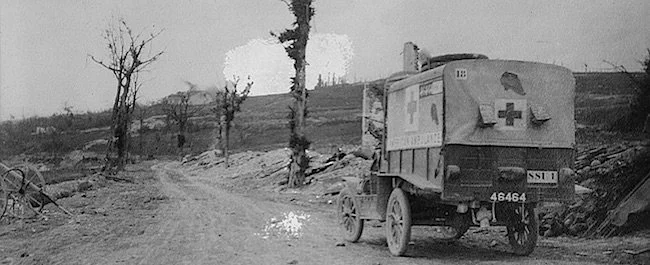
Ambulance Company 310 operated as part of the United States Army Ambulance Service, a critical logistical and humanitarian arm of the American war effort. Their mission was simple in concept but perilous in execution. They transported wounded soldiers from advanced triage points to field hospitals and evacuation centers. This work was carried out under constant threat from artillery fire, gas attacks, and collapsing terrain.
The company utilized a combination of horse drawn ambulances and early motorized vehicles, navigating cratered roads at night to avoid enemy observation. Drivers often worked without headlights, relying on memory and instinct. Shellfire could strike without warning. Concussive blasts were powerful enough to lift men from their seats or overturn vehicles. Despite these dangers, Ambulance Company 310 maintained its operations with remarkable effectiveness and discipline.
The St. Mihiel Offensive and Villers Daucourt:
The defining chapter in the service history of the 310th Ambulance Company occurred during the St. Mihiel Offensive in September 1918. This was the first large scale offensive led primarily by American forces. The fighting was intense and fast moving, producing an overwhelming number of casualties in a short period of time.
Near Villers Daucourt, the company played a vital role in evacuating approximately six thousand wounded men. Ambulance drivers and medical personnel worked continuously, often through the night, moving casualties from forward areas near Vitrey and Pagny sur Meuse to safer medical facilities. The roads were crowded, the air was thick with smoke, and artillery fire was constant. In one particularly intense episode, explosions were so close that men were thrown by concussion. Remarkably, the company avoided fatalities during this moment, a testament to both skill and fortune.
Life After the Armistice:
Following the Armistice in November 1918, Ambulance Company 310 relocated to Semur. For the first time in months, the relentless pace slowed. Soldiers were granted leave, equipment was turned in, and the long process of demobilization began. The 78th Infantry Division officially demobilized in June 1919, bringing an end to the unit’s wartime service.
Significance of the Bible:
This New Testament Bible is more than a devotional object. It is a frontline artifact that represents faith carried into danger, compassion exercised under fire, and the unseen labor that saved thousands of lives. Medical units rarely received the same recognition as infantry or artillery formations, yet their work was indispensable. Without them, countless wounded soldiers would never have returned home.
Museum grade artifacts directly associated with identified American ambulance units from World War I are extraordinarily scarce. This example, tied to a named soldier, a specific unit, and a documented major offensive, stands as a powerful primary source. It embodies the quiet resilience of those who ran toward suffering rather than away from it.
In every sense, this Bible is a tangible survivor of the Western Front. It preserves the story of service not defined by weapons, but by mercy, endurance, and the determination to save lives amid one of the most destructive conflicts in human history.