RARE! WWII 1945 Eighth Air Force B-17 Flying Fortress München (Munich) & Nürnberg 8th Air Force Combat FLAK MAP (Heavily Used)
RARE! WWII 1945 Eighth Air Force B-17 Flying Fortress München (Munich) & Nürnberg 8th Air Force Combat FLAK MAP (Heavily Used)
Comes with a hand-signed C.O.A.
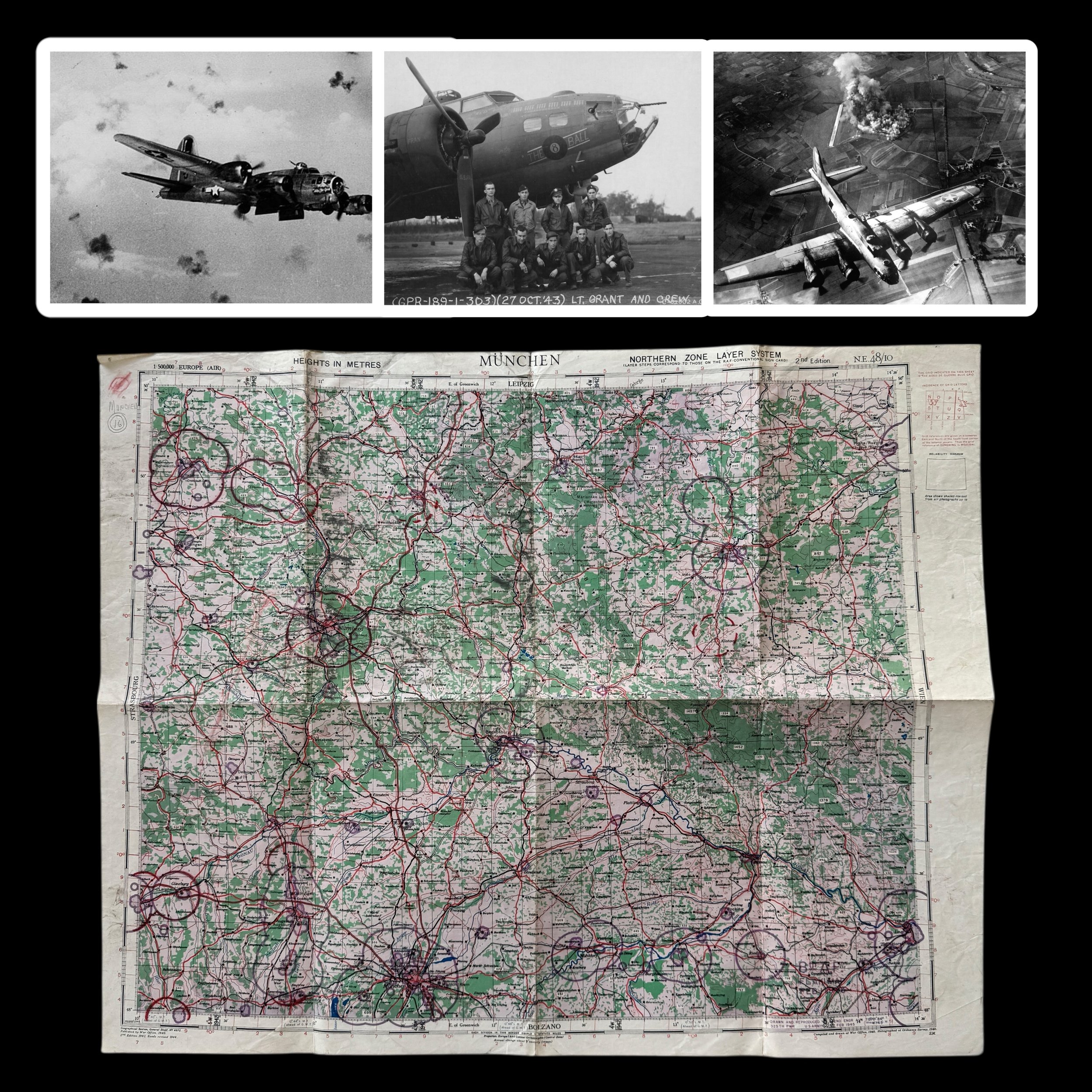
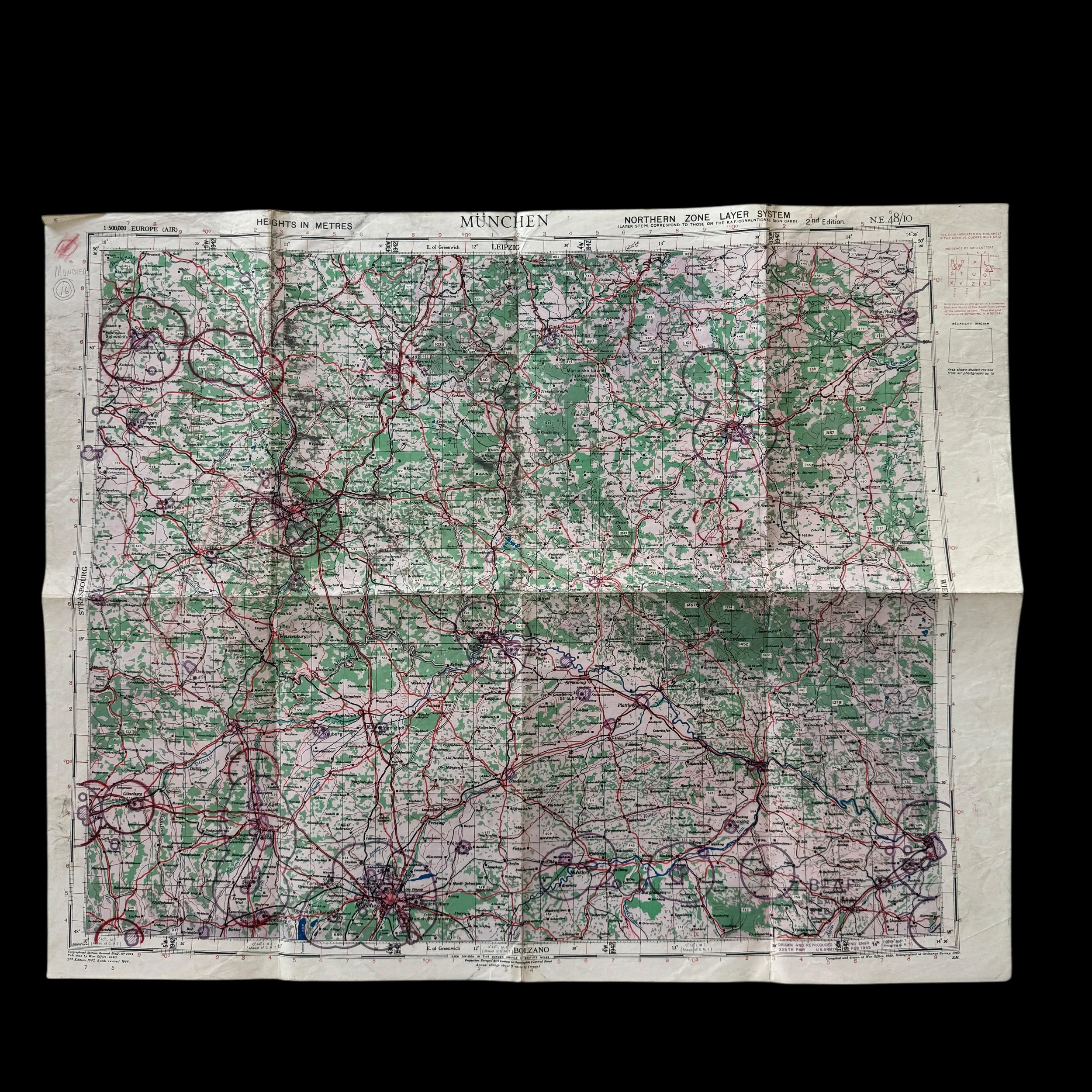
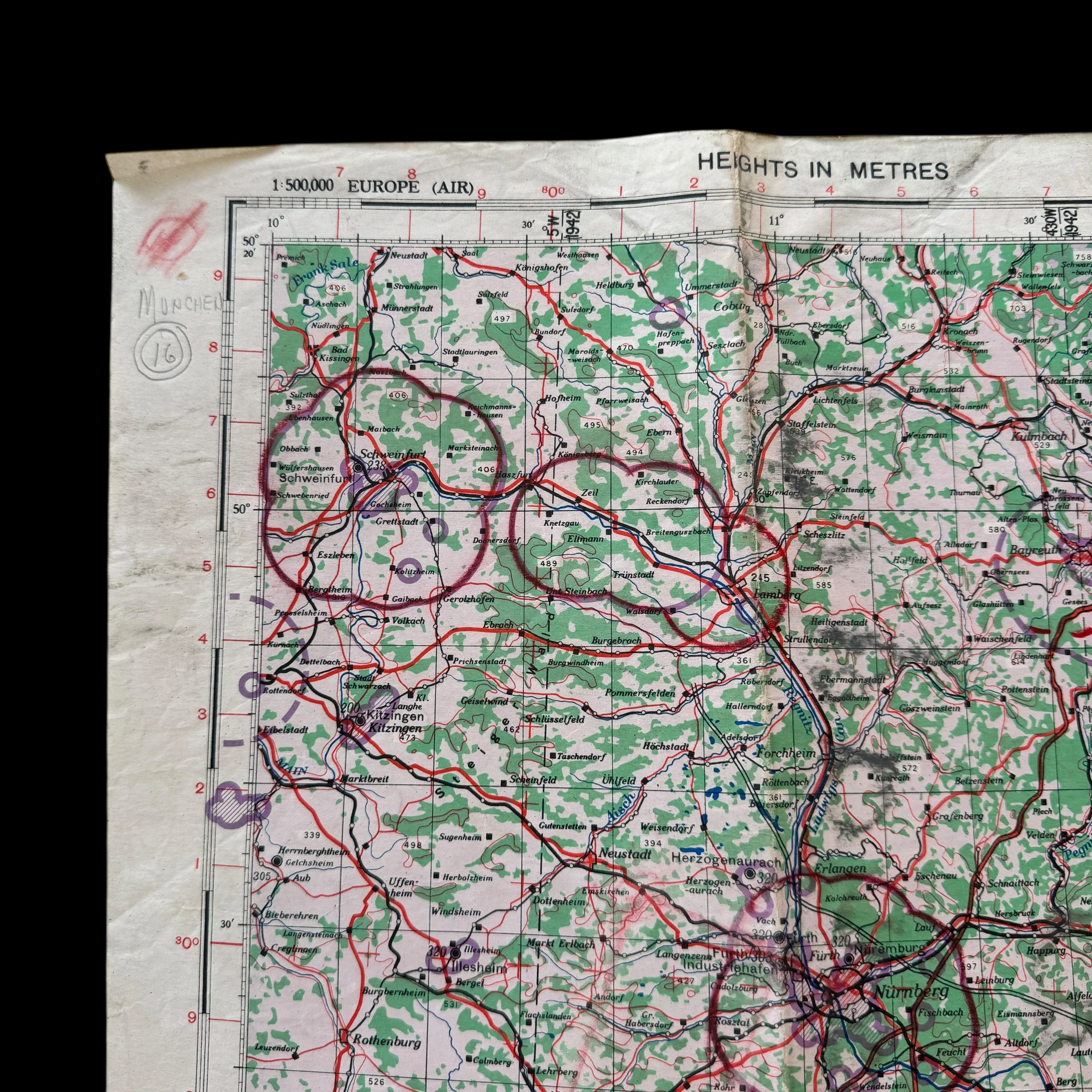
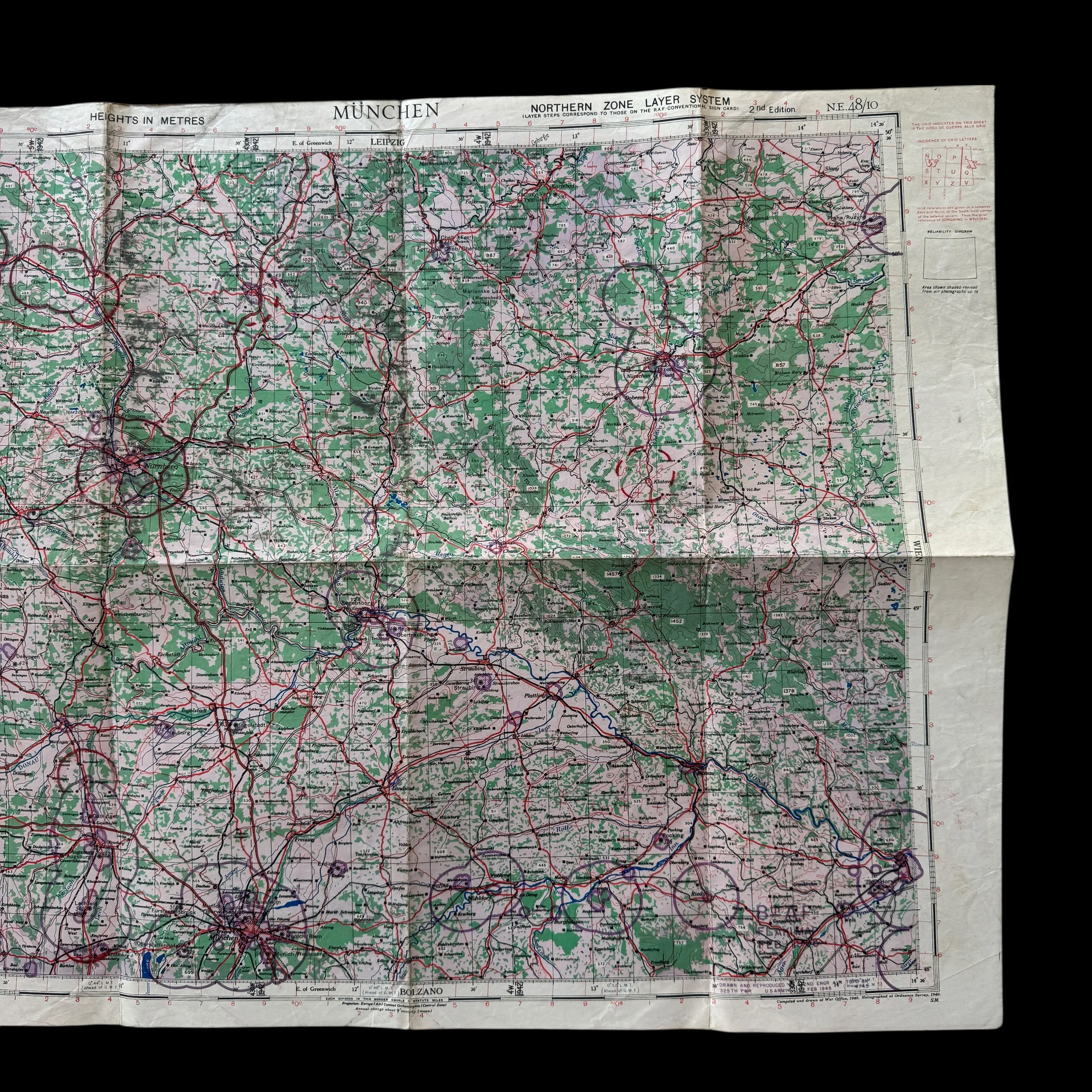
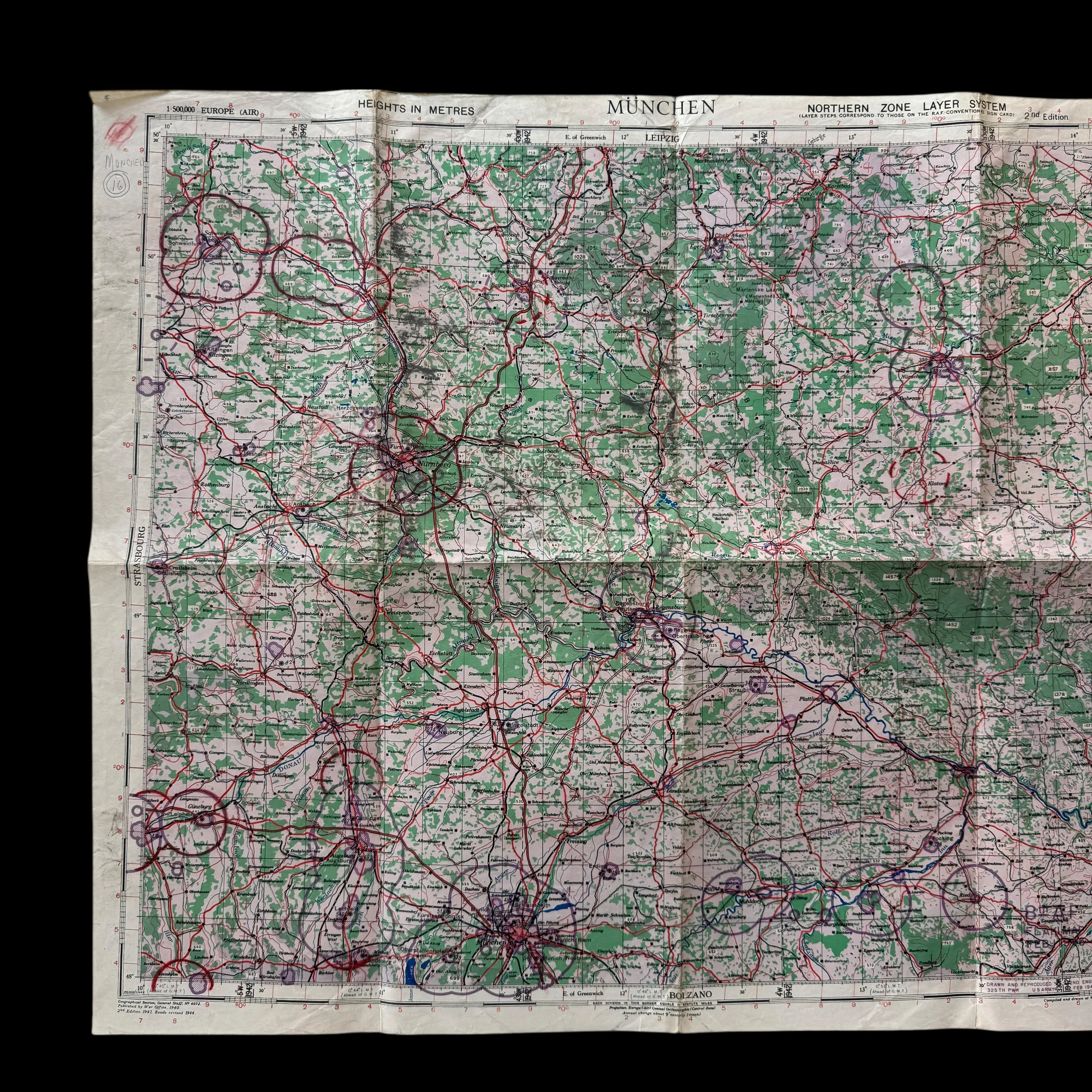
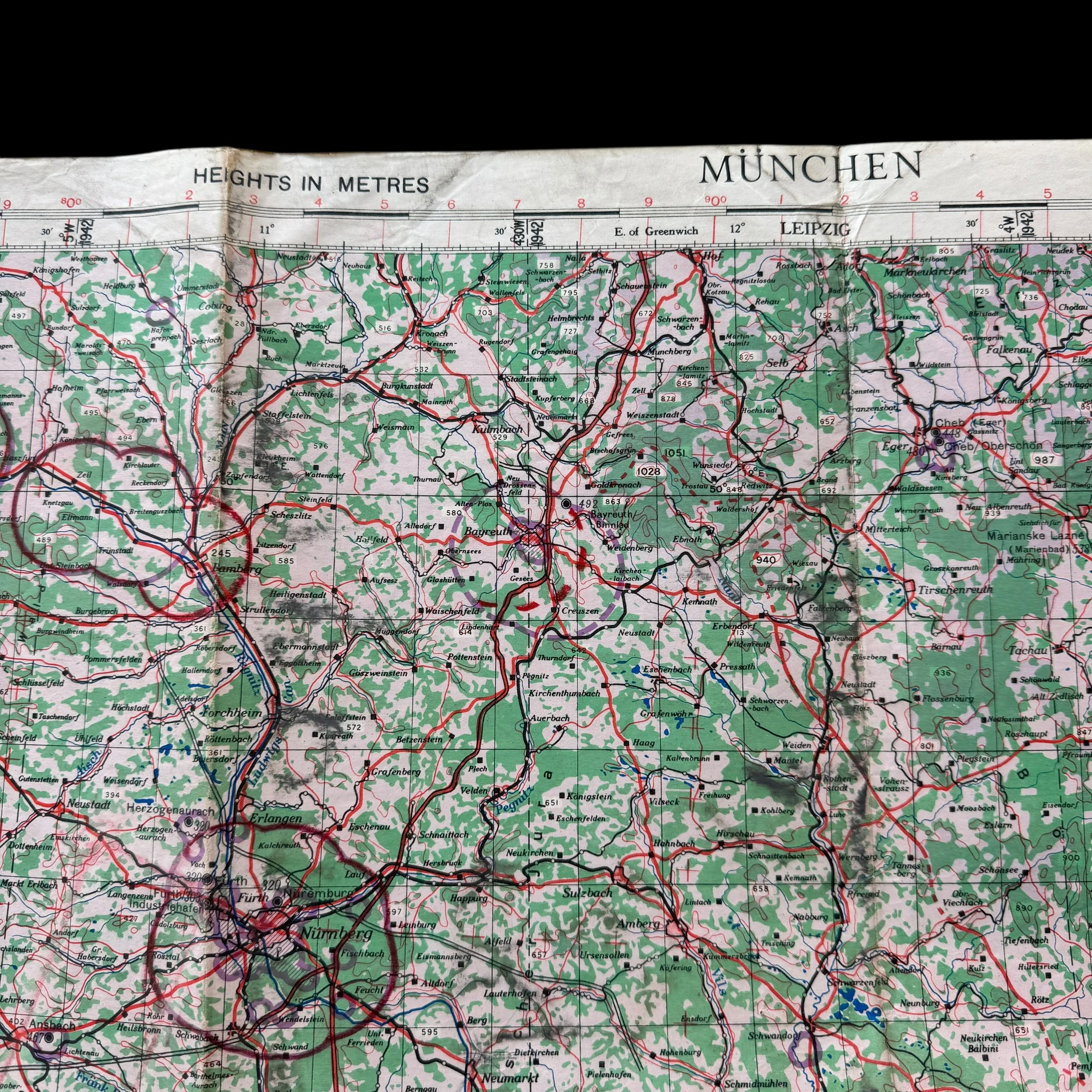
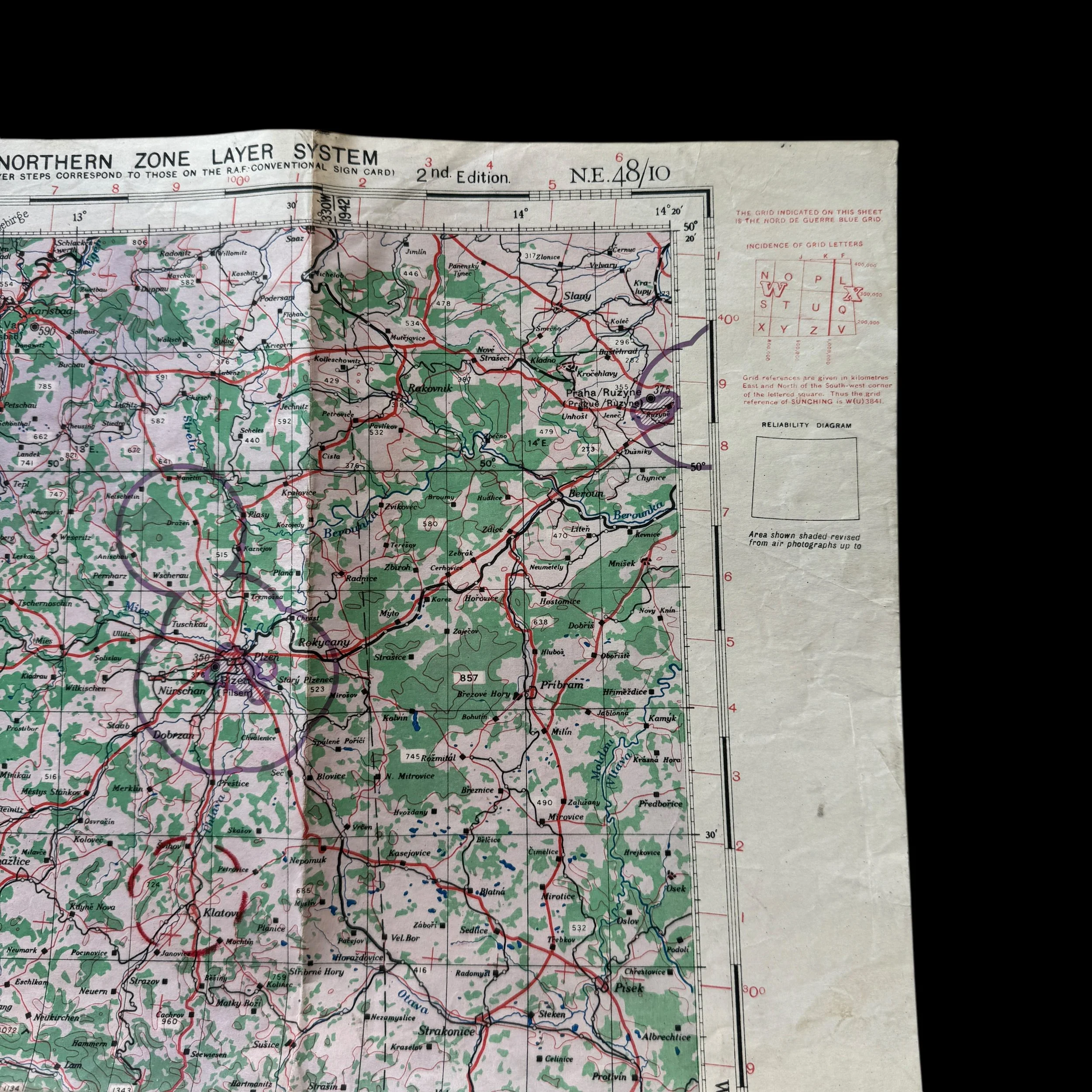
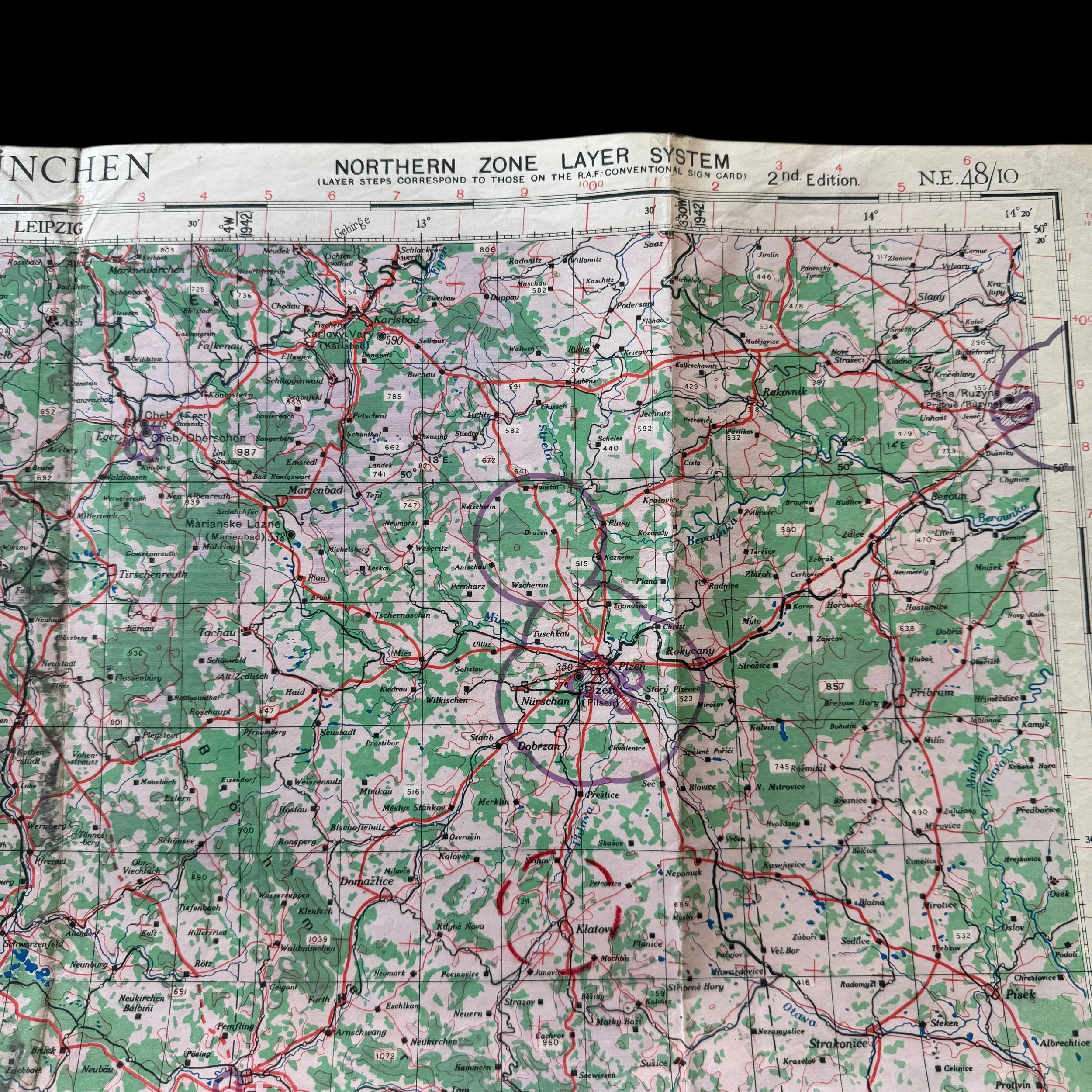
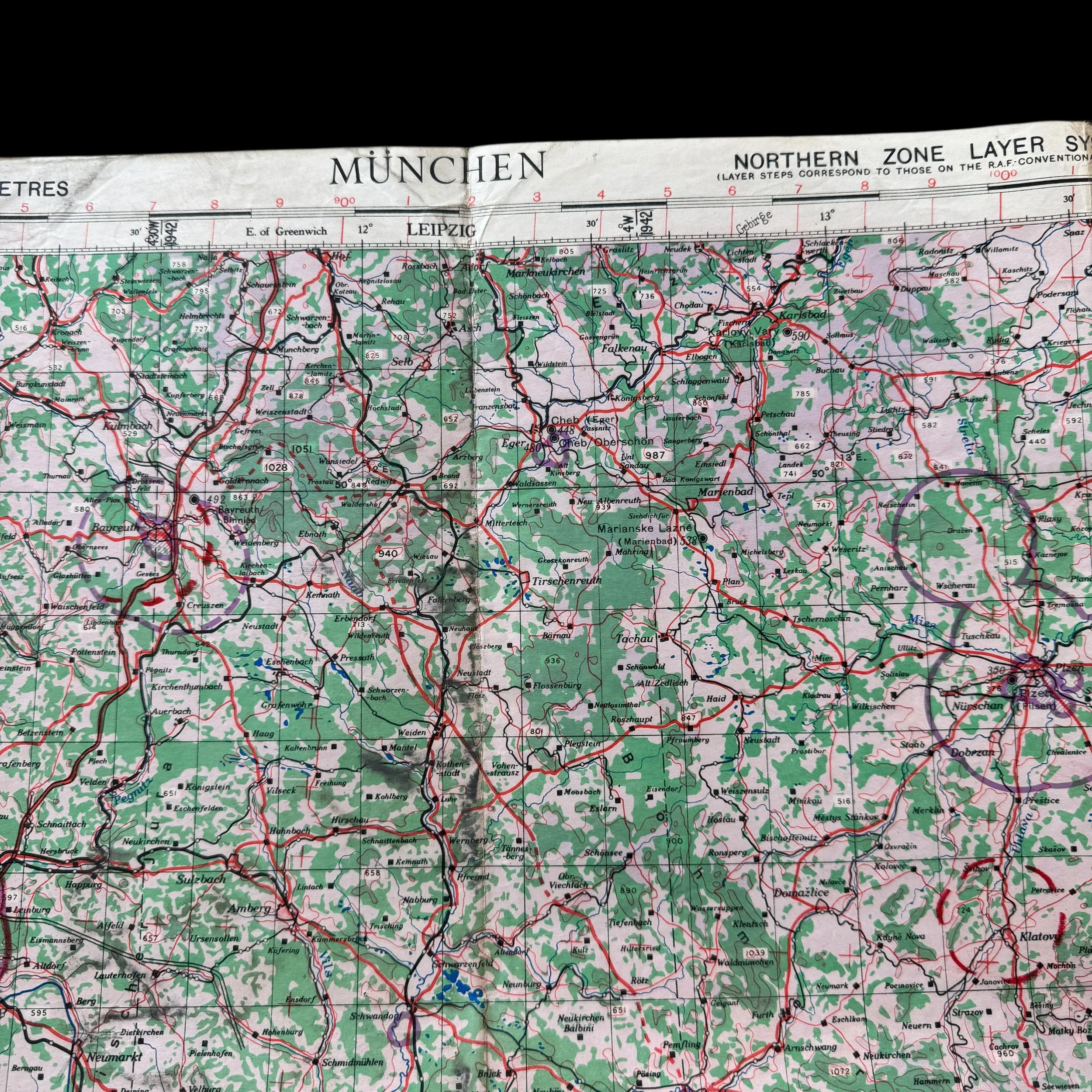
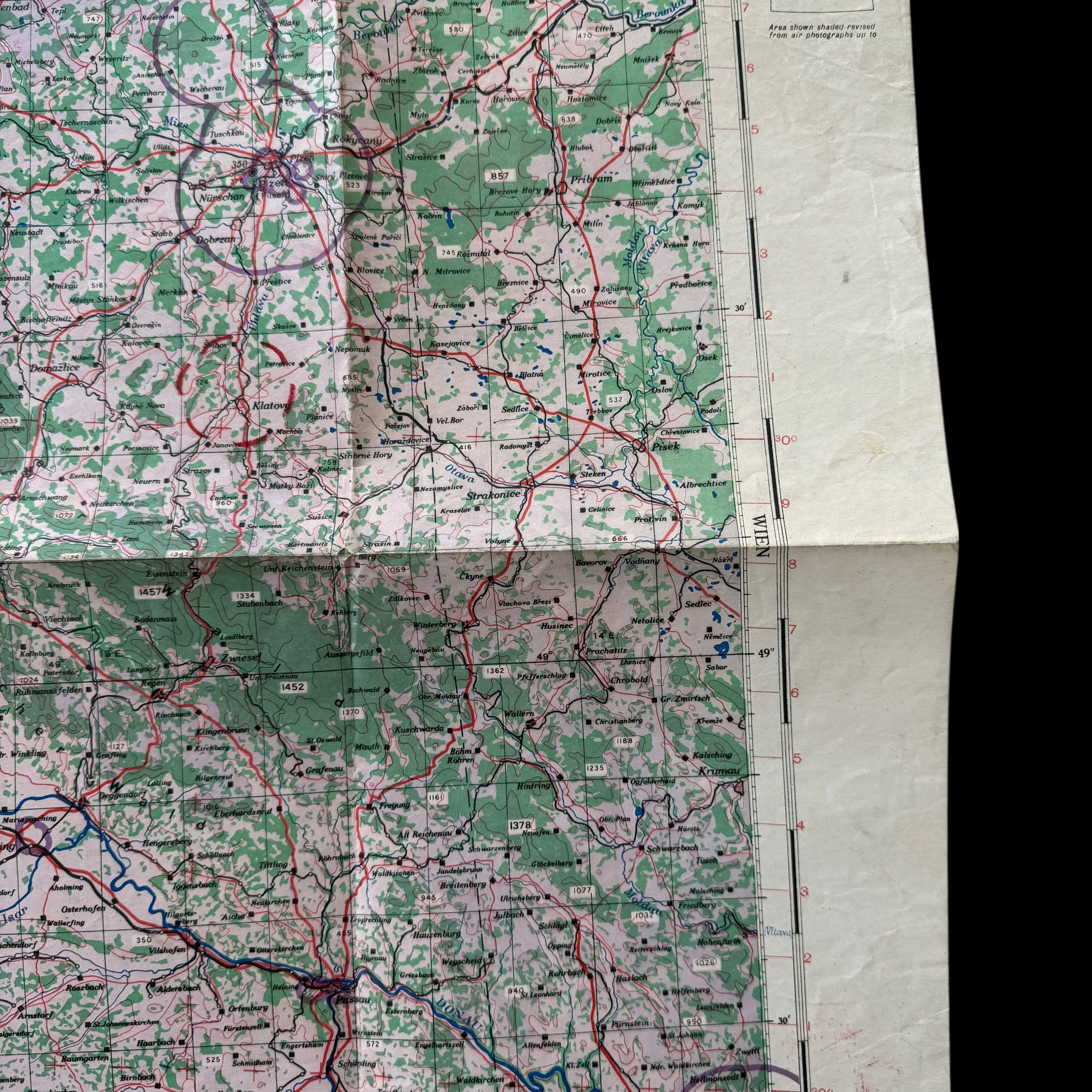
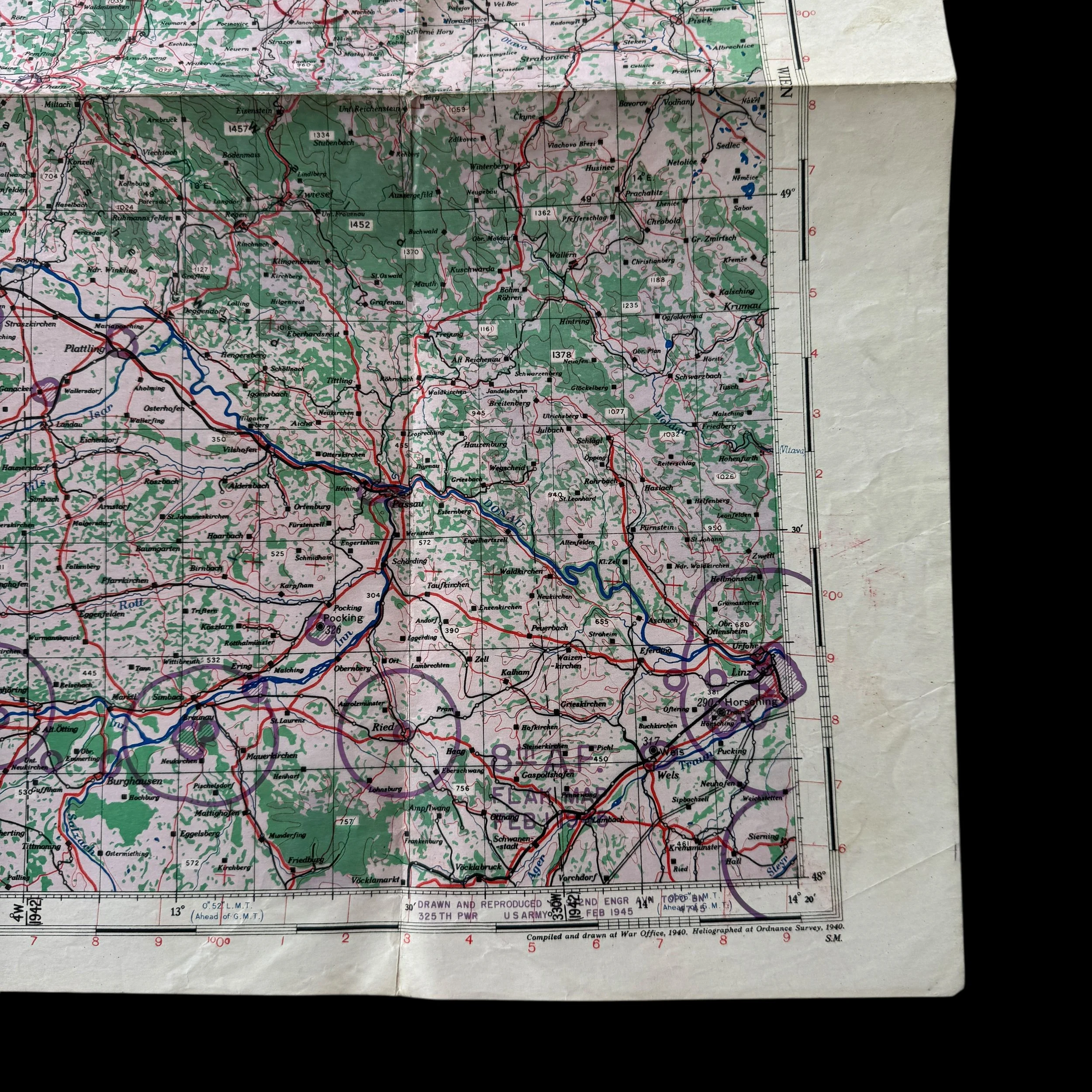
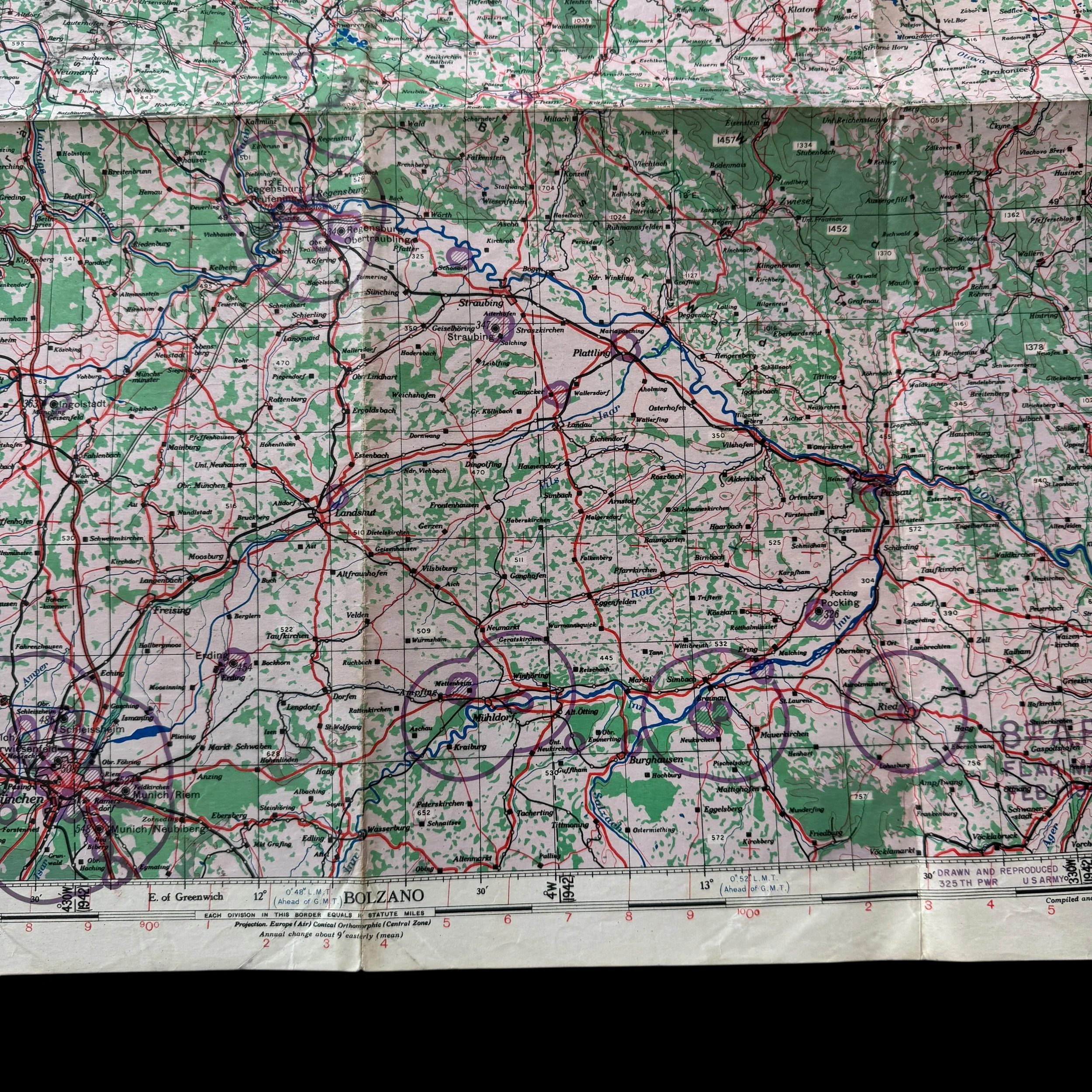
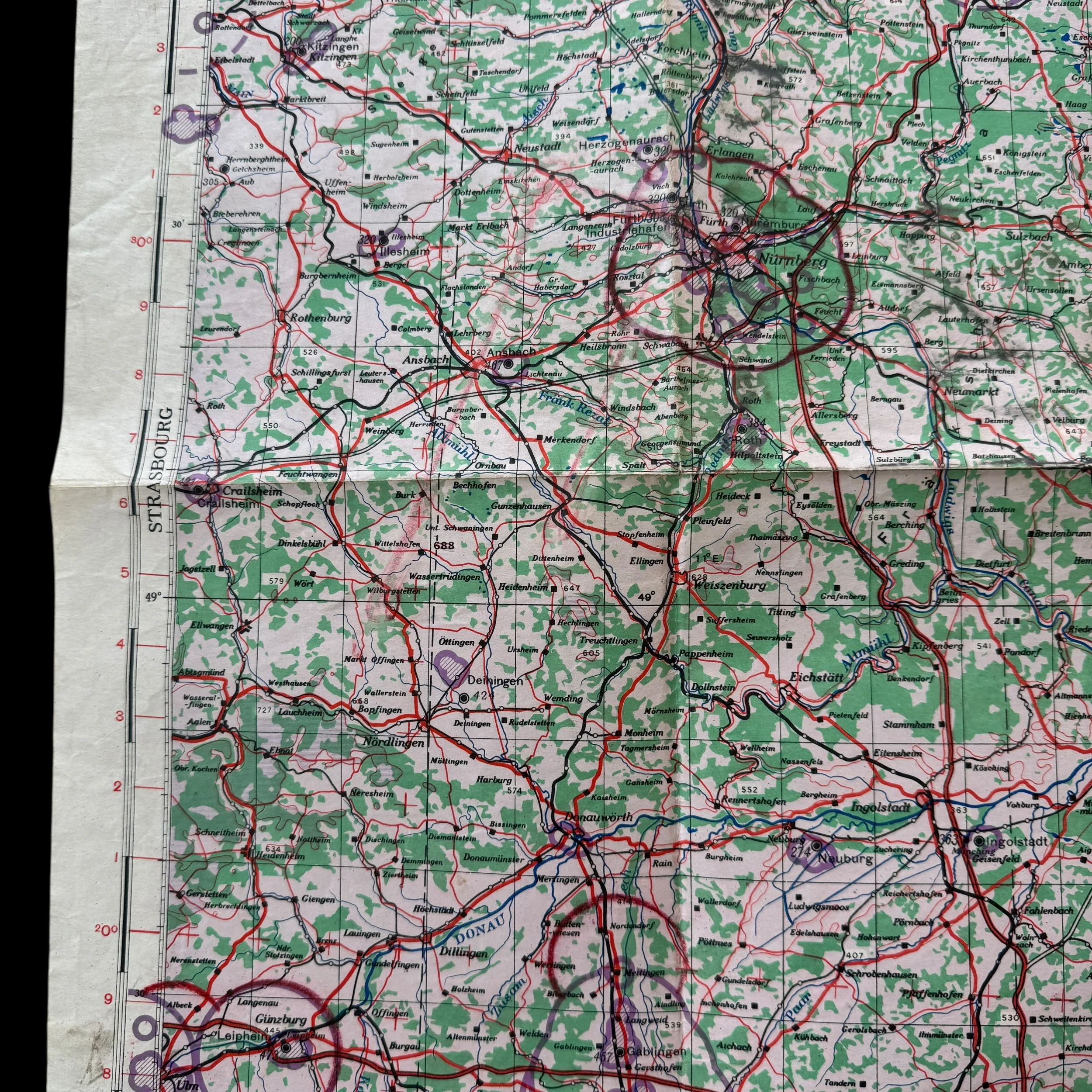
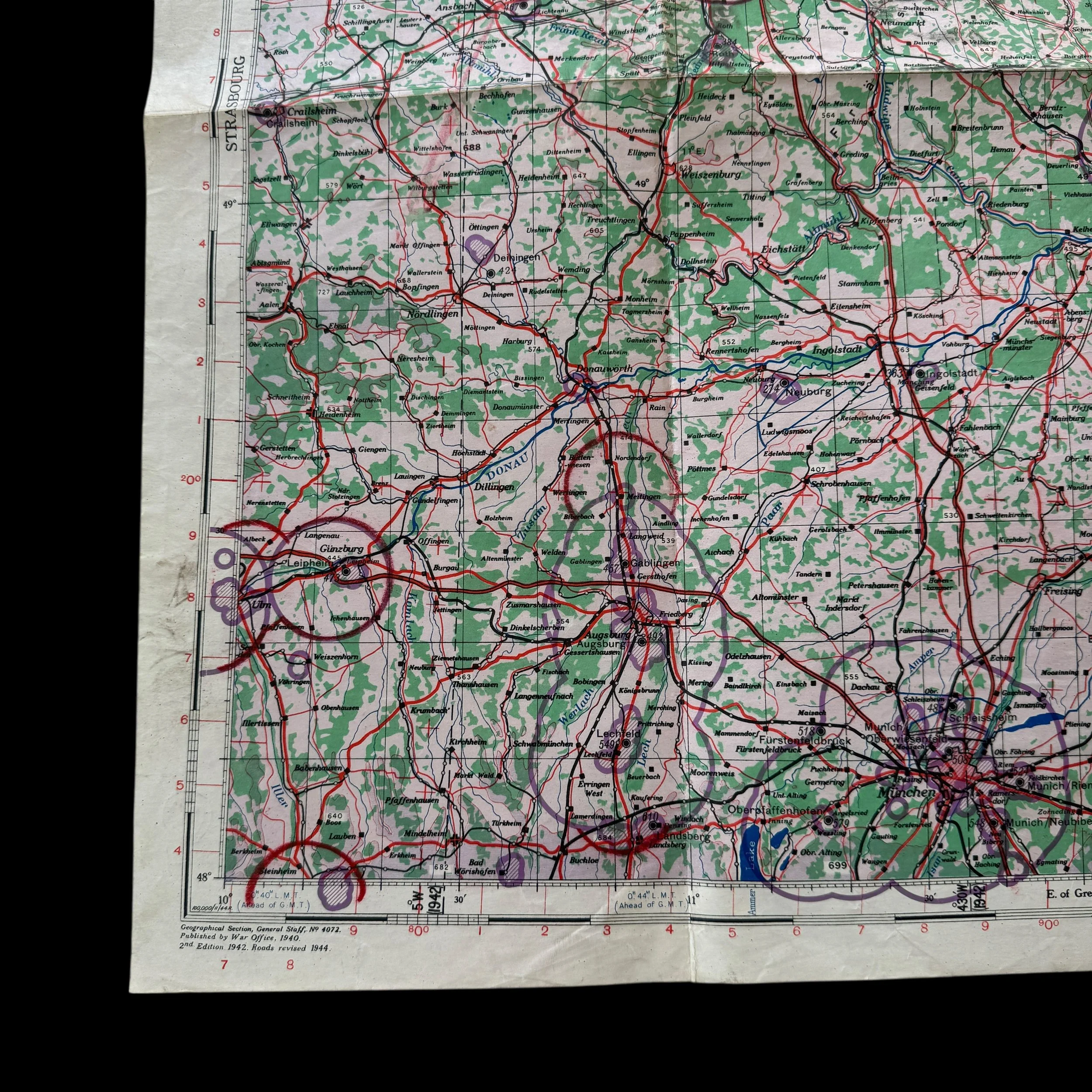
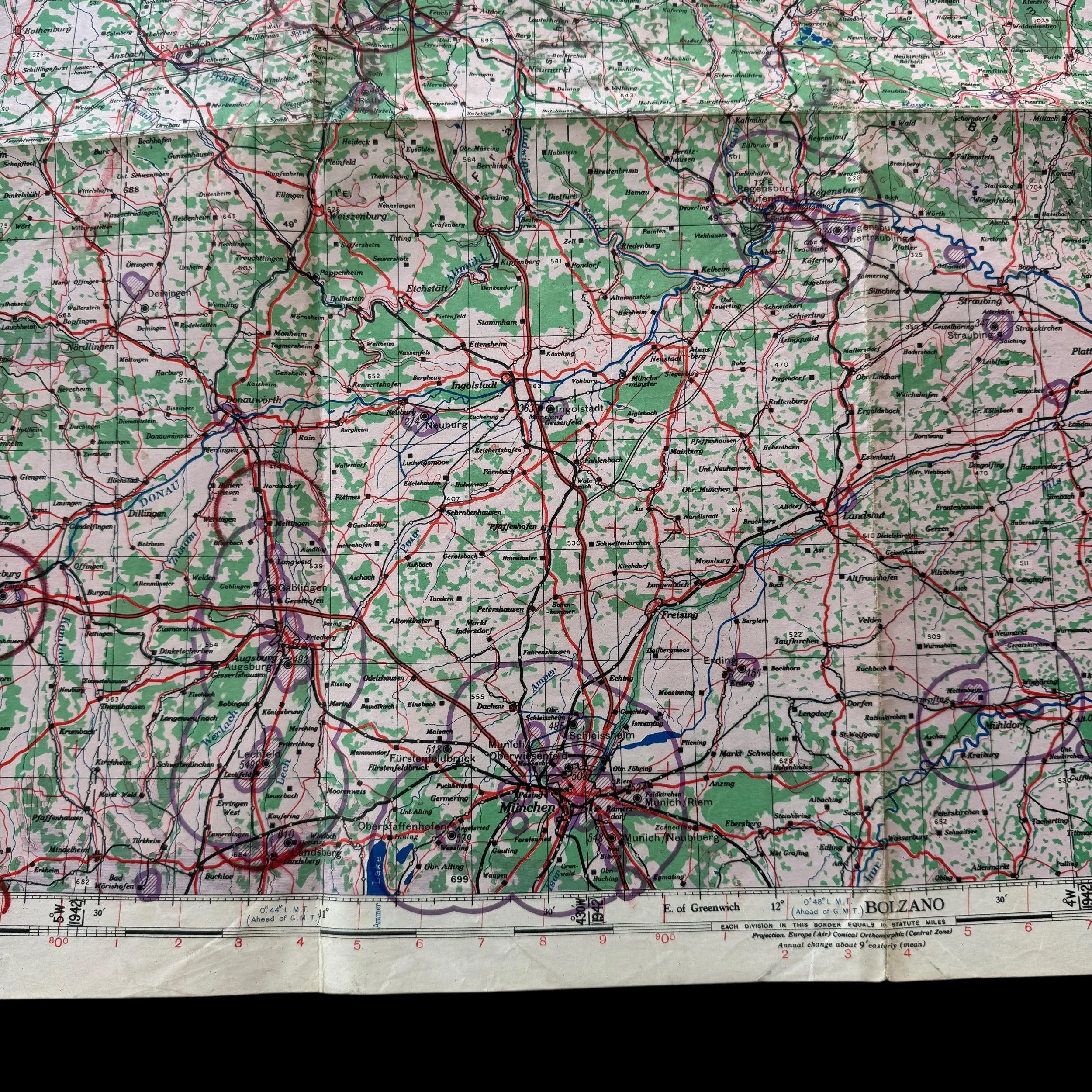
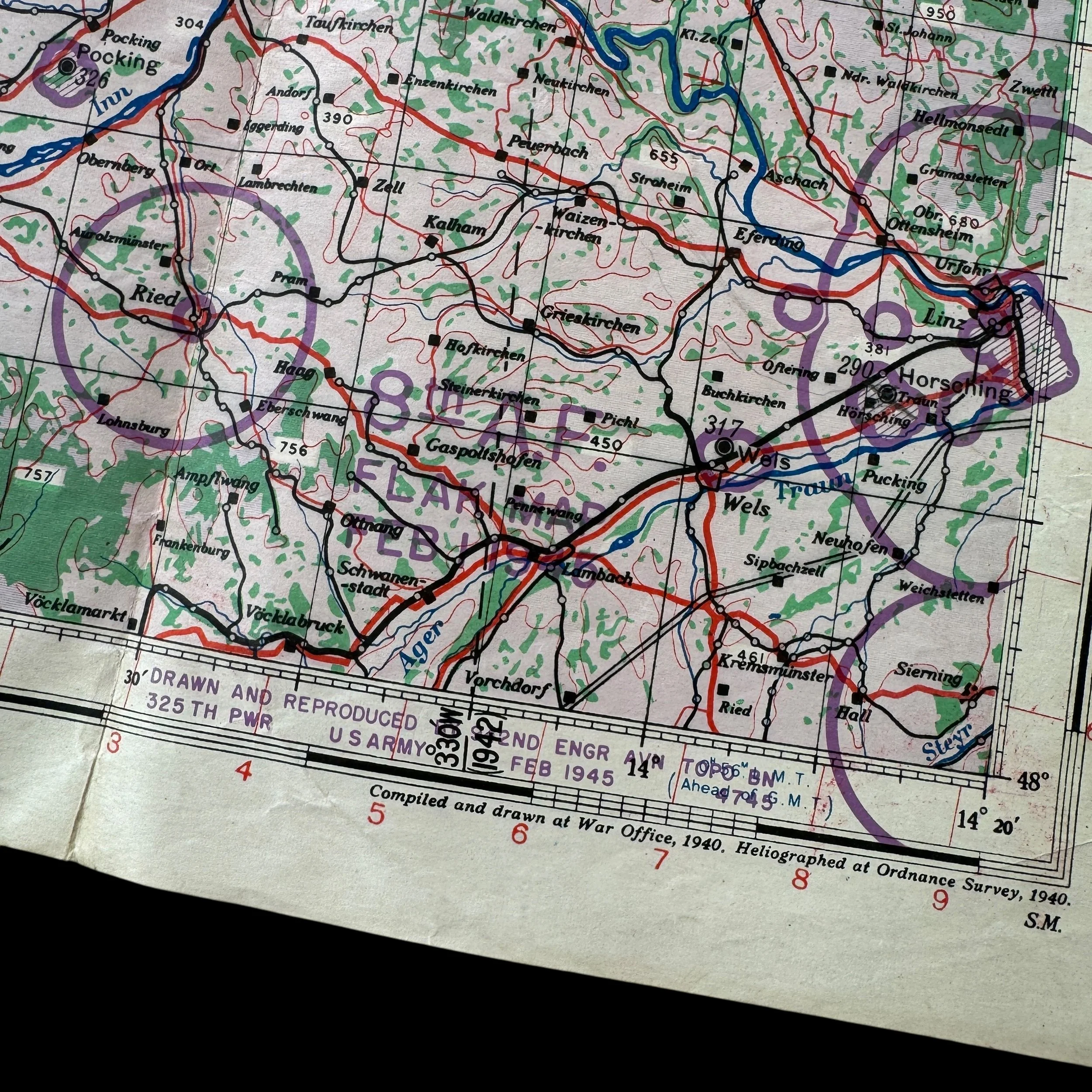
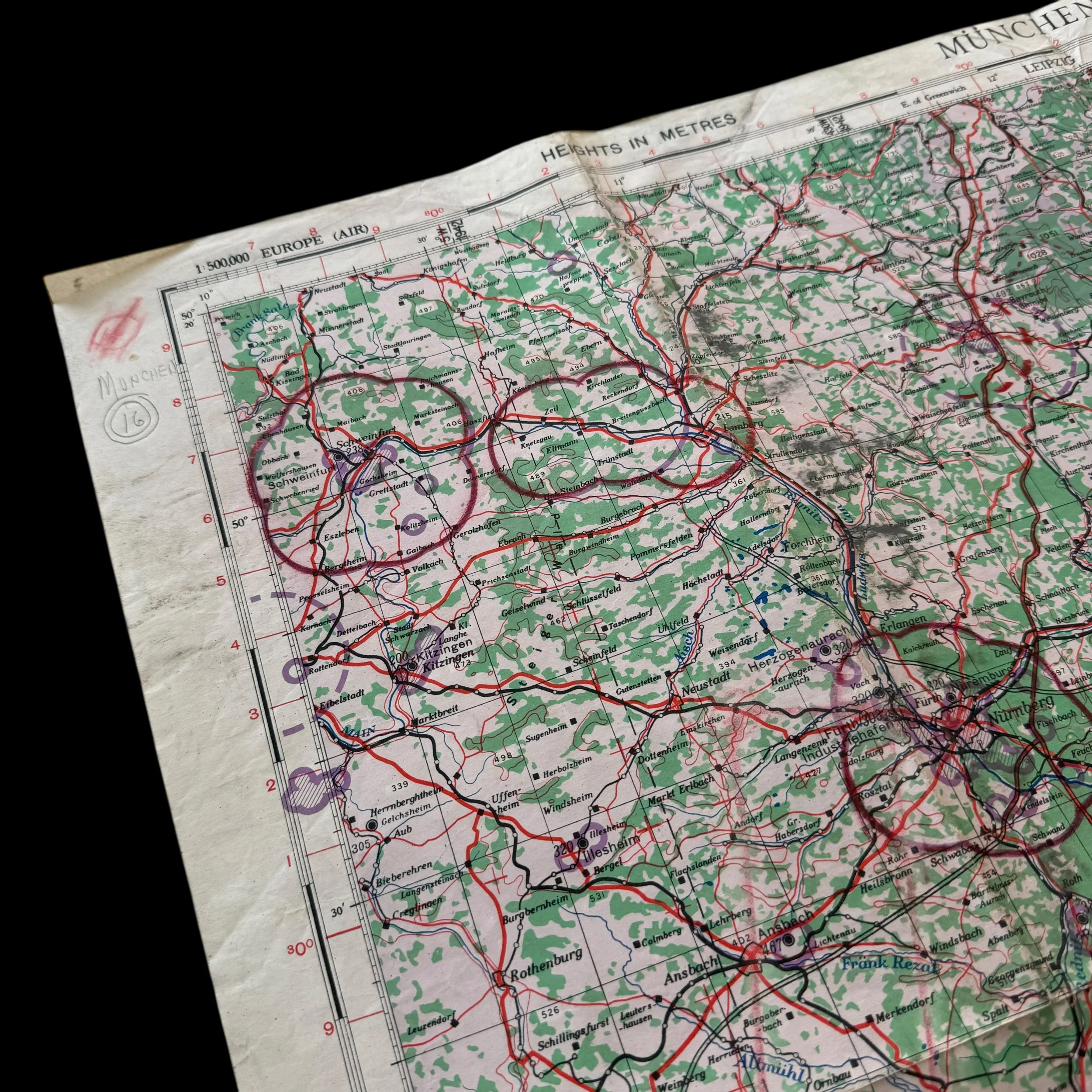
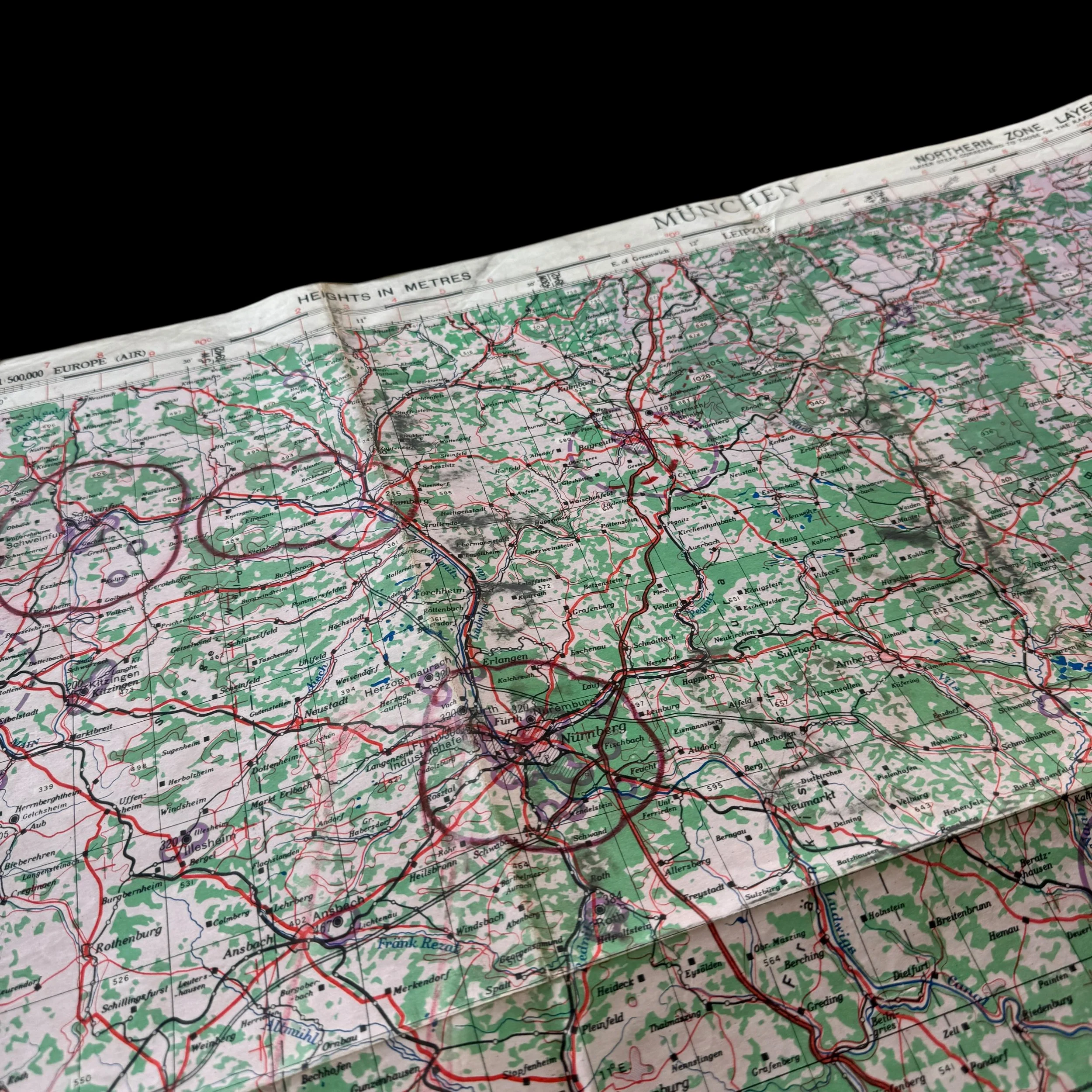
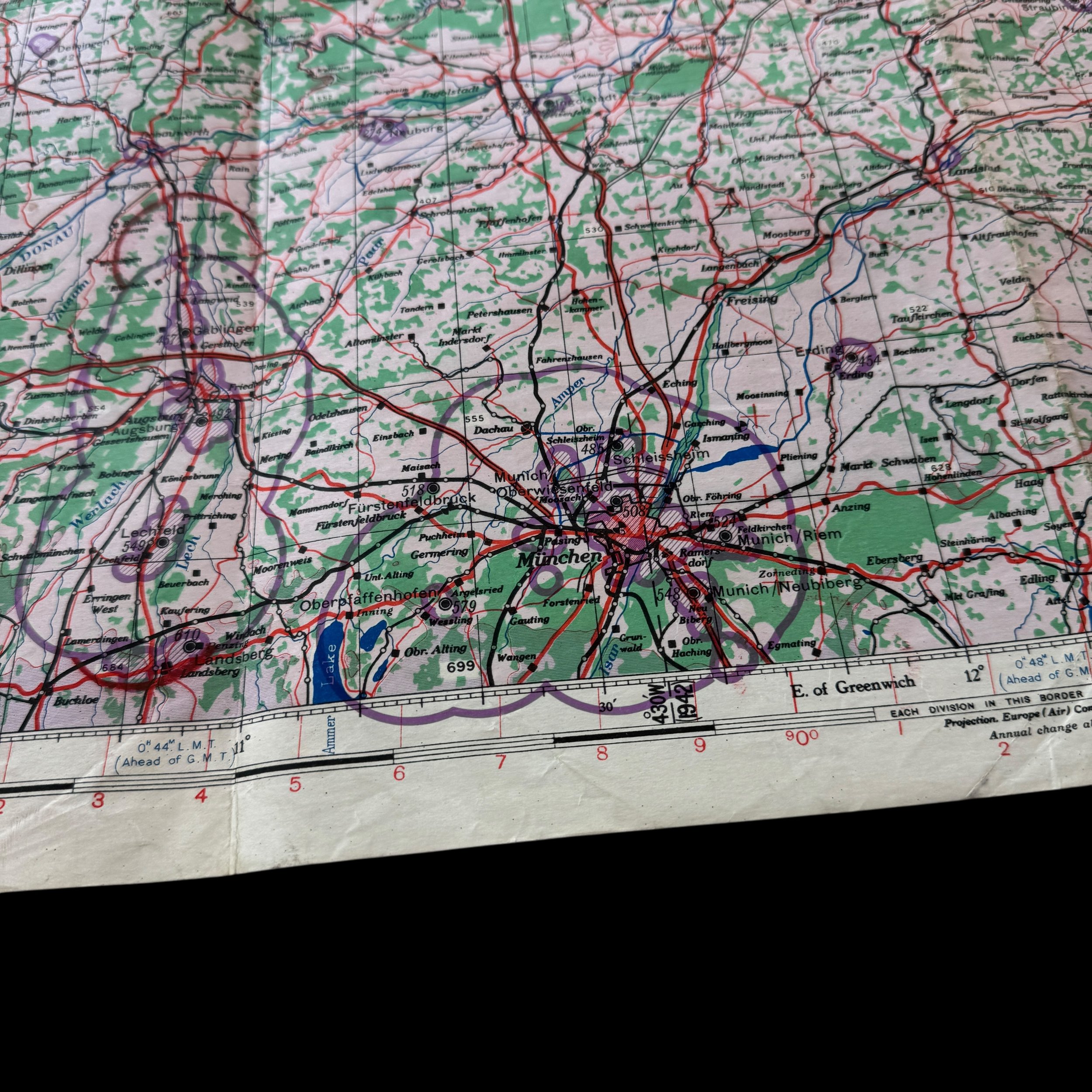
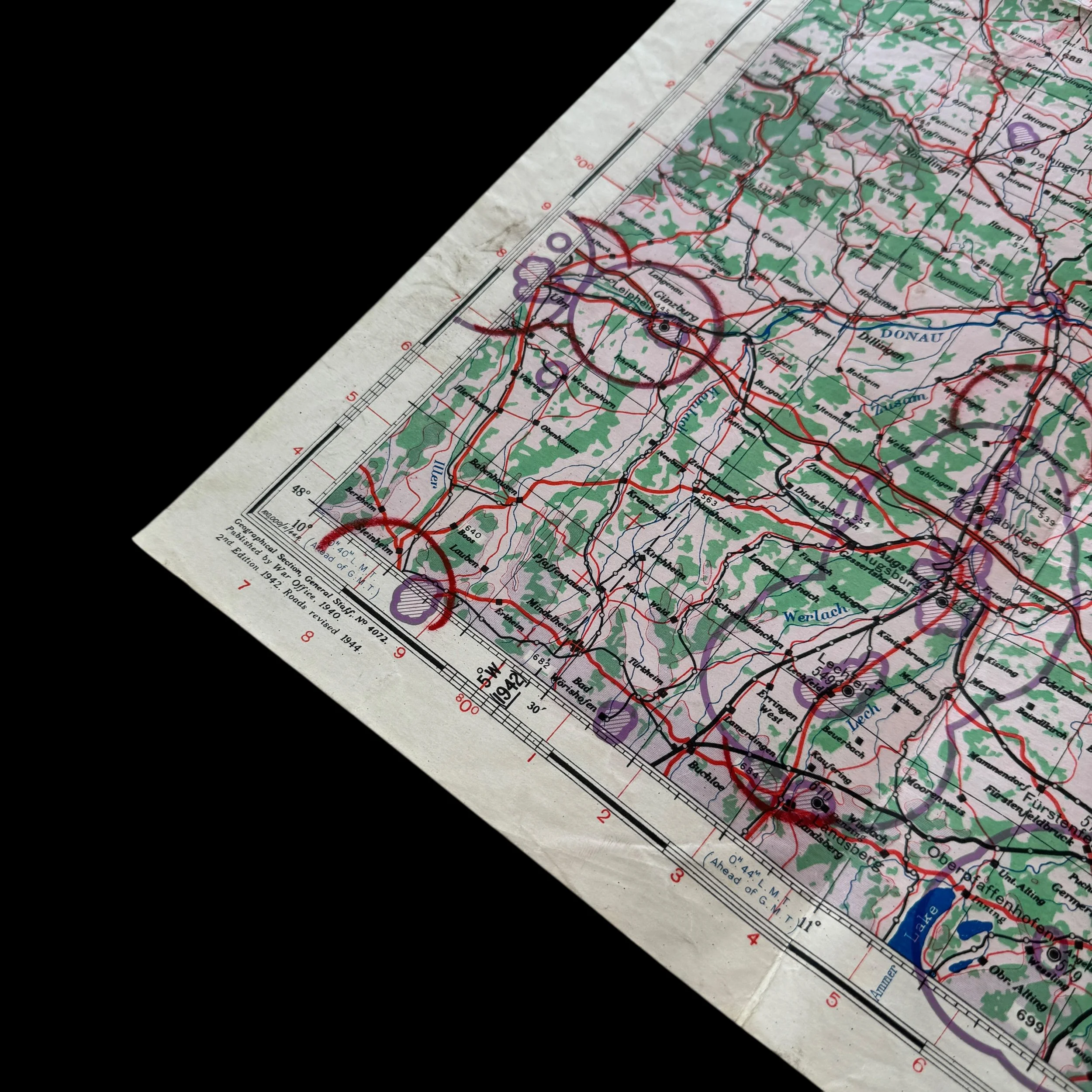
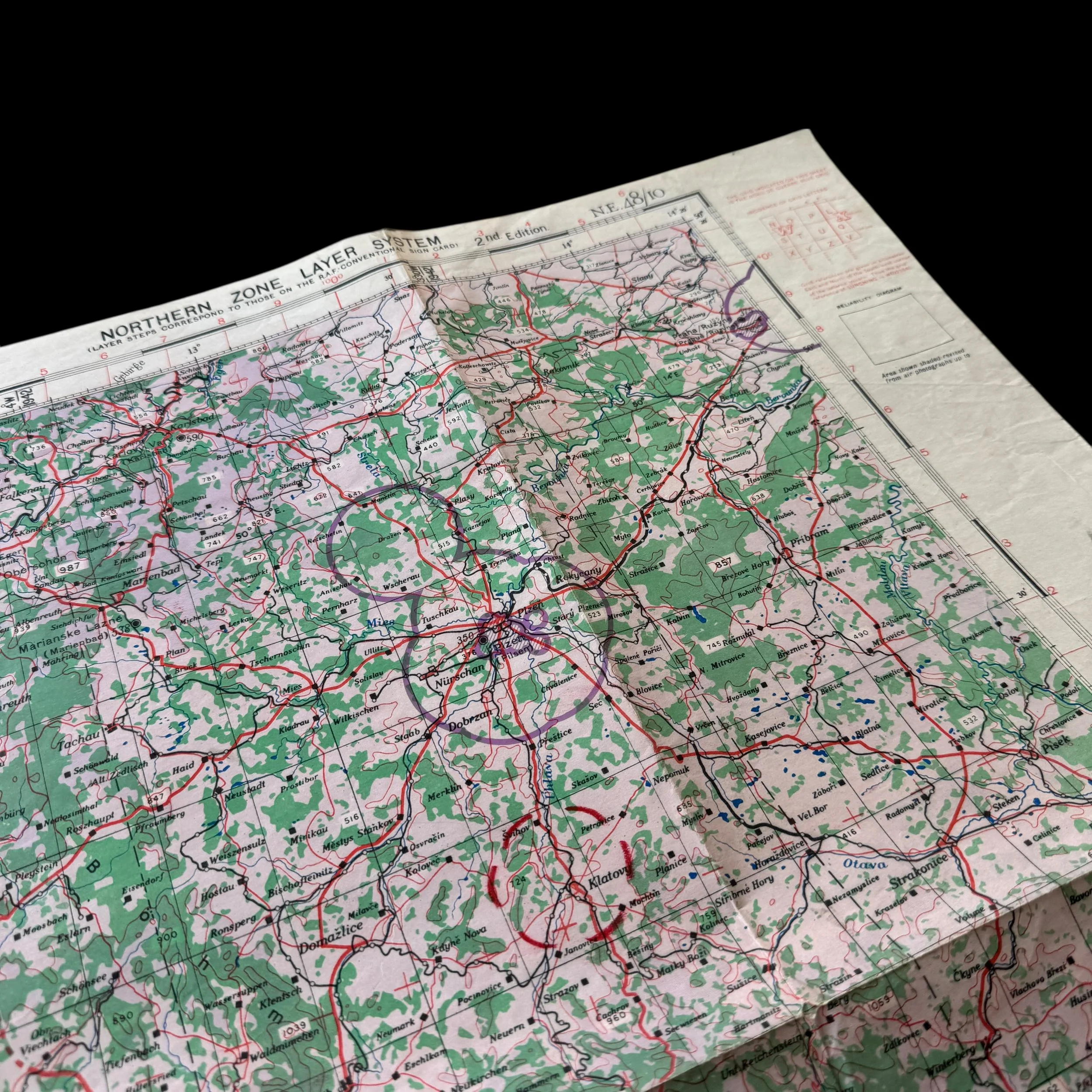
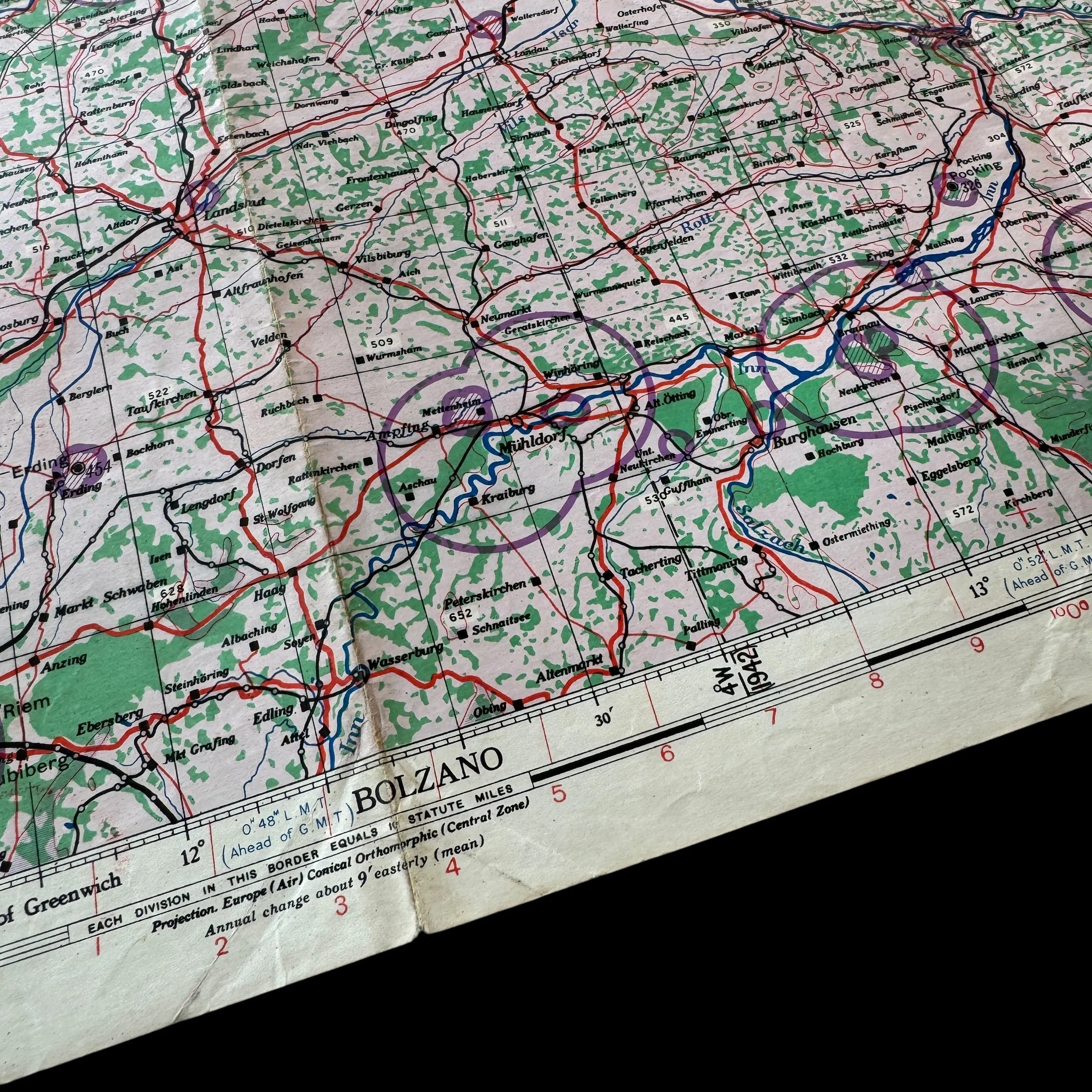
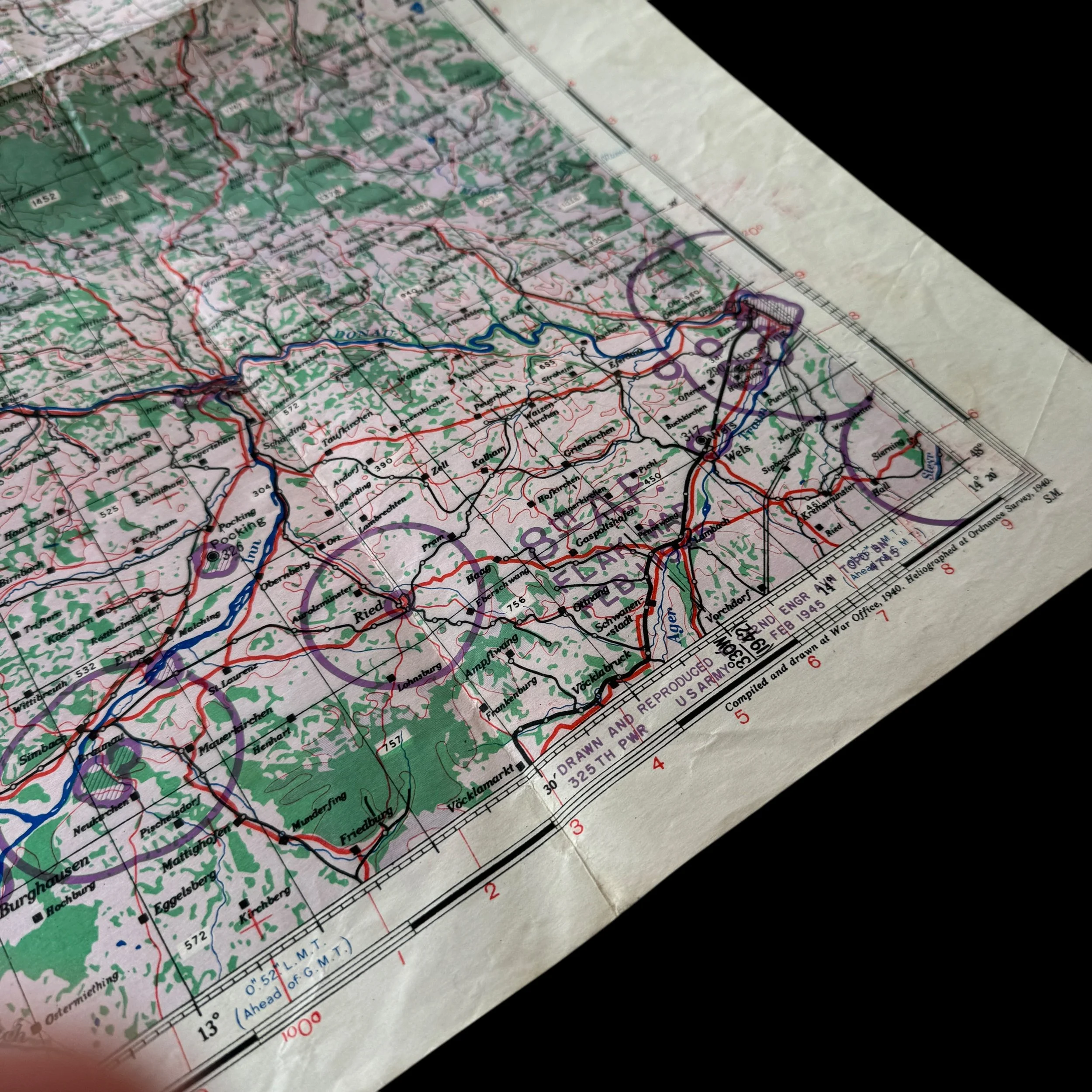
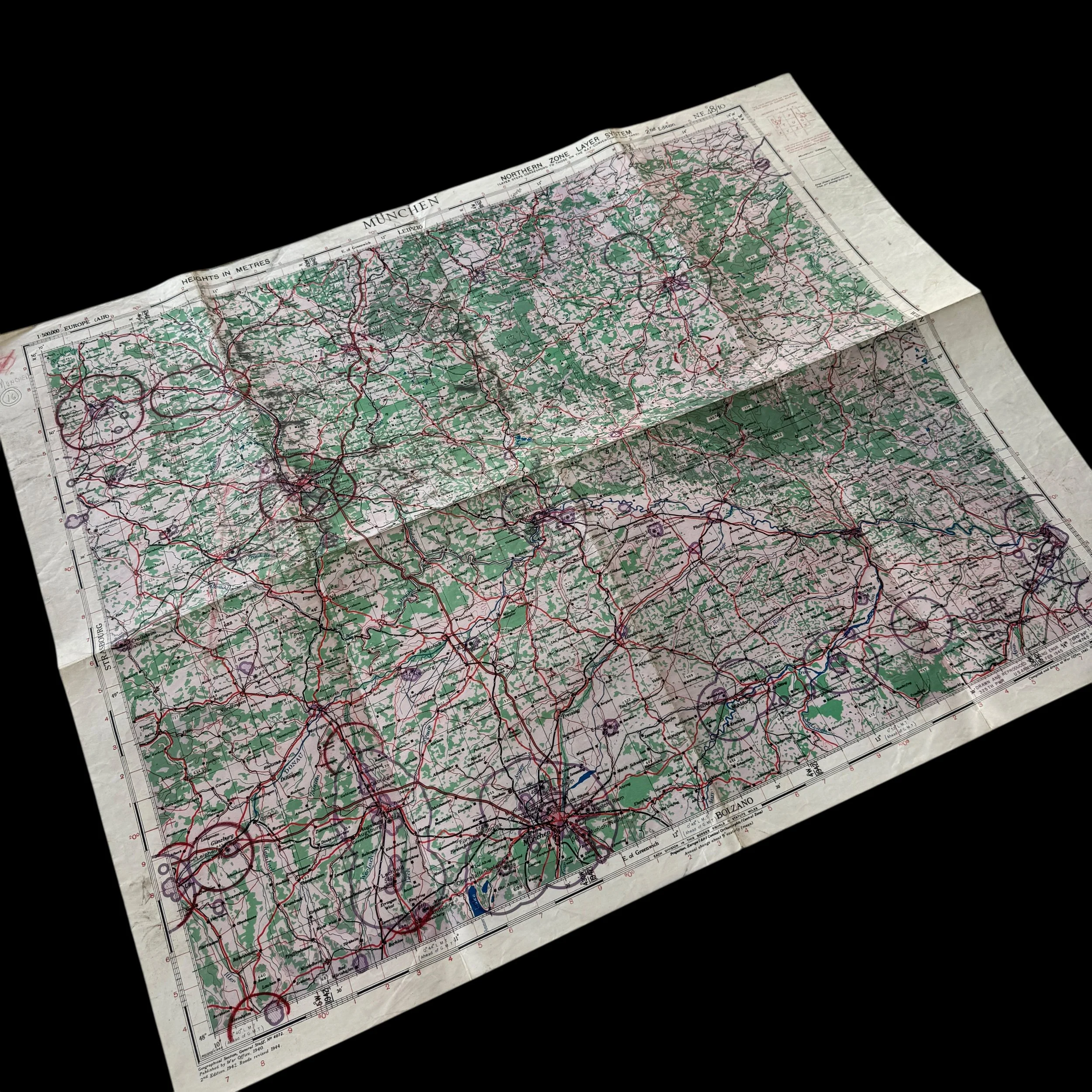
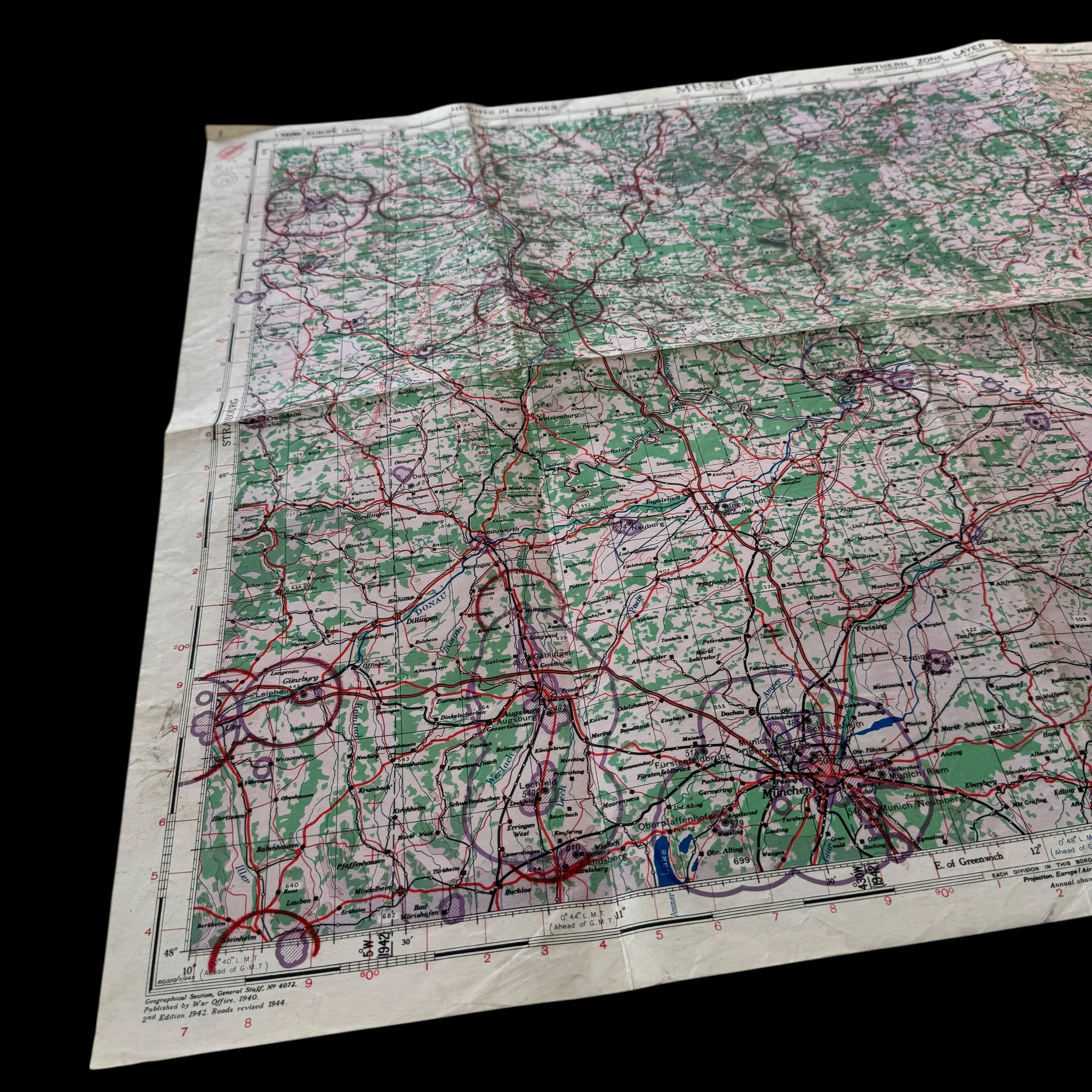
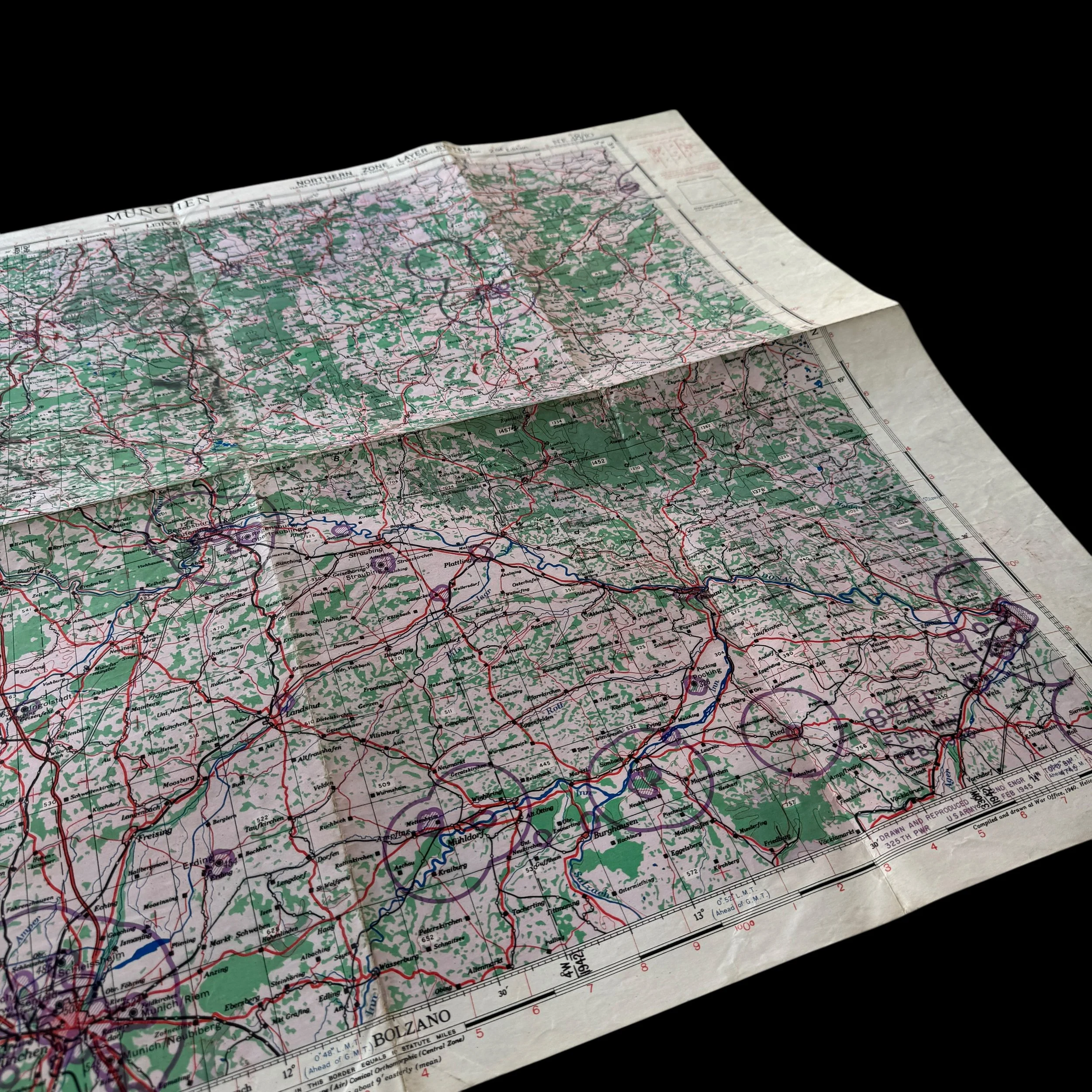
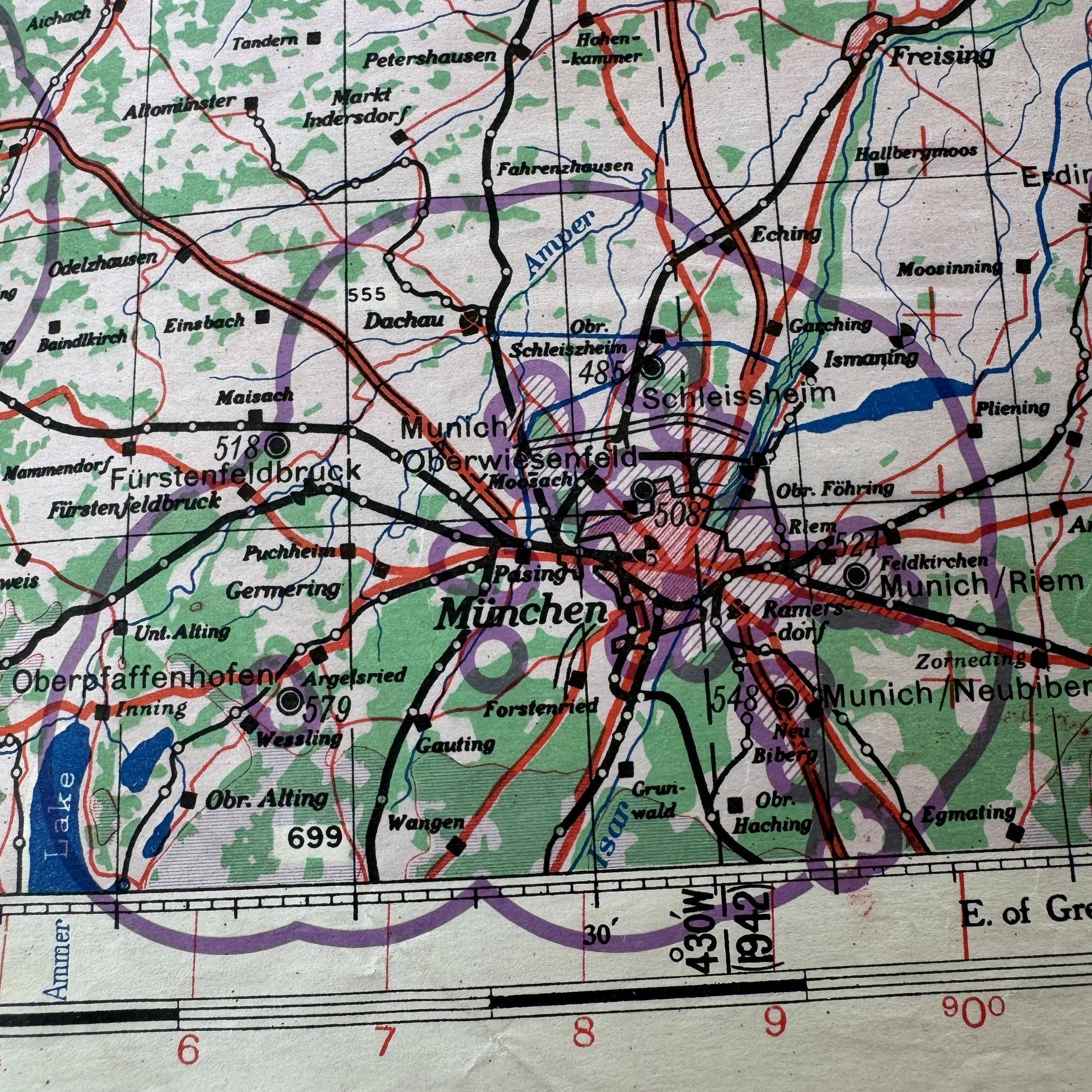
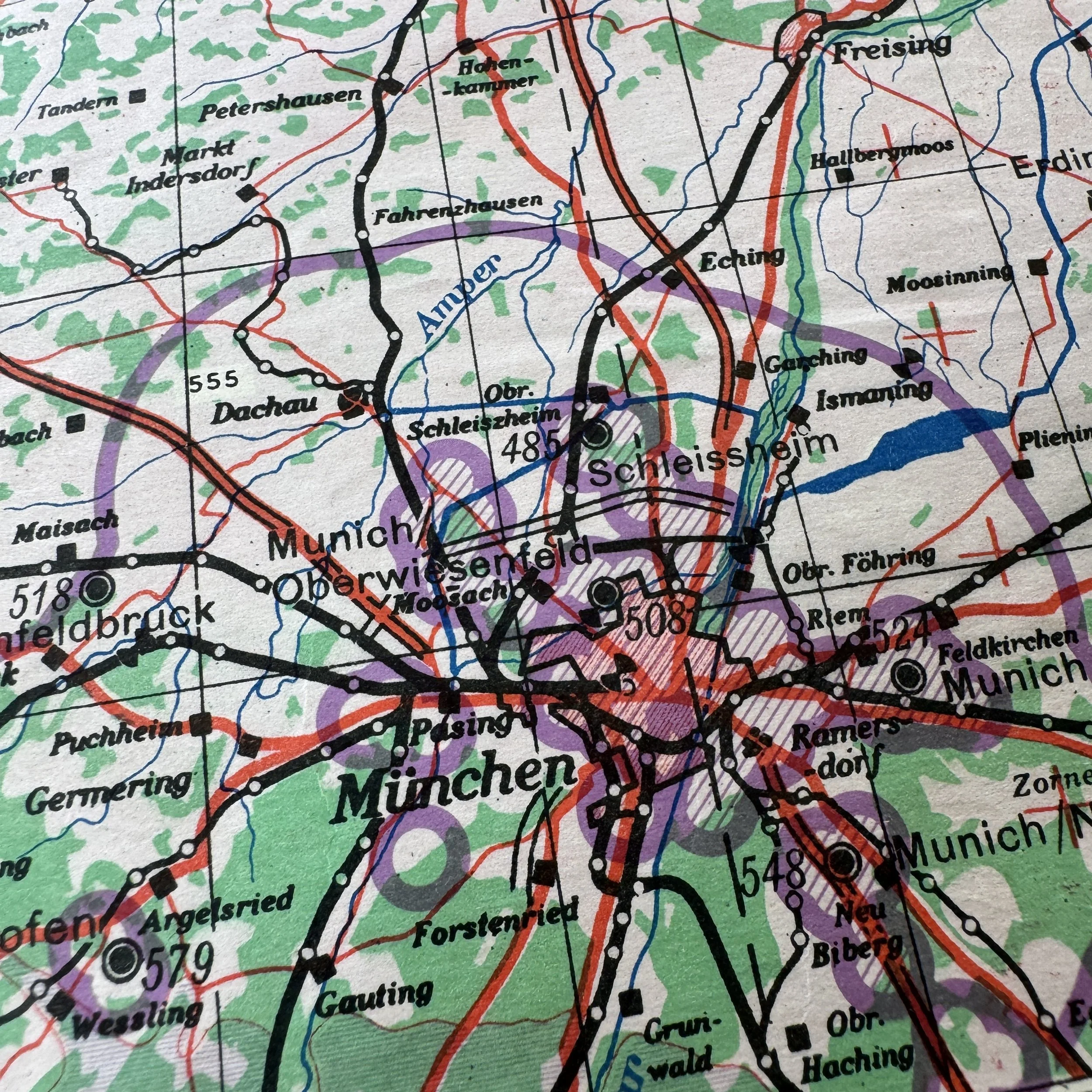
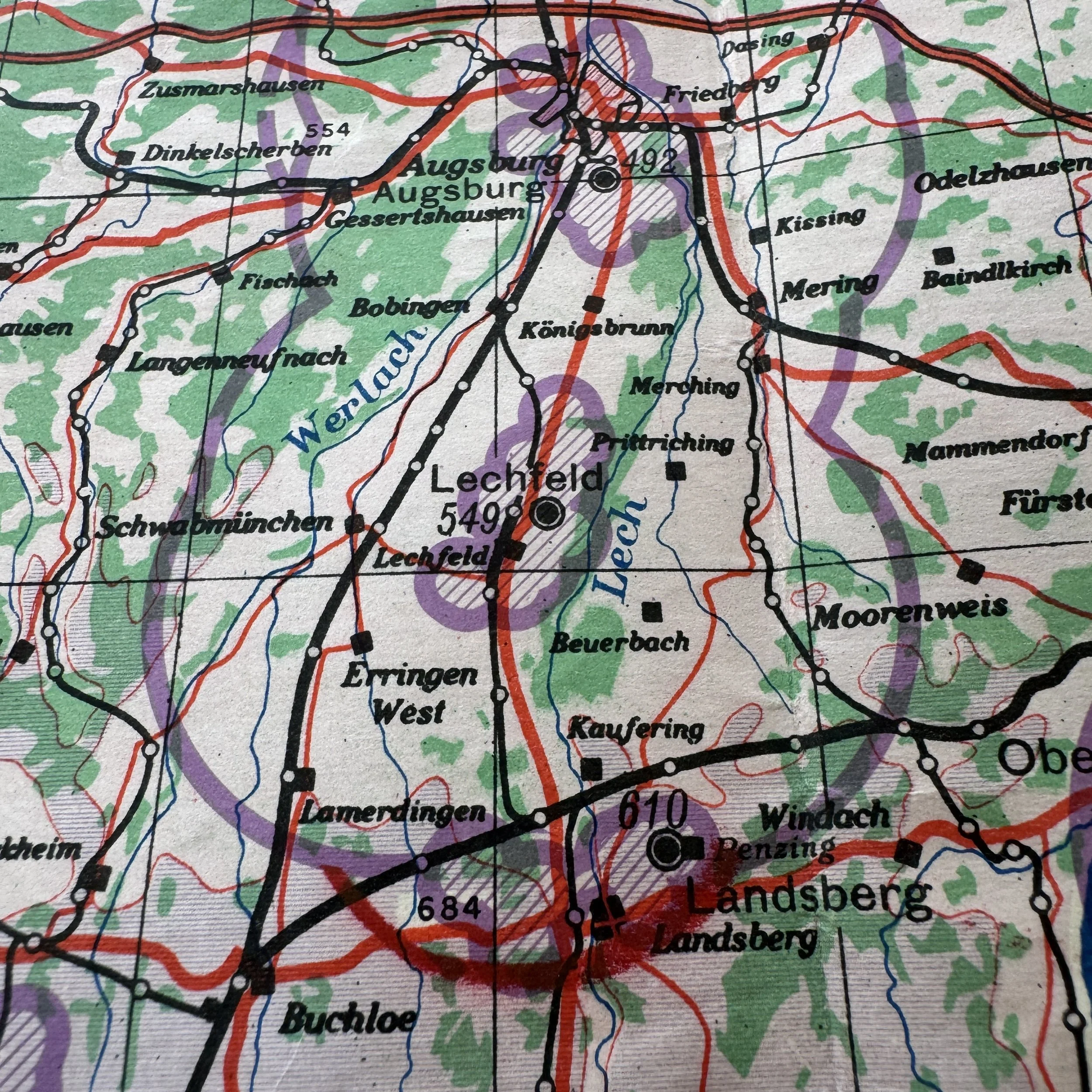
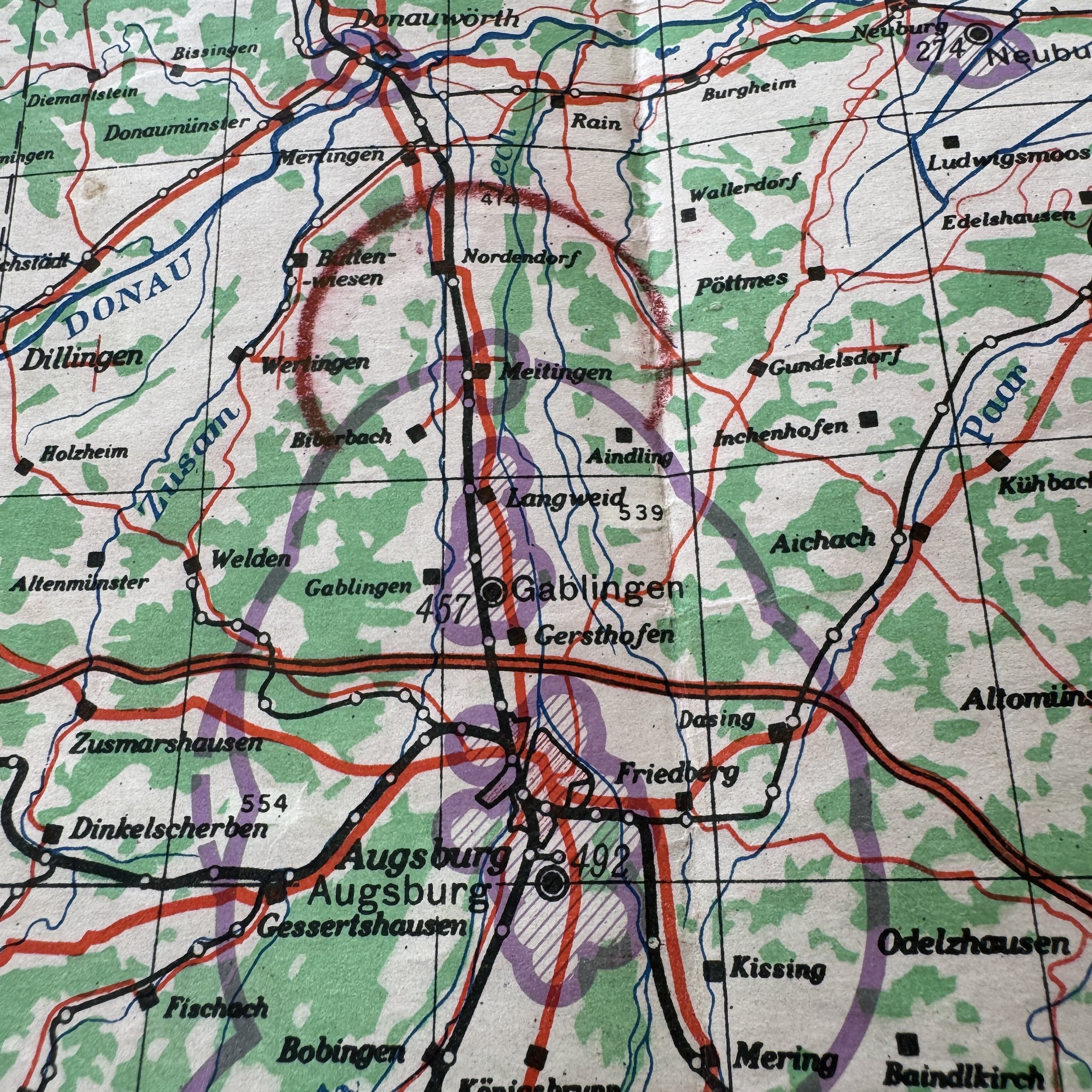
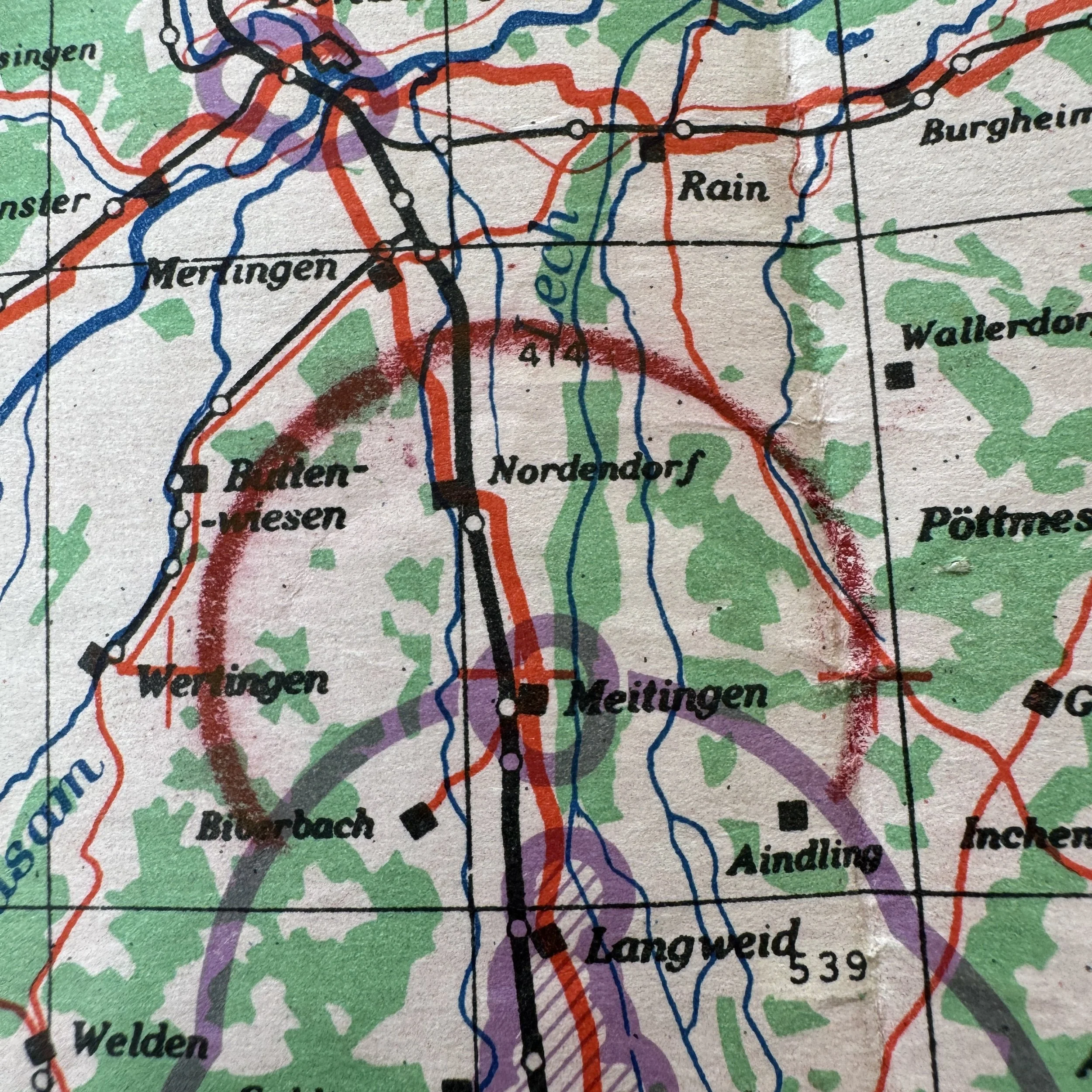
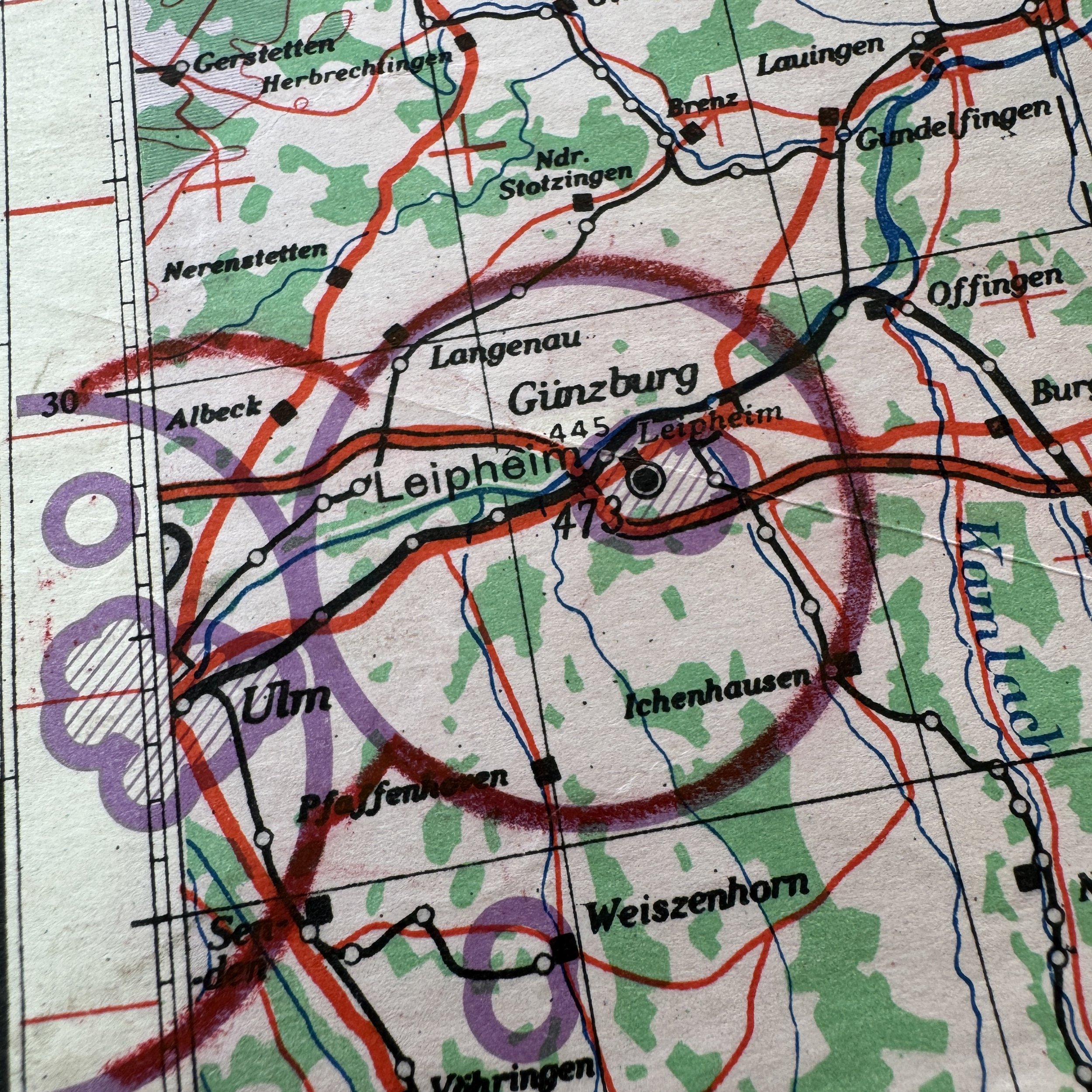
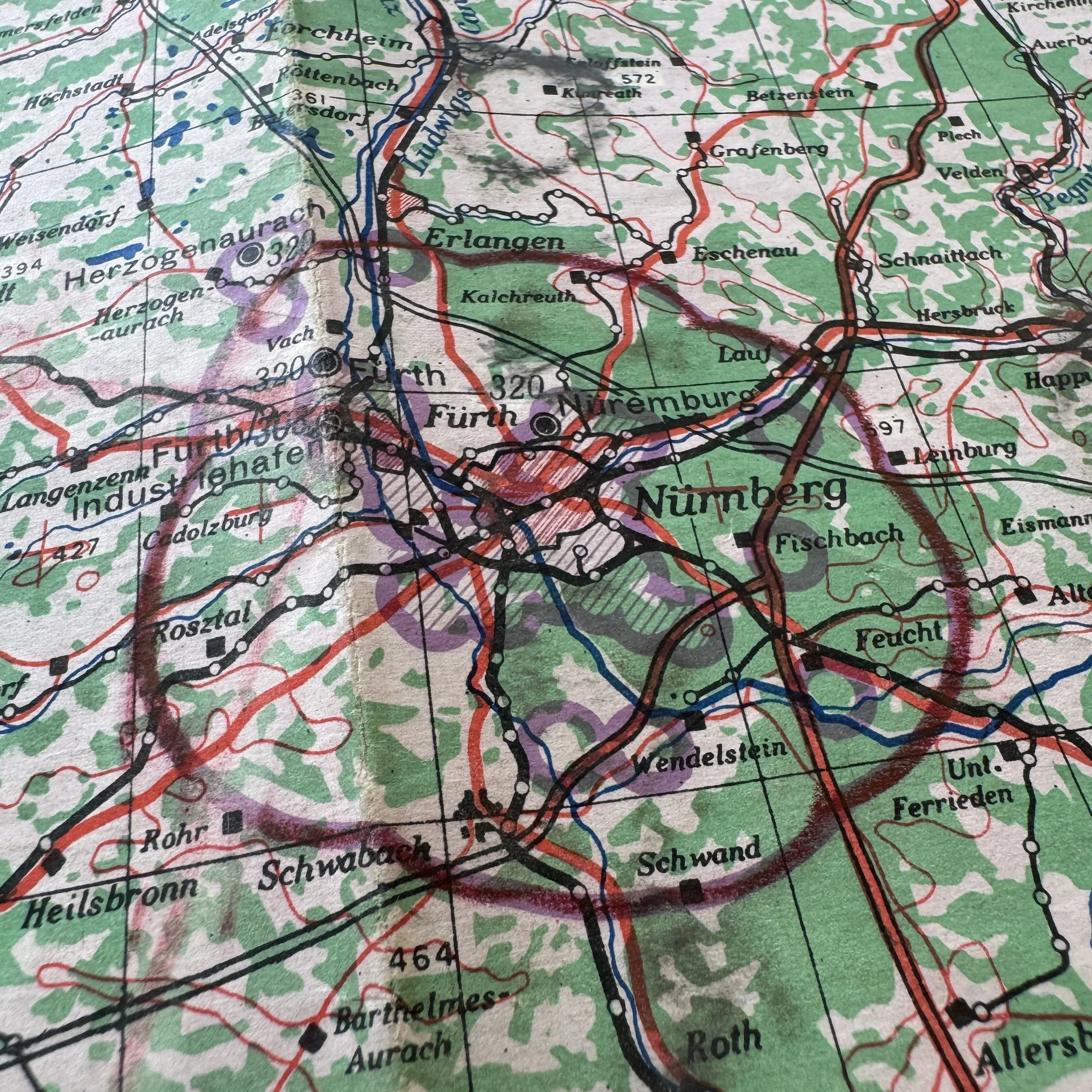
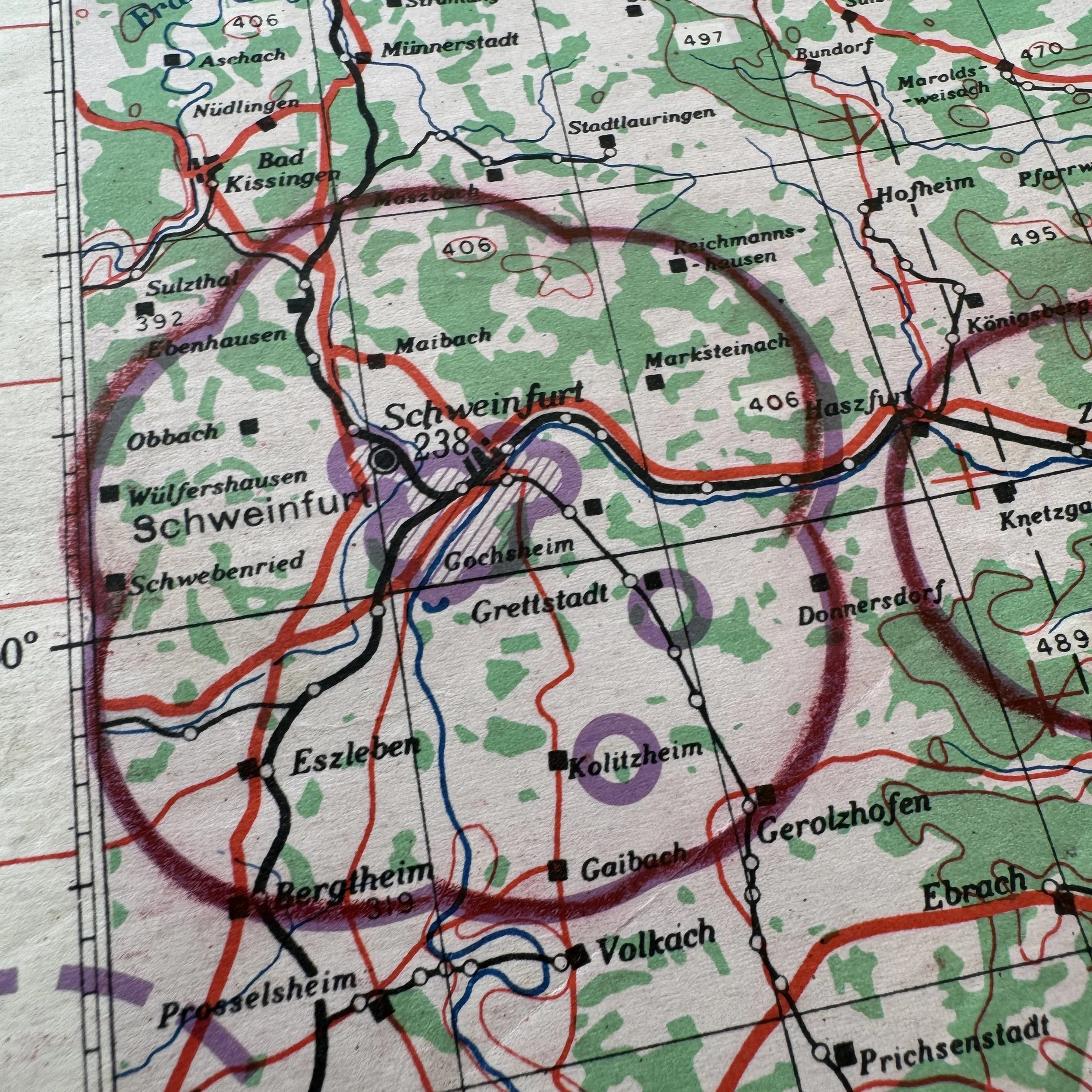
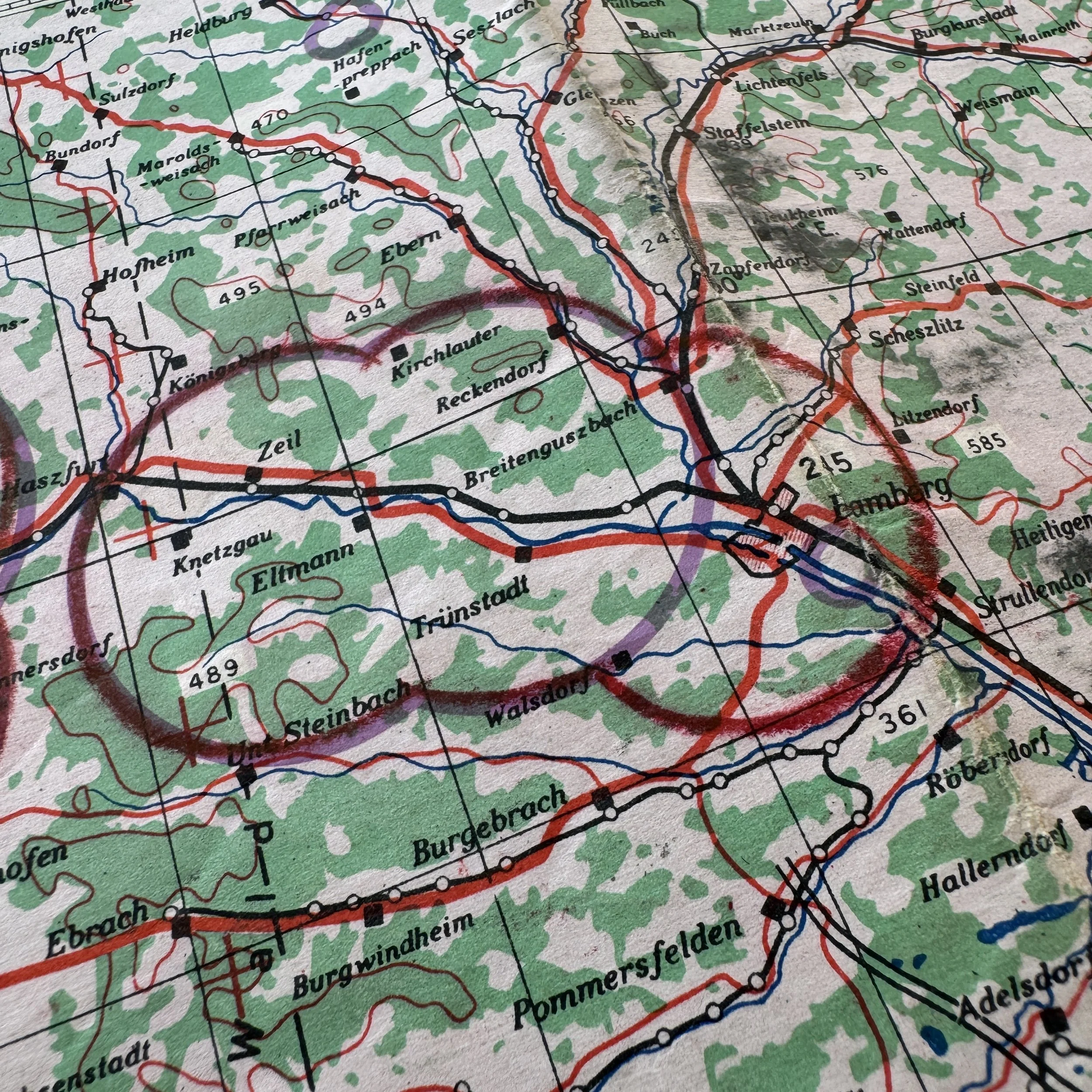
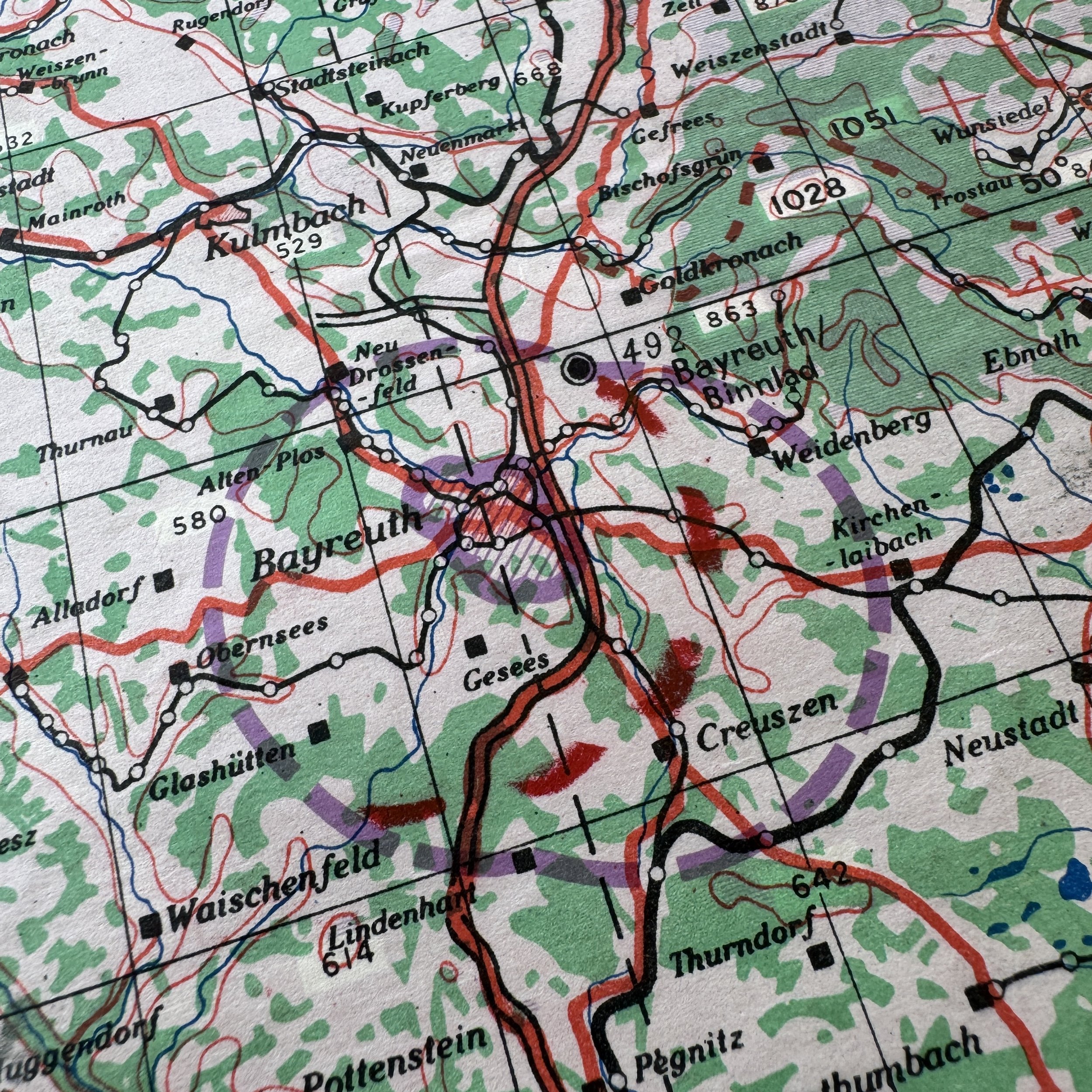
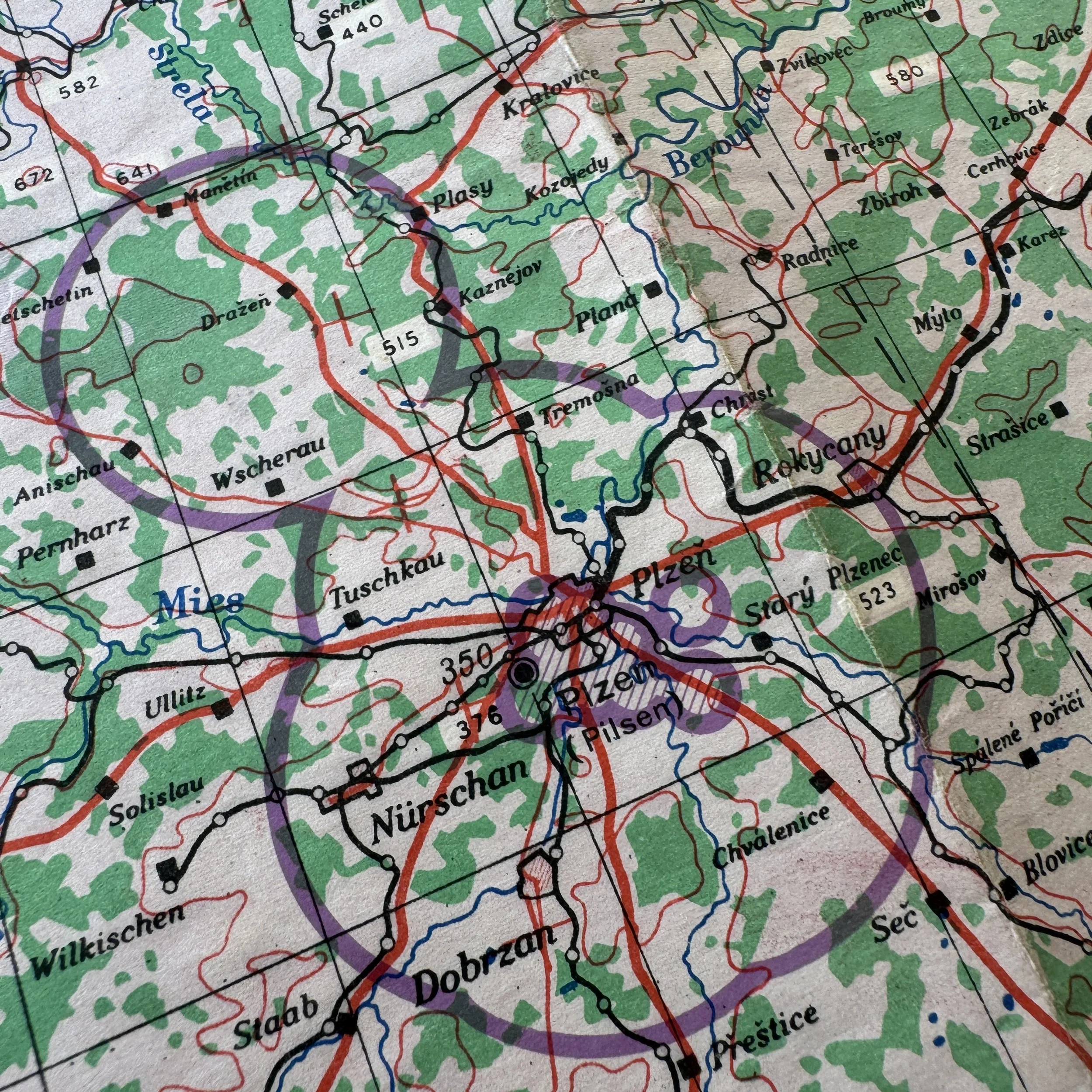
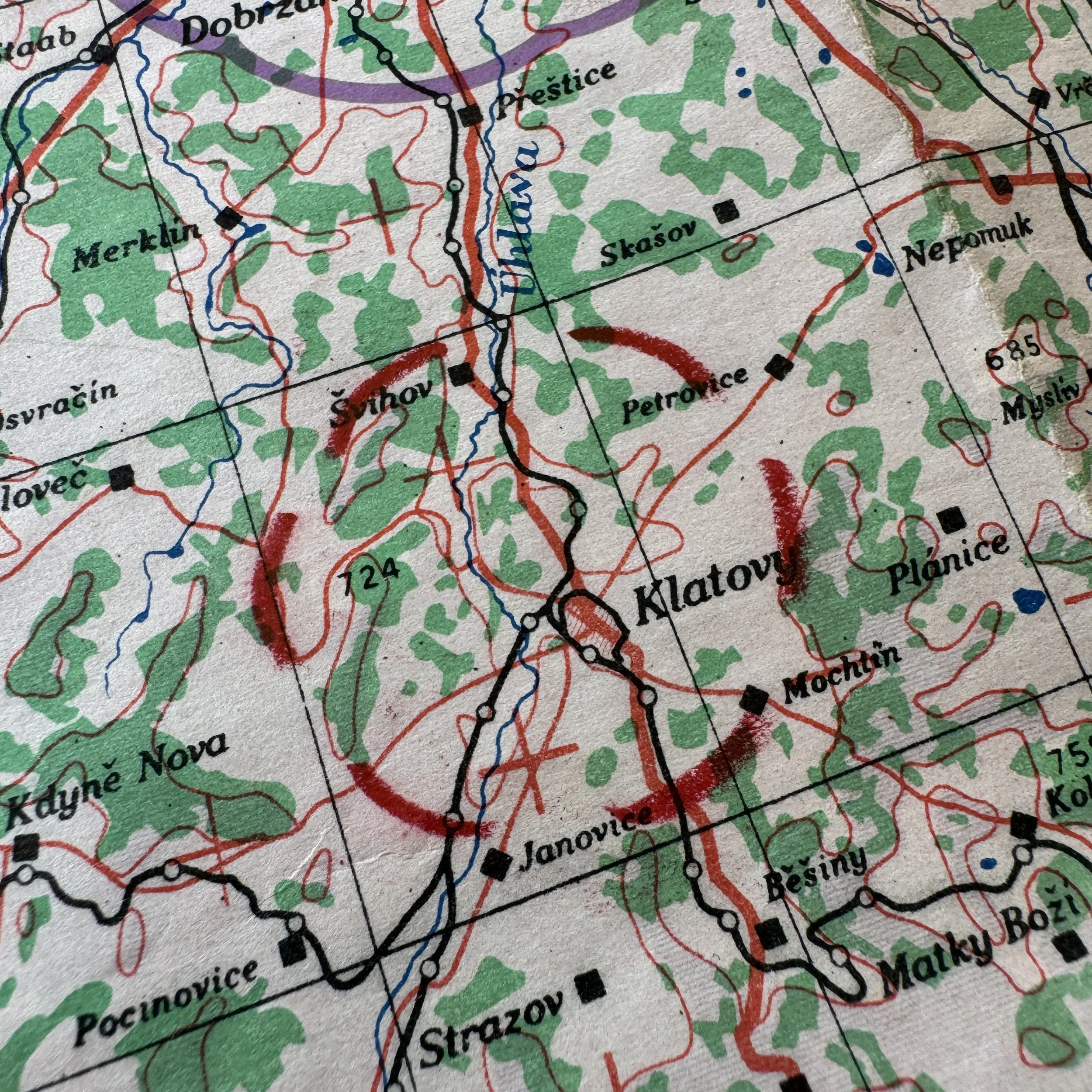
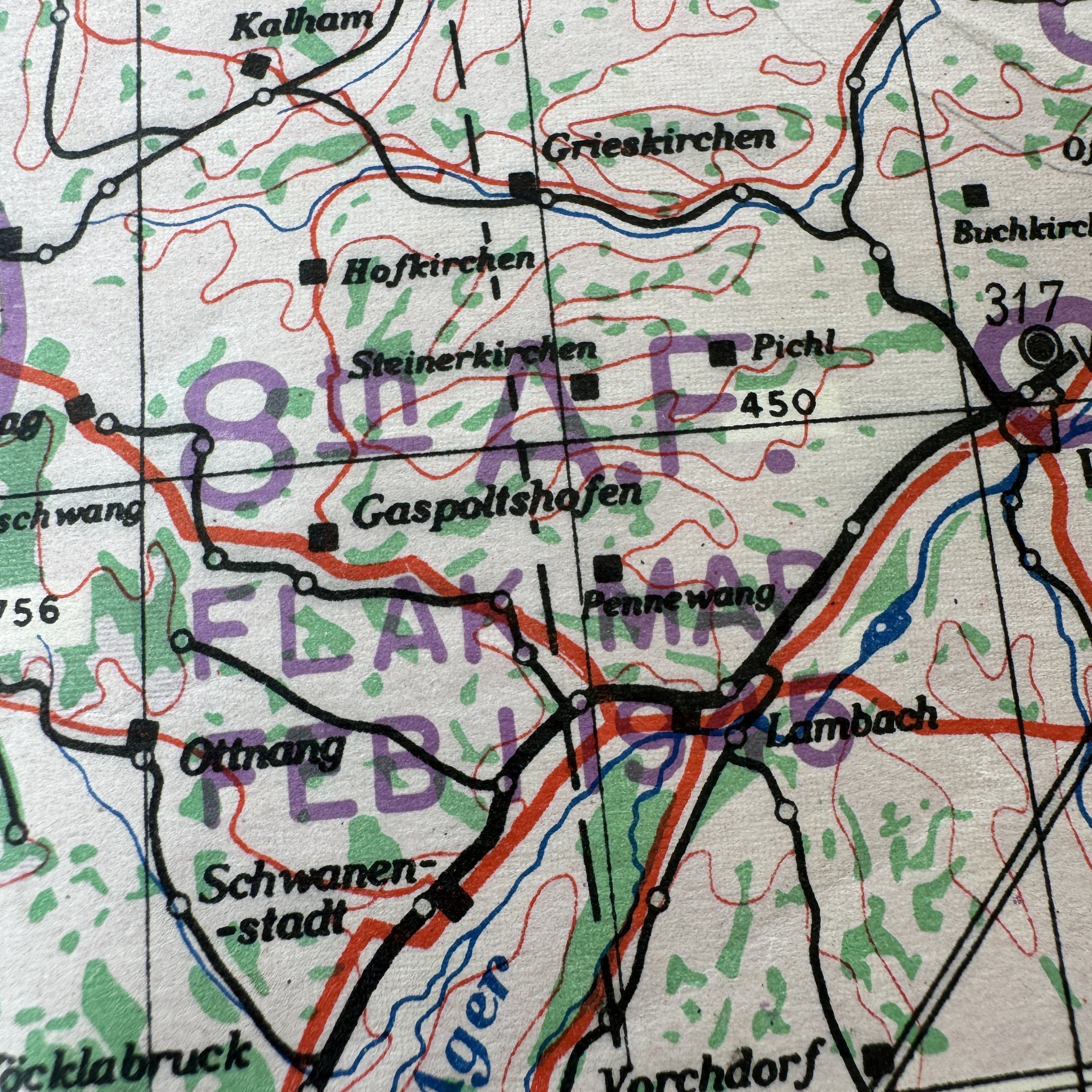
Heavily used and combat marked February 1945 dated 8th Air Force B-17 Flying Fortress combat FLAK map used during extensively used during World War II Eighth Air Force aerial bombing mission over München (Munich) , Nürnberg, and Schweinfurt. Shows very rare hand marked (extended German anti-aircraft flak ranges) near Landsberg, Meitingem, Gunzburg, Nurnberg, Schweinfurt, Lamberg, Bayreuth, and Klatovy.
Size: 23 × 28.5 inches
This exceptionally rare and museum-grade World War II artifact is an original Eighth Air Force flak map created specifically for United States Army Air Forces heavy bomber operations and actively used during 8th Air Force B-17 Flying Fortress combat missions over Germany. This particular flak map shows clear evidence of repeated operational use and was carried on multiple combat sorties during the Eighth Air Force’s accelerated bombing campaign in 1945. It was used on missions targeting München (Munich) , Nürnberg, and Schweinfurt, three of the most heavily defended and strategically vital cities in Germany.
These limited produced flak intelligence maps were among the most critical navigational and survival tools issued to 8th Air Force B-17 bomber crews, as they plotted confirmed German anti aircraft artillery concentrations, effective engagement ranges, and high risk defensive belts based on the most current intelligence available at the time. This flak map reflects German flak strength as of February 1945, placing it in the final and most intense phase of the air war over Europe.
By early 1945, the Eighth Air Force had reached the peak of its operational power, launching massive daylight bombing raids deep into the German heartland on an almost daily basis. German air defenses had evolved into a dense and deadly network of heavy and light flak batteries positioned around major industrial cities, transportation hubs, aircraft factories, and oil production facilities. Accurate flak mapping was essential. These flak maps were used extensively during pre-mission briefings to plan routes, altitudes, timing, and formation adjustments, and were then carried aboard the B-17 aircraft during combat missions so navigators and pilots could make real time decisions when encountering unexpected resistance or changing weather conditions.
This particular flak map shows clear evidence of repeated operational use and was carried on multiple combat sorties during the Eighth Air Force’s accelerated bombing campaign in 1945. It was used on missions targeting München, Nürnberg, and Schweinfurt, three of the most heavily defended and strategically vital cities in Germany. München was a major political and industrial center. Nürnberg held enormous symbolic and logistical importance and was protected by extensive flak belts. Schweinfurt was one of the most critical ball bearing production centers in the Third Reich and had been fiercely defended since the infamous 1943 raids that resulted in catastrophic bomber losses. By 1945, despite Germany’s declining resources, these cities remained ringed with anti aircraft fire capable of inflicting severe damage on incoming bomber formations.
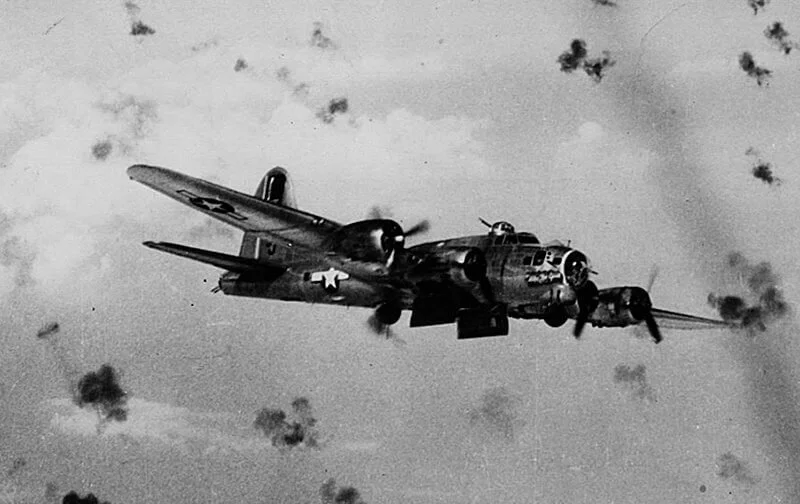
Flak was responsible for more Eighth Air Force losses than enemy fighters during several periods of the war, particularly late in the conflict when German fighter strength had diminished but ground defenses remained formidable. Bursts from eighty eight millimeter and one hundred five millimeter guns filled the sky with steel fragments that could tear through aluminum airframes, sever control cables, ignite fuel tanks, or incapacitate crew members instantly. Maps like this were a direct response to that threat, representing the intersection of intelligence gathering, aerial reconnaissance, and combat survival.
Artifacts of this type were rarely preserved. Most were destroyed after missions, discarded due to wear, or lost with aircraft that failed to return. Surviving examples that can be directly associated with late war Eighth Air Force operations are exceptionally scarce. This flak map stands as a tangible witness to the daily reality faced by B 17 crews flying long hours over enemy territory in unpressurized aircraft, enduring extreme cold, violent flak barrages, and the constant risk of not making it home.
As a primary source artifact, this map is not only a piece of aviation history but also a combat document that reflects the scale, precision, and human cost of the strategic bombing campaign that helped bring the war in Europe to an end.
FULL HISTORY:
The final phase of the air war over Germany in 1945 represented the culmination of everything the United States Army Air Forces had learned since the first tentative daylight raids of 1942. By February 1945, the Eighth Air Force stood at the height of its power. It fielded thousands of heavy bombers, dominated the skies with long range fighter escort, and possessed an intelligence and targeting apparatus capable of striking deep into the collapsing German Reich with near daily regularity. Among the most frequently attacked and symbolically important objectives during this final campaign were München, Nürnberg, and Schweinfurt. Each city represented a different pillar of German war power. Munich served as a transportation and administrative hub. Nuremberg held immense ideological value and significant industrial capacity. Schweinfurt remained one of the most critical industrial targets in the Reich due to its ball bearing plants, which were essential to aircraft, vehicle, and weapons production.
By February 1945, the Eighth Air Force was conducting large scale operations almost daily, often in coordination with the Fifteenth Air Force attacking from Italy. The backbone of these missions remained the B-17 Flying Fortress, an aircraft whose rugged design, heavy defensive armament, and proven reliability had made it synonymous with the daylight bombing campaign. B-17 groups from the First, Third, and especially the Third Air Division flew the majority of the deep penetration raids into southern Germany during this period, frequently operating at the extreme range of their fuel limits while carrying heavy bomb loads.
Munich was attacked repeatedly from February through April 1945 as Allied planners sought to cripple rail yards, marshaling yards, industrial plants, and administrative centers supporting German forces in southern Germany and Austria. Missions against Munich typically involved large formations of B-17s from veteran bomb groups such as the 91st Bomb Group, 100th Bomb Group, 381st Bomb Group, and 401st Bomb Group. These units had already accumulated hundreds of missions over occupied Europe and Germany and by 1945 were among the most experienced heavy bomber organizations in the world. The February raids focused heavily on transportation nodes. Marshalling yards were blanketed with high explosive bombs designed to sever rail connections feeding the Eastern Front and the Alpine redoubt Hitler hoped to establish. Despite the weakening of the Luftwaffe, flak defenses around Munich remained intense, and crews still faced heavy anti aircraft fire even as German fighter opposition dwindled.
Nuremberg held a unique place in the Eighth Air Force target system. Beyond its industrial and transportation value, it was one of the most symbolically charged cities in Germany, long associated with party rallies and propaganda spectacles. In February and March 1945, B-17 groups from the 92nd, 305th, 306th, and 384th Bomb Groups participated in repeated raids aimed at destroying remaining industrial capacity, oil storage, and rail infrastructure. These missions often encountered layered flak belts that tested the discipline of bomber formations. Crews flew through dense clouds of black bursts that rocked aircraft and tore holes through wings and fuselages. Yet by this stage of the war, formation integrity was high and losses were comparatively lower than during the catastrophic raids of 1943. Long range escort by P-51 Mustangs ensured that German fighters rarely posed a serious threat.
Schweinfurt remained one of the most infamous targets in the history of the Eighth Air Force. Earlier in the war, attacks on its ball bearing factories had resulted in devastating losses, making the city a symbol of both strategic necessity and sacrifice. By 1945, Schweinfurt had already been heavily damaged, but it continued to be attacked to ensure that any attempt at industrial recovery was rendered impossible. From February onward, B-17 units from the 351st, 390th, 398th, and 447th Bomb Groups struck remaining industrial sites, rail yards, and repair facilities. These missions were often part of larger coordinated efforts that included strikes on nearby secondary targets, ensuring that German air defenses were overwhelmed by the sheer scale of Allied bomber streams.
The character of these late war missions differed markedly from earlier years. Bomber crews in 1945 were often flying their final missions before rotation home, and many aircraft carried extensive mission markings that testified to years of continuous combat. Aircraft were patched and repatched. Engines bore the scars of flak damage repaired in English hardstands. Crews understood that the end of the war was approaching, yet discipline and caution remained paramount. Even in the final weeks, flak remained deadly, and accidents during takeoff and landing continued to claim lives.
As March gave way to April 1945, attacks on Munich, Nuremberg, and Schweinfurt increasingly focused on transportation collapse rather than pure industrial destruction. Rail bridges, marshalling yards, and supply depots became priority targets as Allied ground forces pushed rapidly into Germany. B-17 groups flew missions in which resistance was minimal, sometimes encountering little more than scattered flak and abandoned airfields below. These raids were instrumental in isolating German armies and preventing organized withdrawal or resupply.
By the time the final missions were flown in late April 1945, the Eighth Air Force had effectively achieved air supremacy over Germany. The B-17 units that had once fought their way through ferocious fighter opposition and murderous flak now flew over shattered cities that bore the cumulative weight of years of bombardment. The campaigns against Munich, Nuremberg, and Schweinfurt from February to the end of the war stand as a testament to the maturity of American strategic bombing doctrine. They also reflect the endurance and professionalism of the B-17 squadrons and groups that carried out these operations. These men and machines played a decisive role in dismantling the industrial and transportation backbone of Germany, hastening the collapse of the Third Reich and bringing the war in Europe to its long awaited conclusion.