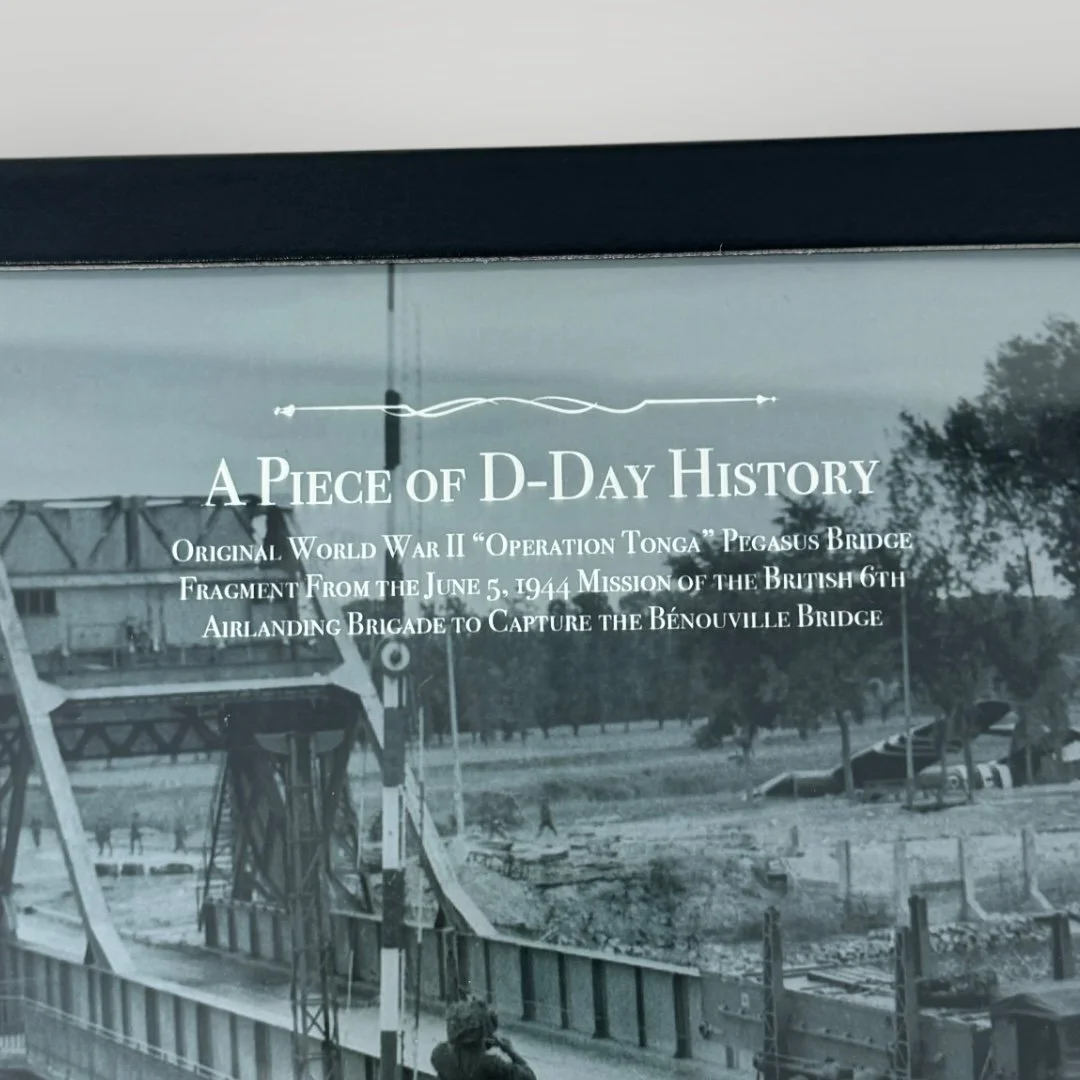
Original World War II "Operation Tonga" Pegasus Bridge Fragment From the June 5th, 1944 Mission of British 6th Airborne Brigade to Capture the Bénouville Bridge Relic Display
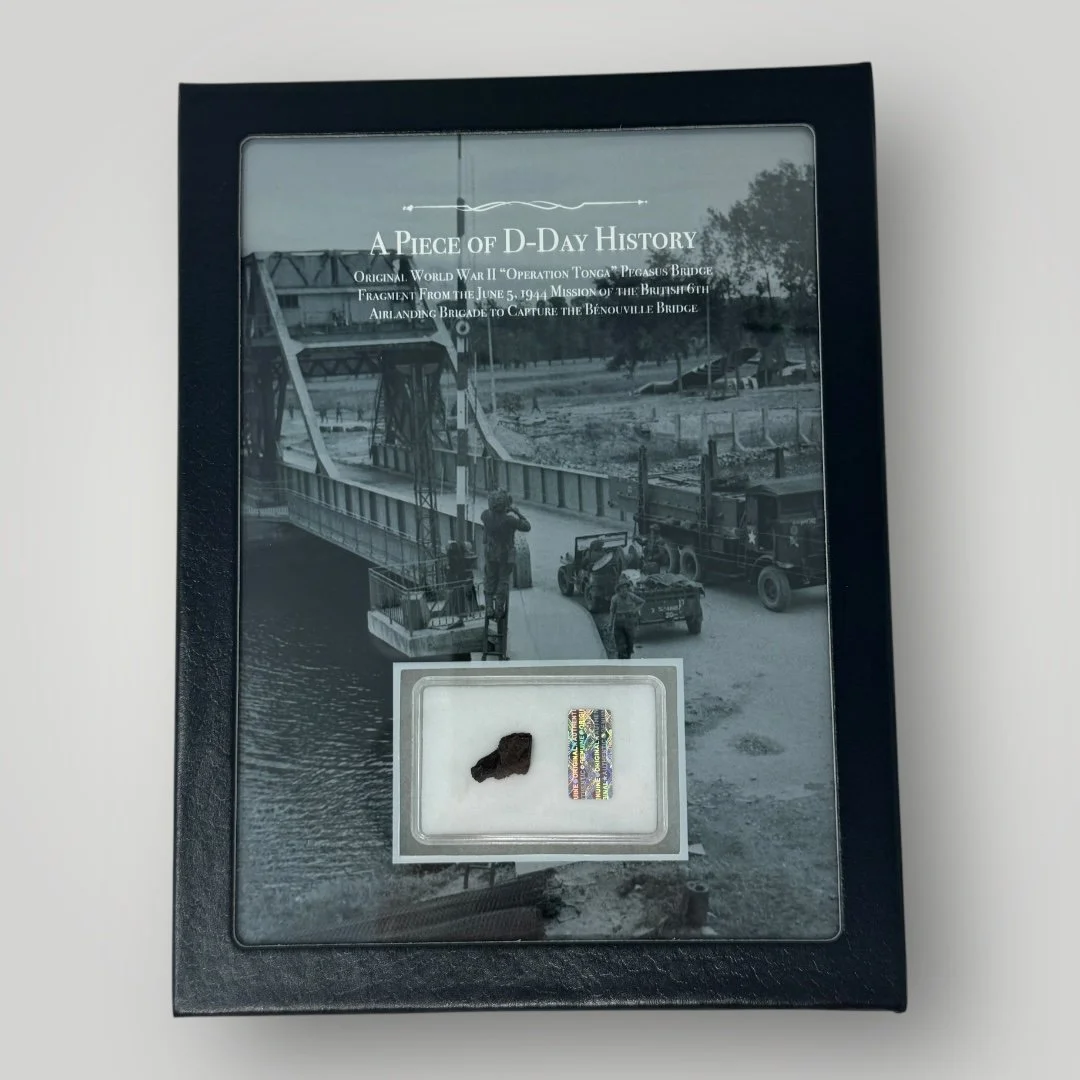
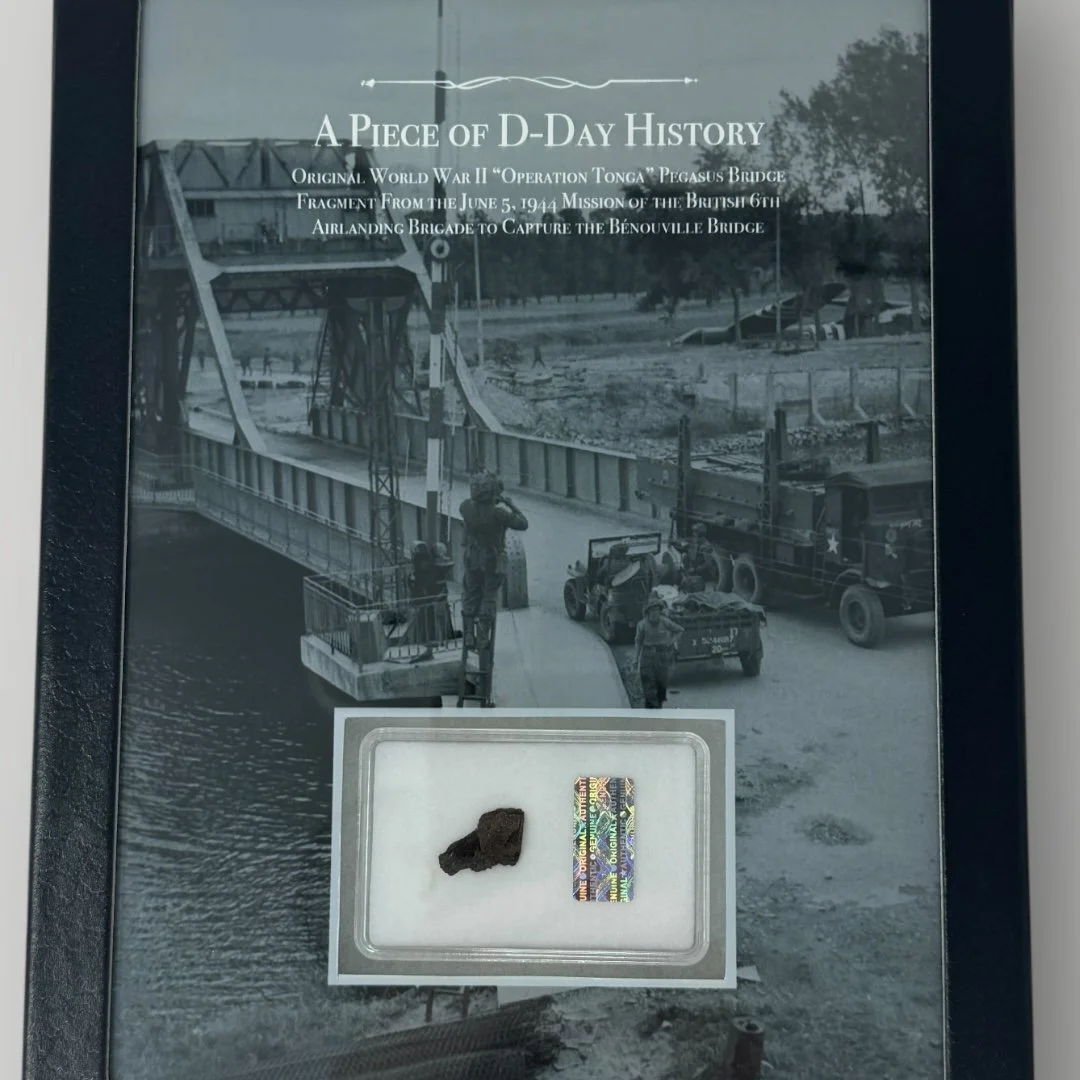
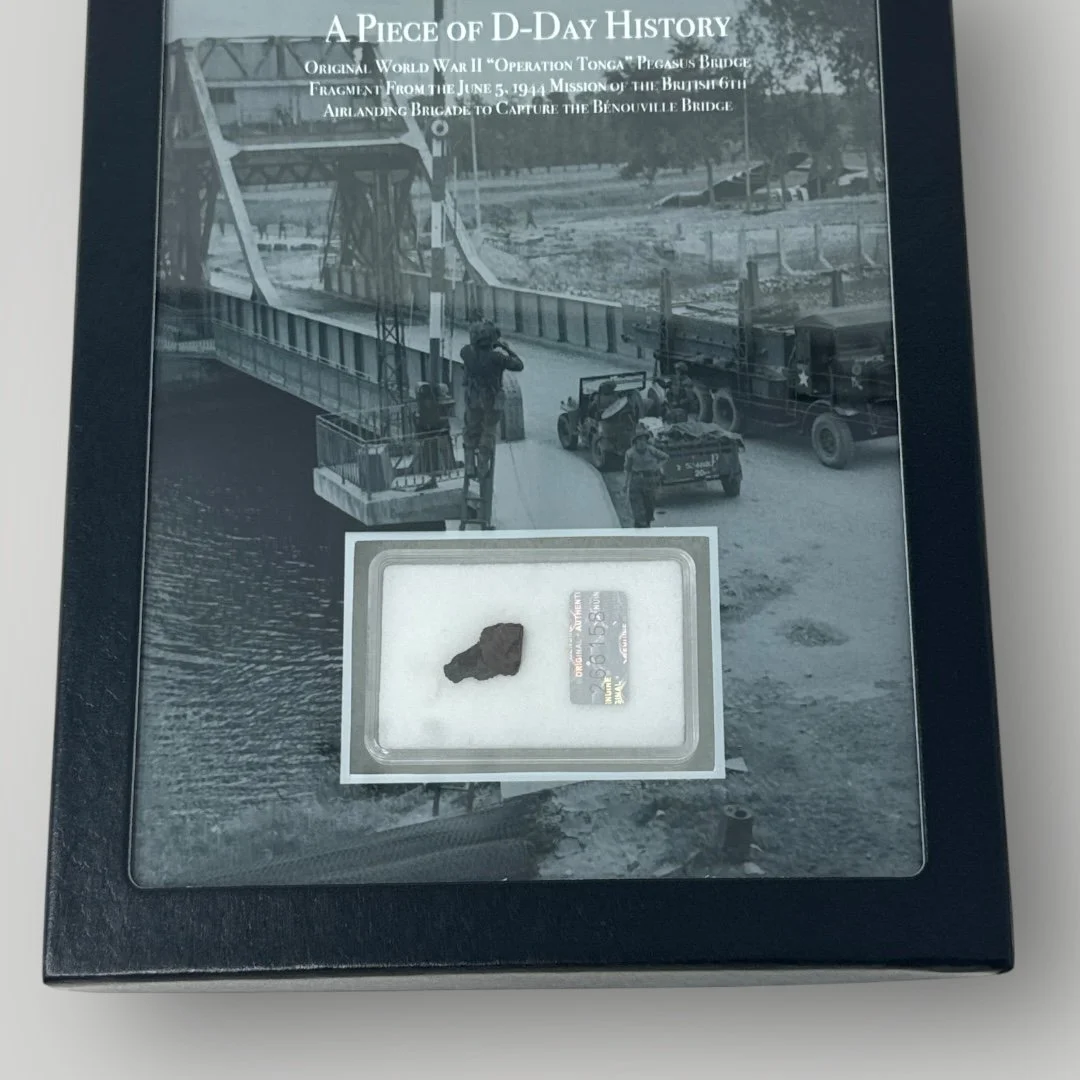
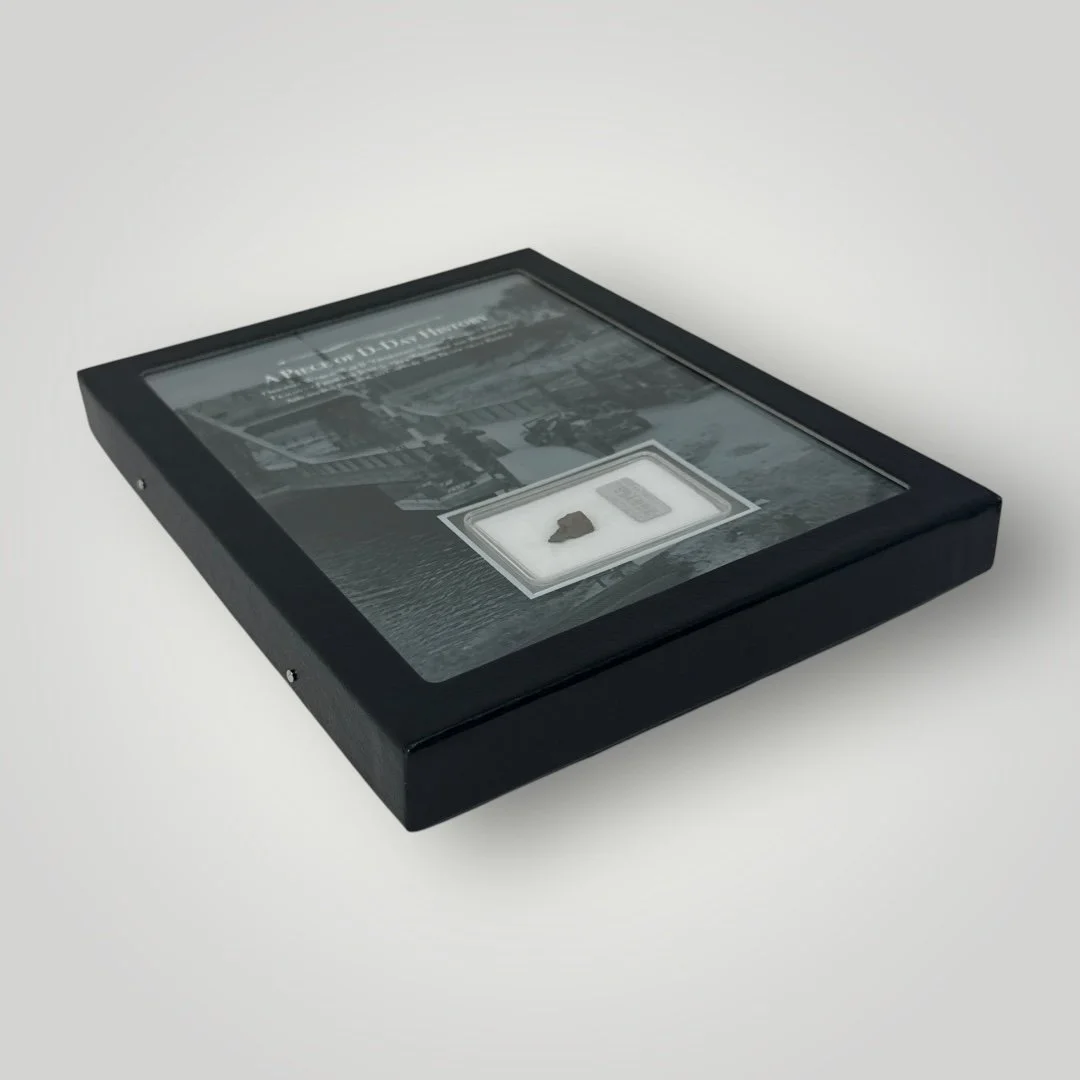
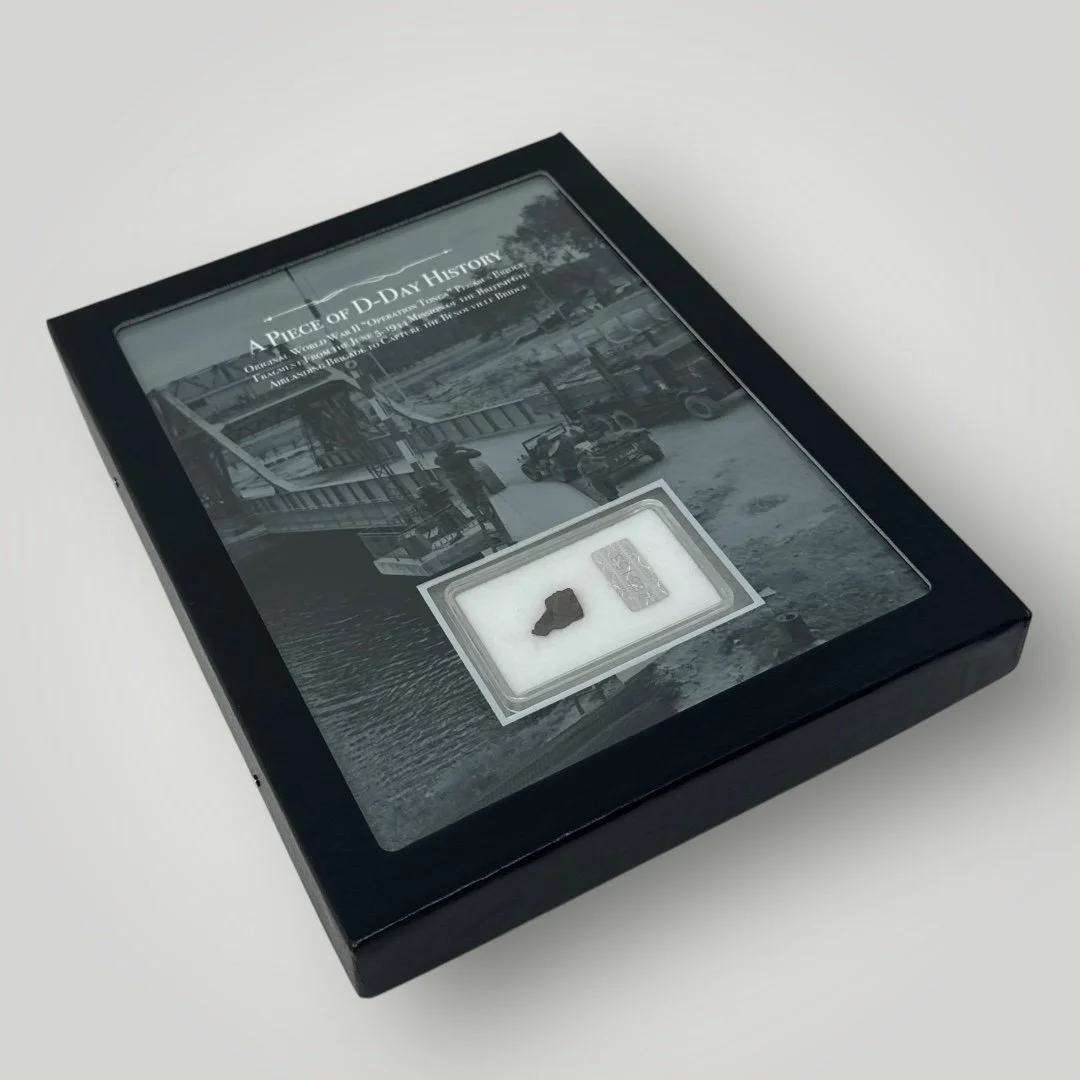
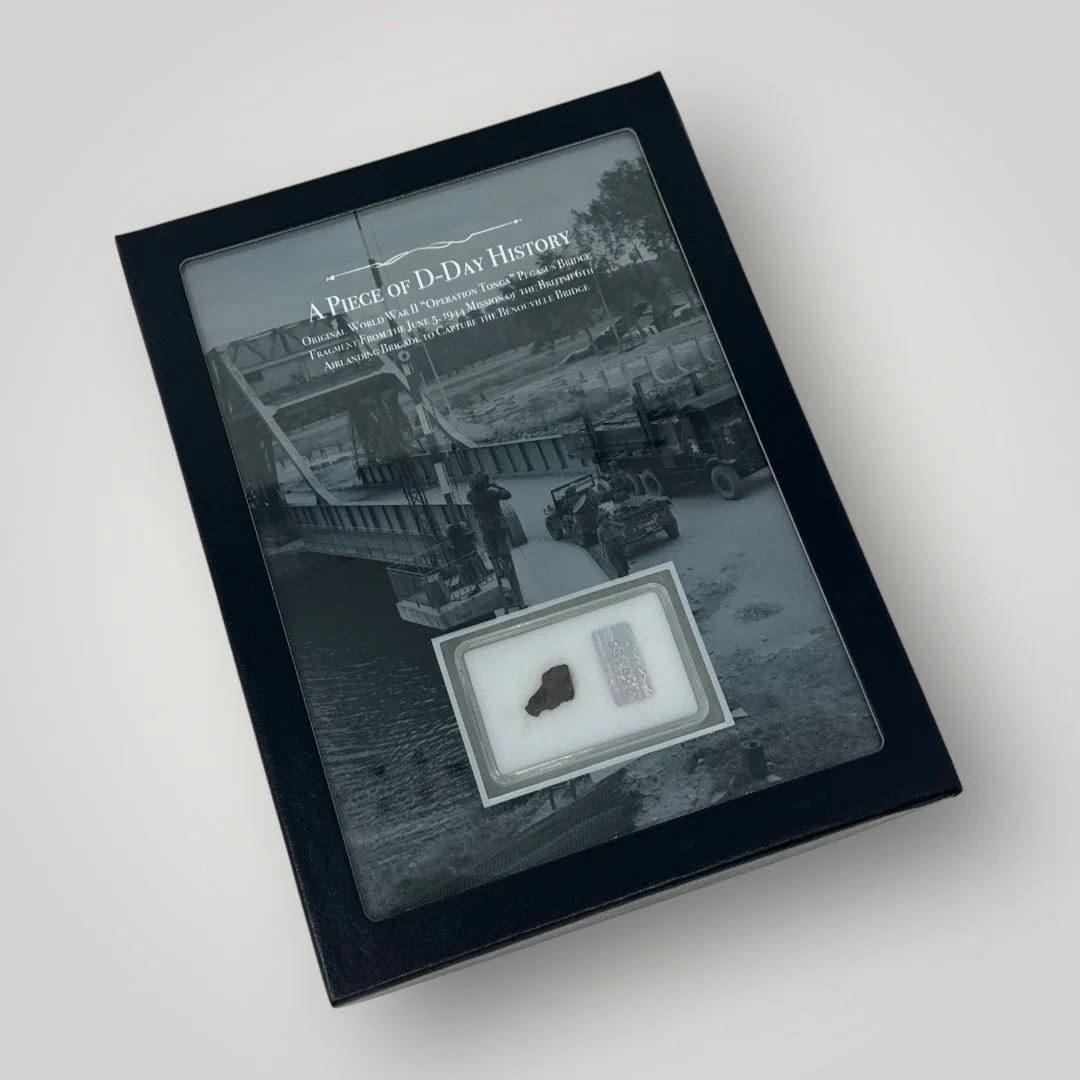
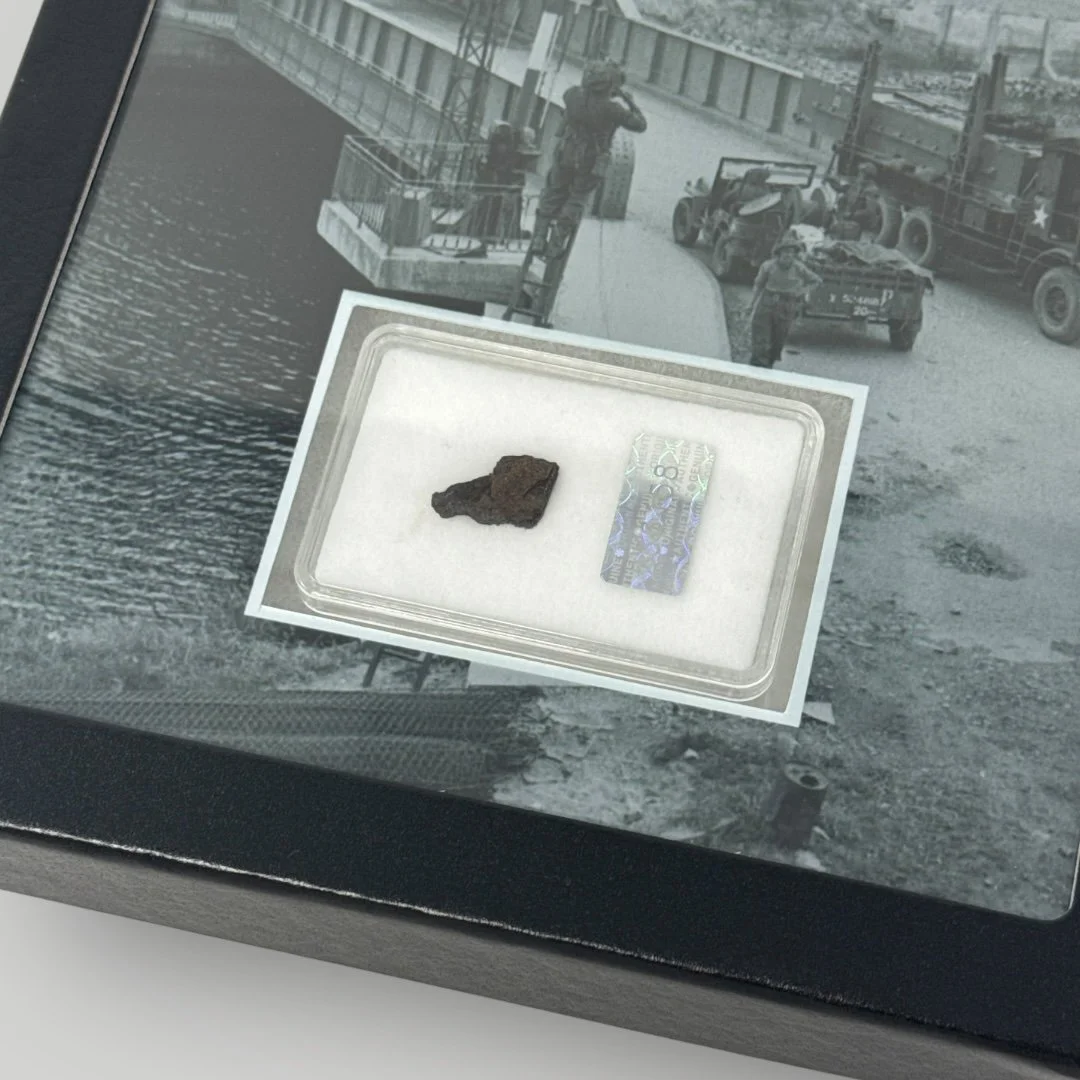
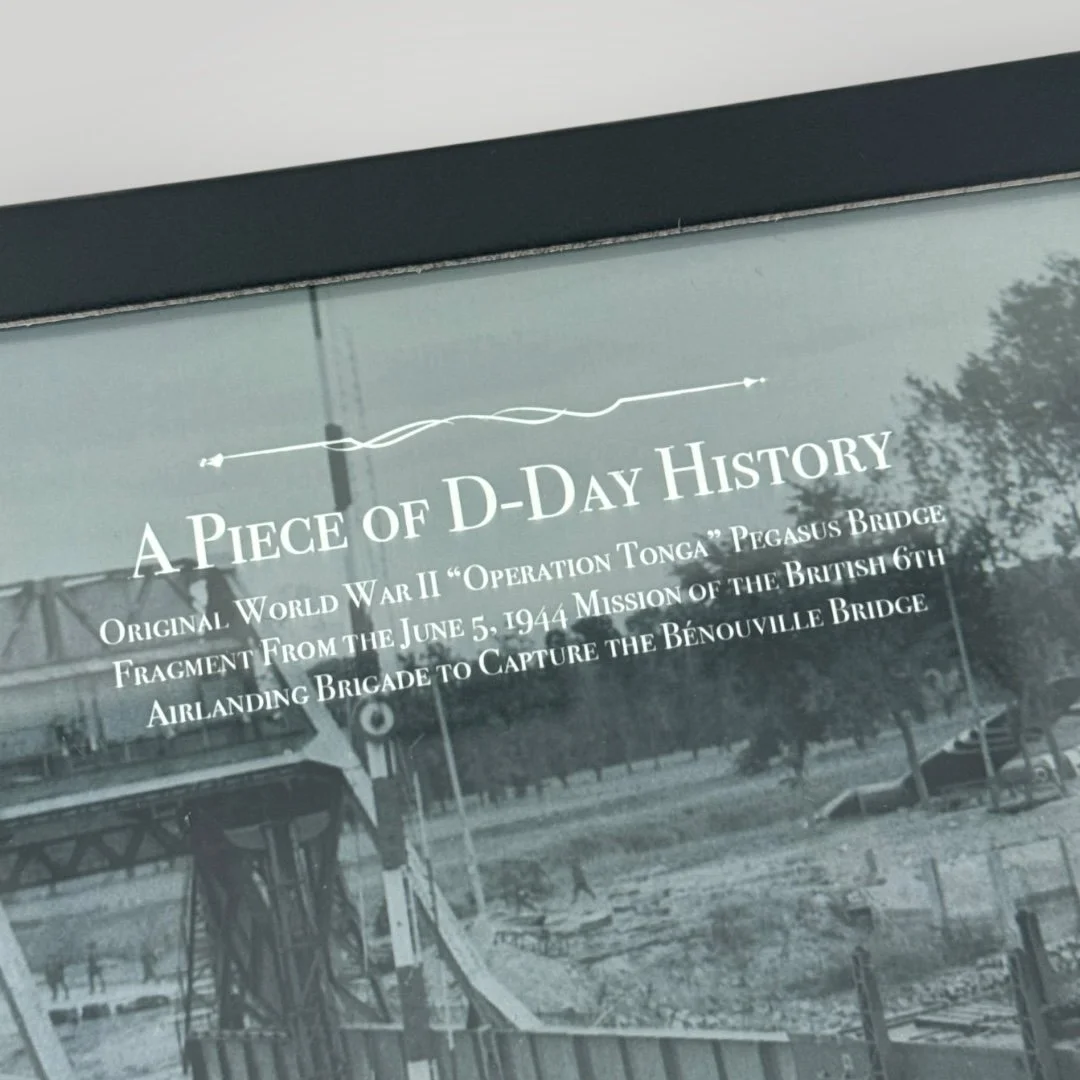
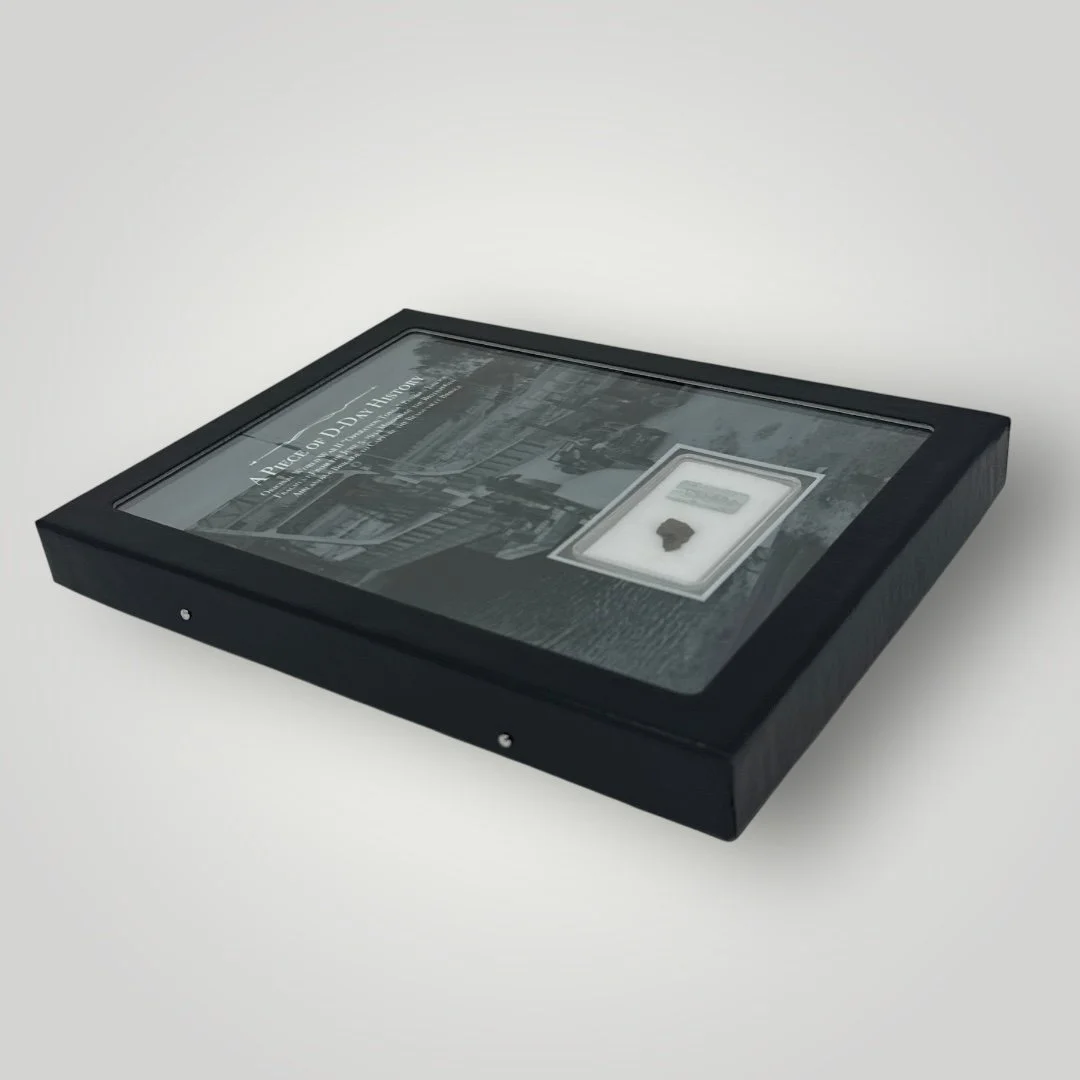
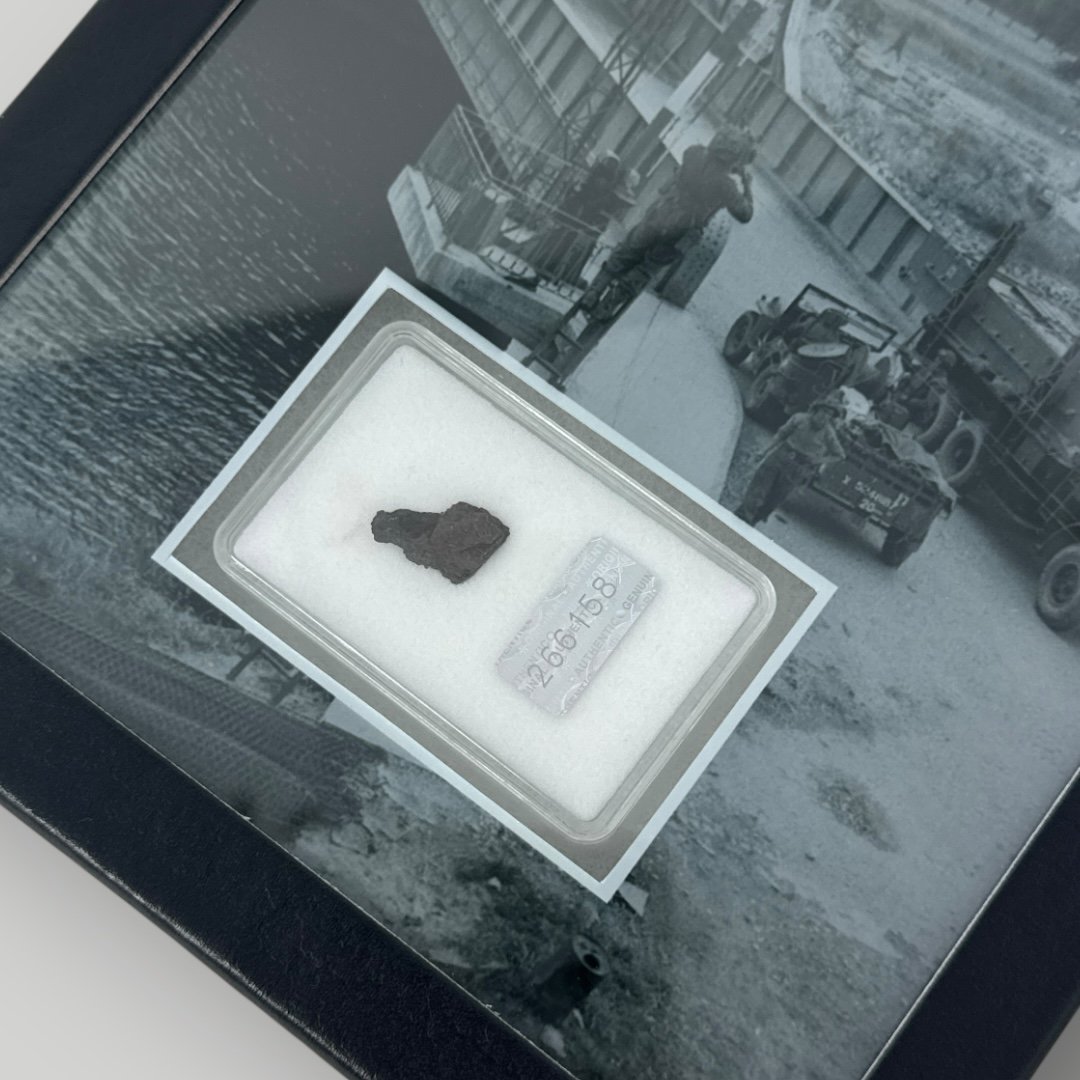
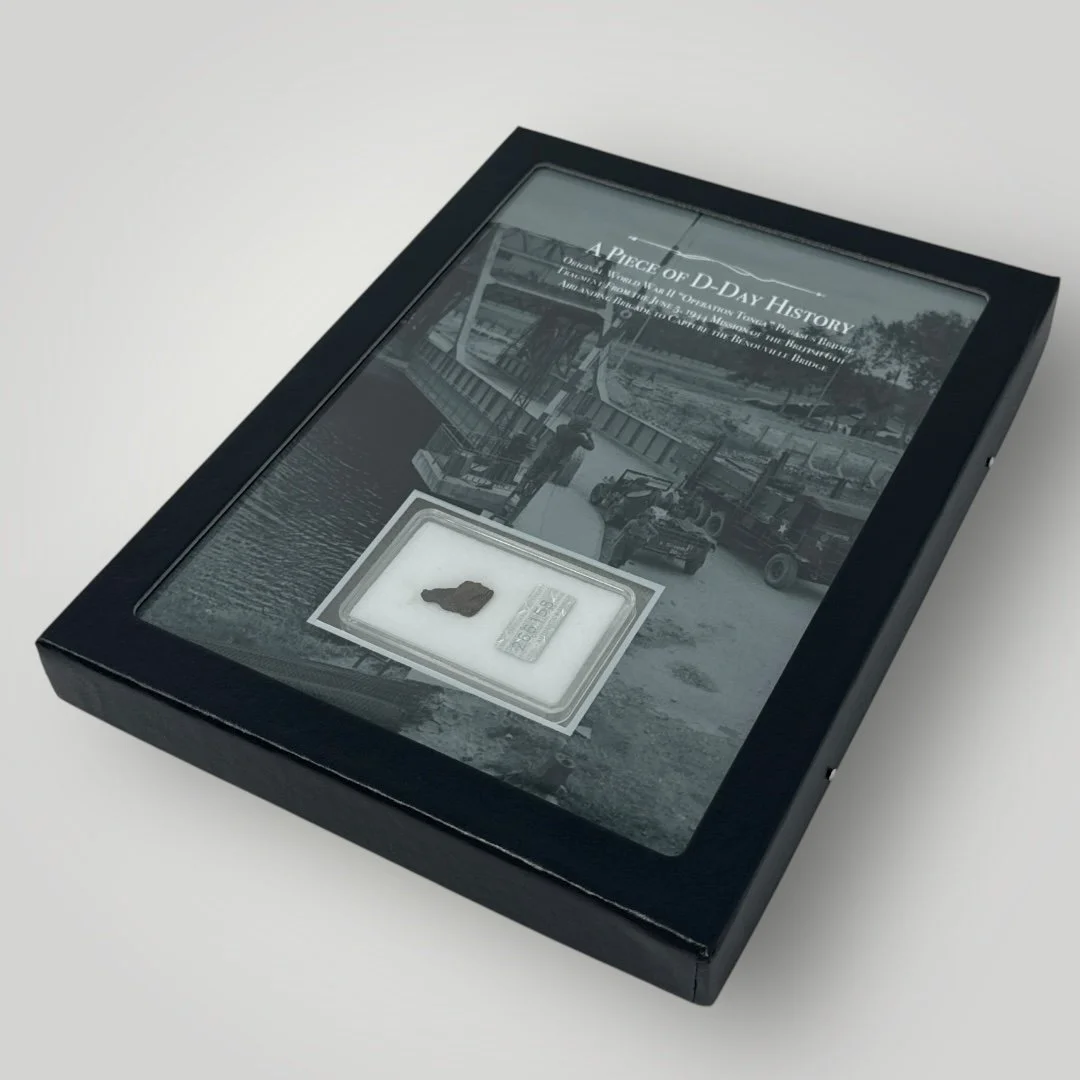
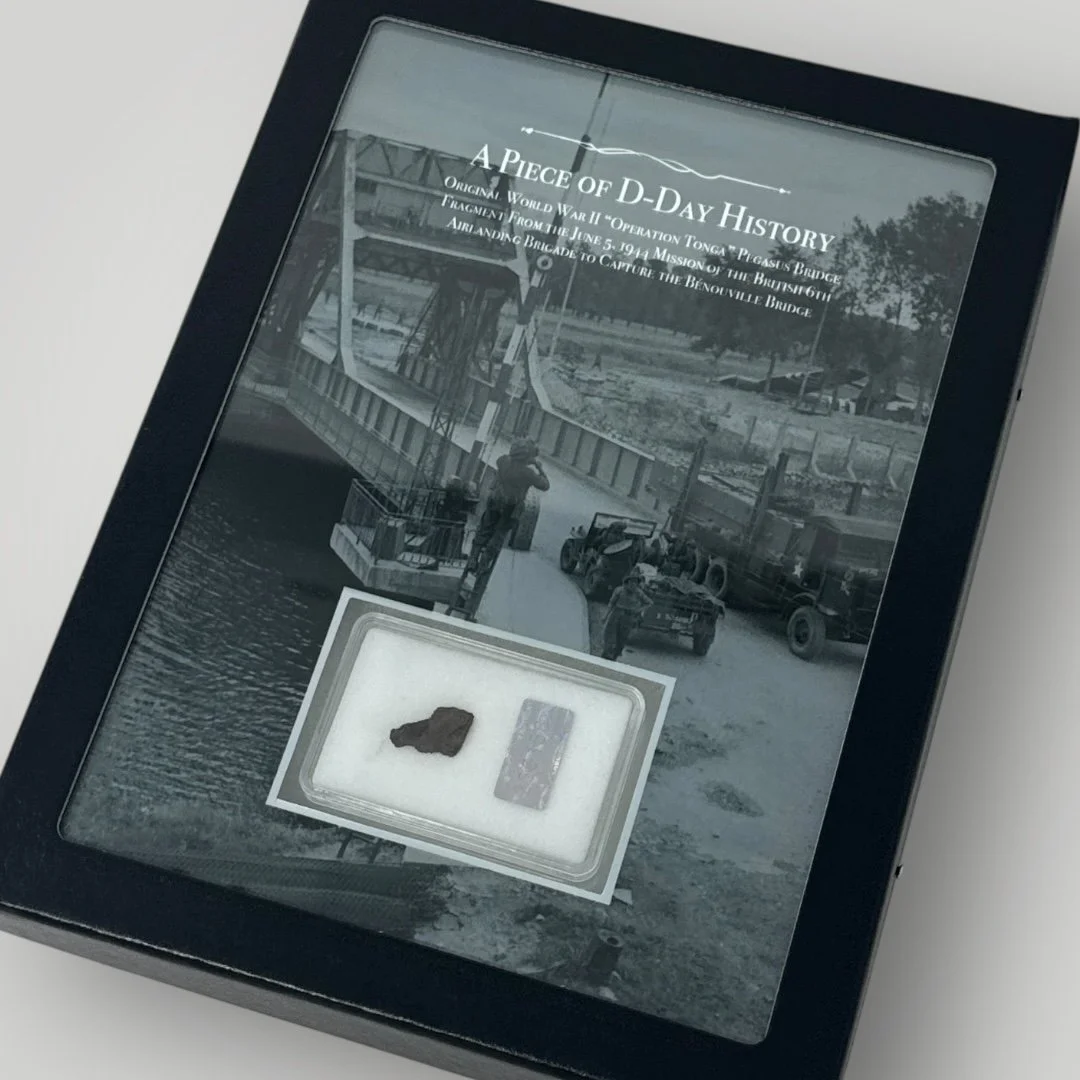
Original World War II "Operation Tonga" Pegasus Bridge Fragment From the June 5th, 1944 Mission of British 6th Airborne Brigade to Capture the Bénouville Bridge Relic Display
Comes with a hand-signed Certificate of Authenticity and a full historical research write-up.
*Ships via USPS Priority Mail in a medium box with full insurance, tracking, and signature confirmation required upon delivery!
Display Size: 6.25 x 8.25 inches (Medium/Large Display Size)
From: World War II - European Theater
Historical Piece of WWII History Included: Original World War II Operation Tonga Pegasus Bridge Fragment From the June 5th, 1944 Mission of British 6th Airlanding Brigade to Capture the Bénouville Bridge
Dated: 1944
Exclusive WWII Relic Display: Limited Edition of 50
________________________
🇺🇸A PROUD U.S.A. COMPANY - OUR PROCESS🇺🇸
Each WWII "Piece of History" is carefully presented in a hand-crafted display made in the U.S.A. to honor and preserve its history. Our team pairs every piece of history with high-resolution archival photographs that connect directly to the moment it represents. The result is not just a display. It is a preserved story. Housed in a premium 6×8 large display frame, each presentation features a custom title, a detailed historical description, and a protective UV resistant acrylic cover with plush archival padding beneath the artifact. Every component is selected to protect the piece while elevating its visual and historical impact. Each piece is also fully authenticated, sealed with a tamper proof hologram, and prepared for confident display in your home, office, or private collection. Own a true piece of the past and preserve its legacy for generations to come.
________________________
#1. Historical Significance:
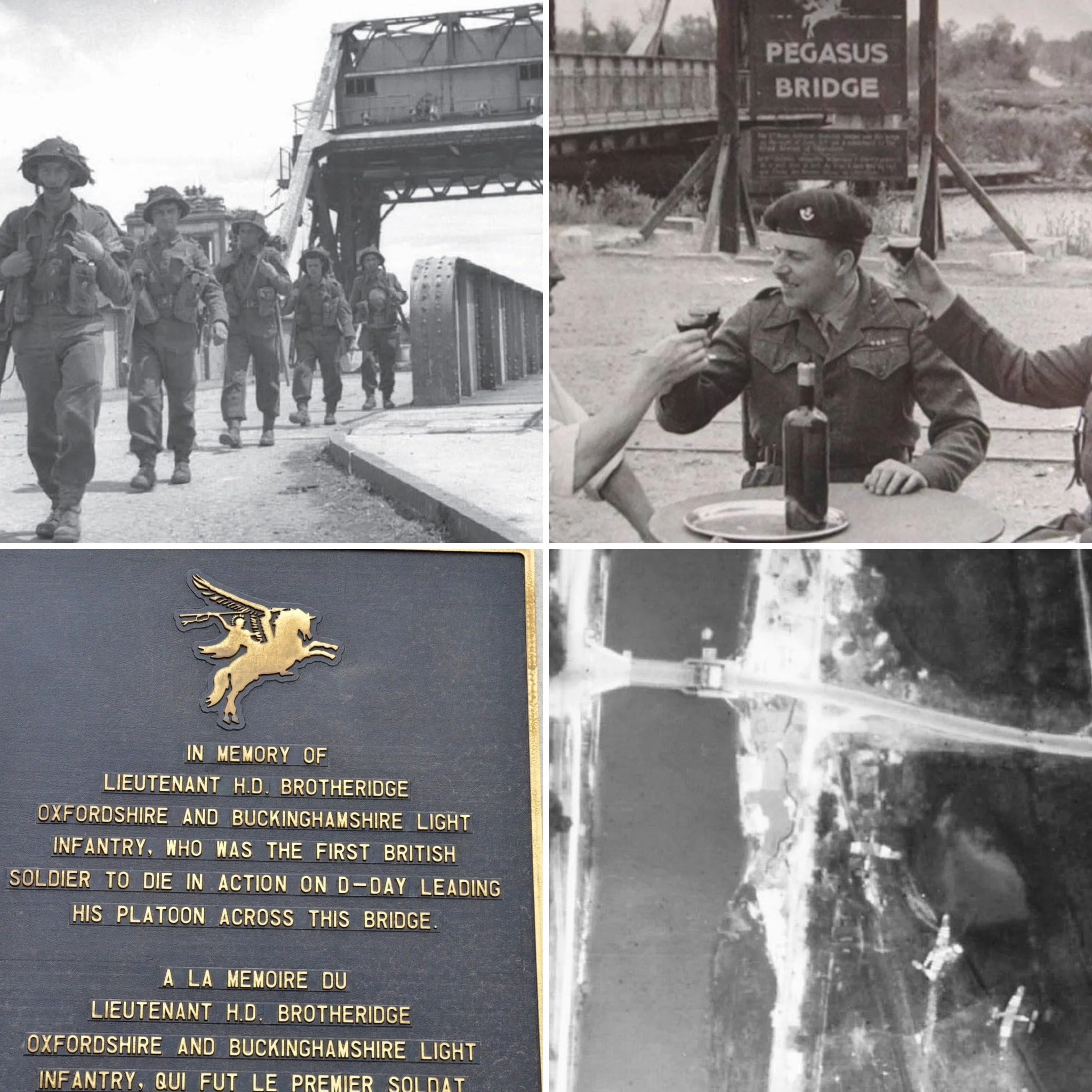
Pegasus Bridge stands as one of the most symbolically powerful sites of the Second World War, not because of its size or firepower, but because of the precision, courage, and urgency that defined its capture. Located at Bénouville over the Caen Canal in Normandy, the bridge controlled a critical gateway between the eastern flank of the Allied landing beaches and the interior of France. On the night of June 5, 1944, it became the first objective of the D Day invasion to be successfully seized by Allied forces. Its capture ensured that German armored units could not counterattack the vulnerable British landing beaches of Sword Beach from the east, while also providing the Allies with a secure route inland.
This operation was part of Operation Tonga, the airborne phase of the British contribution to Operation Overlord. Operation Tonga assigned the British 6th Airborne Division with an extraordinary mission. They were to land deep behind enemy lines under cover of darkness, secure vital bridges, destroy key infrastructure, and hold their positions until relieved by seaborne forces. Their objectives included the bridges over the Caen Canal and the Orne River, the destruction of the Merville artillery battery, and the protection of the eastern flank of the entire invasion. Failure at Pegasus Bridge would have placed the Sword Beach landings in immediate danger of German armored counterattack.
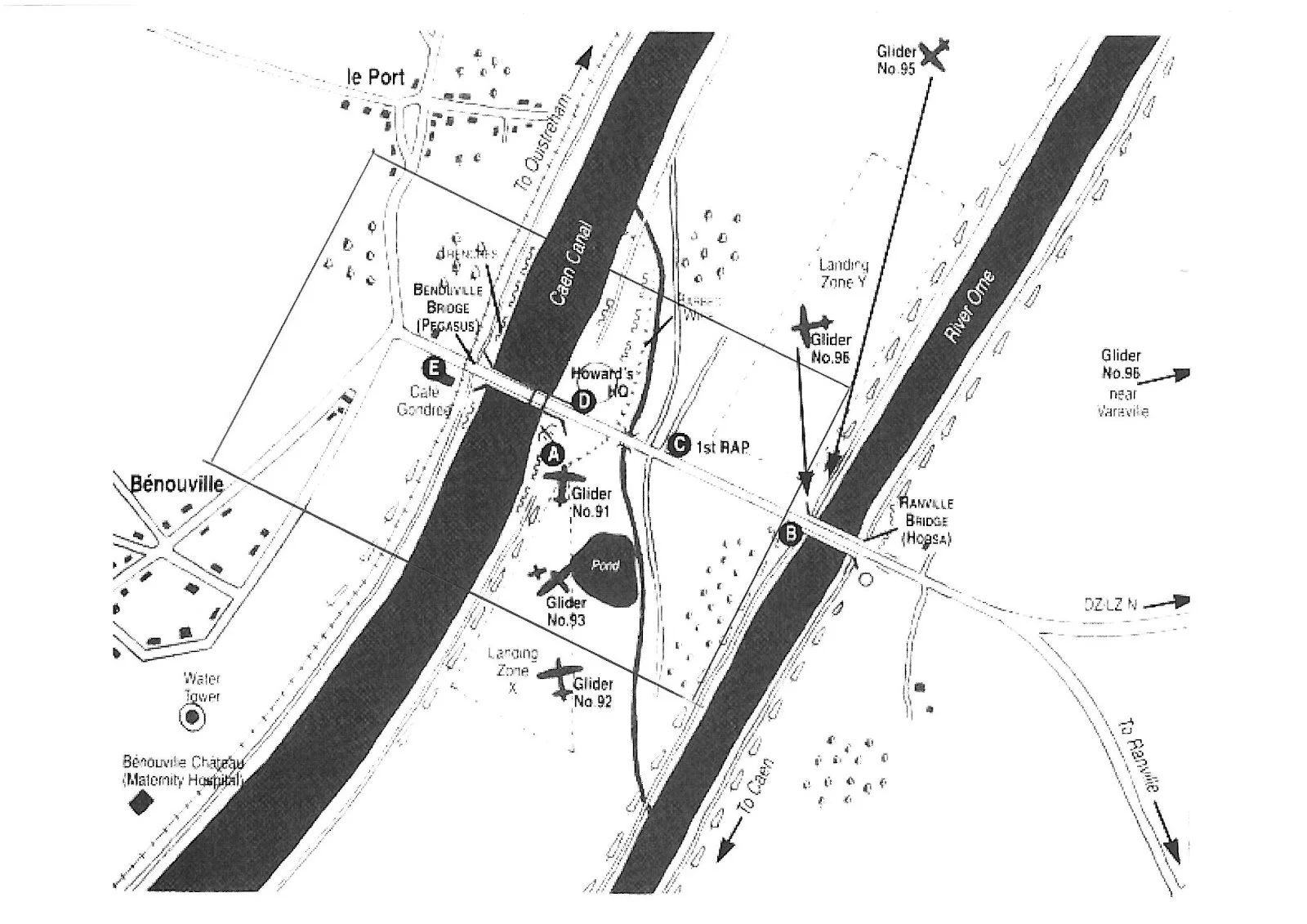
The assault on Pegasus Bridge was executed by a specially selected force from the 6th Airlanding Brigade, led by Major John Howard of the Oxfordshire and Buckinghamshire Light Infantry. Rather than parachuting, Howard’s men arrived in six Horsa gliders, towed across the English Channel and released in near silence just minutes after midnight. The landing was one of the most remarkable feats of navigation and piloting of the war. The gliders touched down only yards from the bridge, despite darkness, obstacles, and enemy defenses. Within moments, British troops were rushing the bridge, engaging German guards at close range with rifles, grenades, and bayonets.
The fight was brief but violent. German defenders were taken by surprise, yet resistance was fierce in pockets. Lieutenant Den Brotheridge, one of the first men across the bridge, was mortally wounded and is widely regarded as the first Allied officer killed on D Day. Despite this loss, the British secured the bridge in roughly ten minutes. The bridge was quickly renamed Pegasus Bridge in honor of the winged horse emblem of the British Airborne Forces. Nearby, a second force captured the Orne River bridge, later known as Horsa Bridge, ensuring both crossings were firmly in Allied hands.
The role of the British 6th Airlanding Brigade did not end with the initial assault. After the capture, the soldiers were tasked with holding the bridge against repeated German counterattacks. They faced infantry assaults, mortar fire, and armored threats, often with limited heavy weapons and little cover. Relief finally arrived when Lord Lovat’s commandos advanced from Sword Beach, famously led by bagpiper Bill Millin, crossing Pegasus Bridge to link up with the airborne troops. This moment symbolized the successful union of airborne and amphibious forces, a central goal of Operation Overlord.
Strategically, the capture of Pegasus Bridge was decisive. It prevented German Panzer divisions from moving rapidly toward Sword Beach, protected the vulnerable eastern flank of the invasion, and provided a stable corridor for Allied expansion inland. Tactically, it demonstrated the effectiveness of airborne and glider forces when combined with precise planning and leadership. Morally, it became a symbol of Allied daring and professionalism, proving that bold, small scale actions could shape the outcome of an entire campaign.
#2. Why This Display is Special:
Our "Piece of History" displays are a tangible connection to one of the most pivotal moments in WWII history. Carefully curated and designed, each display transforms an authentic fragment of WWII history into a breathtaking and meaningful tribute to the past. Whether you're a passionate history enthusiast, a proud descendant of a WWII veteran, or simply someone who values the sacrifices made for freedom, this limited edition display offers a unique way to honor the legacy of the Greatest Generation. Each display invites conversation, reflection, and a deeper appreciation for the courage and resilience of the Allied soldiers who fought in the European Theater. It stands not only as a stunning display but as a reminder of the bravery, sacrifice, and enduring spirit that helped shape the modern world. Let this display spark curiosity, inspire remembrance, and preserve the memory of those who fought for liberty for generations to come.
🇺🇸We are deeply honored to preserve these powerful pieces of history…not only for the world-renowned museums we curate for, but also for private collectors like yours! For this special display, 50% of all sales from this “Piece of History” display will be donated to the non-profit Honor Flight Network. Honor Flight is committed to transporting as many U.S. military veterans as possible to Washington, D.C., where they can visit the memorials dedicated to their service and sacrifice—all at no cost to them. Thank you for joining us in preserving history and honoring the heroes who helped shape it. 🇺🇸
This display would make an extraordinary addition to any WWII or military history collection. For further details or inquiries, please don’t hesitate to reach out.