SPECIAL LISTING OF 5 TYPE 1 PHOTOGRAPHS
SPECIAL LISTING OF 5 TYPE 1 PHOTOGRAPHS
Comes with C.O.A.
SPECIAL LISTING OF 5
eBay pricing:
USS Princeton Battle of Leyte Gulf: $720
8th Air Force B 24 Aerial France: $1,125
1944 Royal Air Force Burma: $765
1944 Normandy Lisieux: $1,395
1945 Nagasaki Atomic Bomb: $769
Website pricing:
USS Princeton Battle of Leyte Gulf: $550
8th Air Force B 24 Aerial France: $800
1944 Royal Air Force Burma: $700
1944 Normandy Lisieux: $925
1945 Nagasaki Atomic Bomb: $650
We can automatically honor the website pricing, which brings the total down from $4,774 on eBay to $3,625 through the website. That gives you an immediate savings of $1,149, or roughly 24% off the eBay price.
It is always such an honor to help add more meaningful historical pieces to your private collection. In addition to honoring the website pricing, and since you frequently order artifacts from us, I can take an additional 10% off your order, bringing the total for all five Type I photographs down to $3,262.50. That would give you a total savings of $1,511.50 compared to the eBay pricing and a final 34% off discount.
__________________
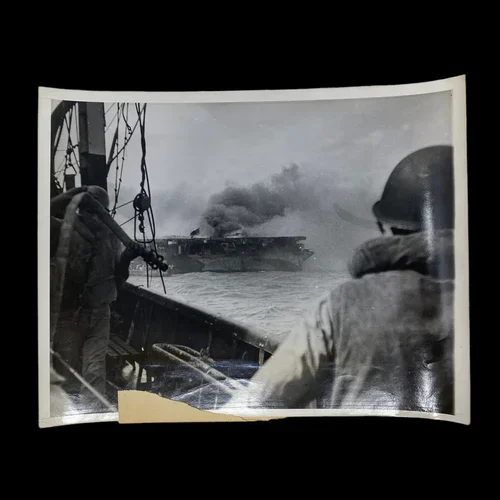
RARE! WWII USS Princeton Battle of Leyte Gulf “TYPE ONE” U.S. Navy Combat Battle of the Philippine Sea Press Photograph
$550.00
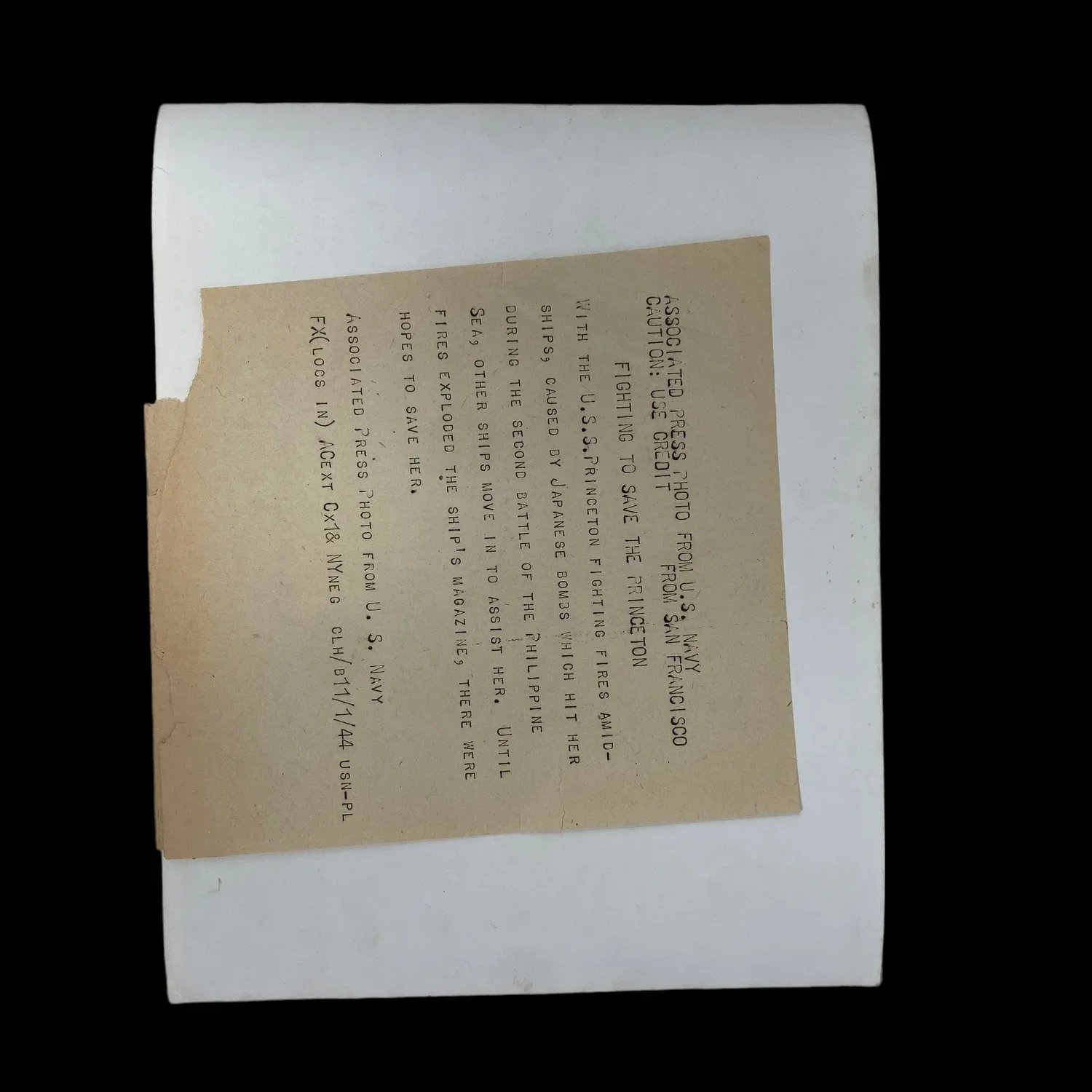
This rare and museum-grade World War II “TYPE ONE” Battle of Leyte Gulf combat U.S. Navy photograph of the Associated Press shows the USS Princeton fighting fires after taking a direct hit from a Japanese plane during the Battle of the Philippine Sea. This type one combat photograph shows other ships moving in to assist the USS Princeton until the fires entered the ship magazine and she was last.
_______________________
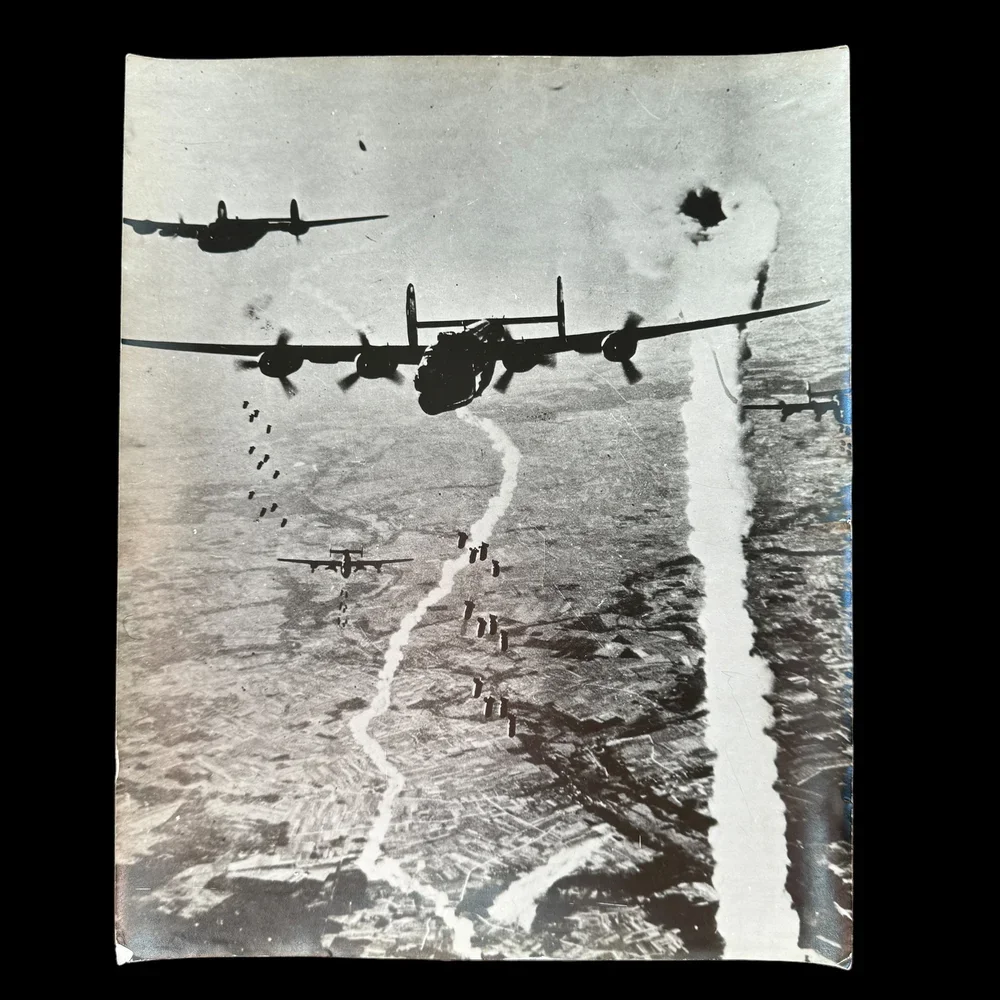
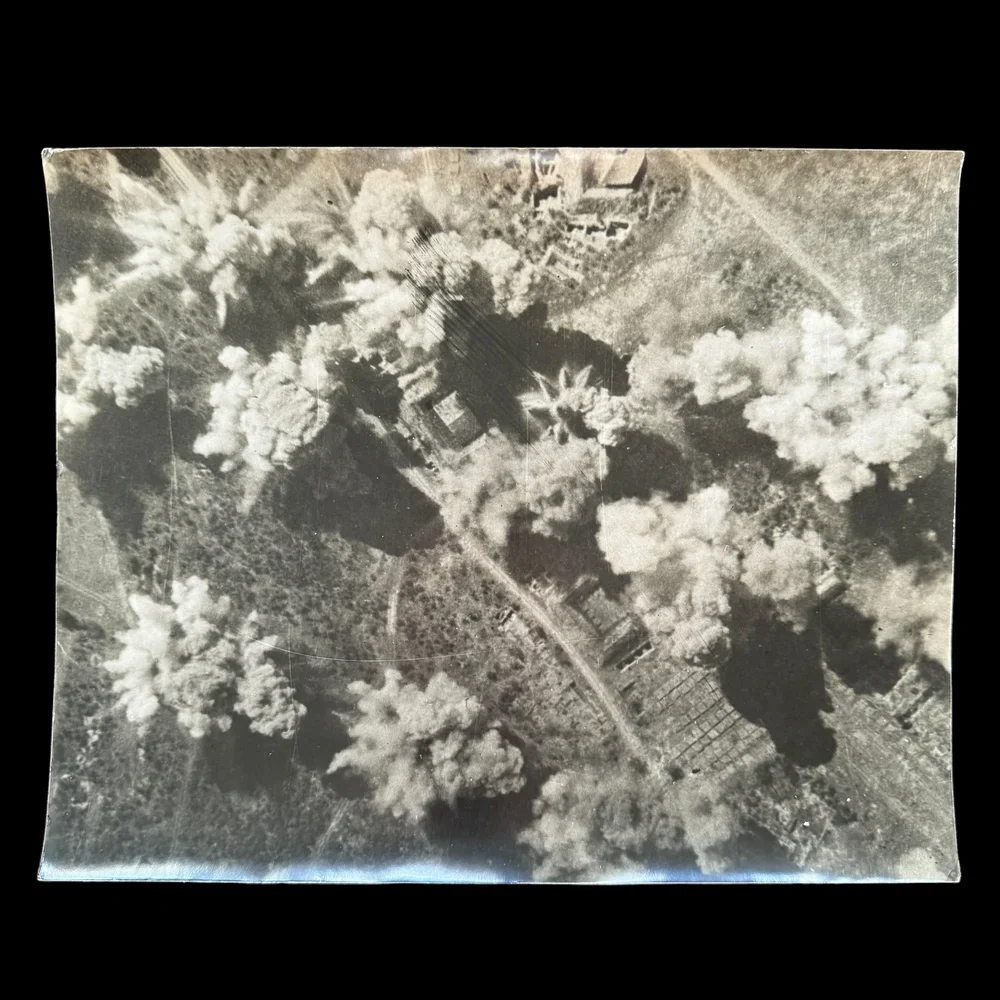
VERY RARE! WWII 1944 Type 1 8th Air Force 446th Bomb Group - B-24 Liberators Aerial Mission Tours France British Ministry of Information Photograph Department Press Photograph (OVERSIZED PRINT)
$800.00
Size: 12 x 15 inches
This incredibly rare, museum-grade World War II 8th Air Force 446th Bomb Group artifact is an original 1944-dated “Type 1” press photograph, sourced directly from the British Ministry of Information - Photograph Department. Type 1 photographs are exceptionally scarce as they represent the first high-gloss prints made from original combat negative camera images. These prints feature original marker stamps on the backside, indicating photography information.
What makes this WWII Type 1 Invasion of Normandy photograph even more exceptional is that it is an extremely rare, limited oversized print produced by the British Ministry of Information - Photograph Department. This particular photograph captures a historic moment, showing 8th Air Force B-24 Liberators of the 446th Bomb Group bombing raid on Tours, France.
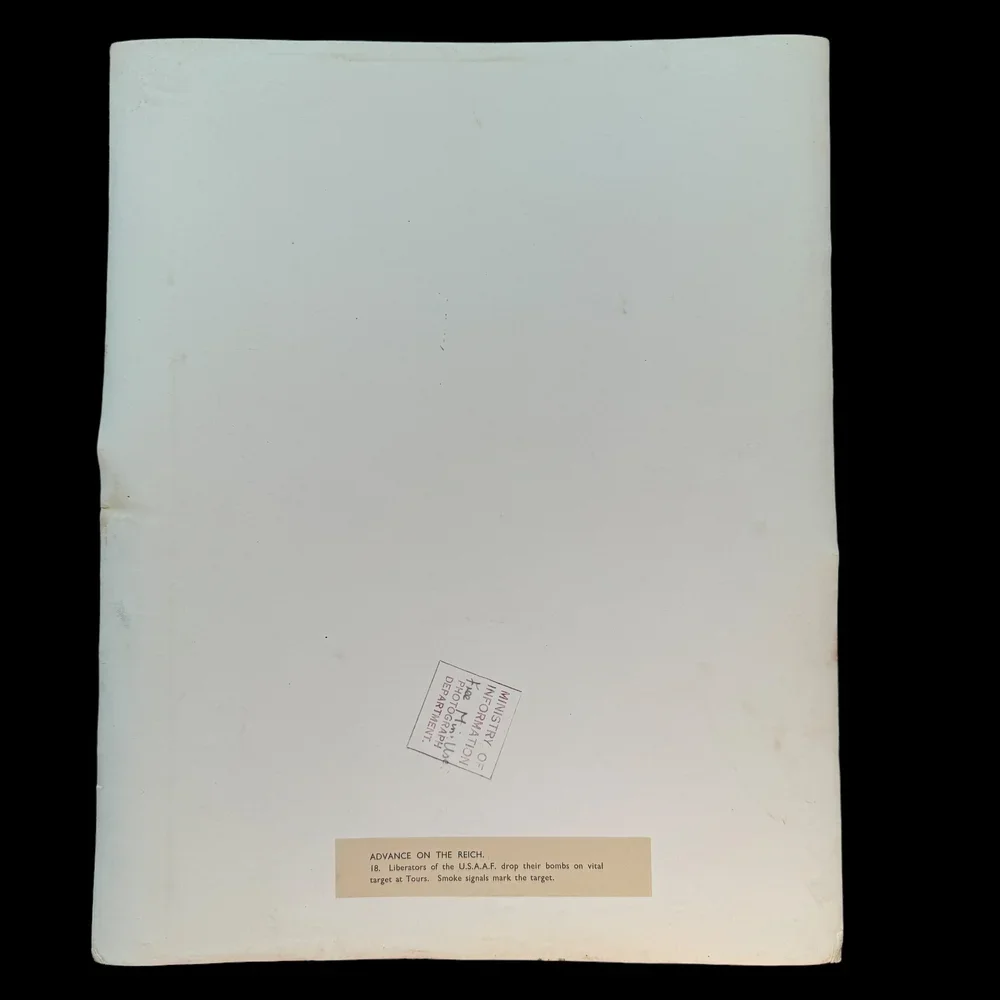
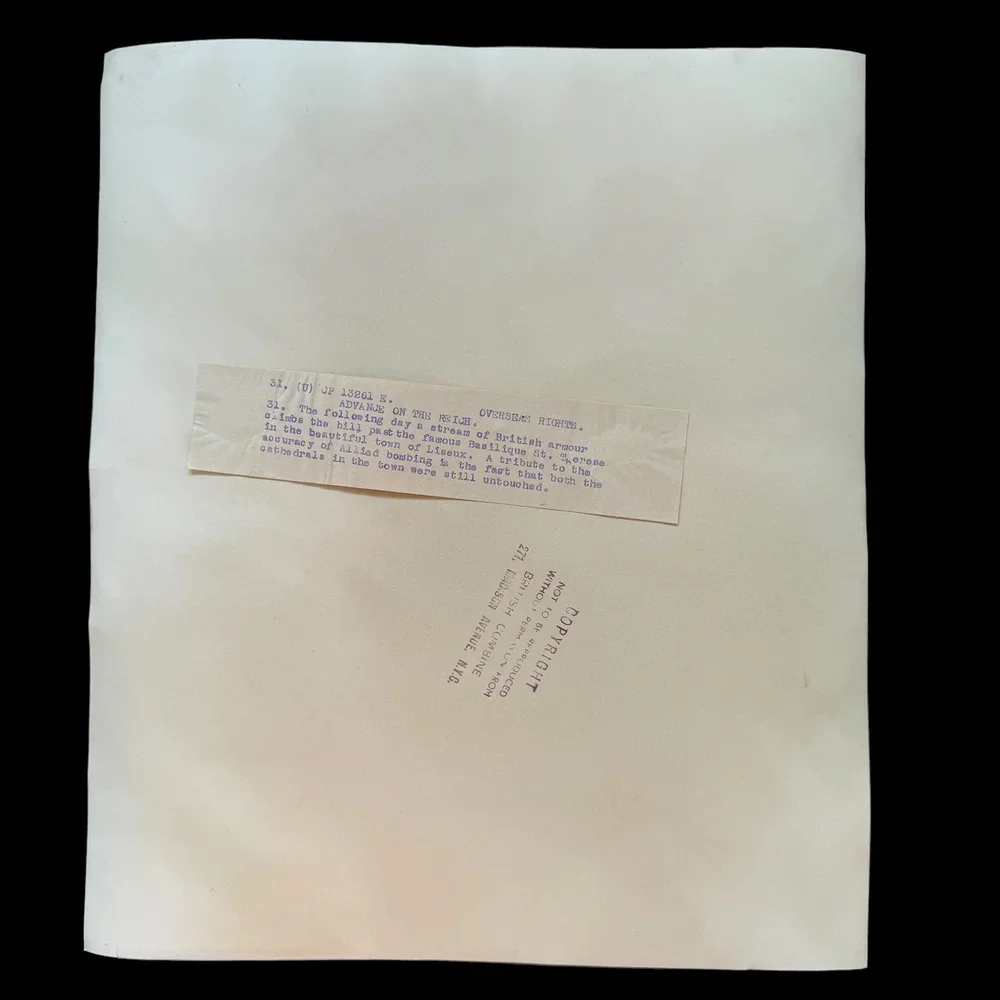
The back of this Type 1 photograph still retains the original hand-typed press caption, along with the authentic British Ministry of Information - Photograph Department press stamp. This is a once-in-a-lifetime opportunity to own an original oversized Type 1 combat photograph from the 8th Air Force’s 446th Bomb Group, a true piece of history.
___________________
VERY RARE! WWII 1944 Type 1 Royal Air Force No. 231 Group Aerial Mission Burma Campaign Pacific Theater British Ministry of Information Photograph Department Press Photograph (OVERSIZED PRINT)
$750.00
This incredibly rare, museum-grade World War II Royal Air Force No. 231 Group artifact is an original “Type 1” press photograph, sourced directly from the British Ministry of Information - Photograph Department. Type 1 photographs are exceptionally scarce as they represent the first high-gloss prints made from original combat negative camera images. These prints feature original marker stamps on the backside, indicating photography information.
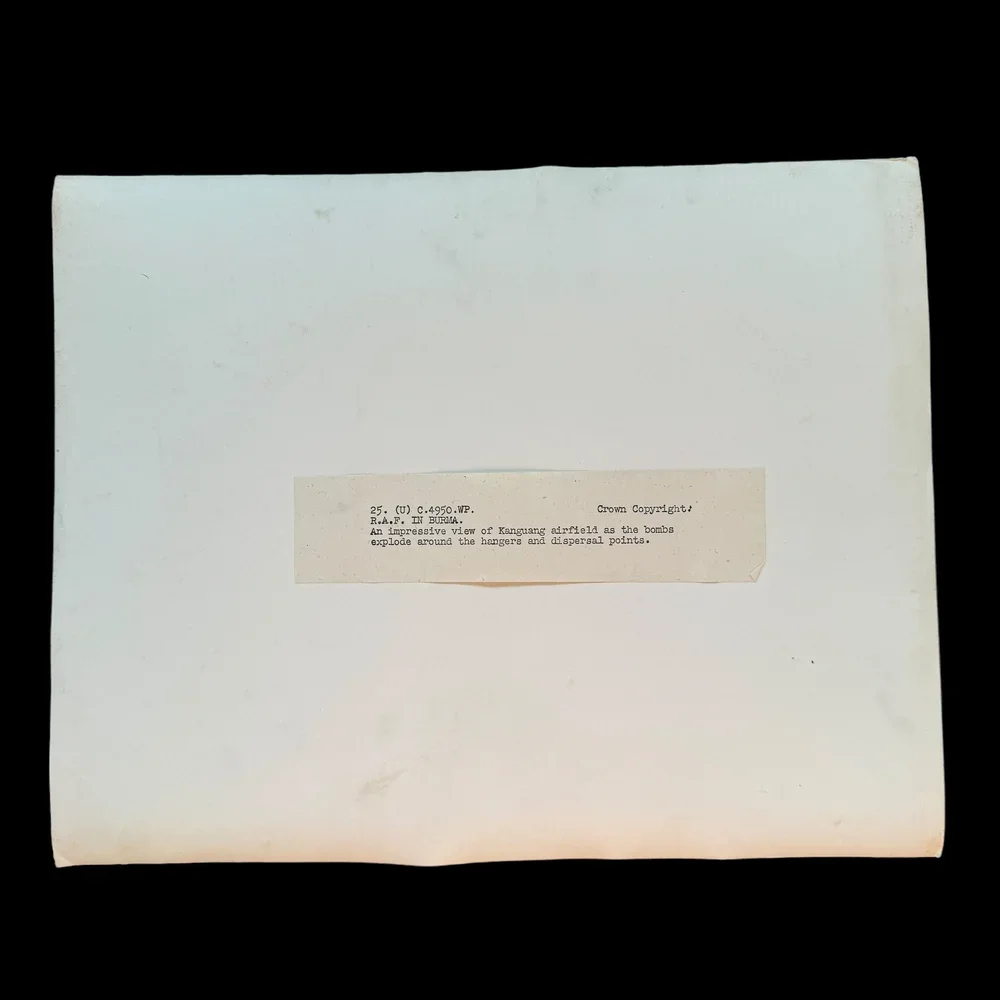
What makes this WWII Type 1 RAF Burmna Campaign photograph even more exceptional is that it is an extremely rare, limited oversized print produced by the British Ministry of Information - Photograph Department. This particular photograph captures a historic moment, withing RAF bombs explode on and around hangars, dispersal points and administrative buildings during a daylight attack on the airfield at Kangaung, Burma, by Consolidated Liberators of No. 231 Group.
The back of this Type 1 photograph still retains the original hand-typed press caption, along with the authentic British Ministry of Information - Photograph Department press stamp. This is a once-in-a-lifetime opportunity to own an original oversized Type 1 combat photograph from the Royal Air Force No. 231 Group, a true piece of history.
___________________
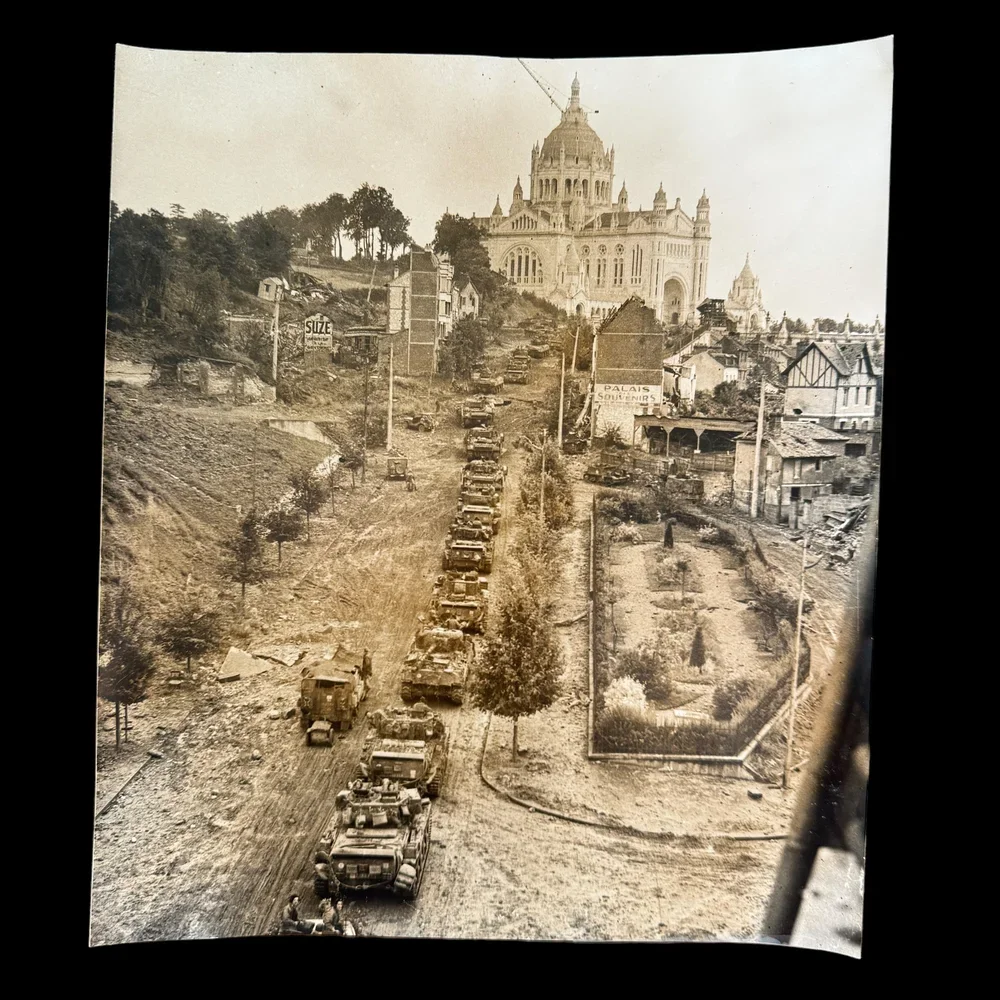
VERY RARE! WWII 1944 Type 1 Invasion of Normandy "1st Royal Tank Regiment - Liberation of Lisieux" British Ministry of Information Photograph Department Press Photograph (OVERSIZED PRINT)
$925.00
Size: 12 x 15 inches
This incredibly rare, museum-grade World War II D-Day Invasion of Normandy artifact is an original 1944-dated “Type 1” Invasion of Normandy press photograph, sourced directly from the British Ministry of Information - Photograph Department. Type 1 photographs are exceptionally scarce as they represent the first high-gloss prints made from original combat negative camera images. These prints feature original marker stamps on the backside, indicating photography information.
What makes this WWII Type 1 Invasion of Normandy photograph even more exceptional is that it is an extremely rare, limited oversized print produced by the British Ministry of Information - Photograph Department. This particular photograph captures a historic moment, showing a column of British Army Cromwell Mk V and M4 Sherman Firefly tanks from the 1st Royal Tank Regiment (1 RTR), 22nd Armoured Brigade of the 7th Armoured Division. The tanks are seen entering Lisieux on August 25, 1944, as they advance through the shell-damaged city towards the Basilica of St. Thérèse in the Normandy region of northwestern France.
The back of this Type 1 photograph still retains the original hand-typed press caption, along with the authentic British Ministry of Information - Photograph Department press stamp. This is a once-in-a-lifetime opportunity to own an original oversized Type 1 combat photograph from the Allied Invasion of Normandy, a true piece of history.
______________________
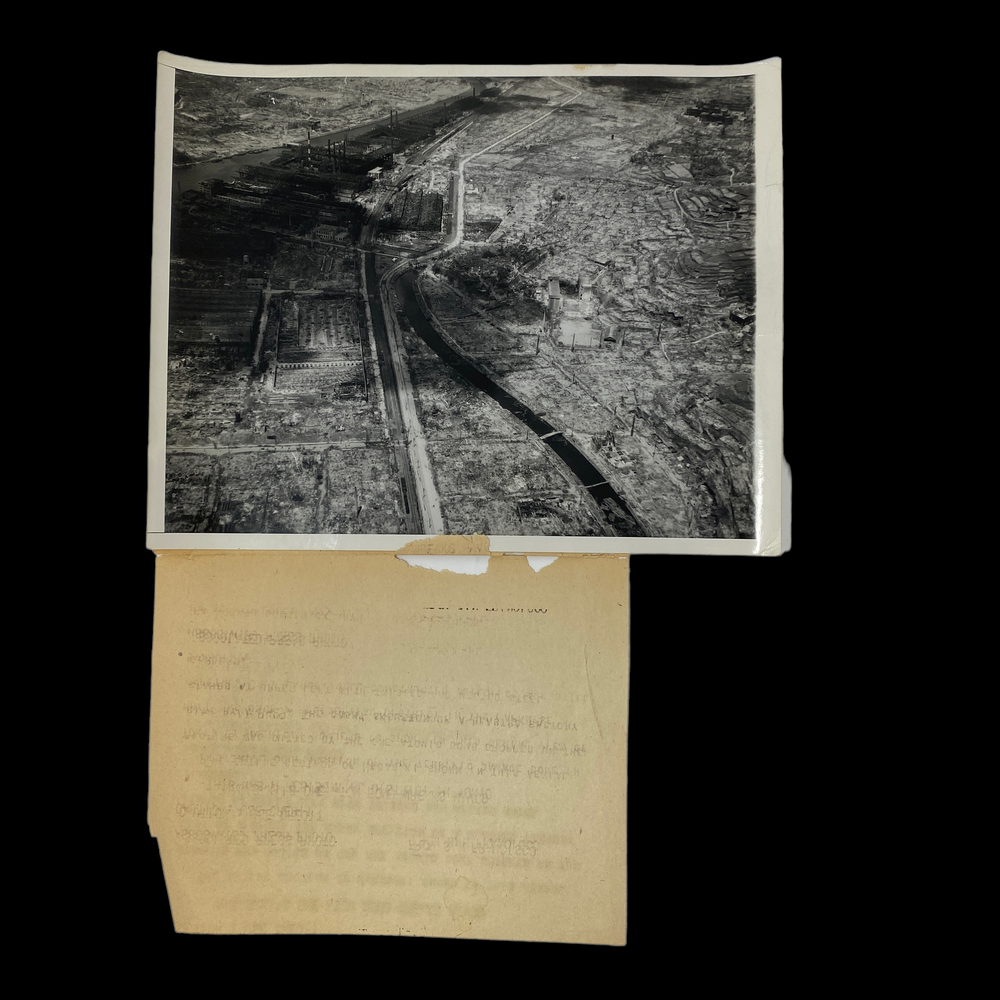
RARE! 1945 WWII Nagasaki Atomic Bomb Aftermath Damage TYPE 1 Photograph
$650.00
This incredible and museum-grade 1945 WWII Nagasaki atomic bomb aftermath damage TYPE 1 photograph was taken shortly following the world’s second atomic bomb drop. Original Nagasaki aftermath photographs like this are extremely rare as some of them have never been published given the CONFIDENTIAL and SECRET nature of the bombs. This original a large print of the aftermath of Nagasaki is a TYPE 1 photograph. TYPE 1 photographs are extremely rare in that they are the first prints of the camera image and are meant to be used for other photographs to be based off of. Accompanied with the TYPE 1 photograph is the original press release description. This is one of the first original photographs taken by a low flying American aircraft of the ground following the atomic bombs being dropped.
On August 6, 1945, during World War II (1939-45), an American B-29 bomber dropped the world’s first deployed atomic bomb over the Japanese city of Hiroshima. The explosion immediately killed an estimated 80,000 people; tens of thousands more would later die of radiation exposure. Three days later, a second B-29 dropped another A-bomb on Nagasaki, killing an estimated 40,000 people. Japan’s Emperor Hirohito announced his country’s unconditional surrender in World War II in a radio address on August 15, citing the devastating power of “a new and most cruel bomb.”
By the morning of August 9, 1945, Soviet troops had invaded Manchuria and Sakhalin Island, but there was still no word from the Japanese government regarding surrender. At 3:47 AM the B-29 Bockscar took off from Tinian. The aircraft was piloted by Maj. Charles Sweeney, with Capt.
Kermit Beahan serving as bombardier and Manhattan Project veteran Comdr. Frederick Ashworth in the role of weaponeer. Their payload was Fat Man, the plutonium-fueled implosion device similar to the bomb detonated at the Trinity test. Unlike Little Boy, Fat Man was fully assembled when it was loaded onto Bockscar, and shortly after takeoff Ashworth armed the device. As with the Hiroshima bombing, the strike plane was preceded by other B-29s performing weather reconnaissance, and light haze but relatively clear skies were reported over the primary target of Kokura.
At about 9:45 AM local time Bockscar reached Kokura, but by then visibility had degraded badly. Thick clouds and haze obscured the area, possibly the result of a firebombing attack on the nearby city of Yahata the previous night. Three attempted bombing passes failed to yield a clear view of the target, the city’s massive arsenal. Roughly 45 minutes passed as Bockscar lingered over Kokura, and concerns about diminishing fuel reserves and Japanese antiaircraft defenses led Ashworth to conclude that they would have to proceed to the secondary target. Sweeney turned the plane south toward Nagasaki.
Geographically, Nagasaki was not an ideal target. Whereas Hiroshima was flat and the bombardier’s aimpoint was a visually distinctive feature near the city centre, the urban area of Nagasaki was divided into two coastal valleys separated by a range of hills. The aimpoint would be a Mitsubishi arms plant near the city’s harbour. This site was located between the two densely populated valleys, but the uneven terrain would reduce the destructive potential of a weapon that was significantly more powerful than the bomb that had been dropped on Hiroshima.