Authentic 1972 Apollo 16 "Magazine E" Lunar Surface 70mm Hasselblad Film Cell #2
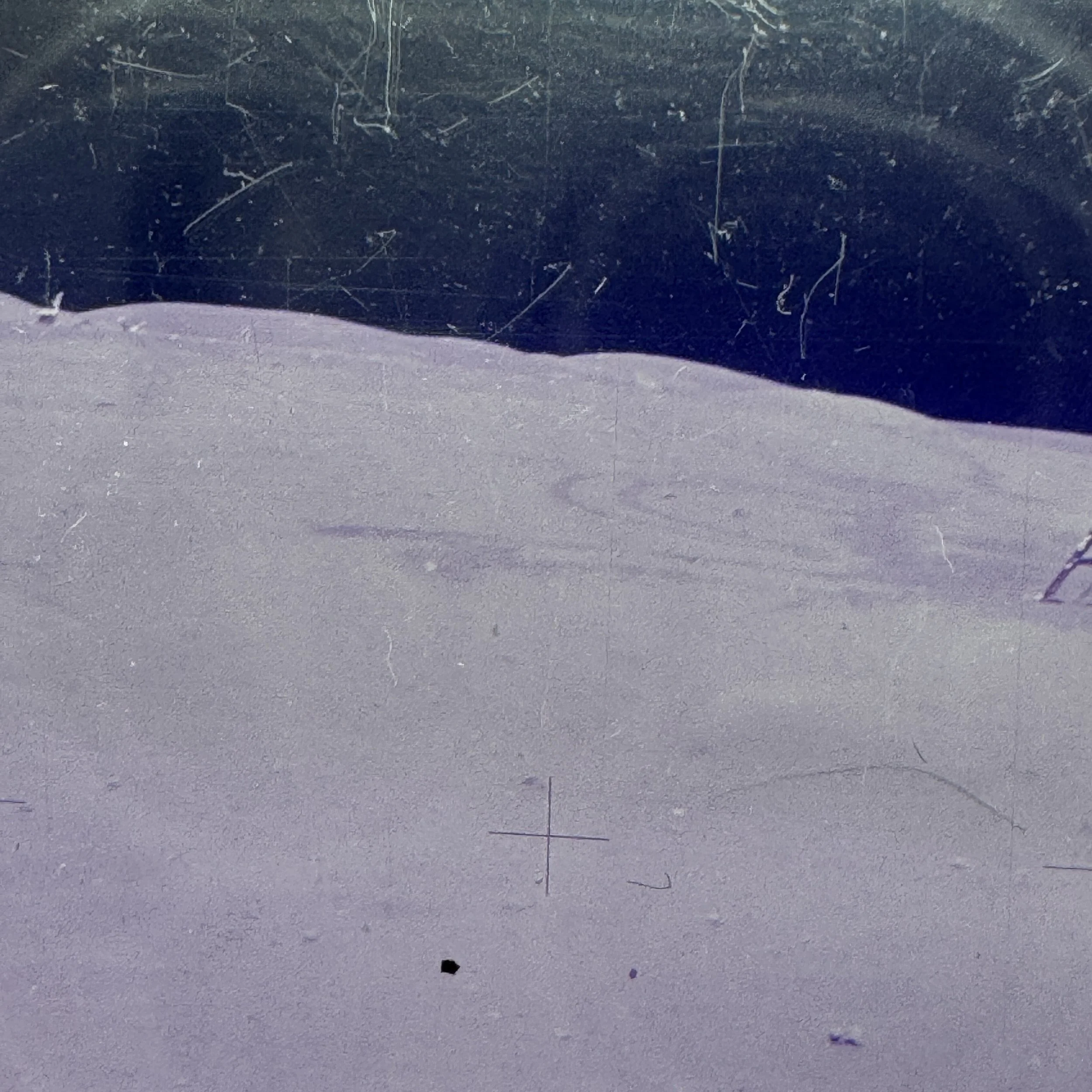
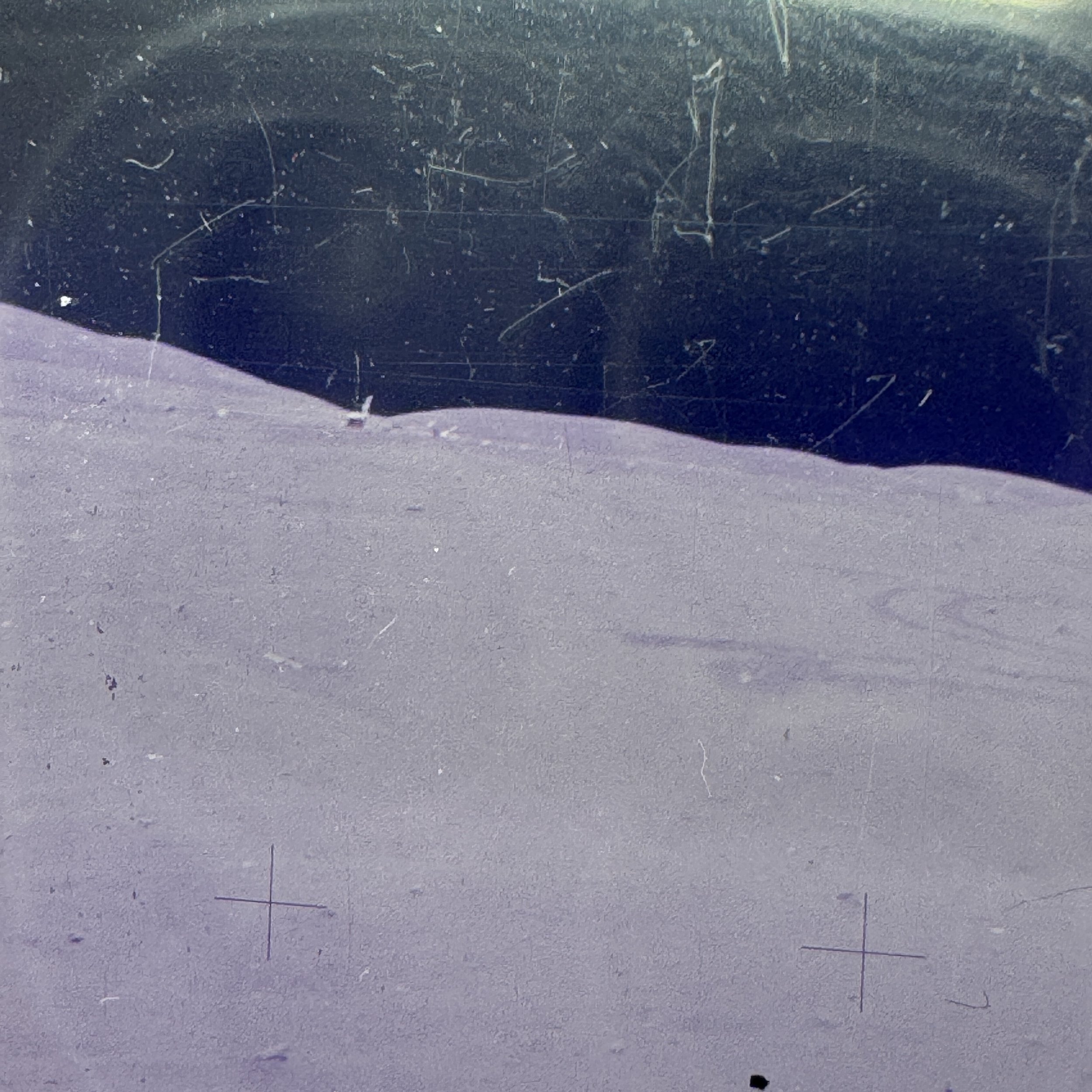
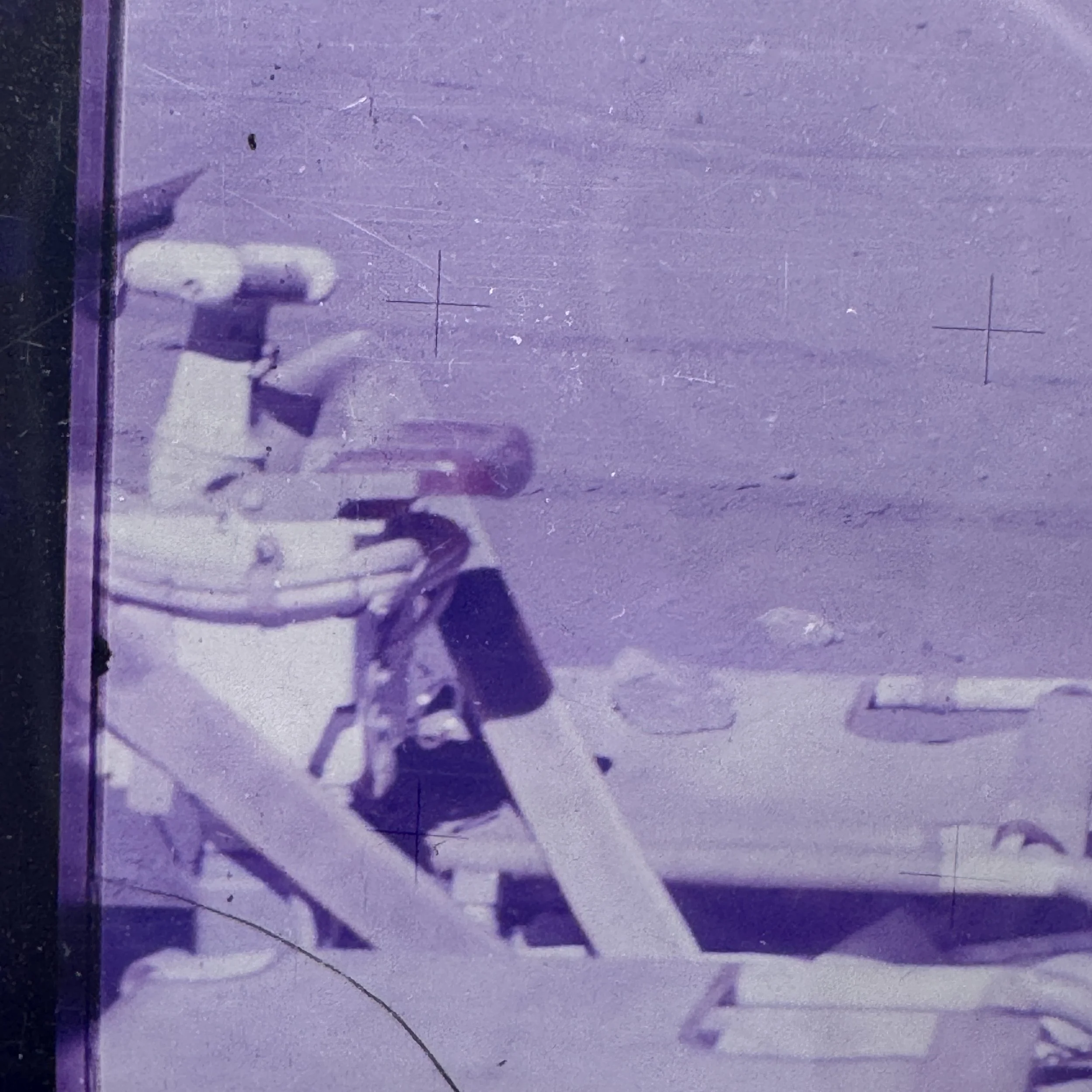
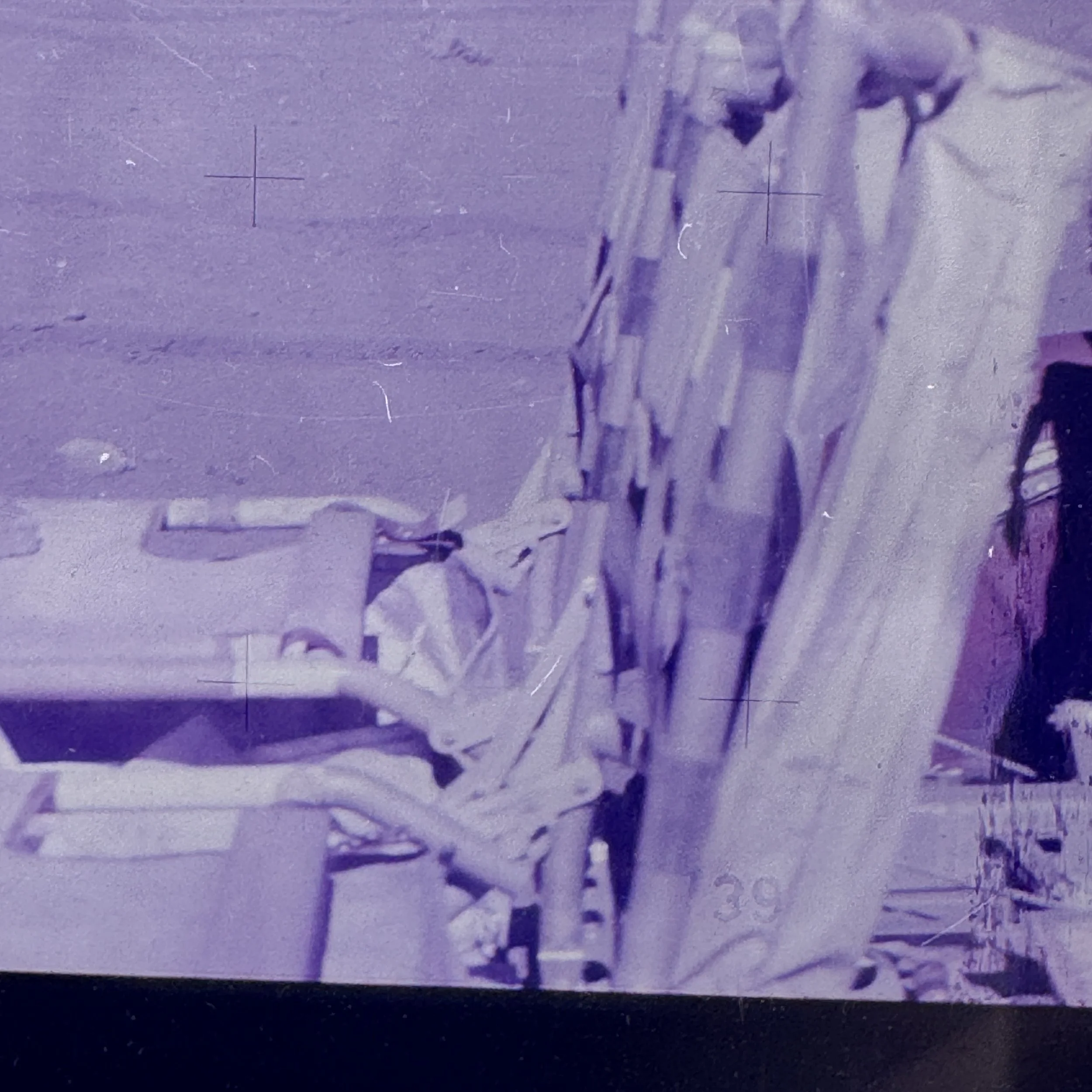
Authentic 1972 Apollo 16 "Magazine E" Lunar Surface 70mm Hasselblad Film Cell #2
Comes with a hand signed Certificate of Authenticity
Size: 2.75 x 2.25 inches
From: NASA Apollo Program - Apollo 16
Dated: 1972
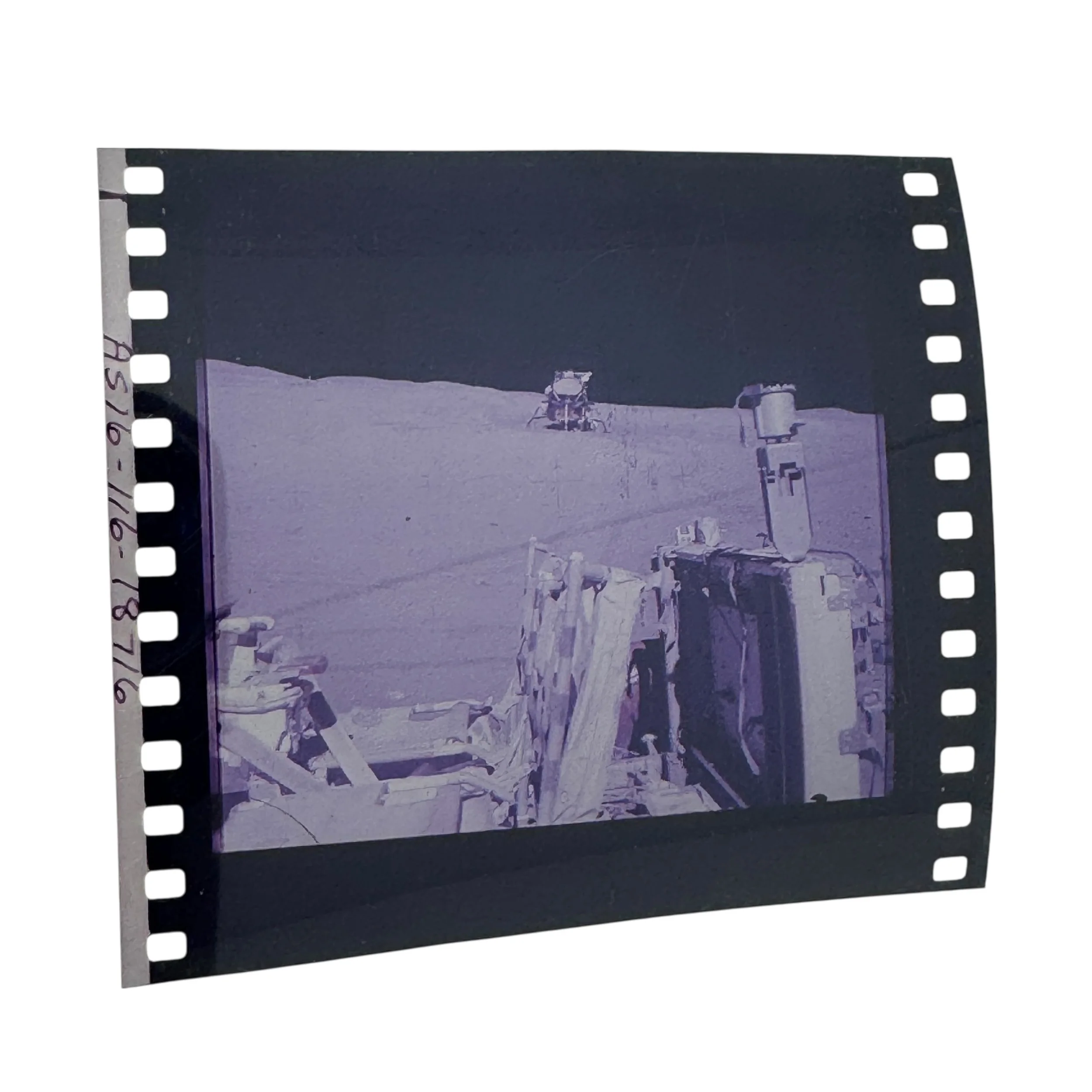
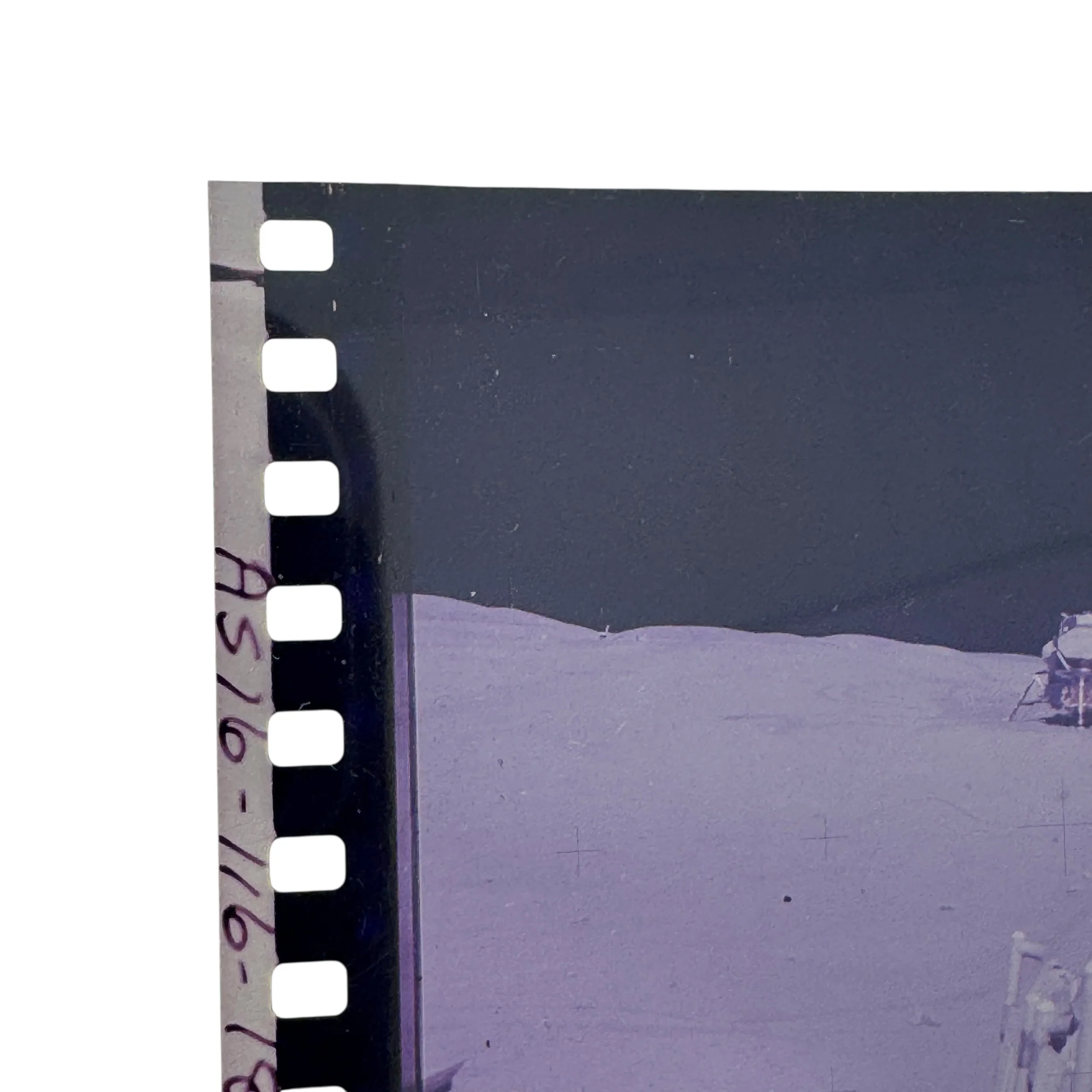
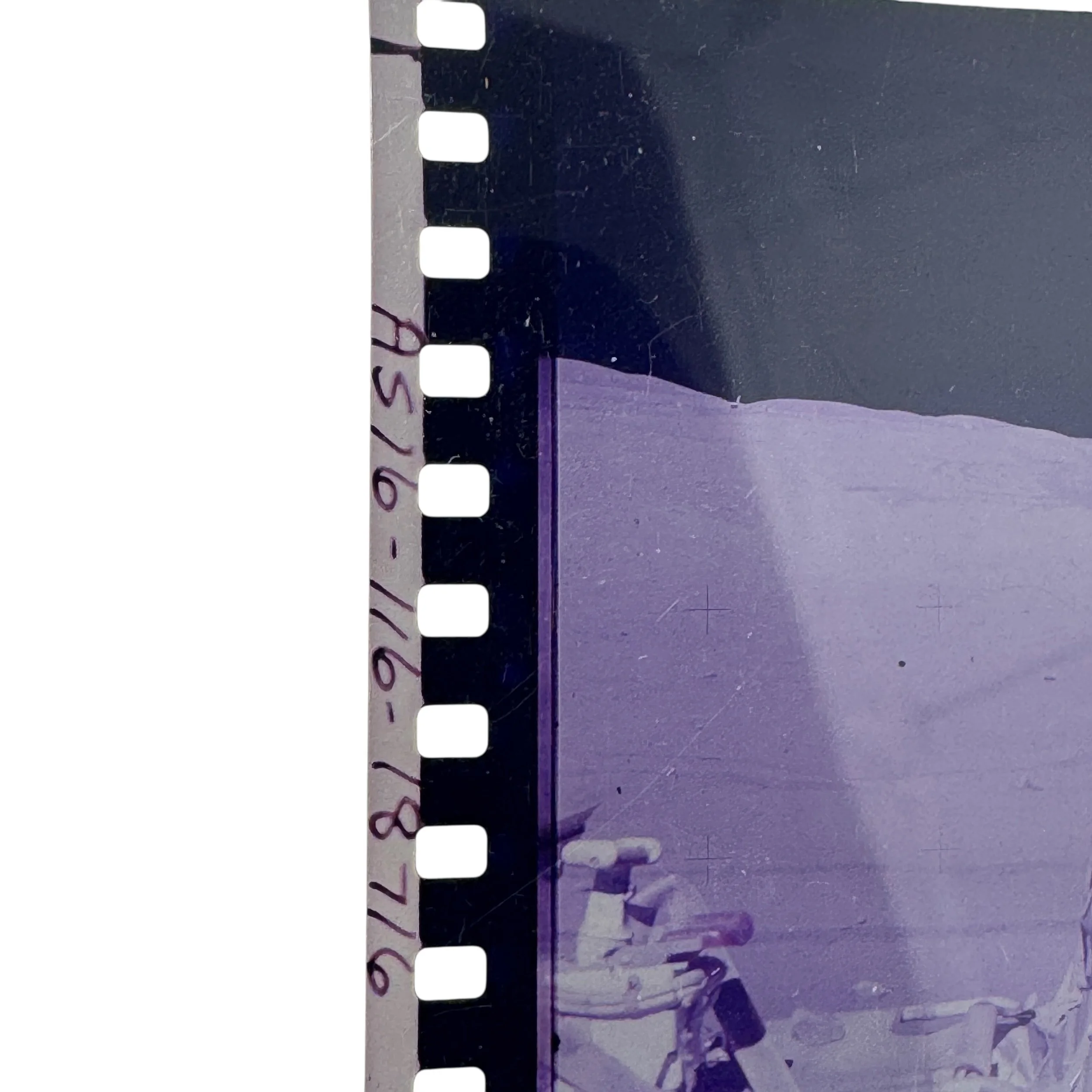
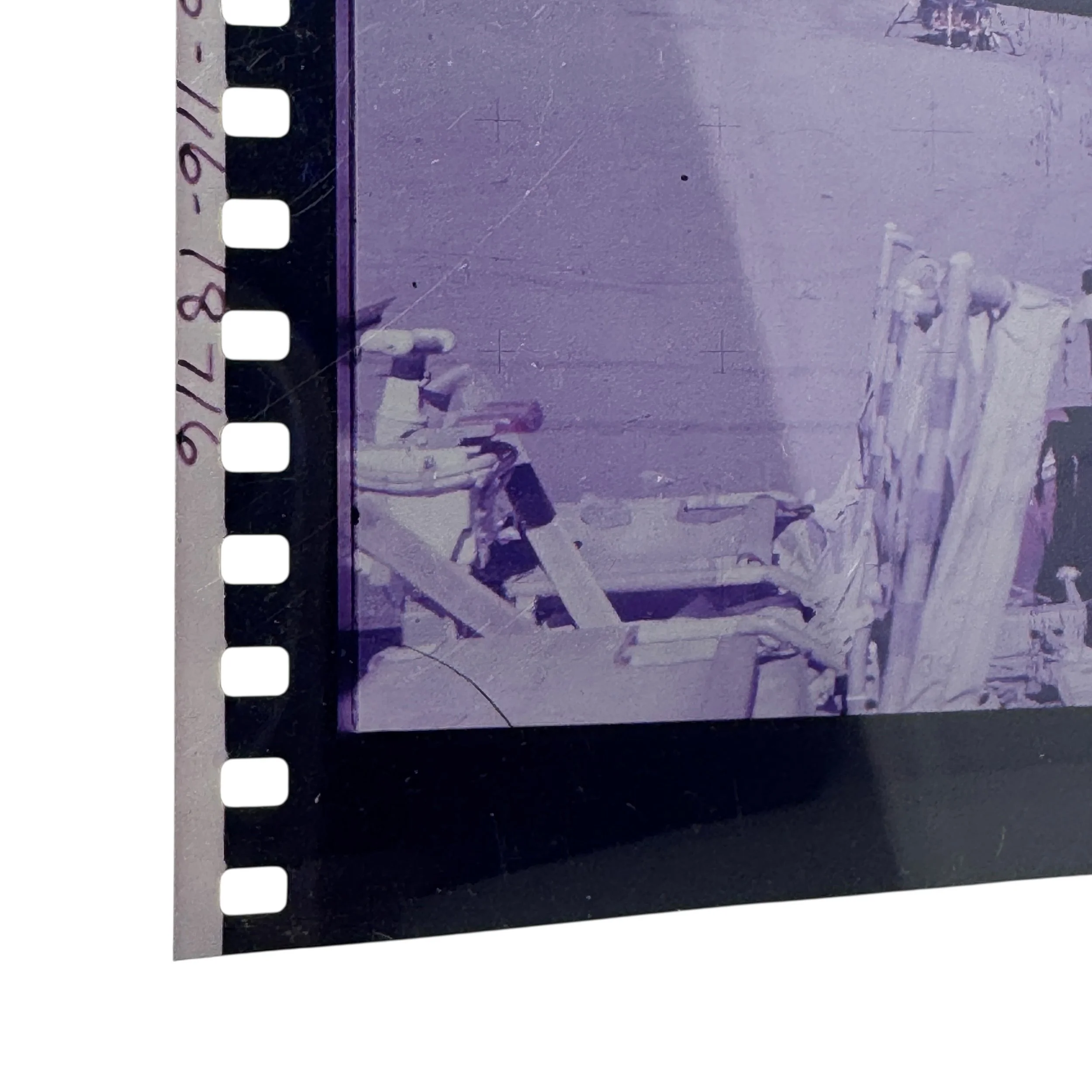
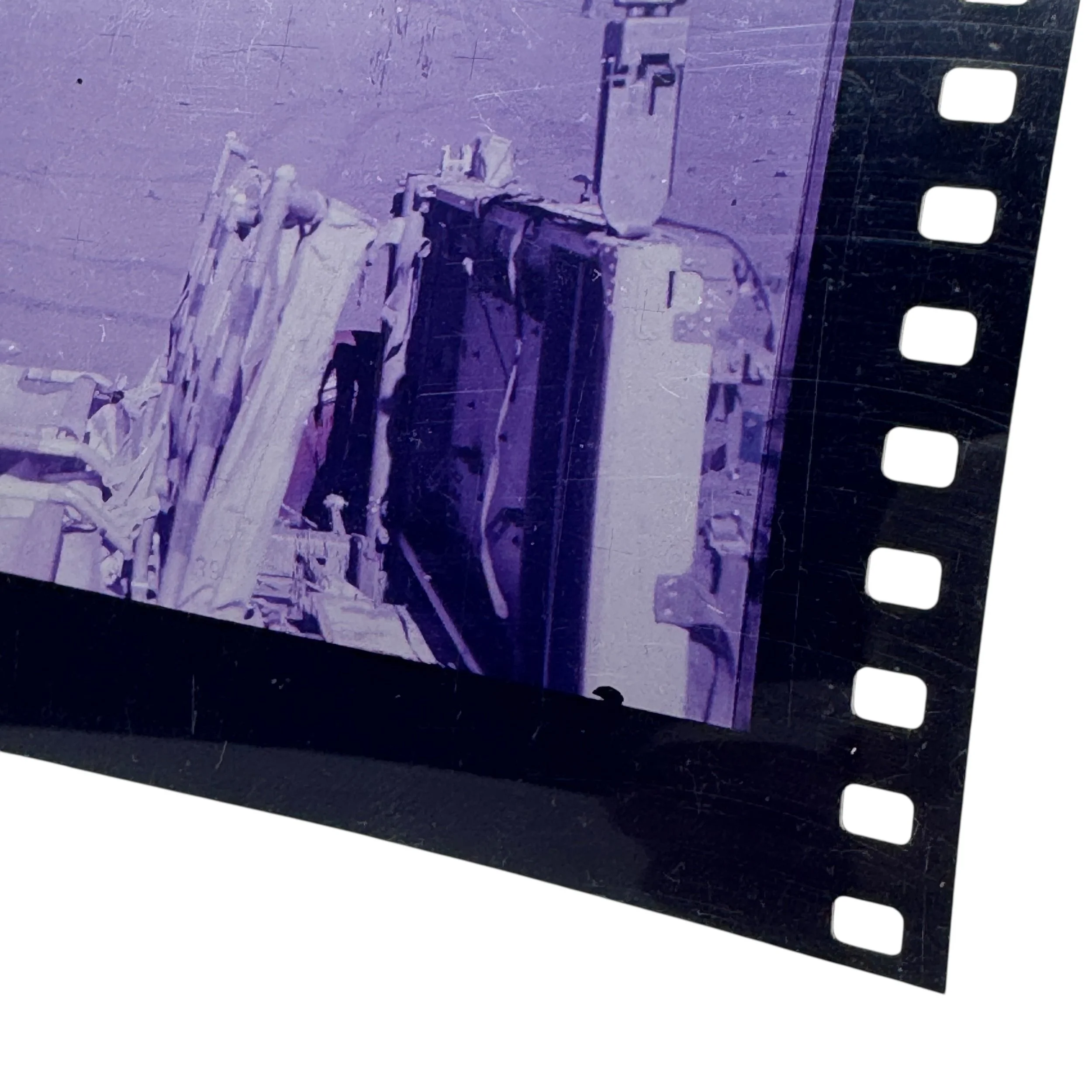
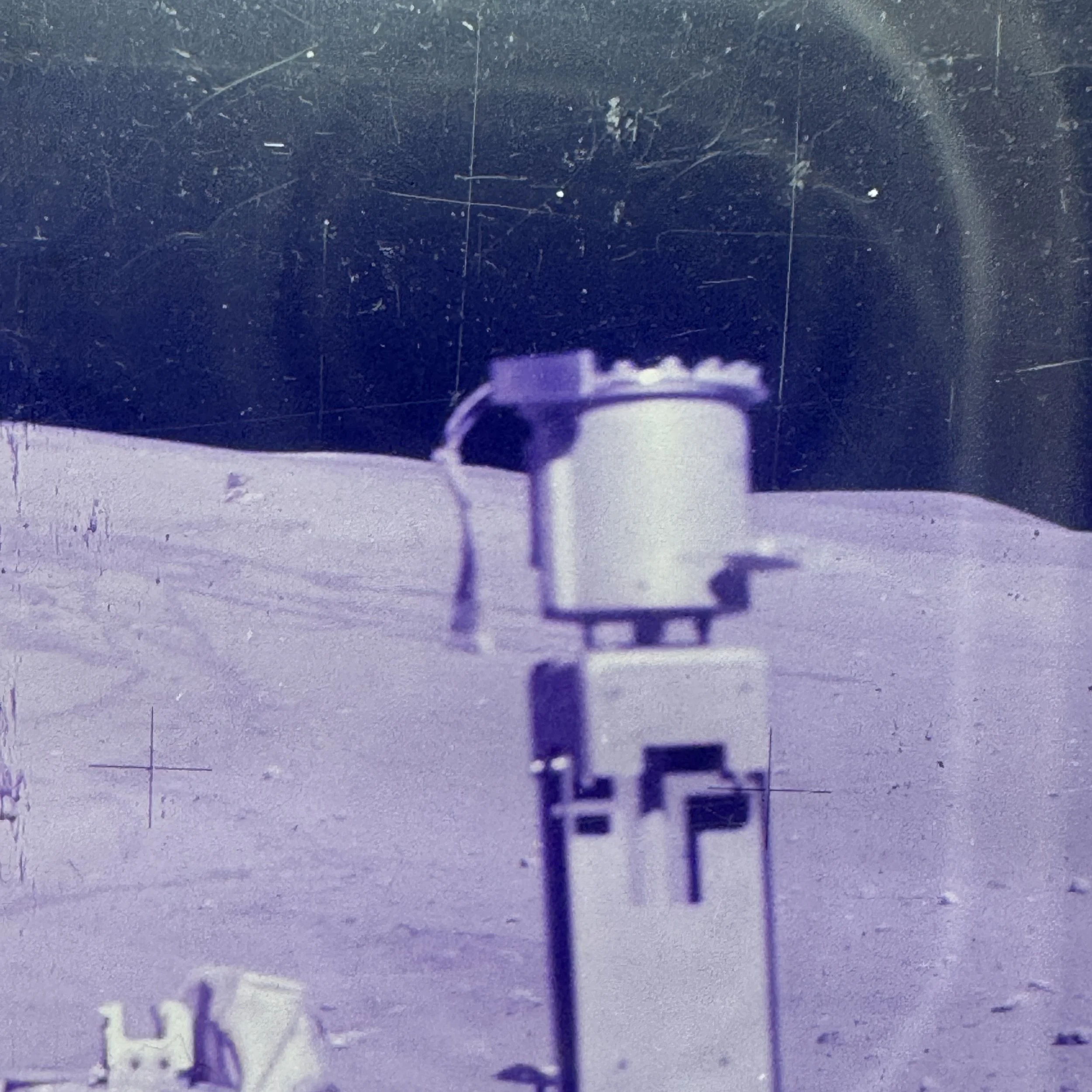
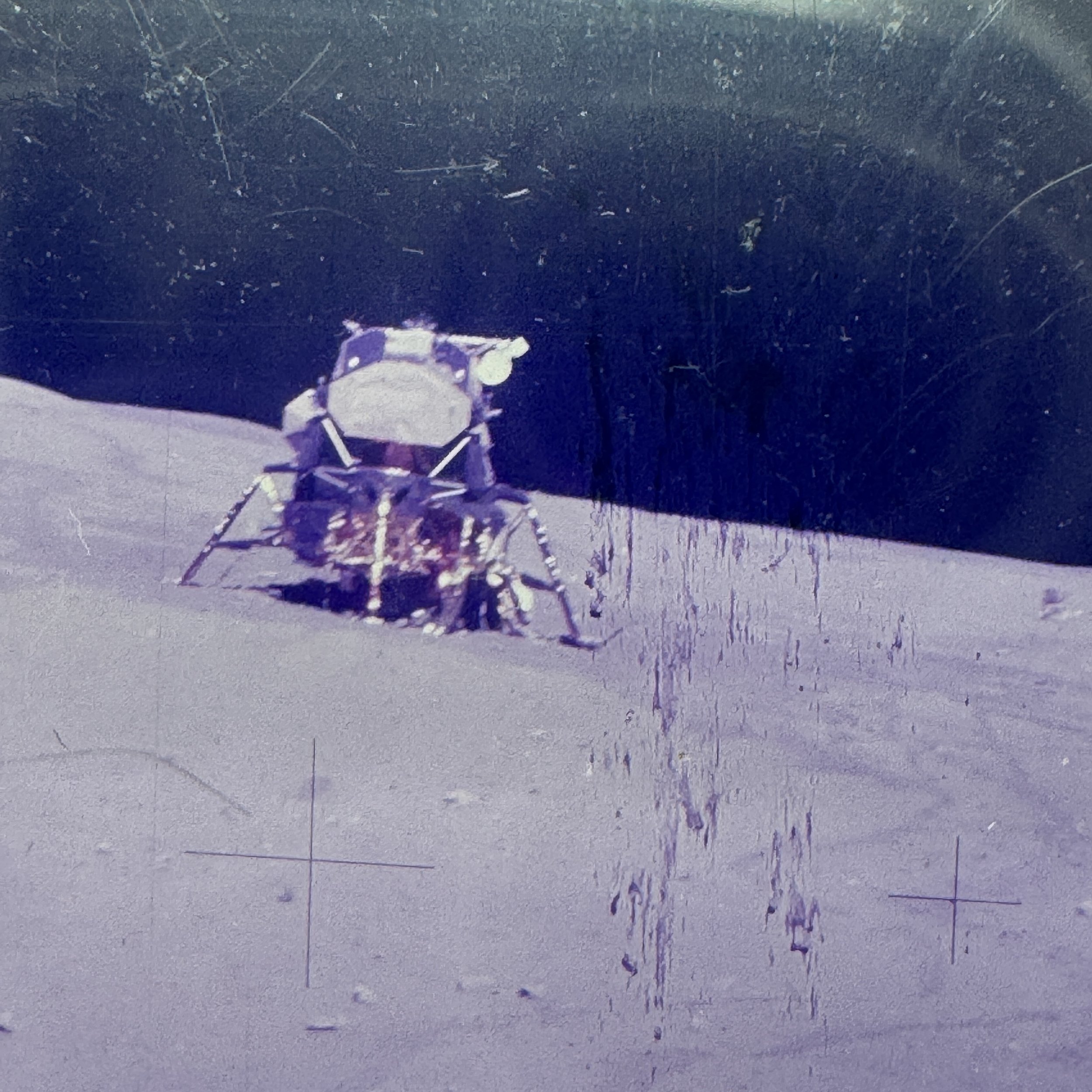
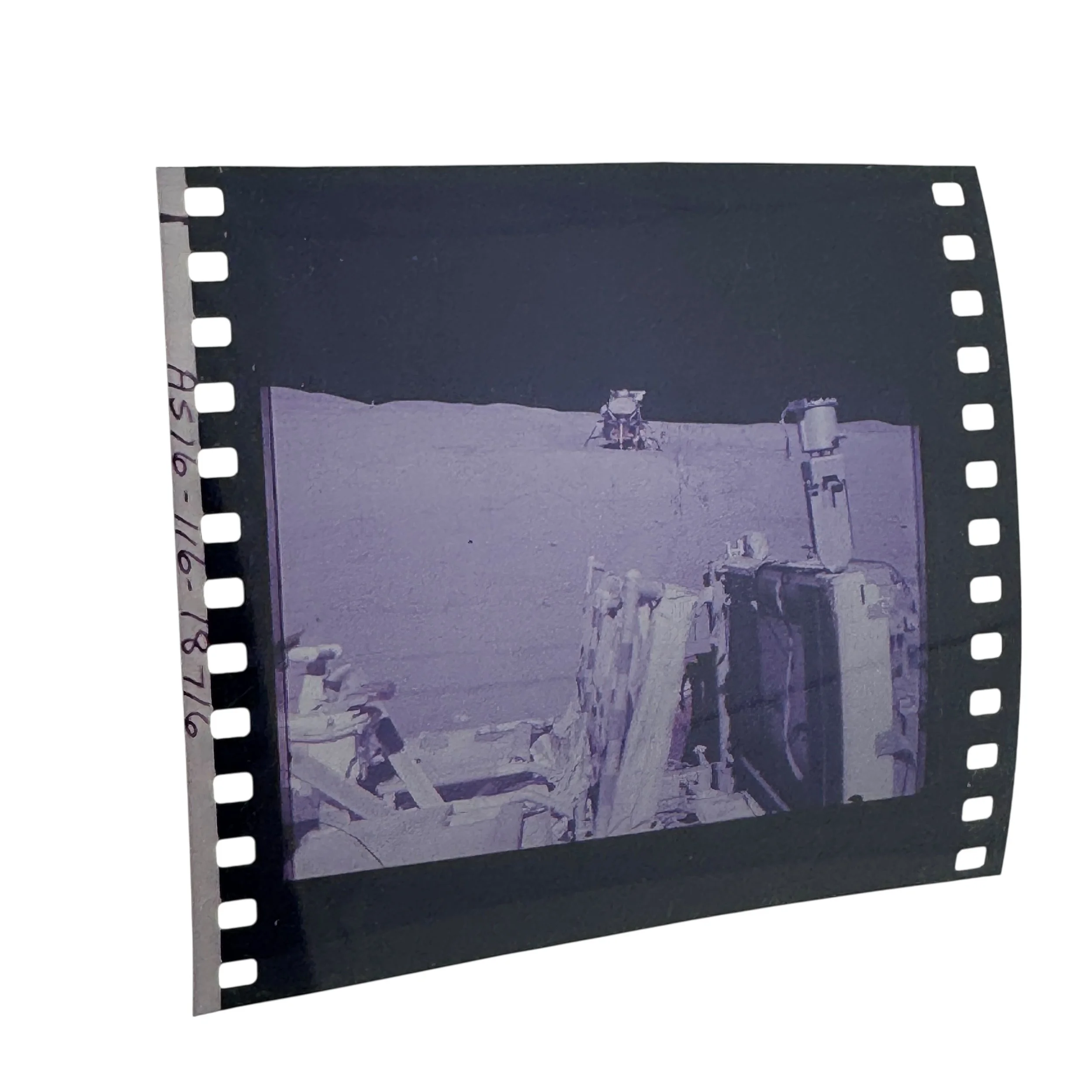
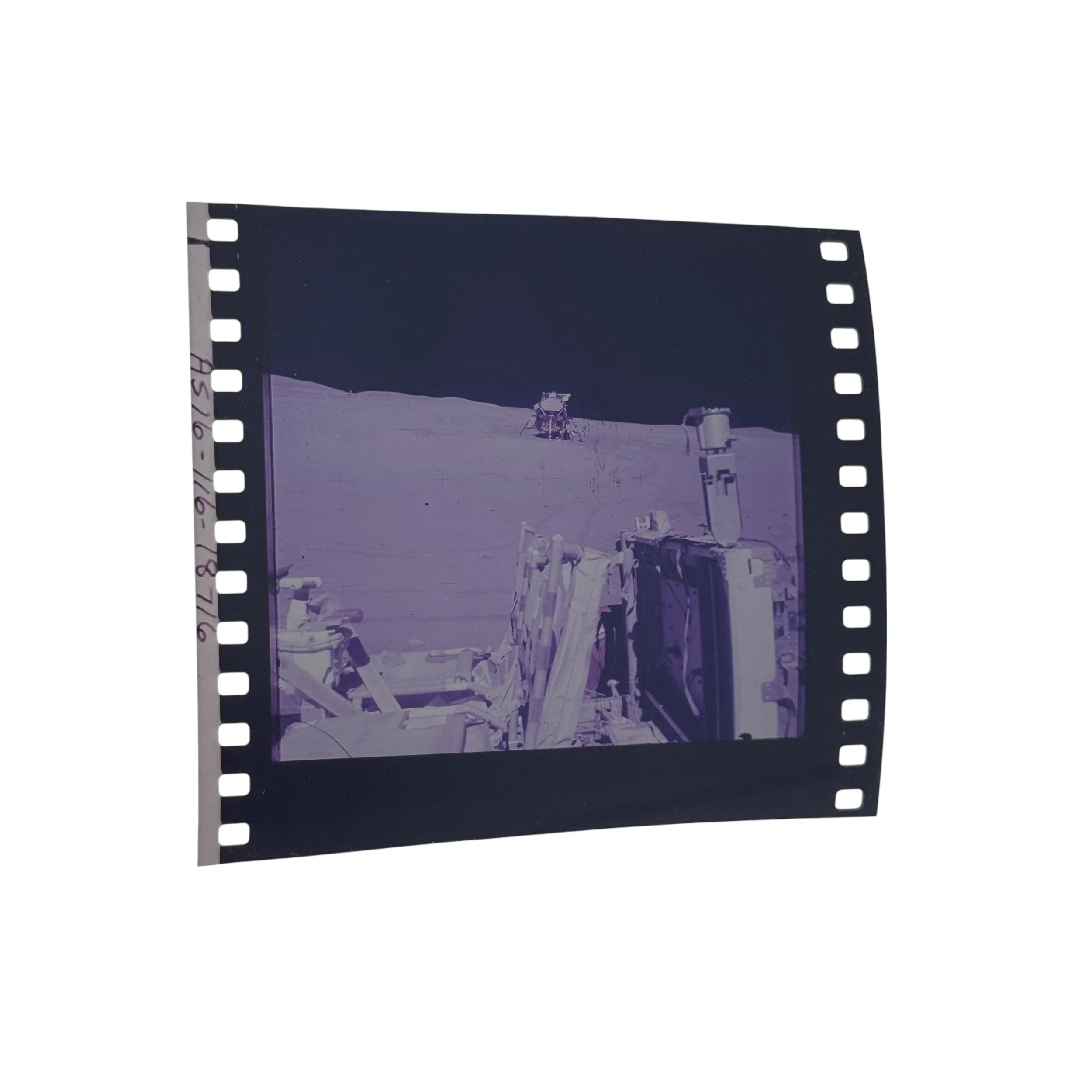
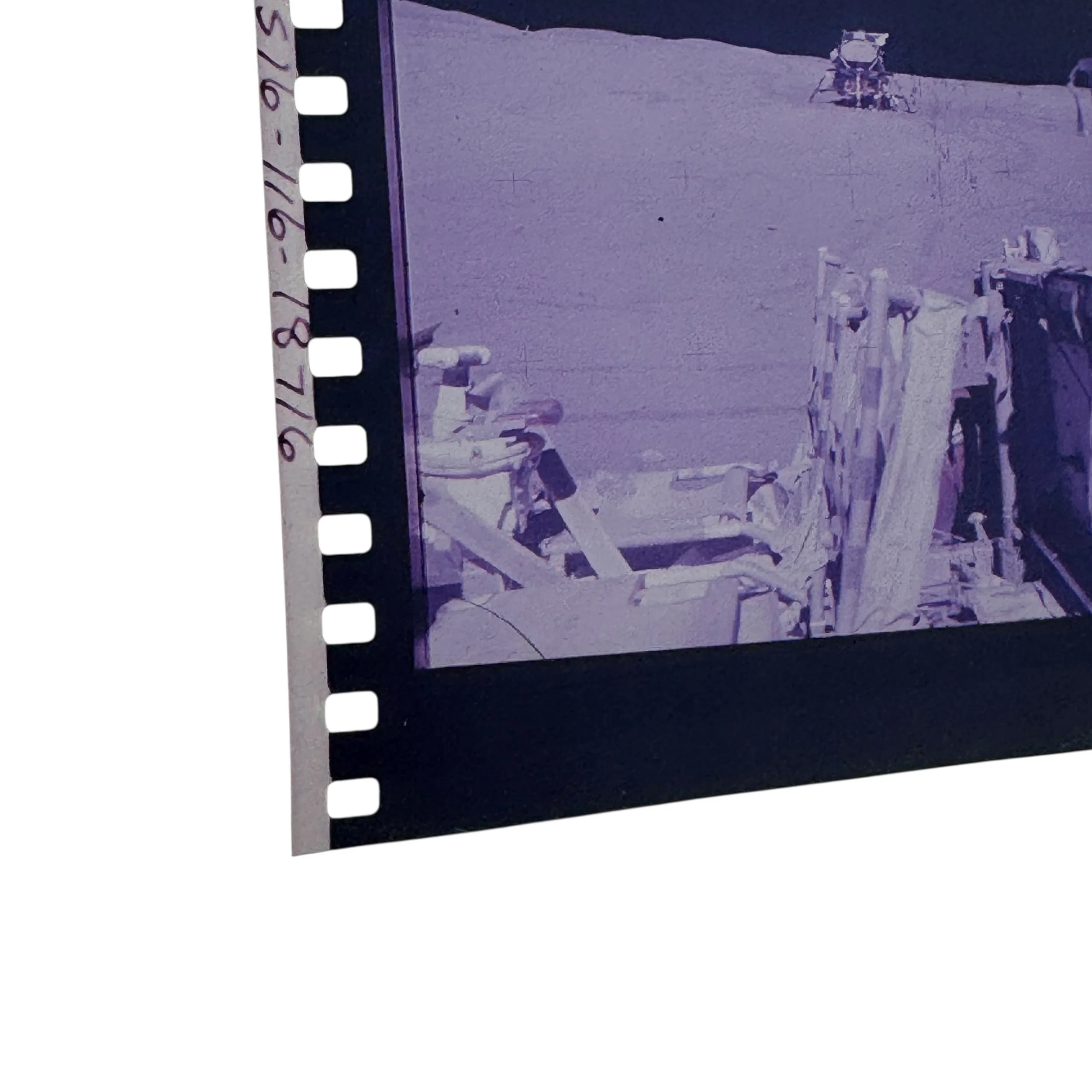
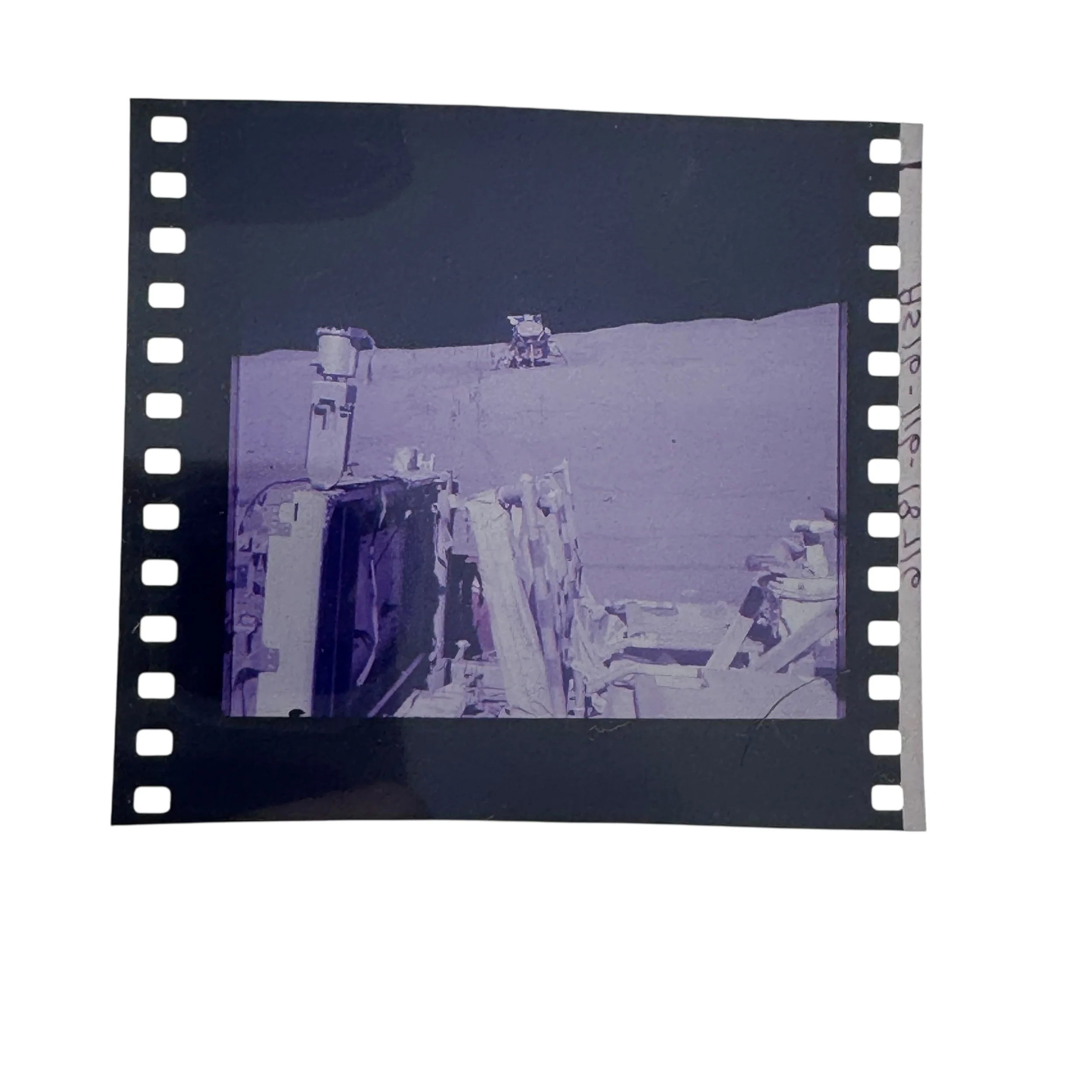
Type: Original AS16-116-18716 hand-numbered Apollo 16 lunar surface (Descartes Highlands) 70mm Hasselblad color film positive from Magazine E taken by John Young and Charlie Duke
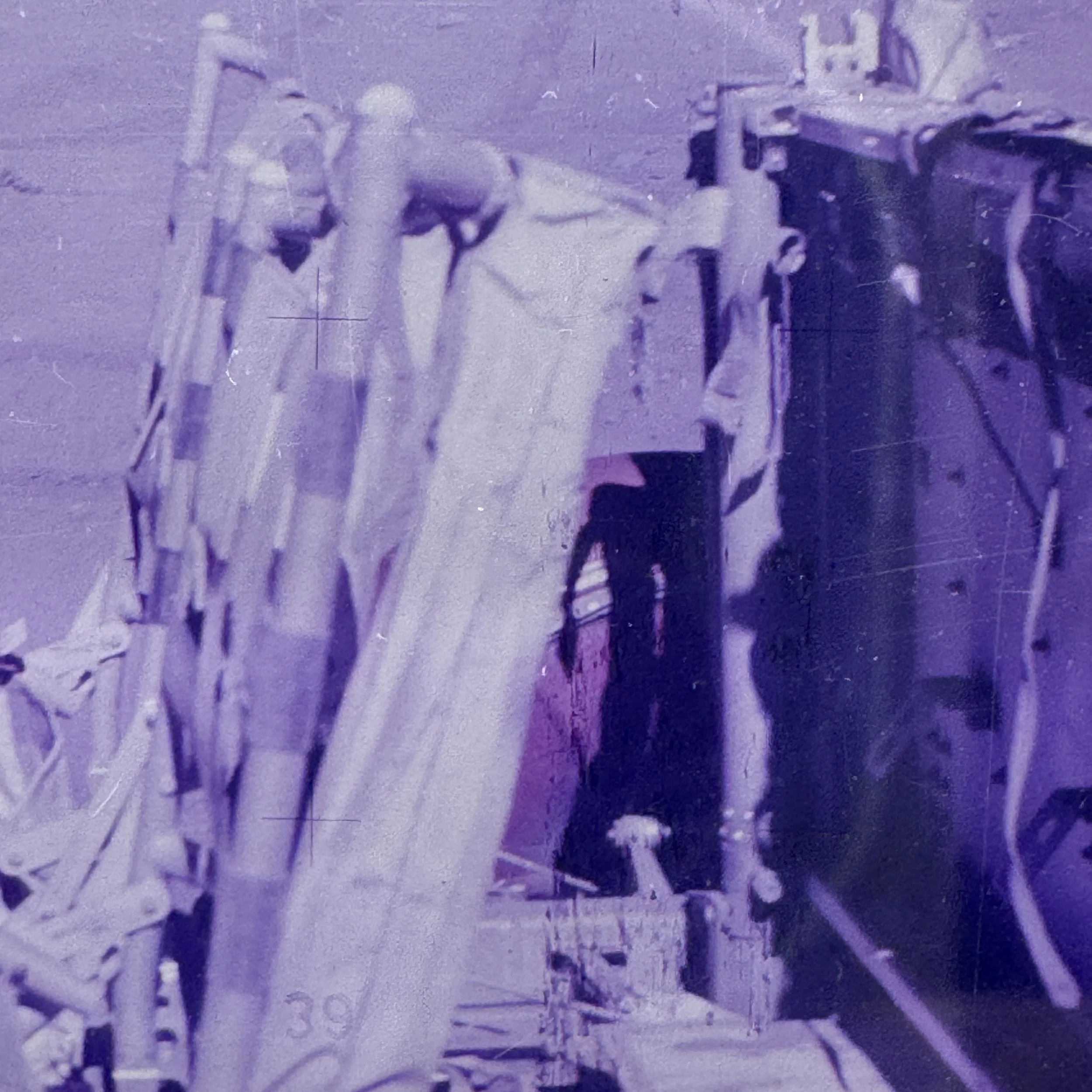
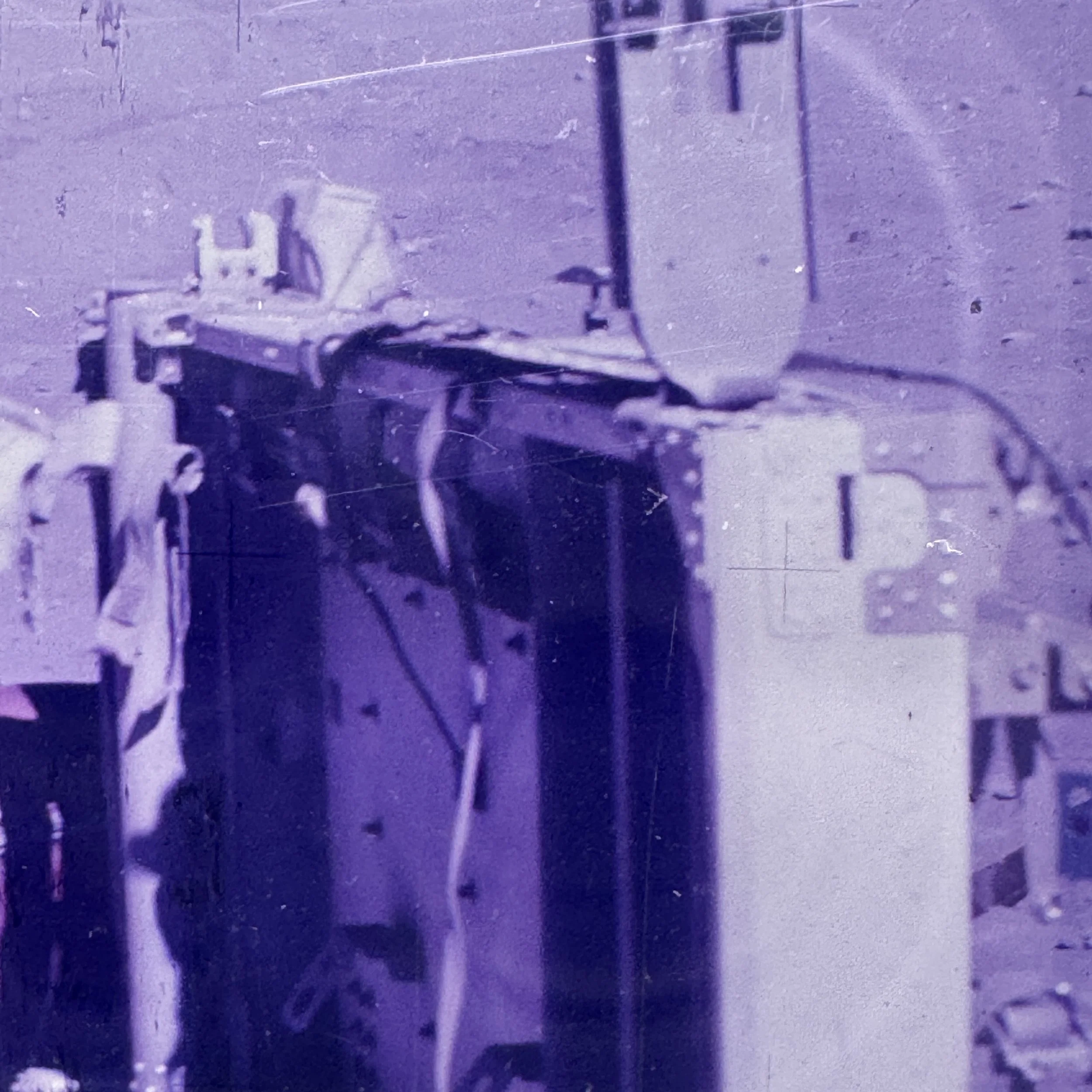
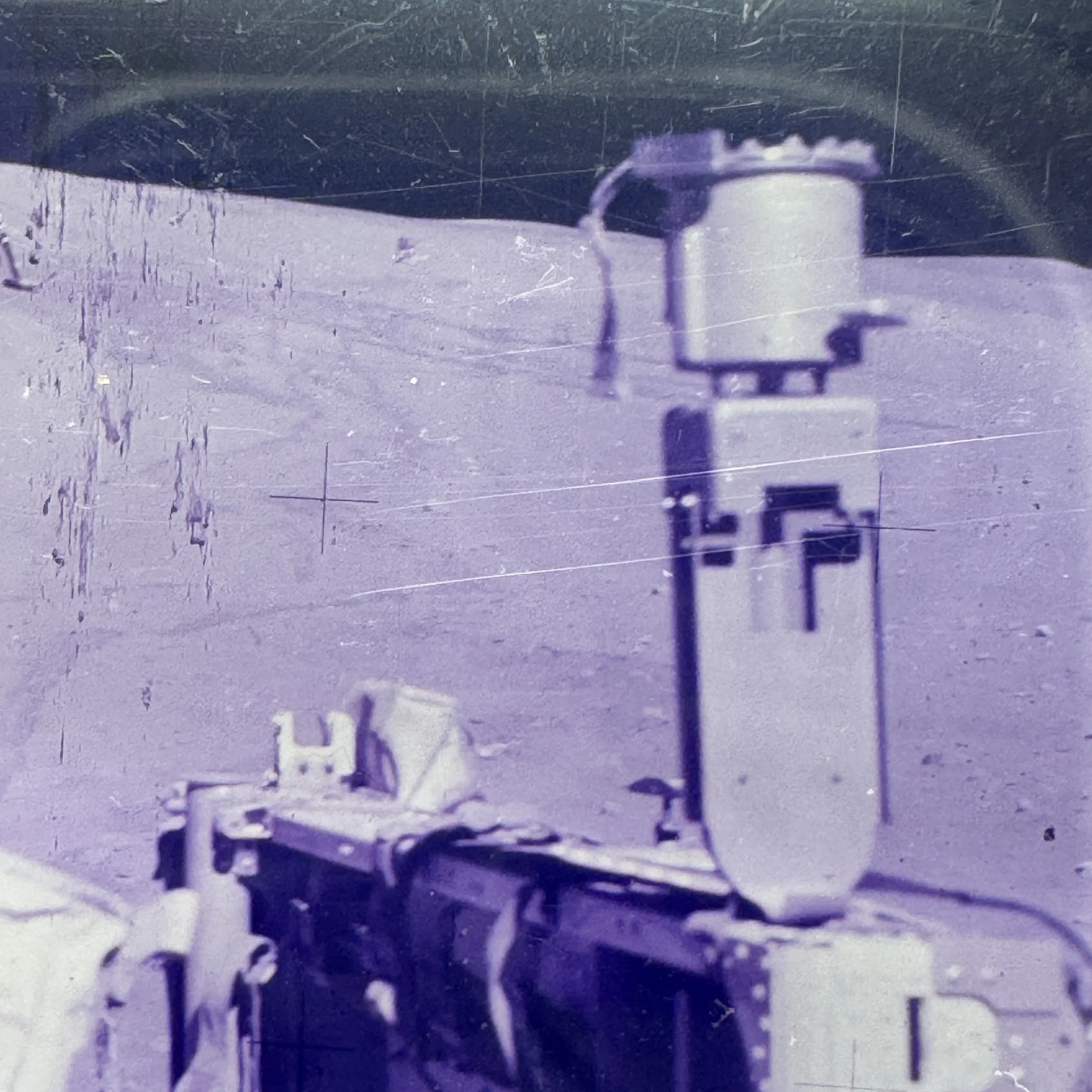
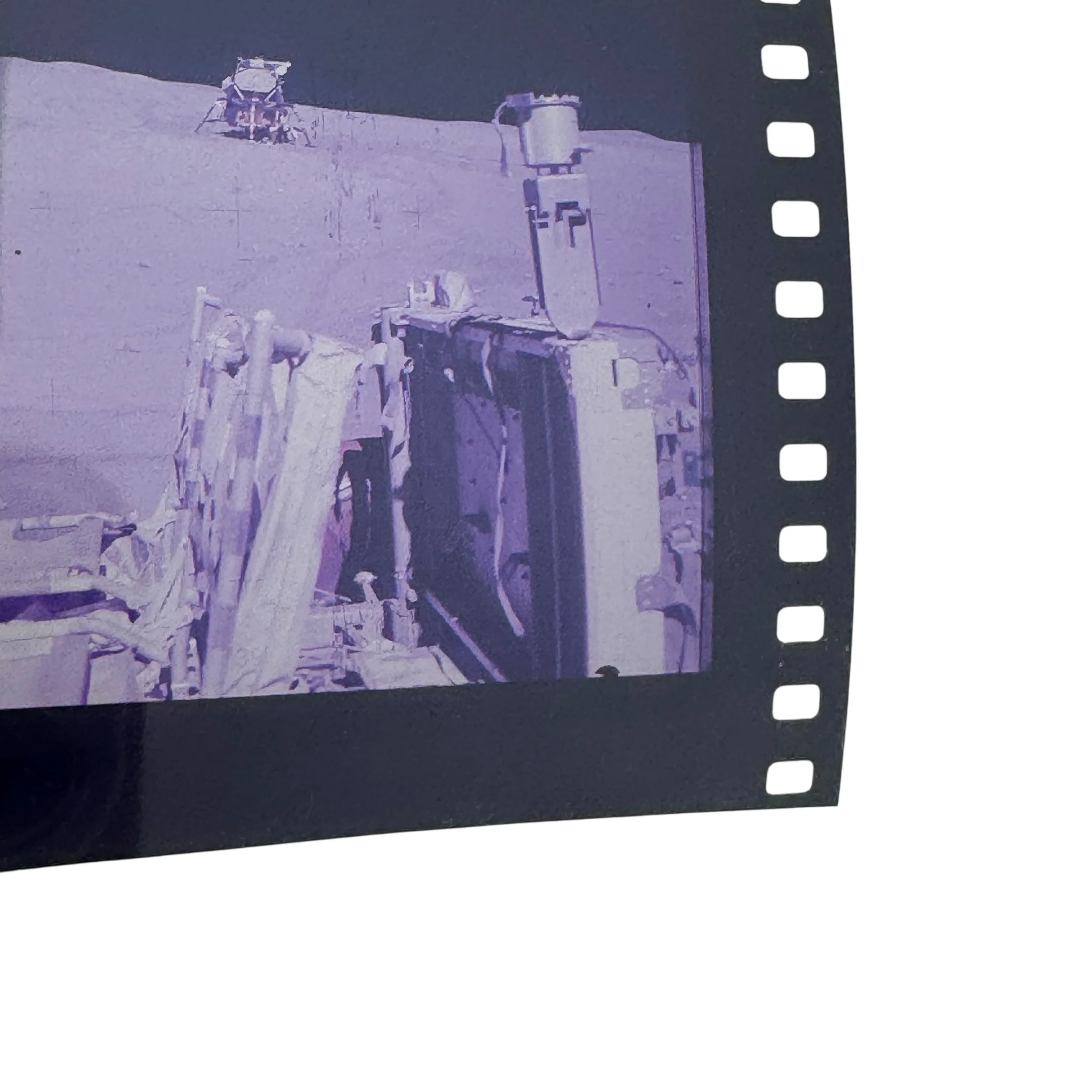
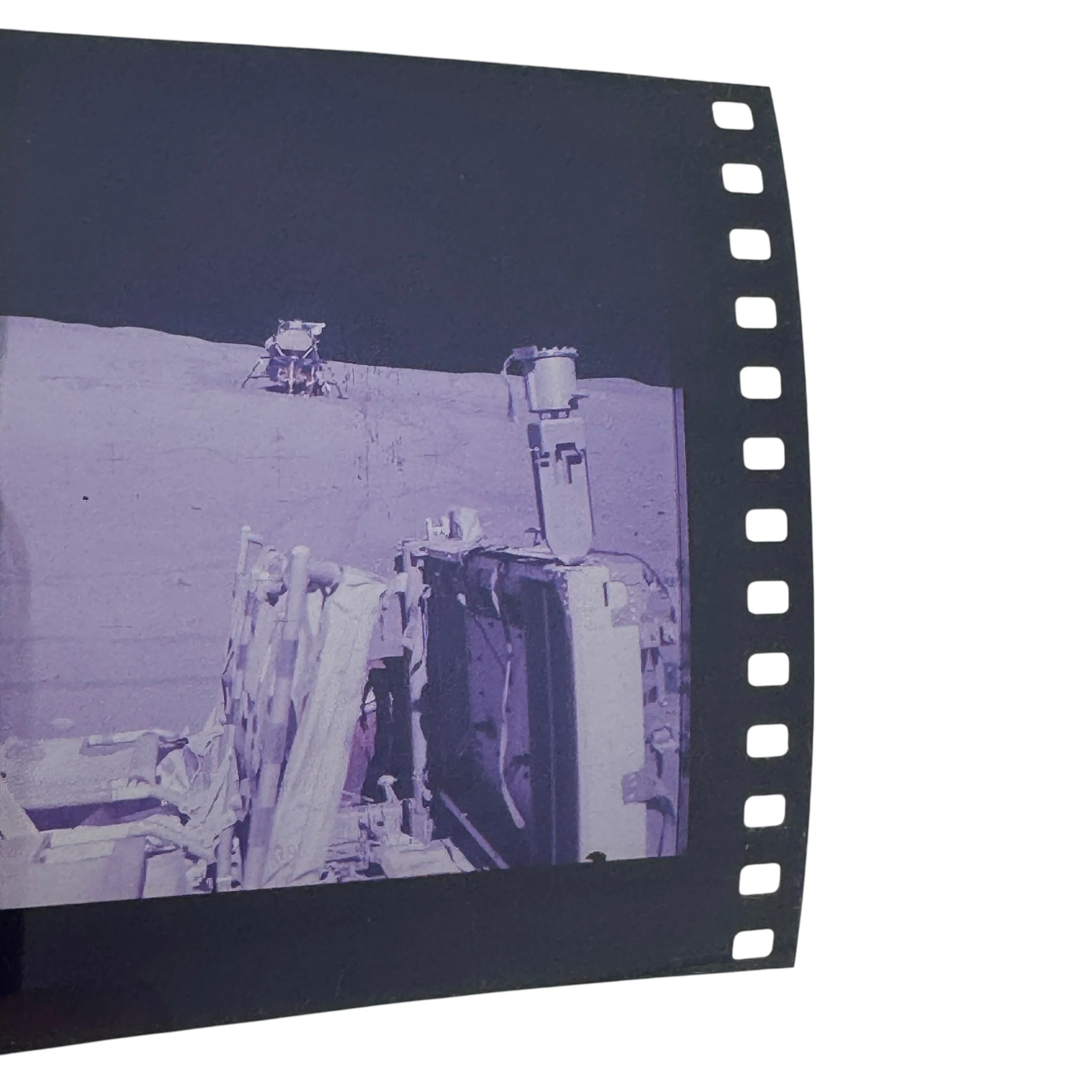
AS16-116-18716 - Apollo 16 Hasselblad image from film magazine 116/E - EVA-3. Locator shot from the rover in its final position to the lunar module. Sample 60335 is sitting on the rover seat, just before it is placed on the lunar portable magnetometer.
Use: Rare early Hasselblad film frame from Apollo 16 "Magazine E" camera used to create the infamous NASA first edition production film for end-use photographs
This exceptionally rare and museum-grade NASA Apollo 16 artifact is an original 70mm color film positive cell from Magazine E of the Apollo 16 Hasselblad lunar surface camera. The image was captured on the Moon between April 21 and April 23, 1972, during humanity’s fifth crewed landing on the lunar surface.
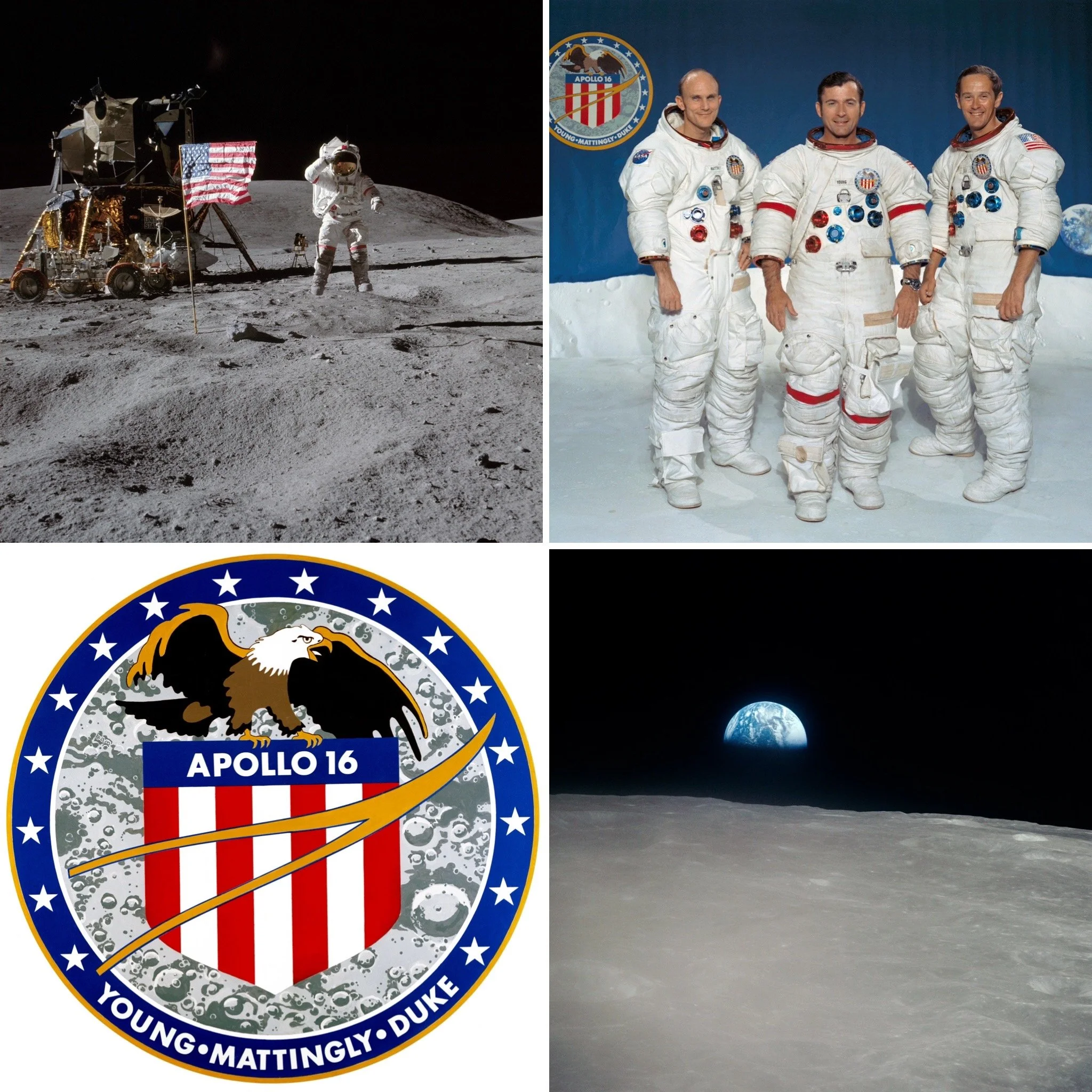
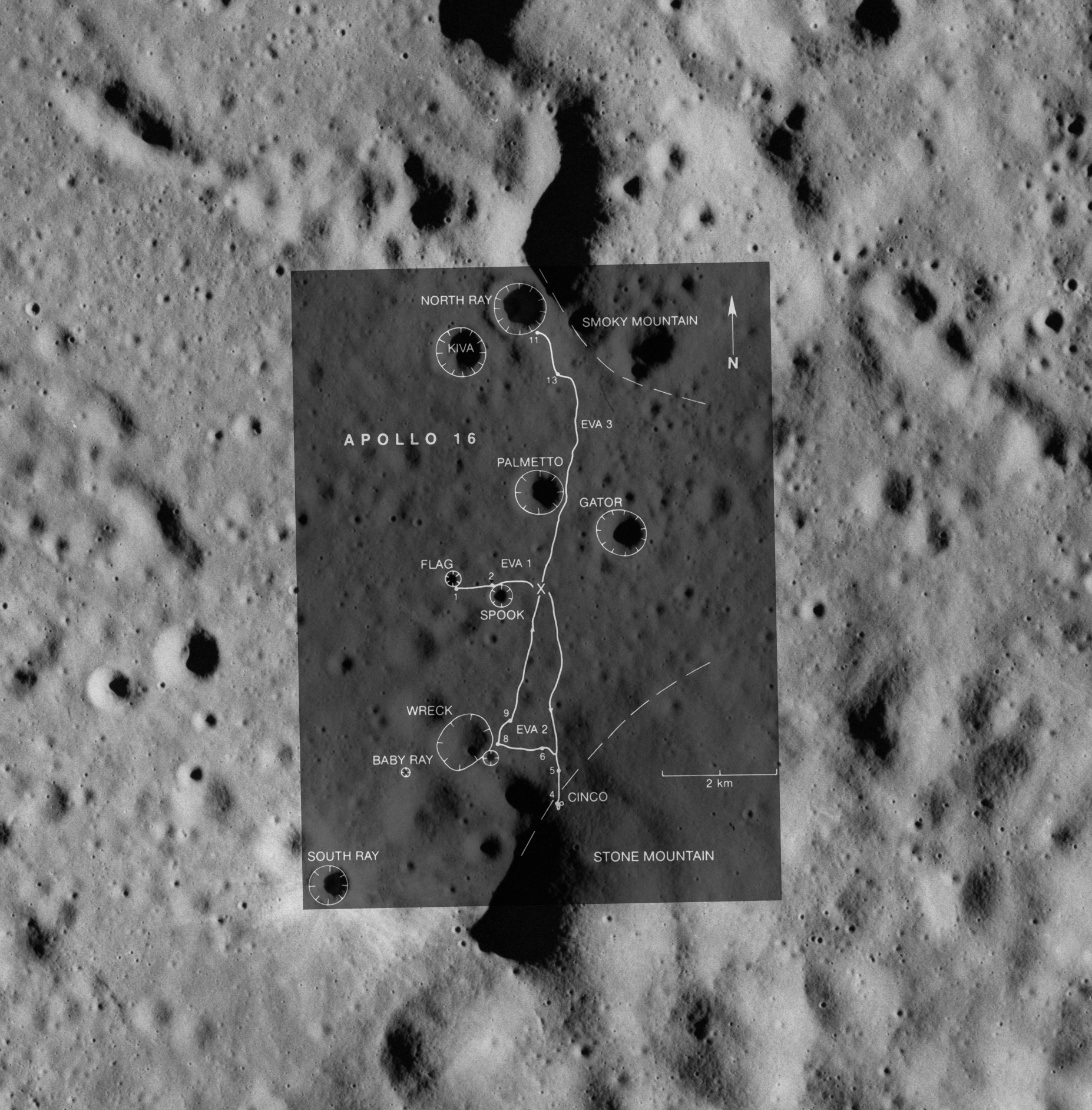
Apollo 16 marked the first mission dedicated to exploring the rugged Descartes Highlands, a region scientists believed would reveal critical clues about the Moon’s volcanic history. Astronauts John Young and Charlie Duke conducted three historic lunar surface EVAs, traveling farther from the Lunar Module than any previous crew and returning with invaluable geological data that reshaped scientific understanding of the Moon’s formation.
While both astronauts operated the Hasselblad cameras, many of the key EVA photographs within Magazine E, specifically frames AS16-116-18563 through AS16-116-18724, were captured by Lunar Module Pilot Charlie Duke alongside Commander John Young during their methodical exploration of the highlands. These photographs documented real time surface operations, geological sampling, and the stark lunar landscape under true mission conditions.
This hand numbered film cell originates from the personal collection of renowned NASA photographic specialist Richard Underwood, who served at the Johnson Space Center’s Photographic Technology Laboratory throughout the Apollo era. Underwood held the title of Supervisory Aerospace Technologist and played a central role in the handling and development of Apollo flight film immediately upon its return to Earth.
Widely respected within NASA, Underwood was responsible for training every astronaut in space photography from the Mercury Program through the early Space Shuttle missions. Remarkably, he was the first individual to view and process every photograph returned from Gemini, Apollo, Skylab, Apollo Soyuz, and the first twenty three Space Shuttle missions. His direct stewardship of the film places this piece at the very heart of NASA’s photographic history.
The Apollo 16 mission carried four 70mm Hasselblad cameras and twenty two film magazines. Across the mission, astronauts exposed a total of 2,808 images, including 1,224 black and white frames, 1,501 color images, and 83 ultraviolet photographs. This particular early generation positive, frame within the Magazine E sequence, represents the crucial first stage of NASA’s photographic workflow.
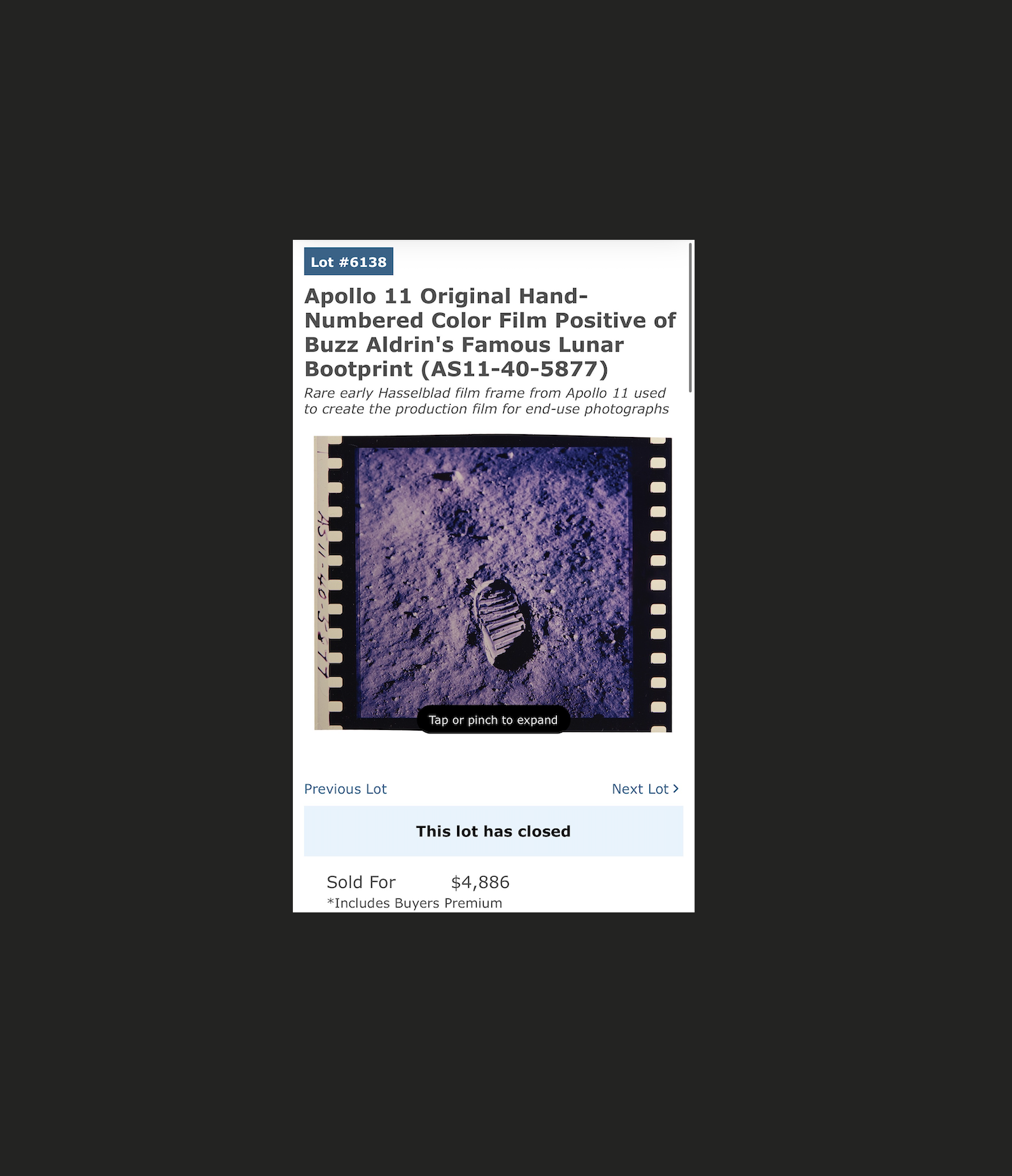
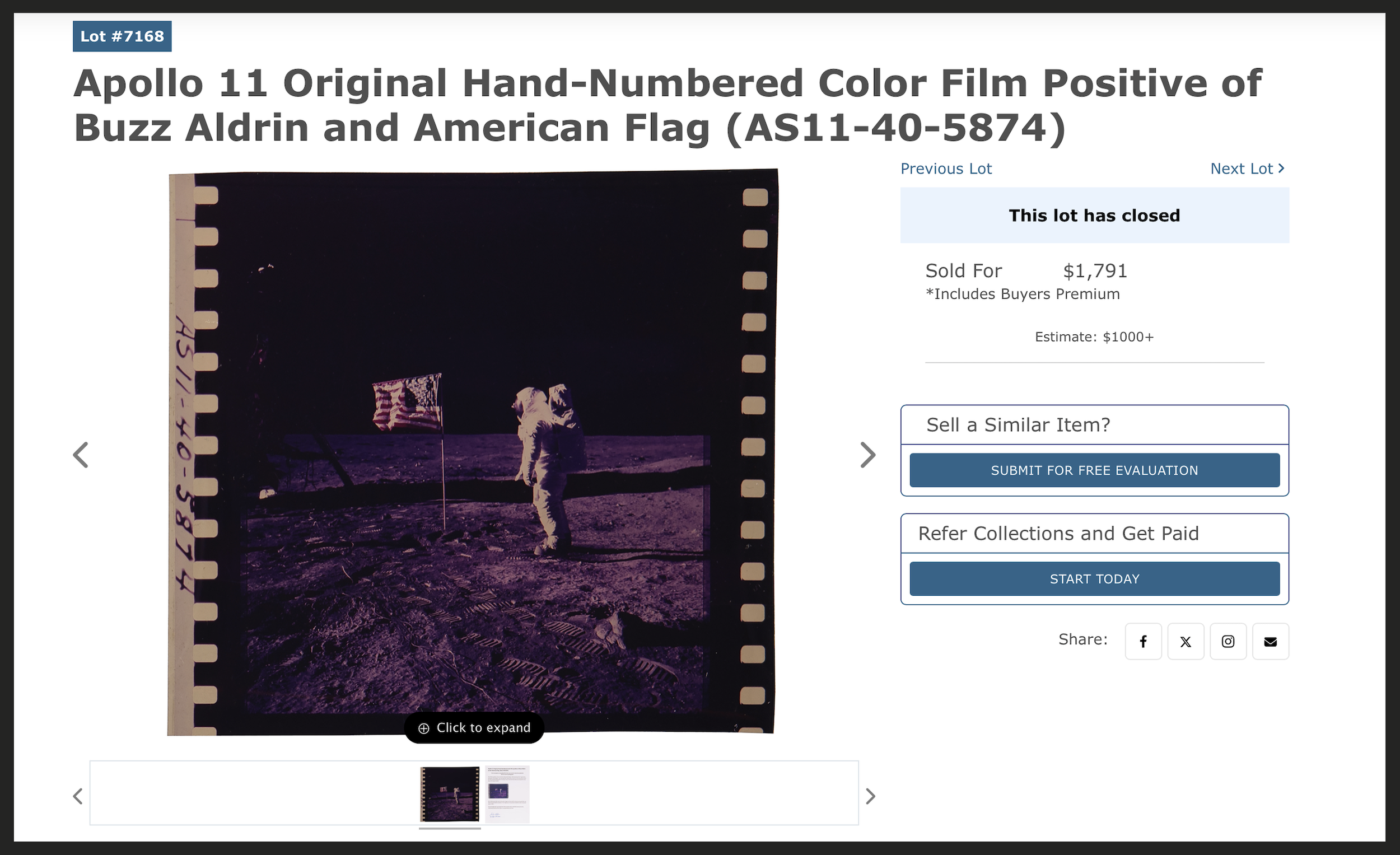
Hand numbered positives such as this were produced prior to the later machine numbered red series prints that became the most widely distributed NASA images. These early positives served as the master photographic sources used to create the famous red numbered releases seen in archives and publications around the world.
Developed by NASA shortly after Apollo 16’s return, this film positive stands as an authentic early generation artifact from the very camera system that operated on the lunar surface. It represents not only a tangible connection to one of NASA’s most scientifically important missions, but also a direct link to the behind the scenes photographic processes that preserved mankind’s exploration of the Moon for history.
An extraordinary and highly desirable piece of original Apollo Program history.