RARE! WWII 2nd Lt. Rinard Douglas C-47 Leipzig Germany "Mission Marked" 437th Troop Carrier Group Combat Flight Map (EXAC WOUNDED/RESUPPLY MISSIONS)
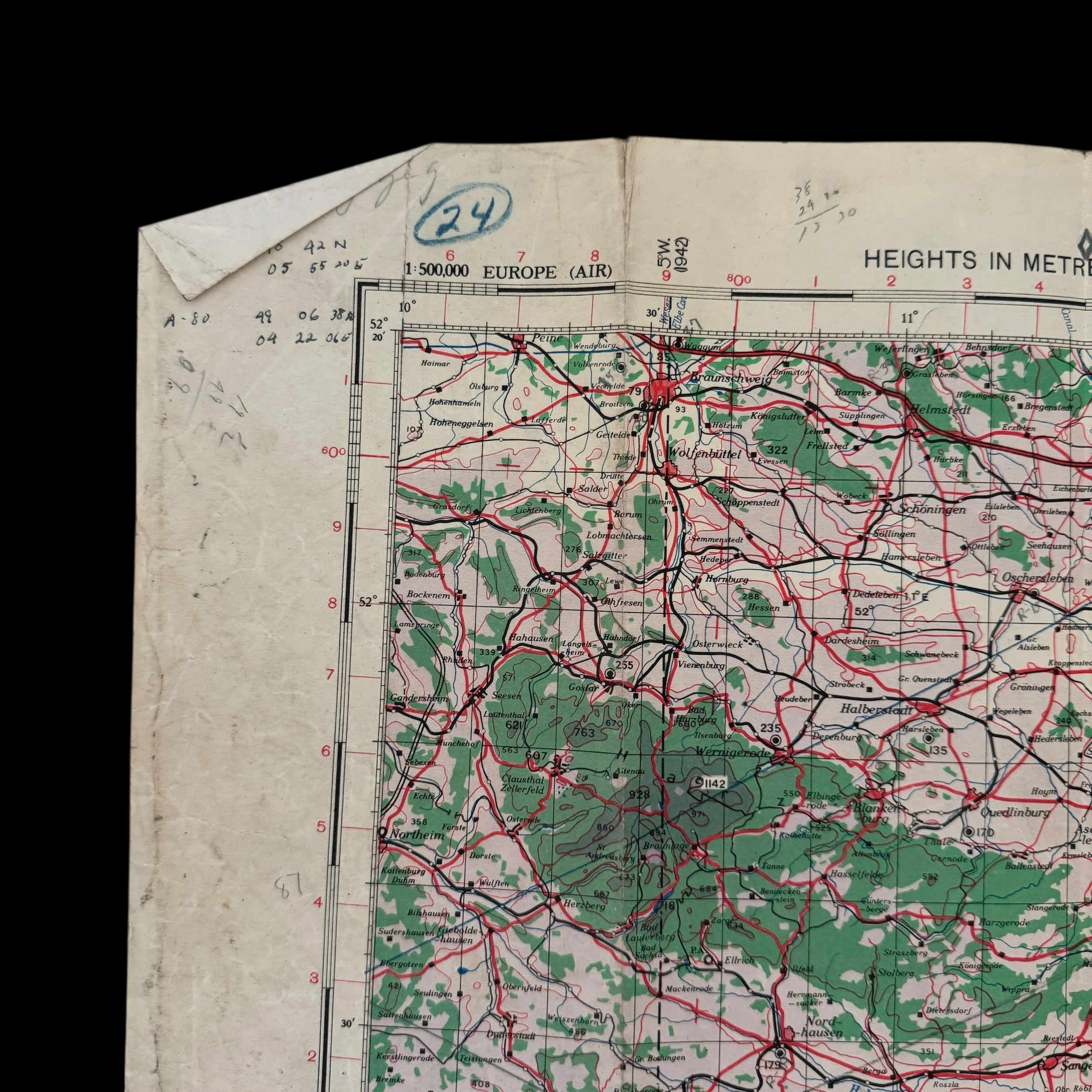
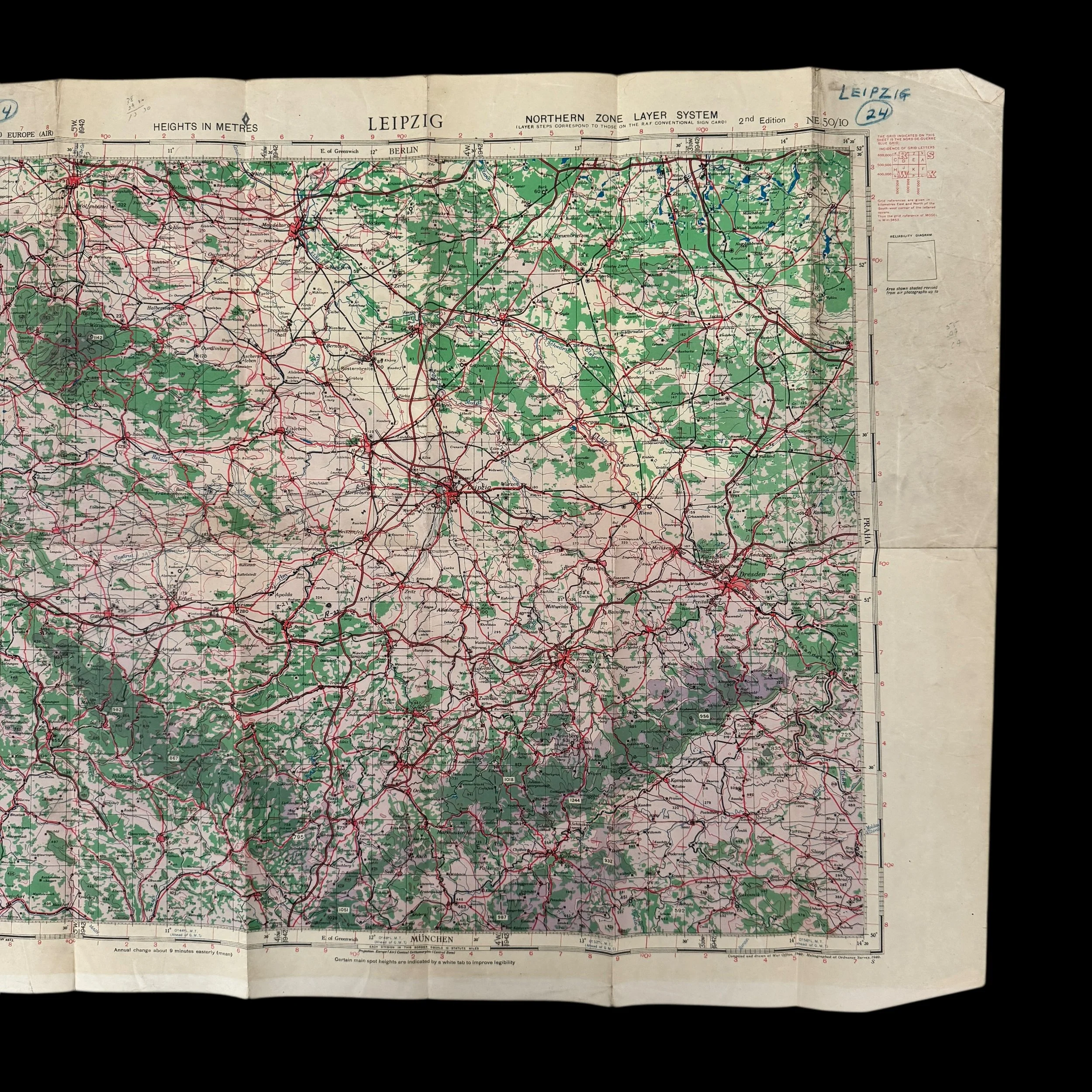
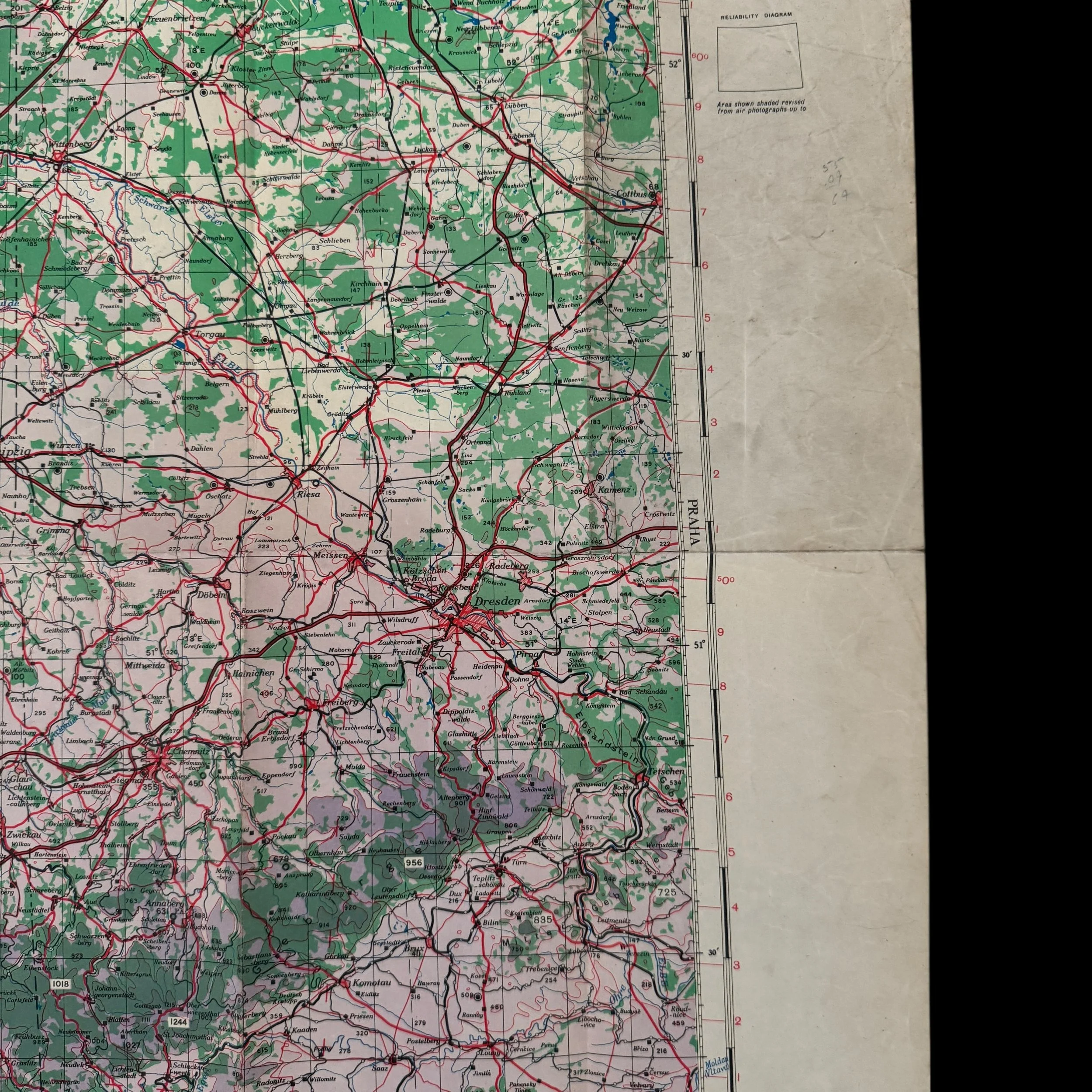
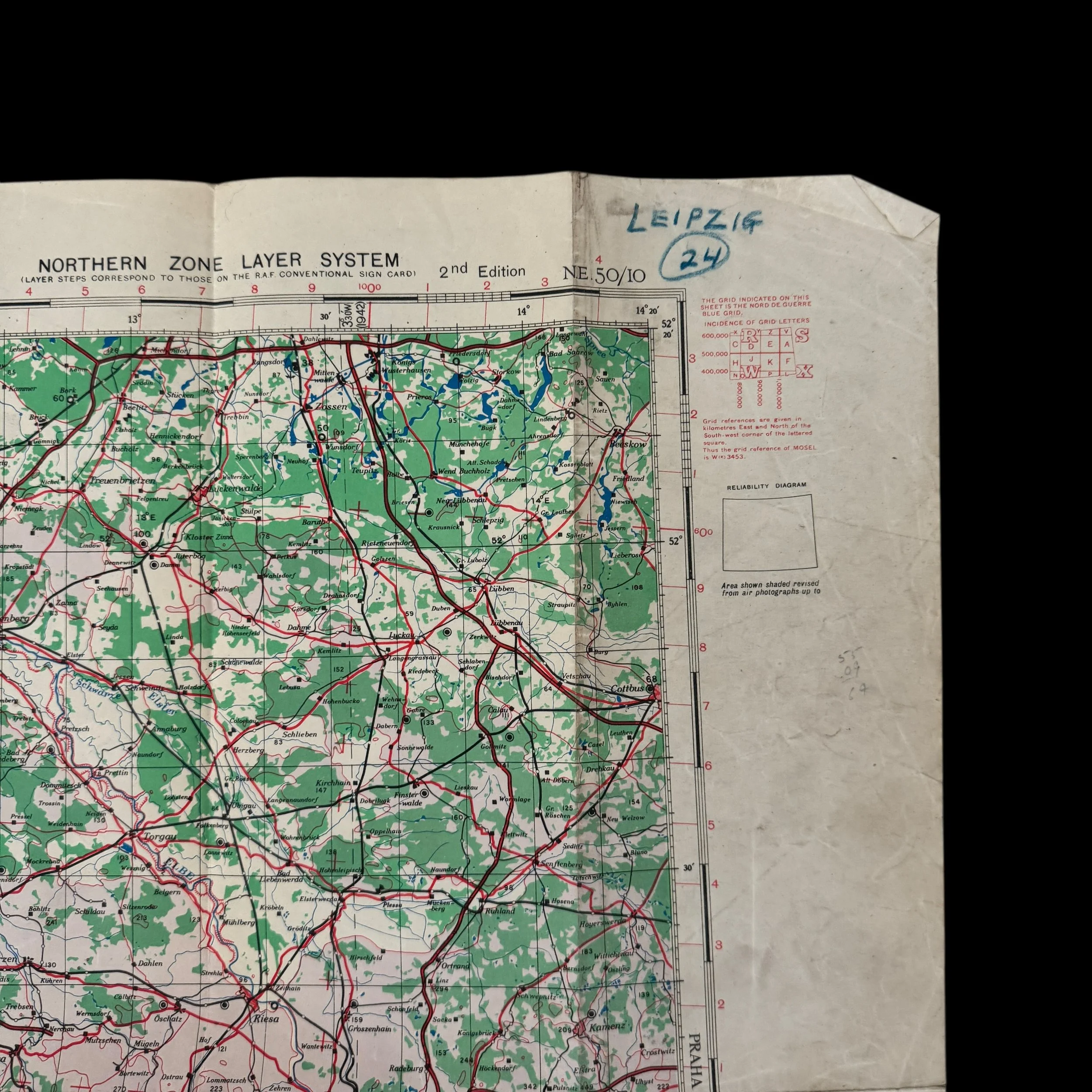
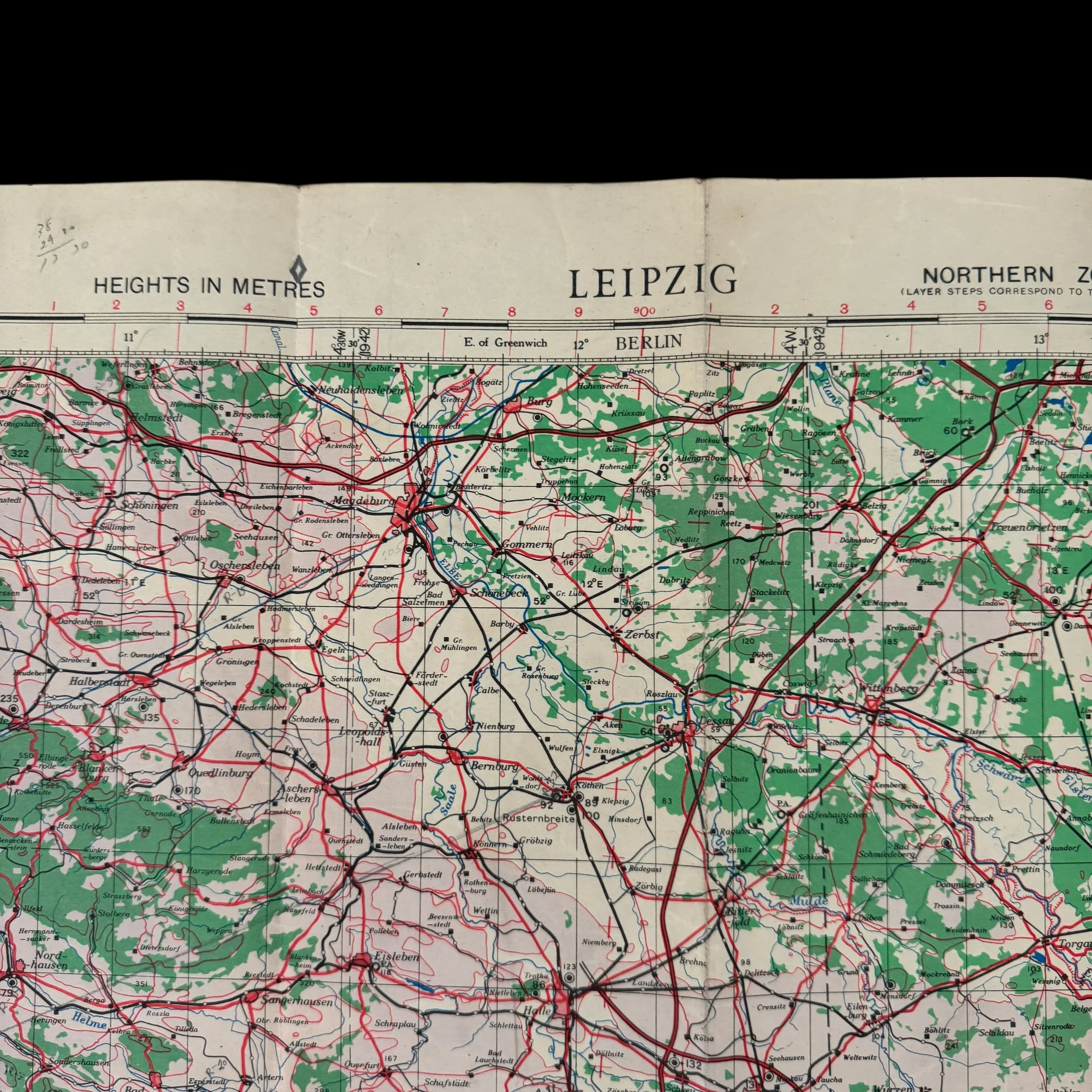
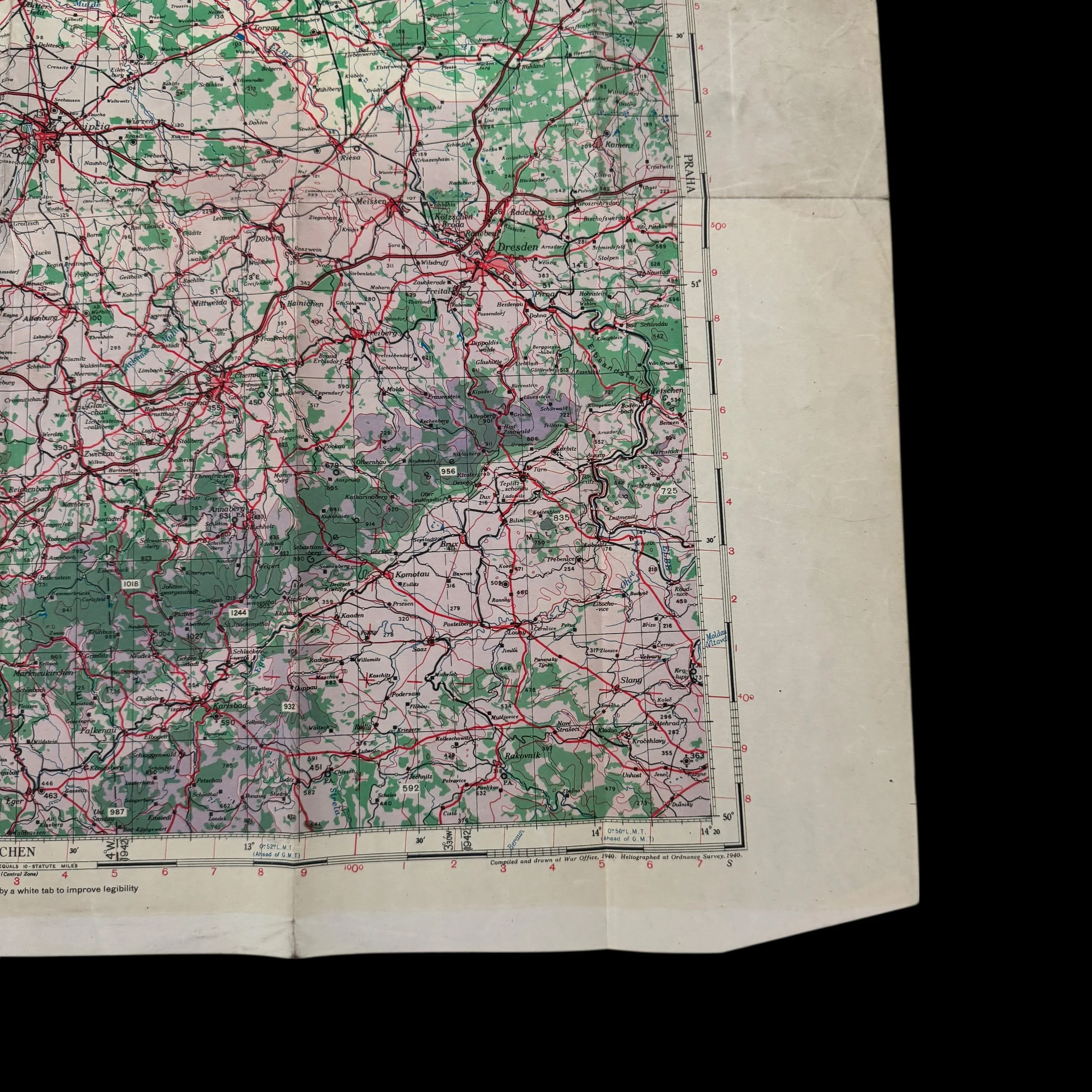
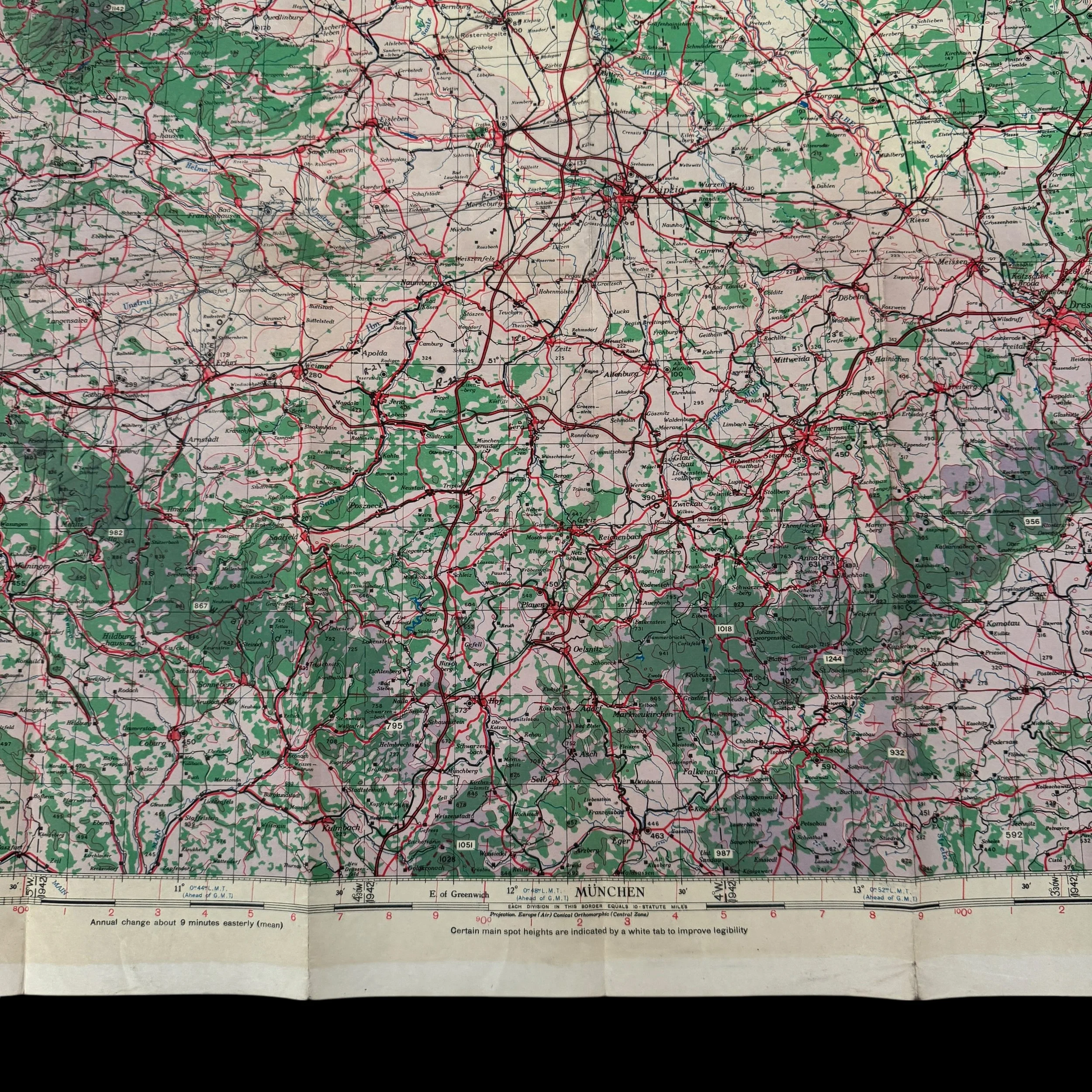
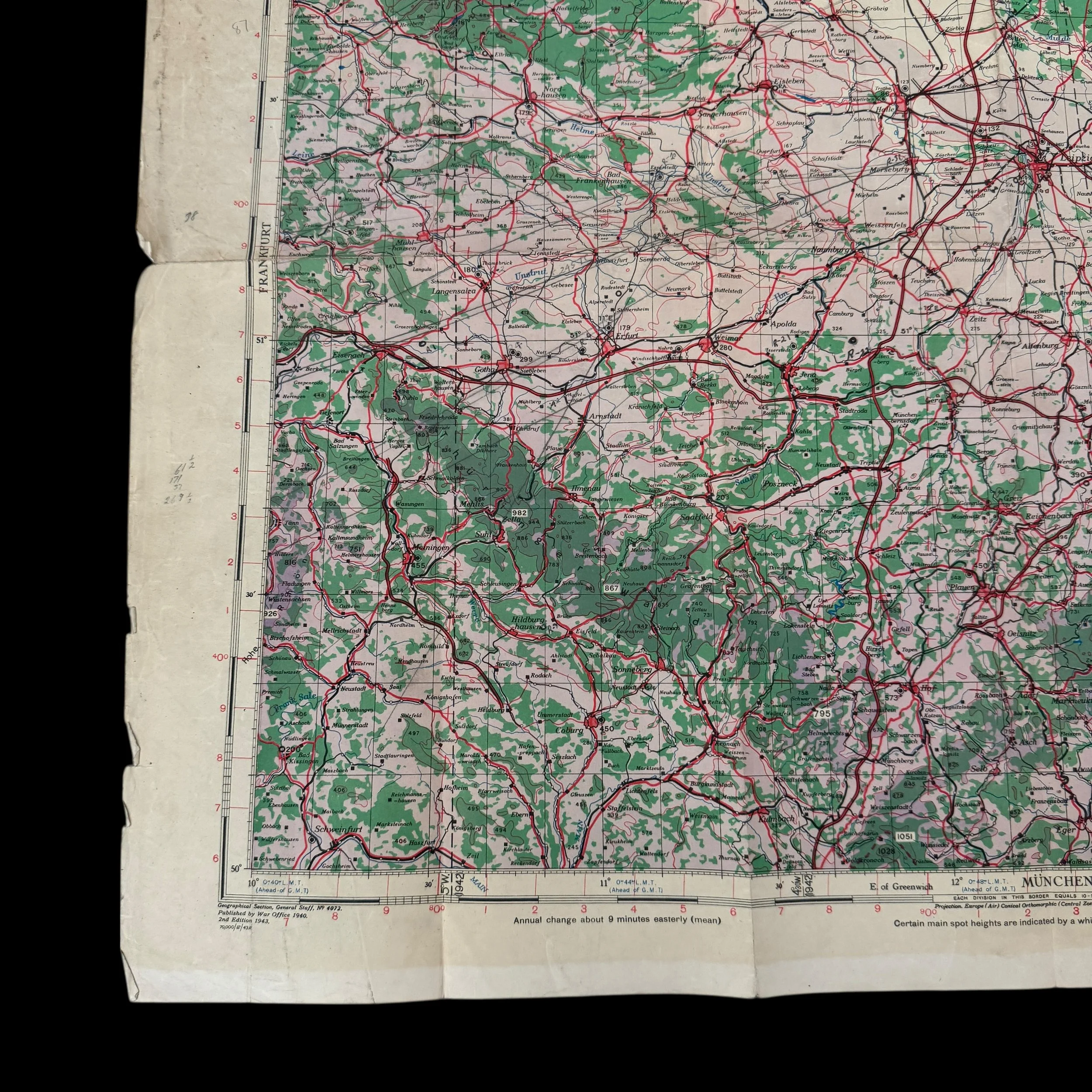
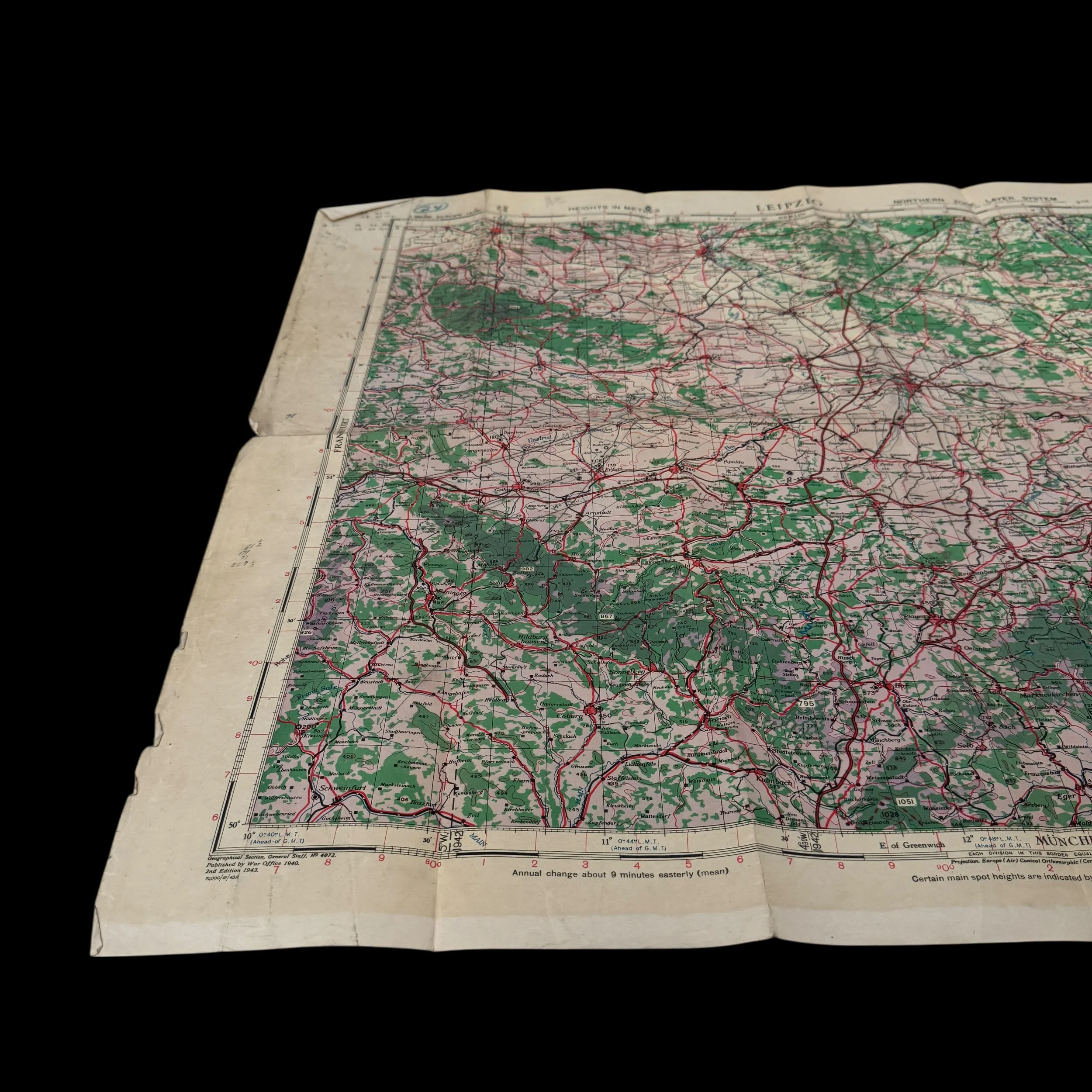
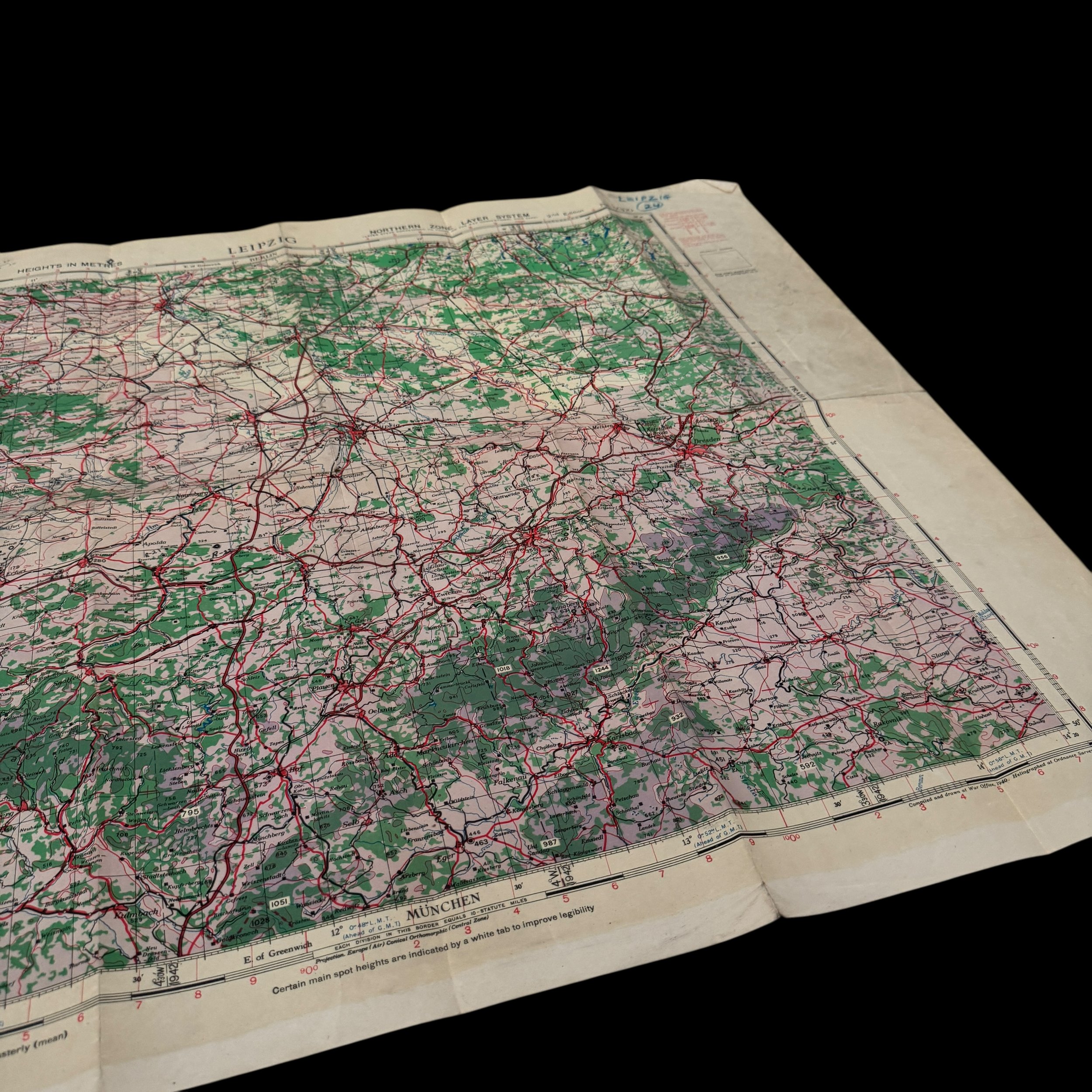
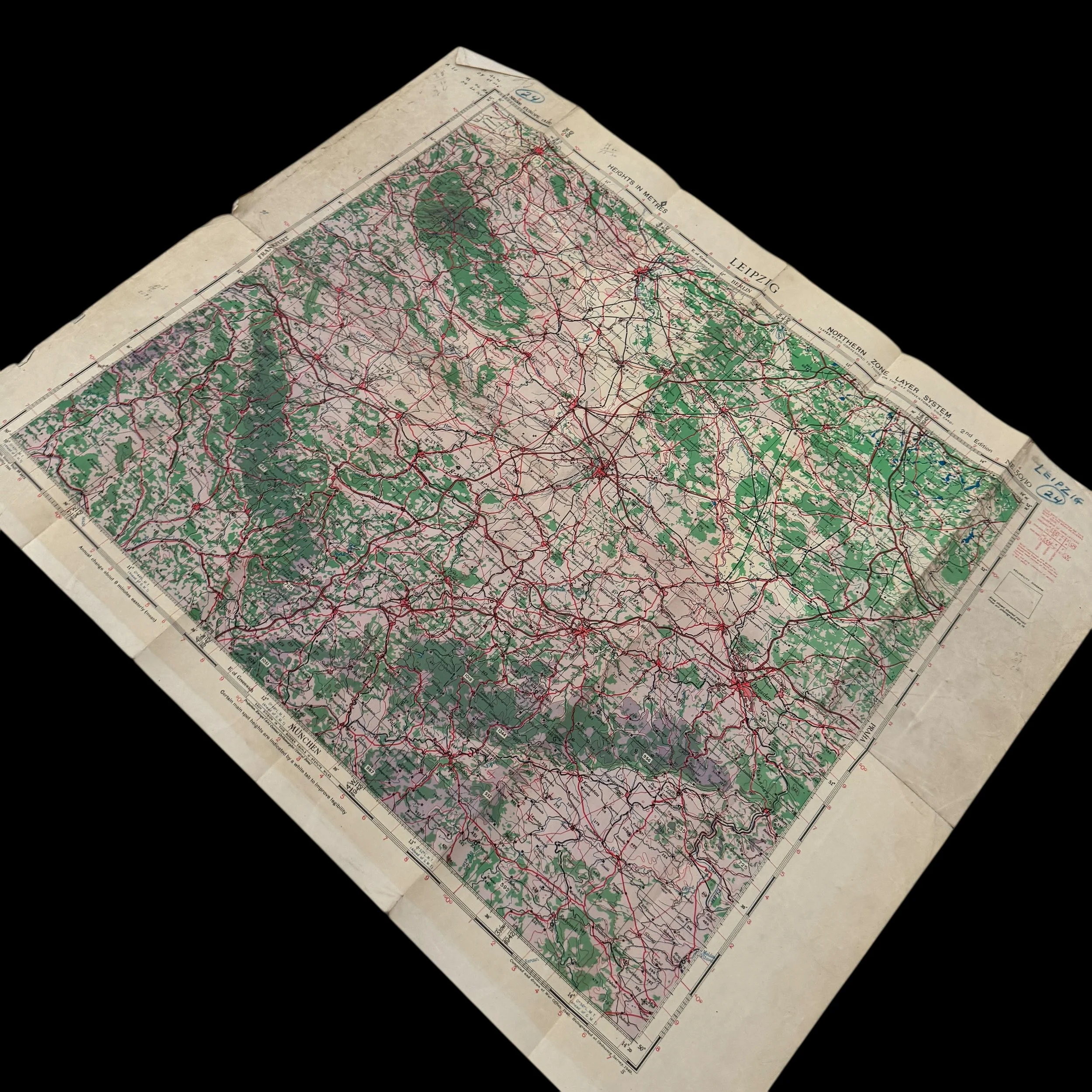
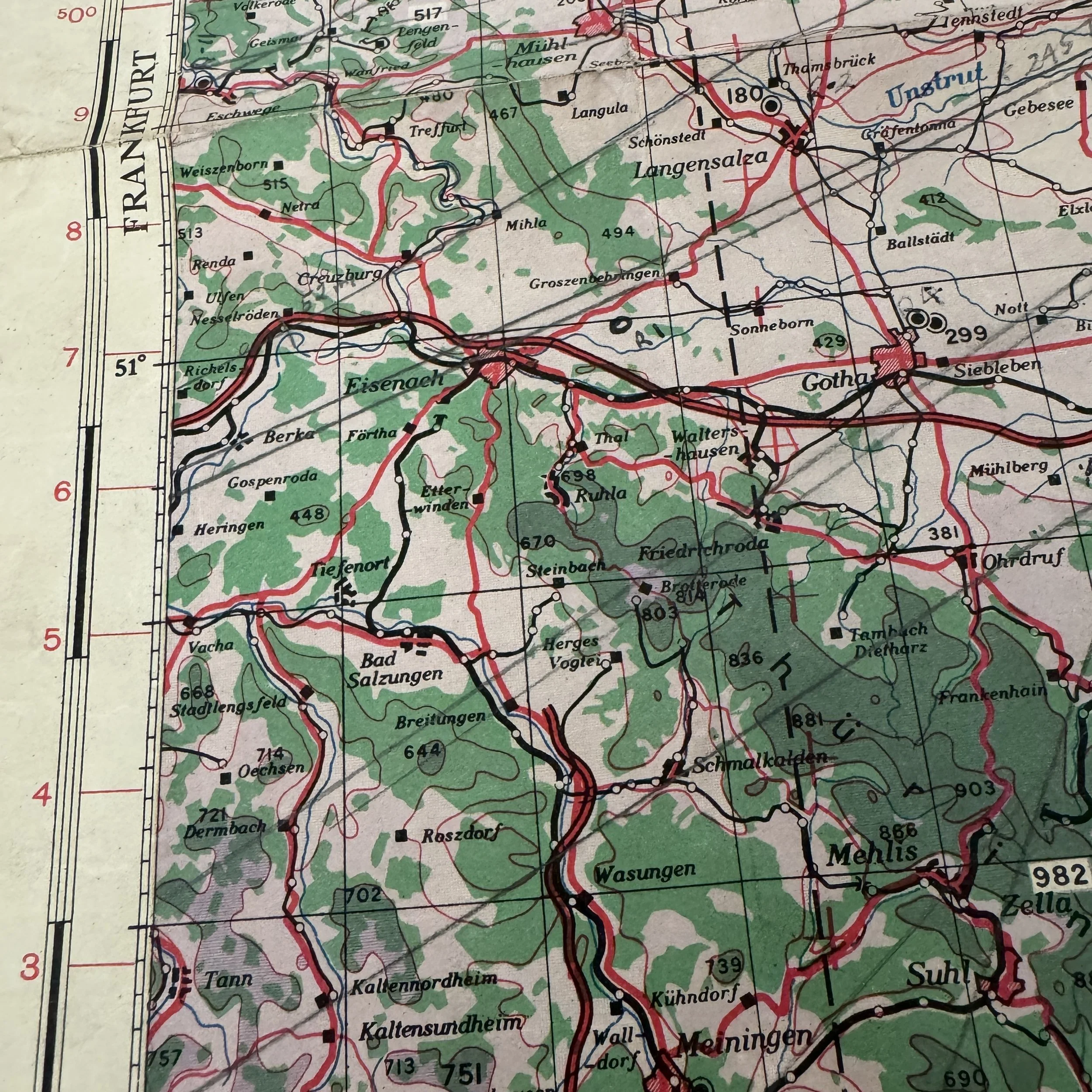
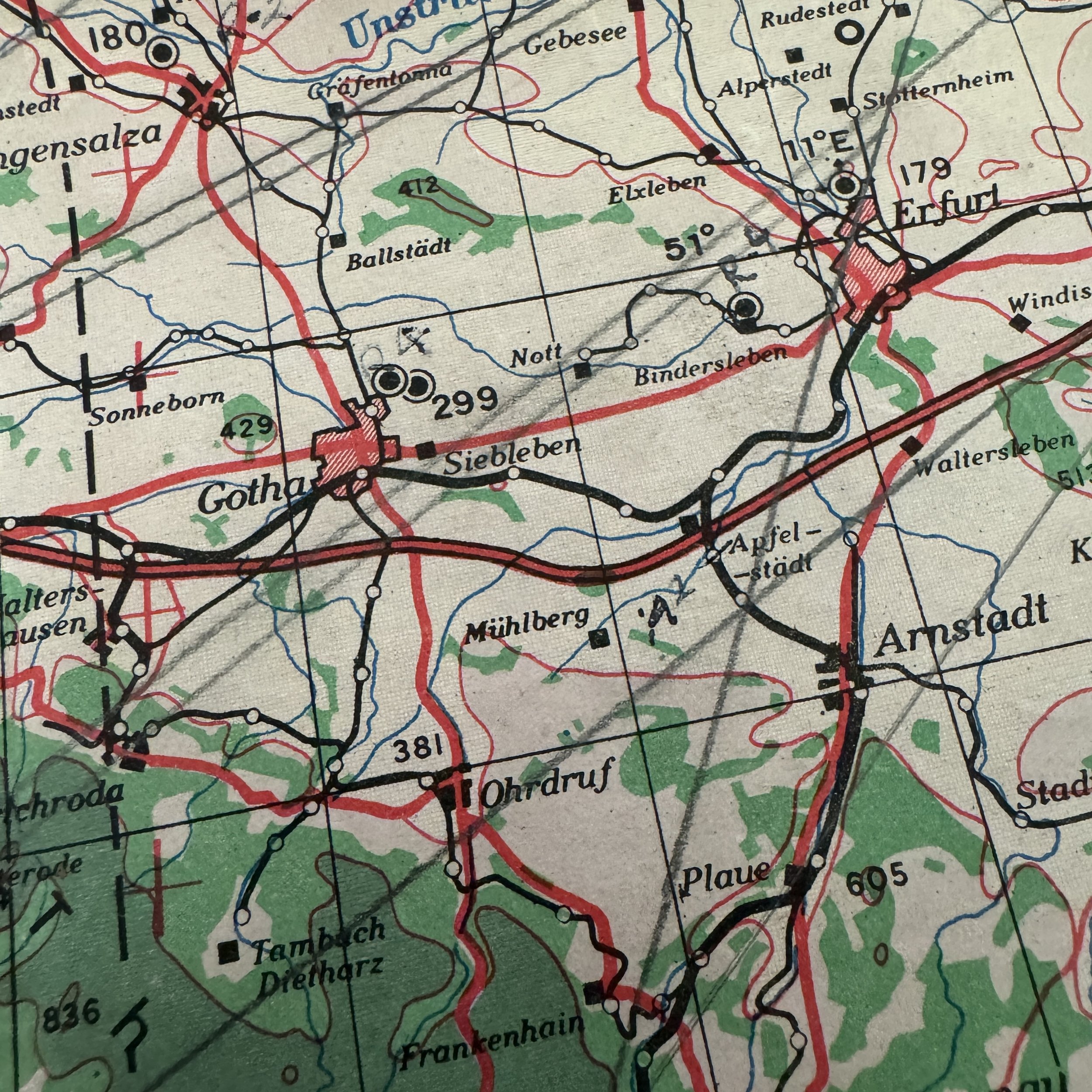

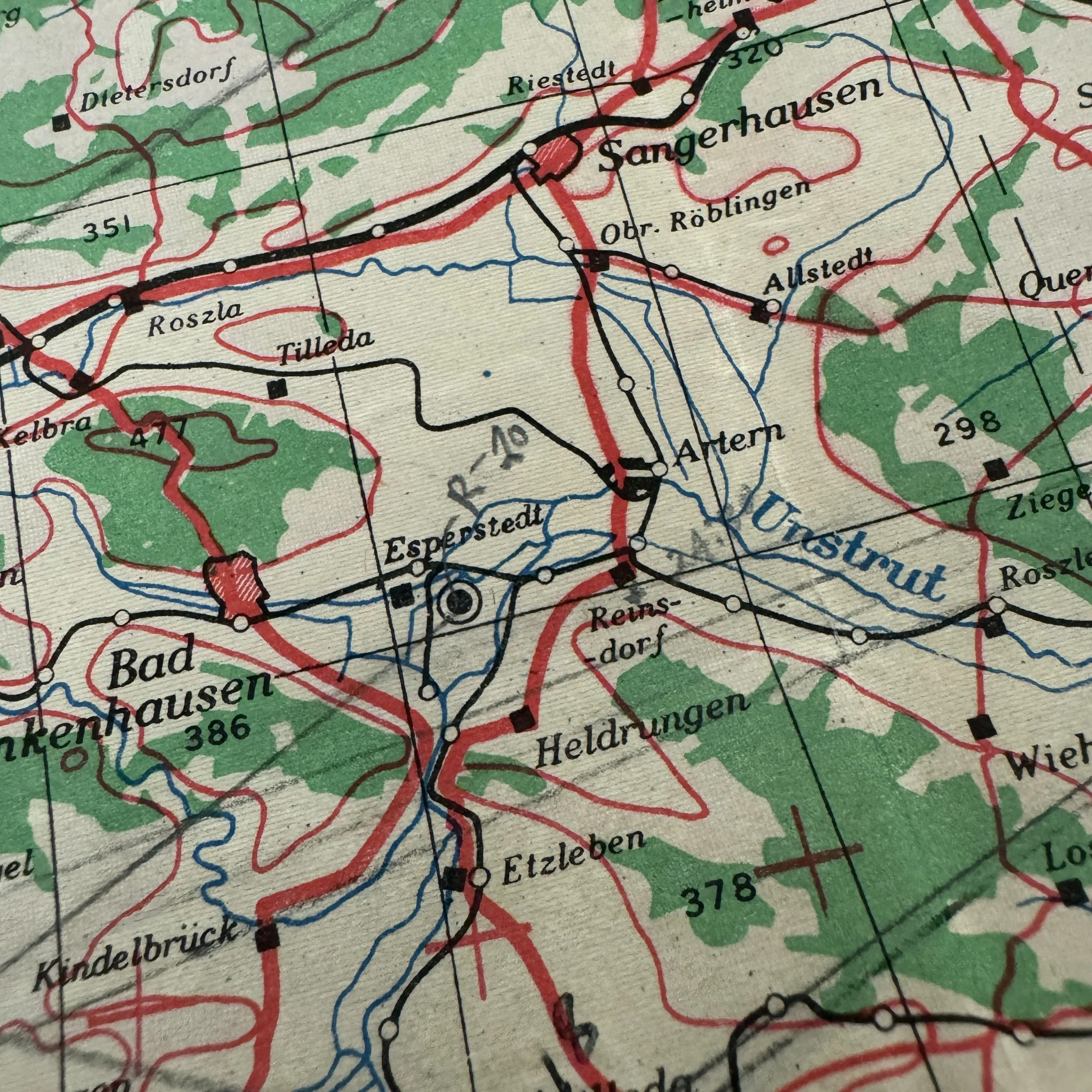
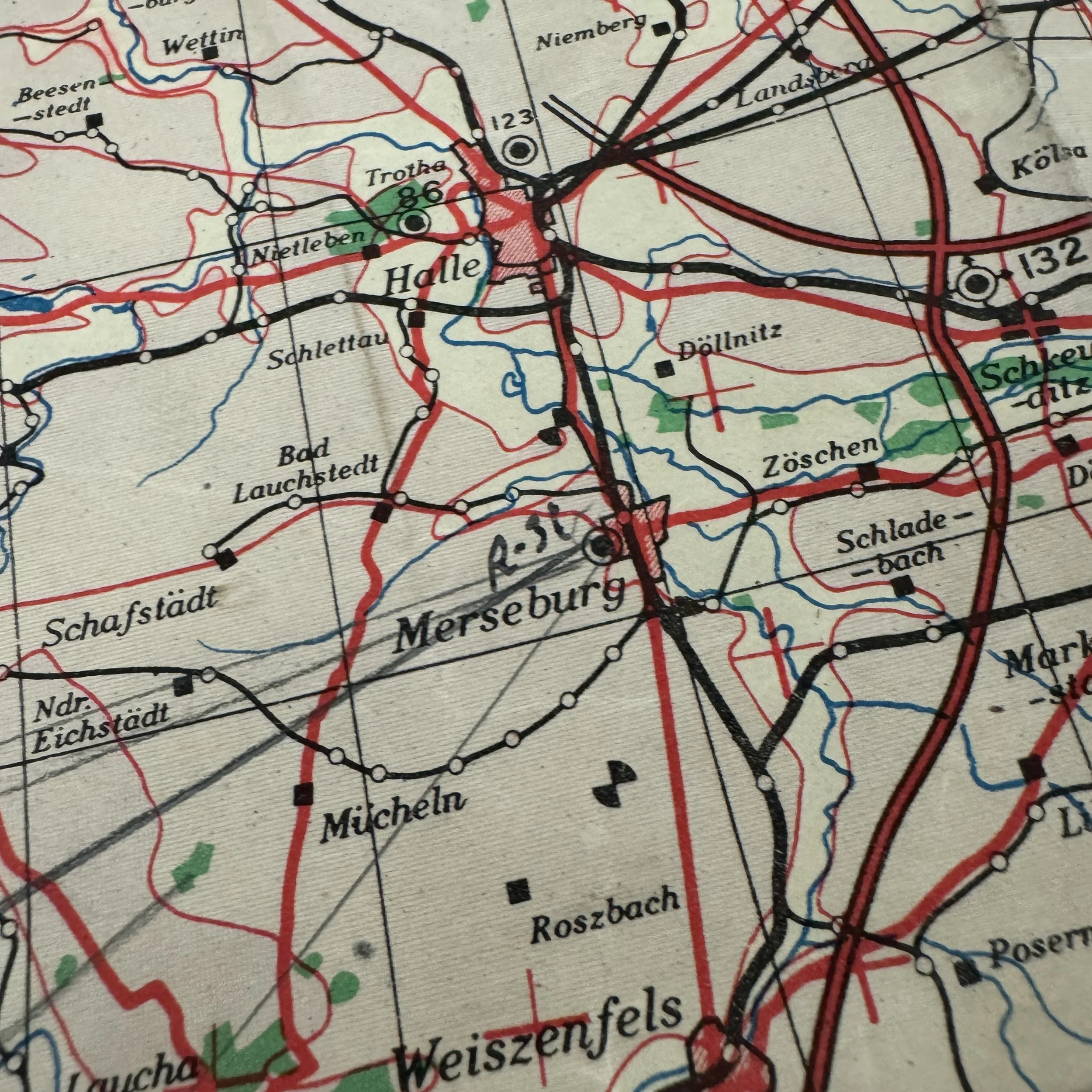
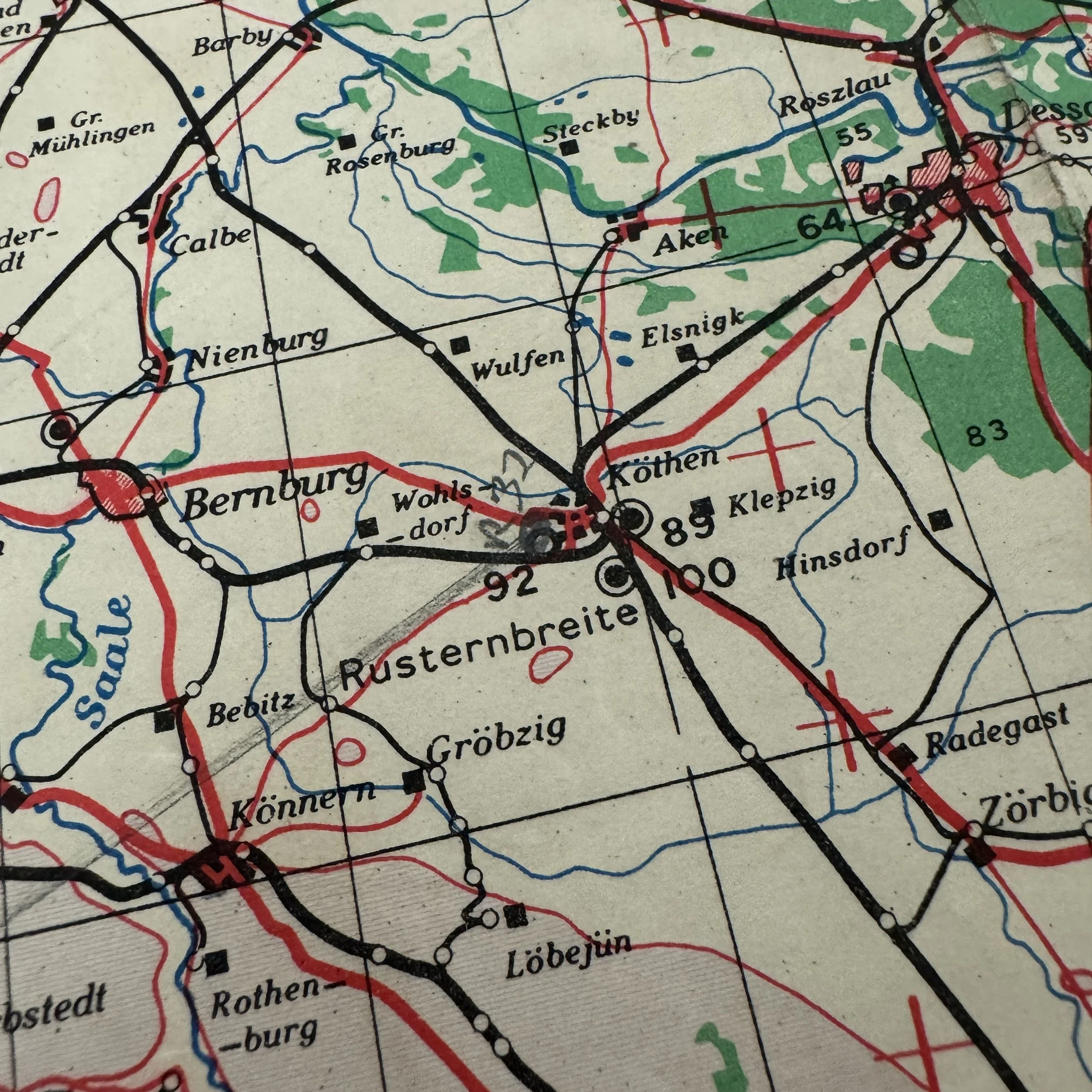
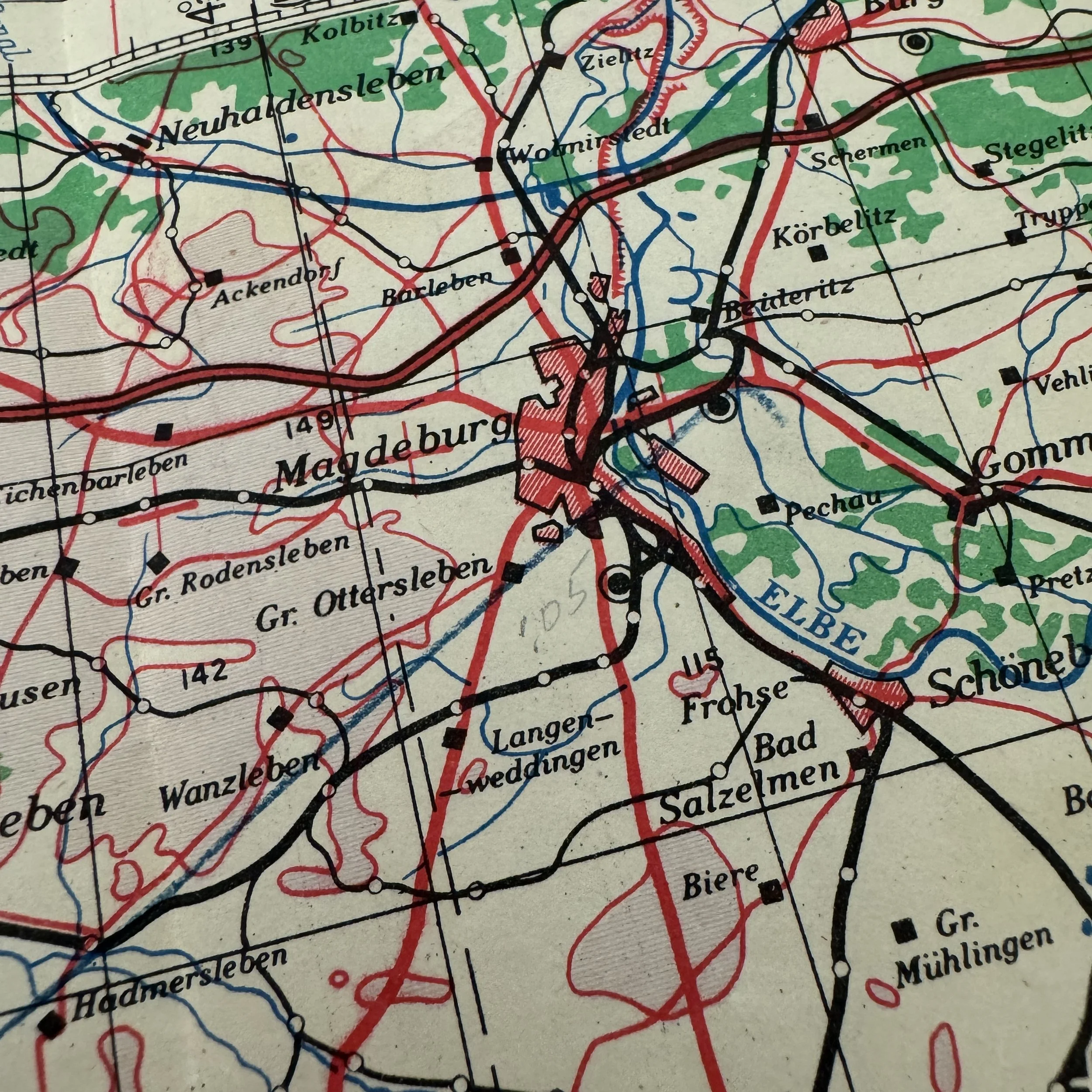
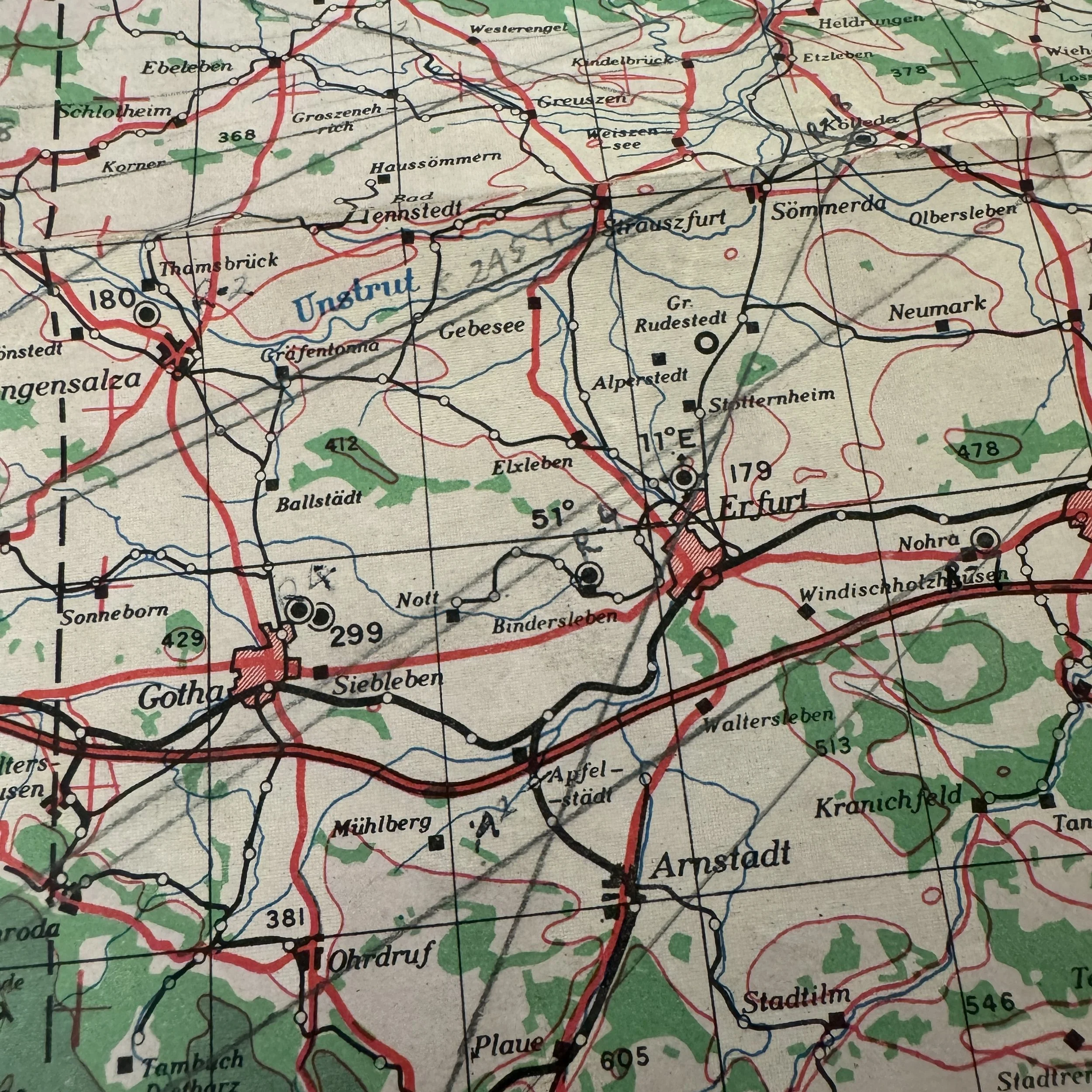

RARE! WWII 2nd Lt. Rinard Douglas C-47 Leipzig Germany "Mission Marked" 437th Troop Carrier Group Combat Flight Map (EXAC WOUNDED/RESUPPLY MISSIONS)
Comes with a hand-signed C.O.A. and full historical research report
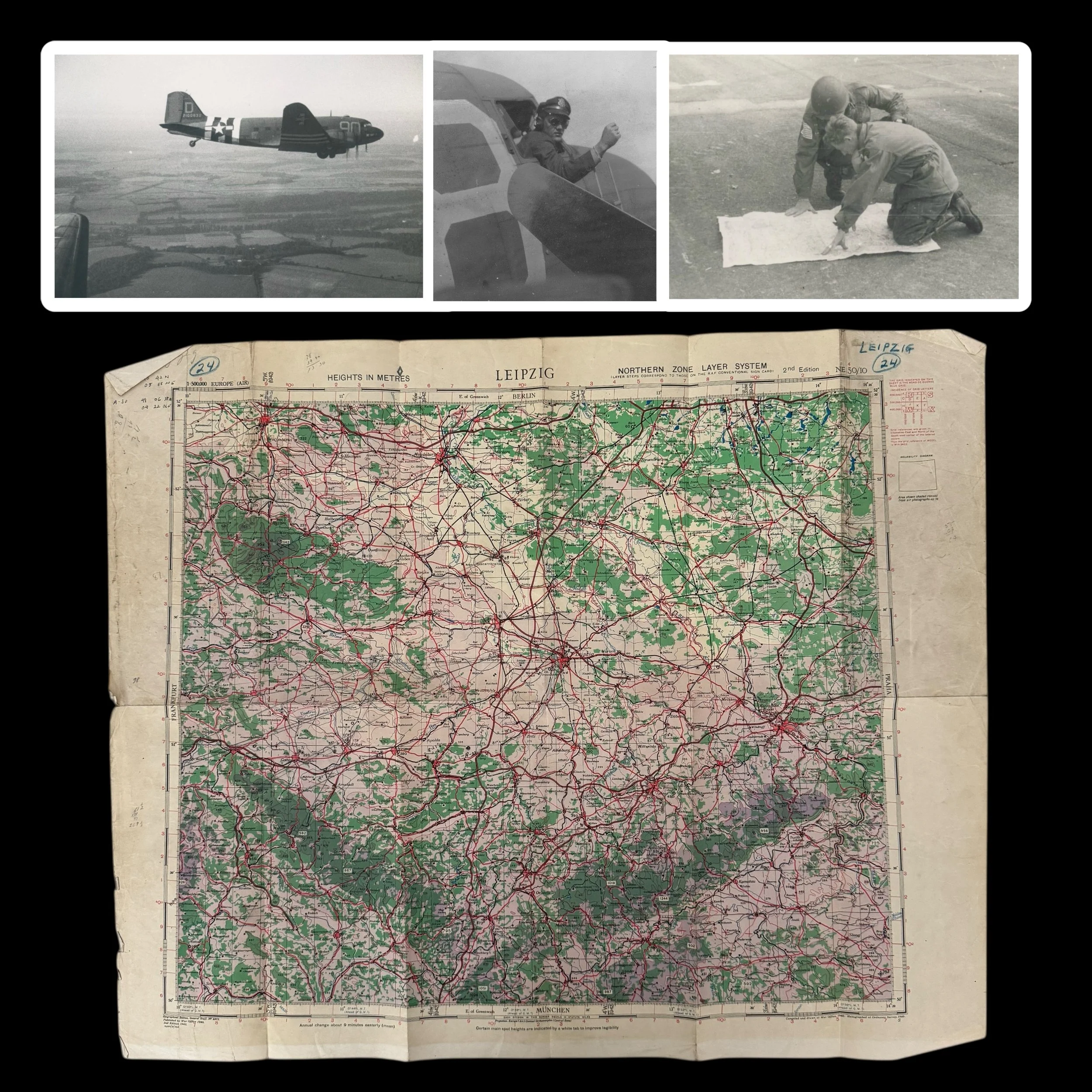
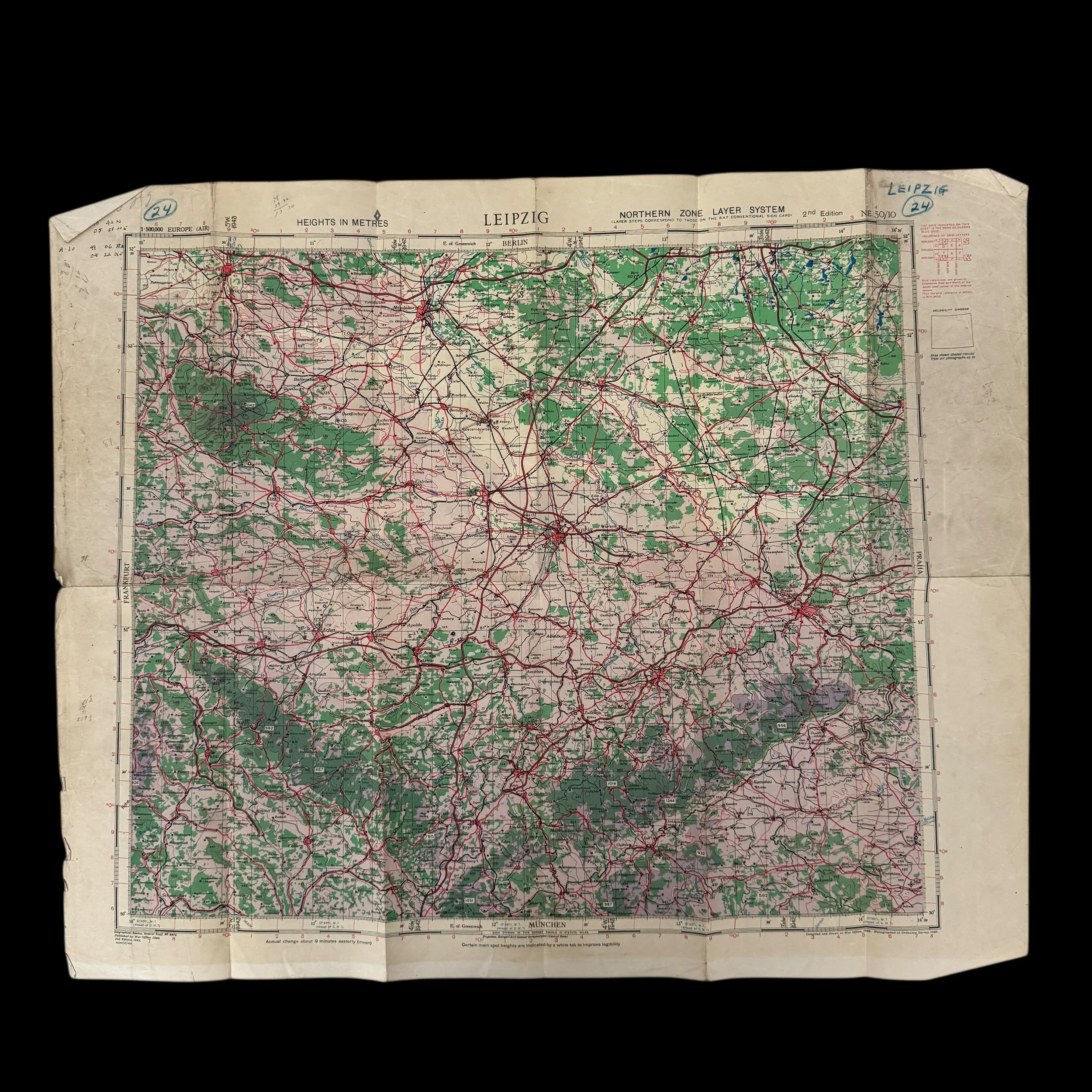
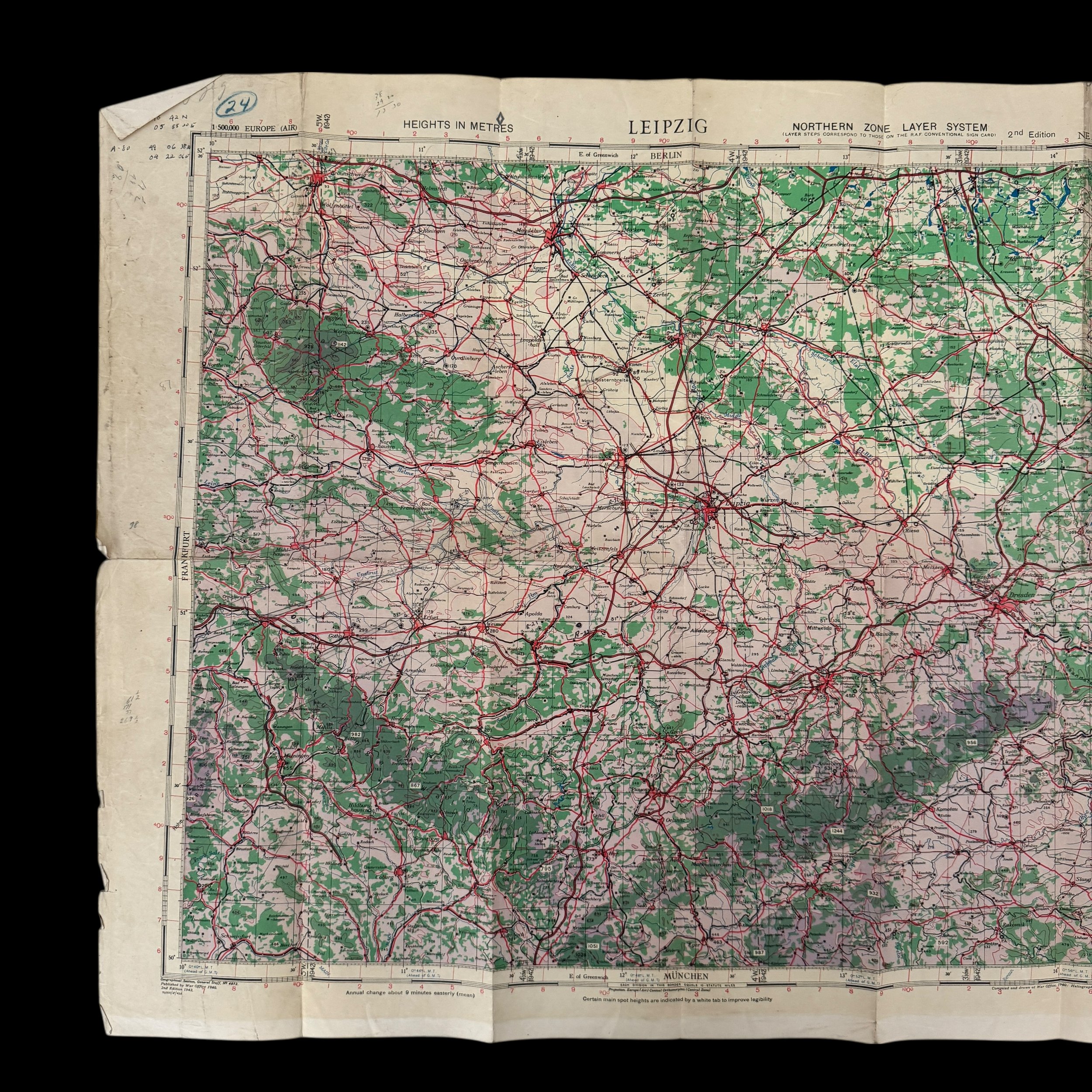
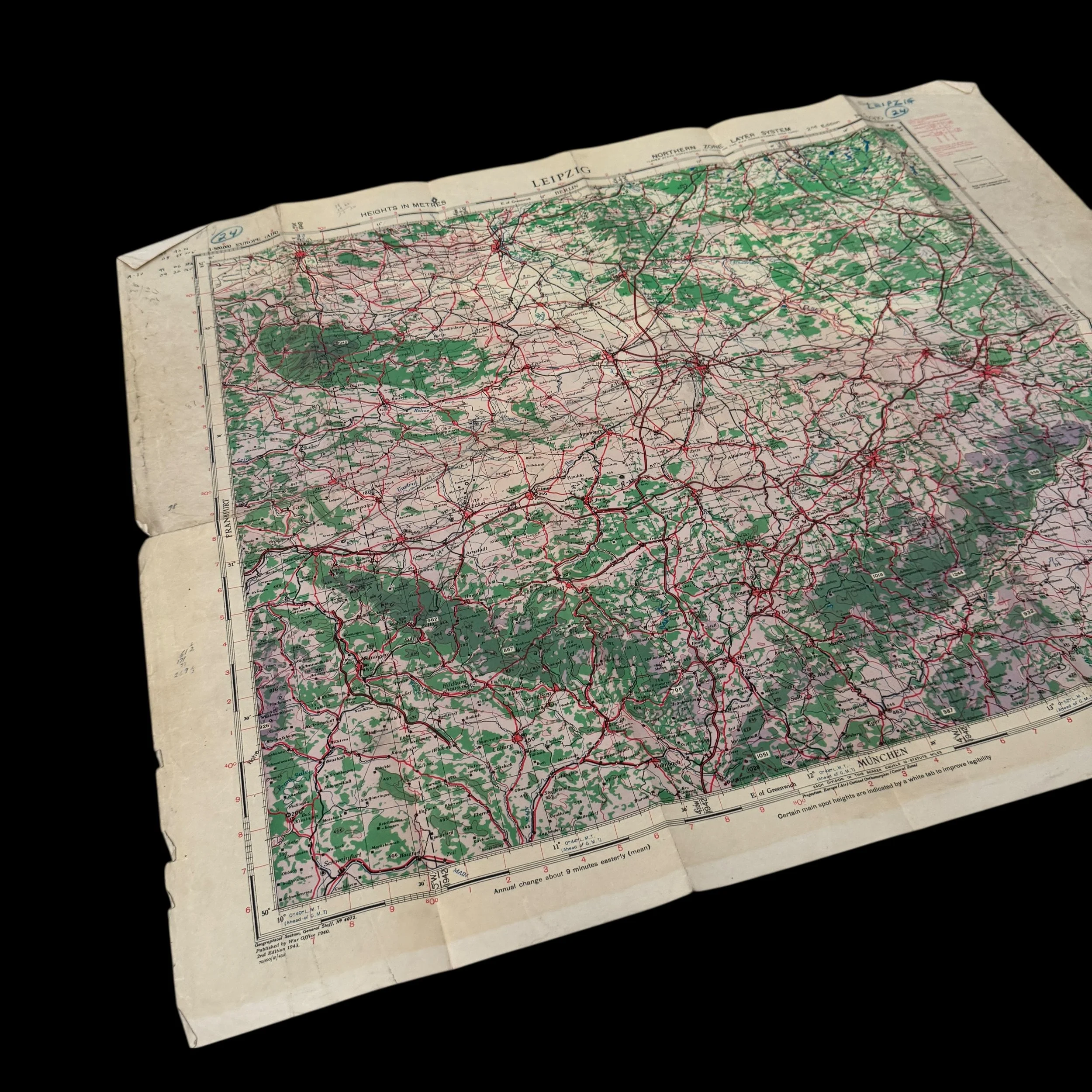
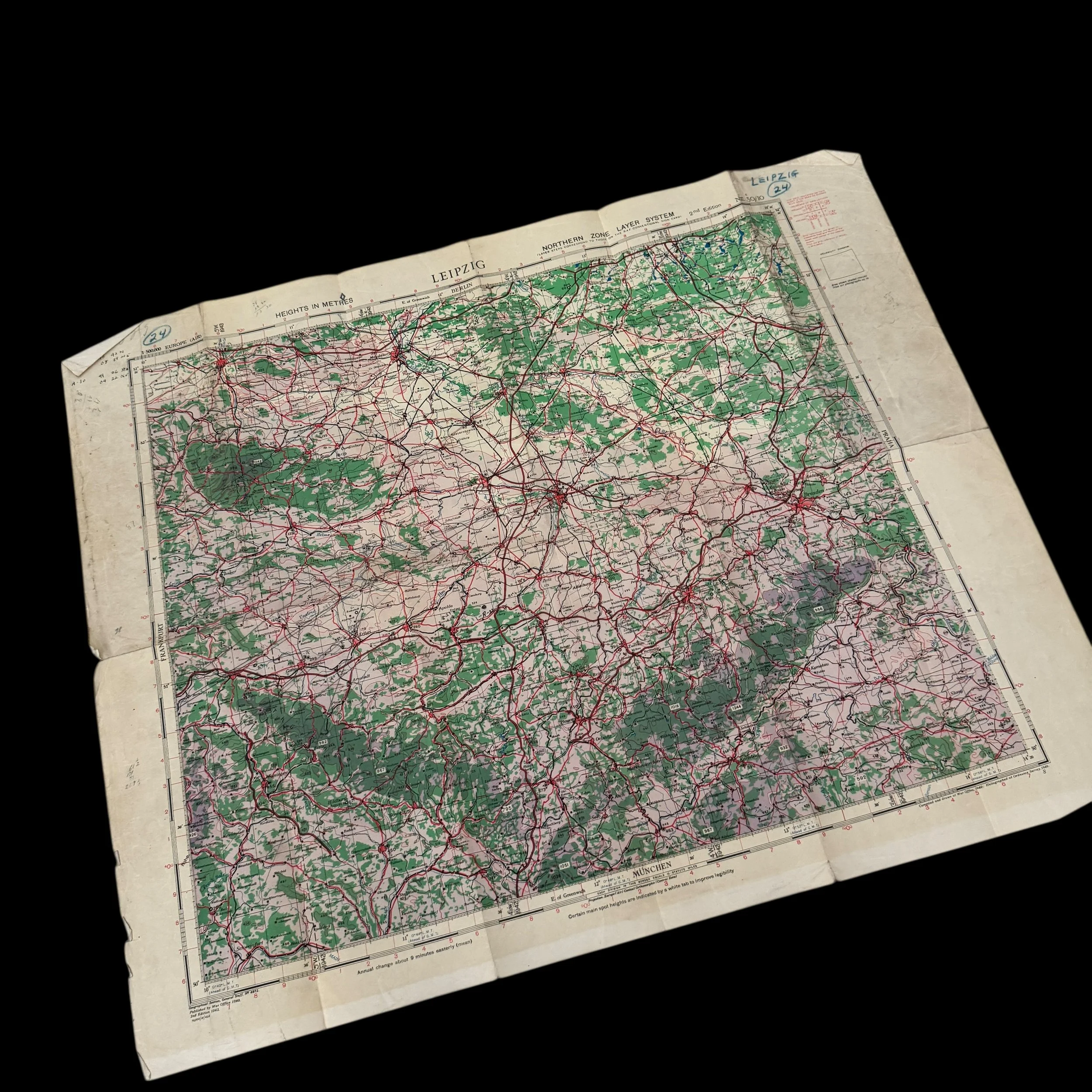
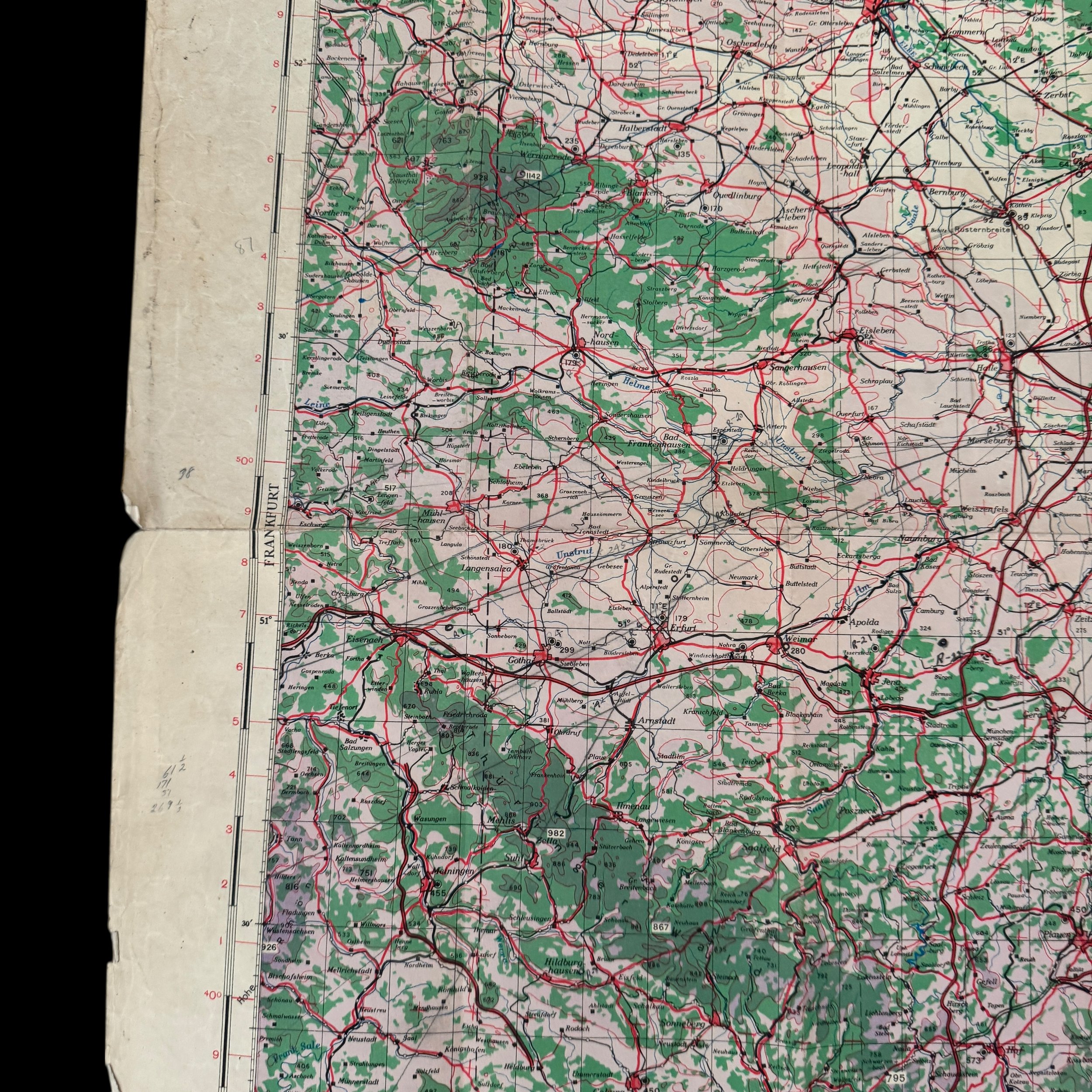
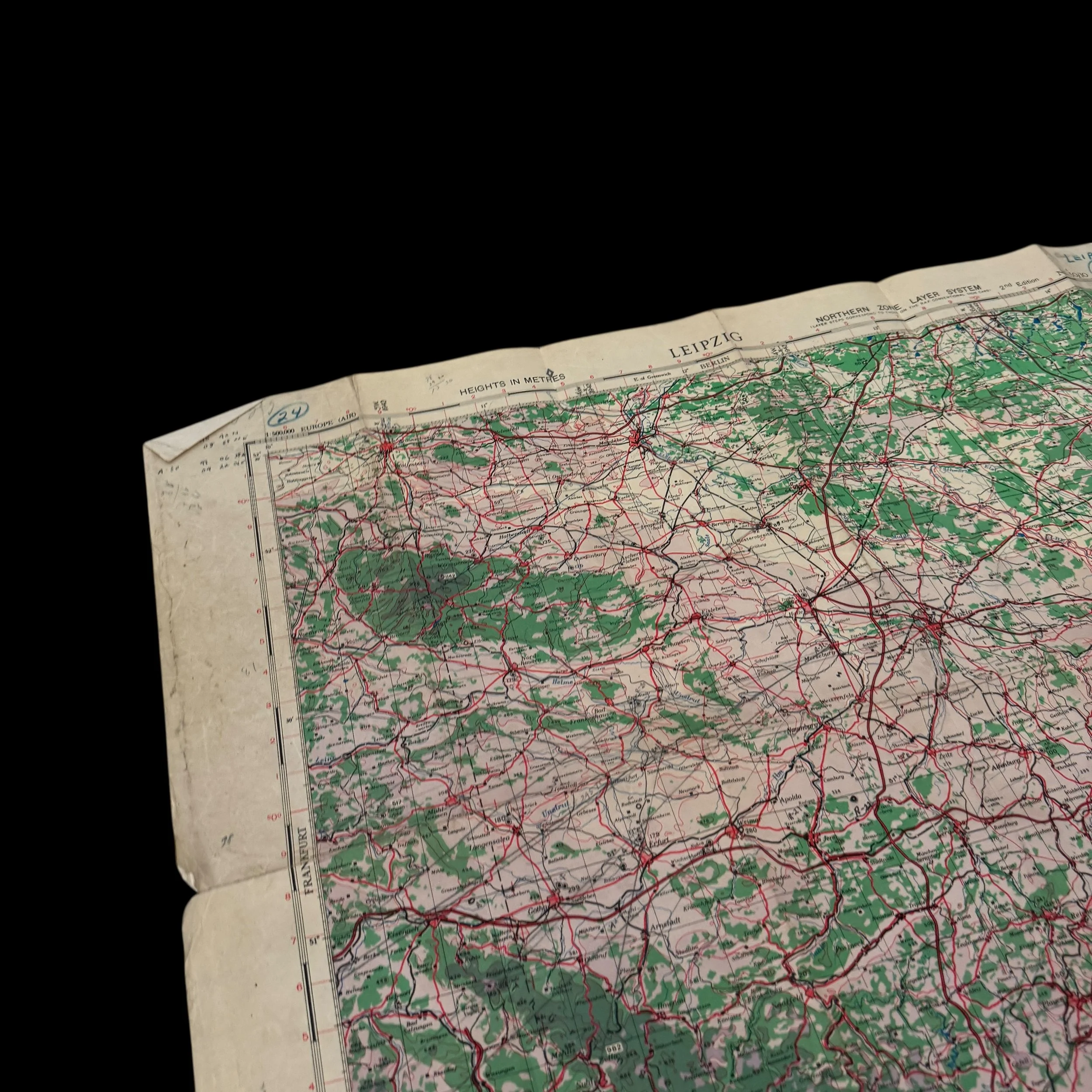
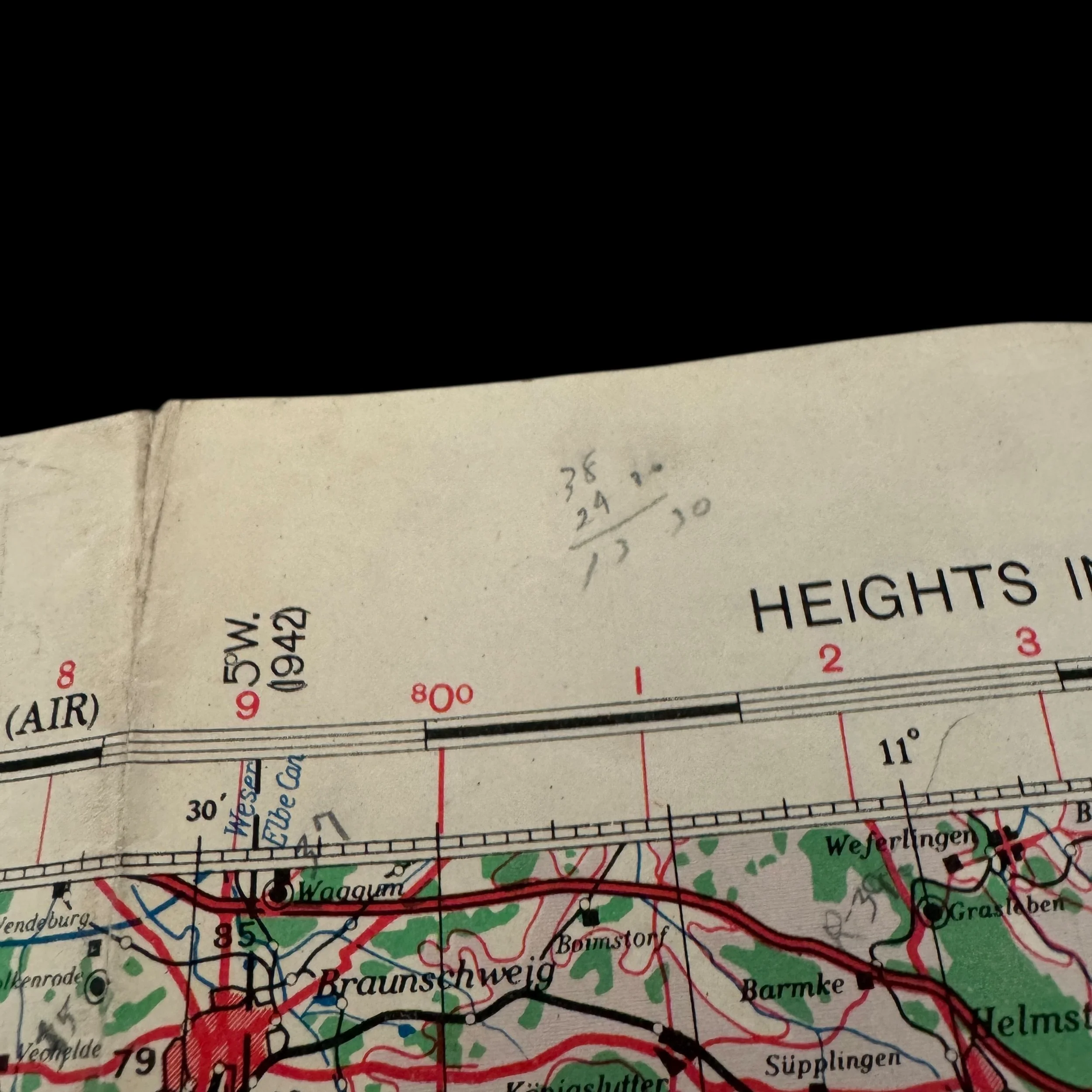
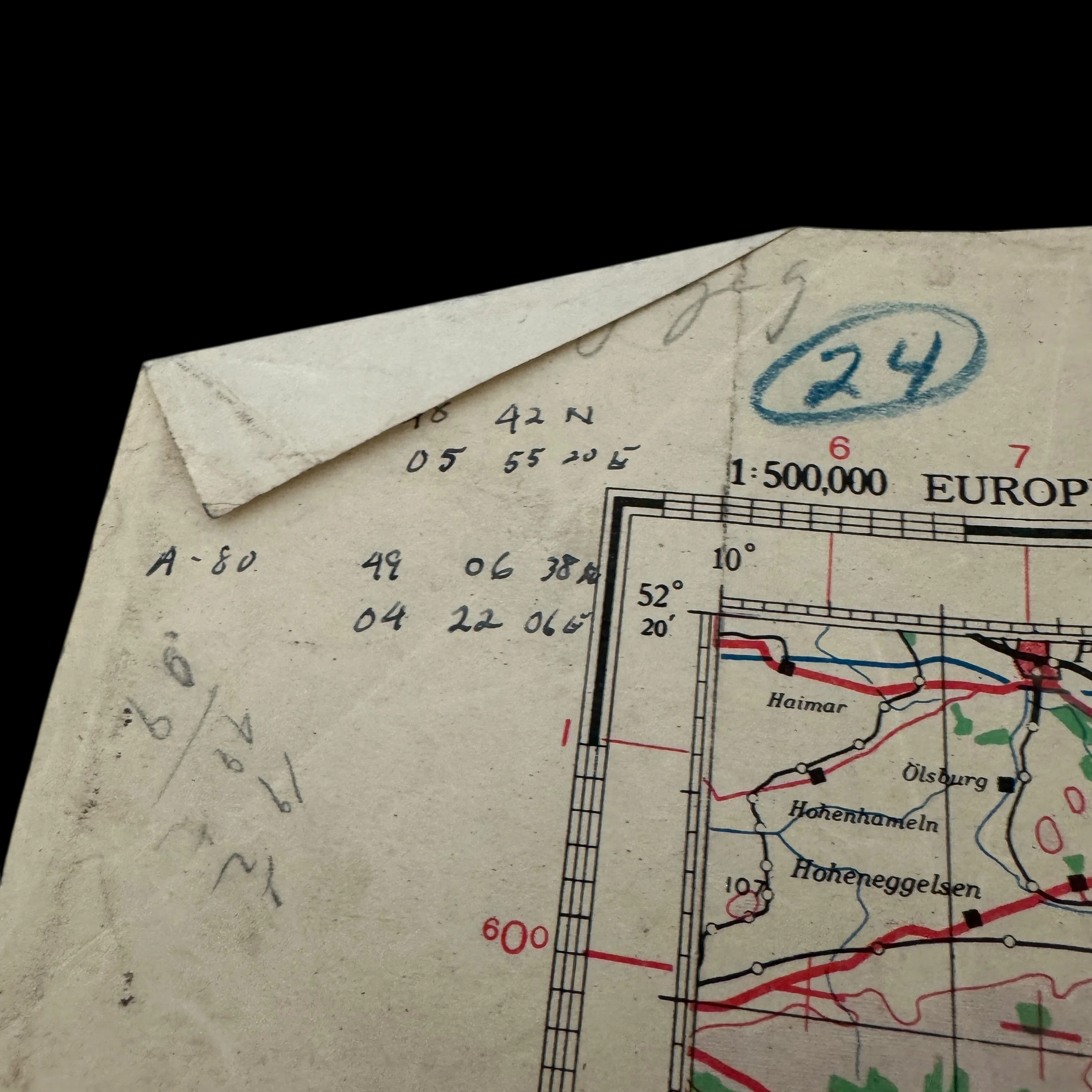
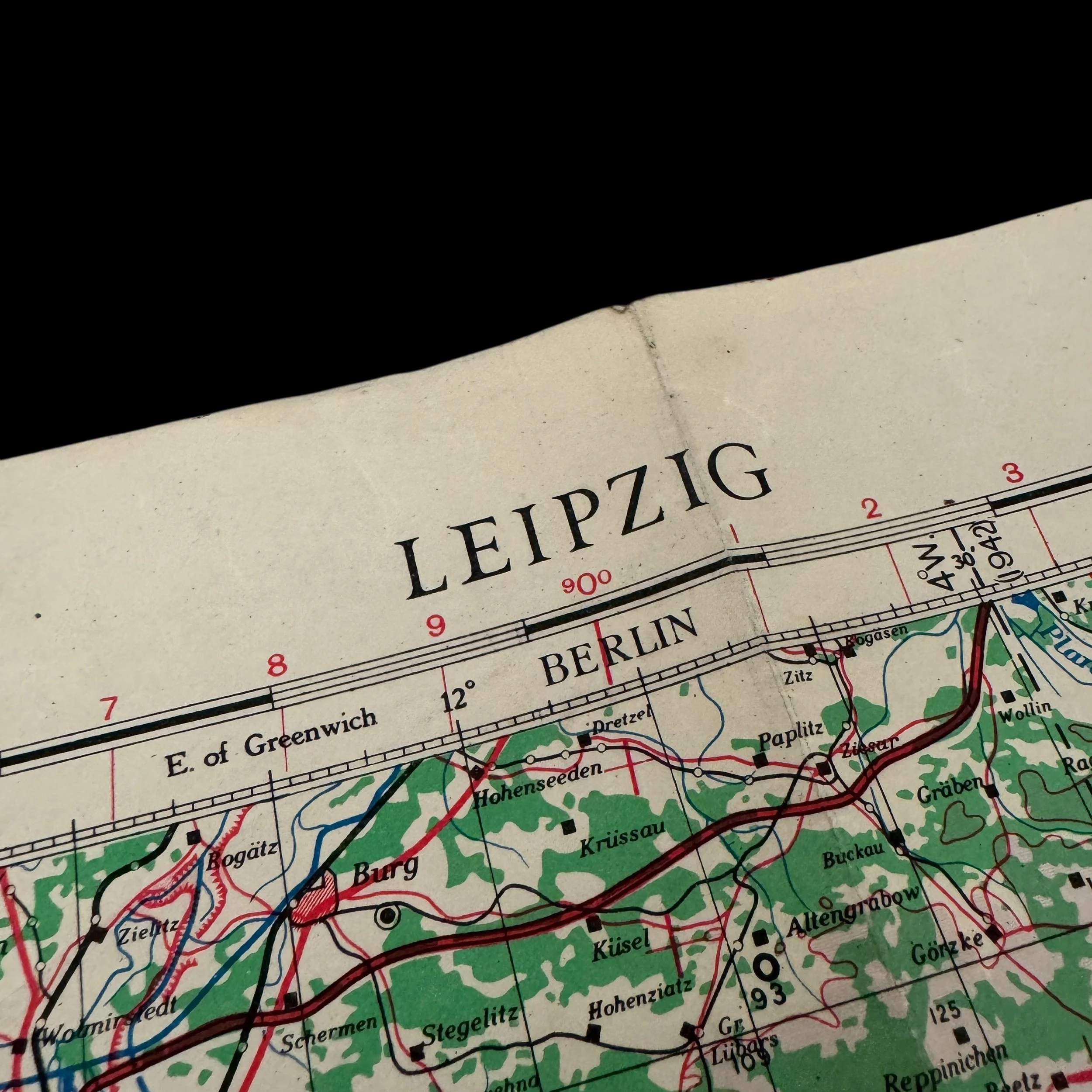
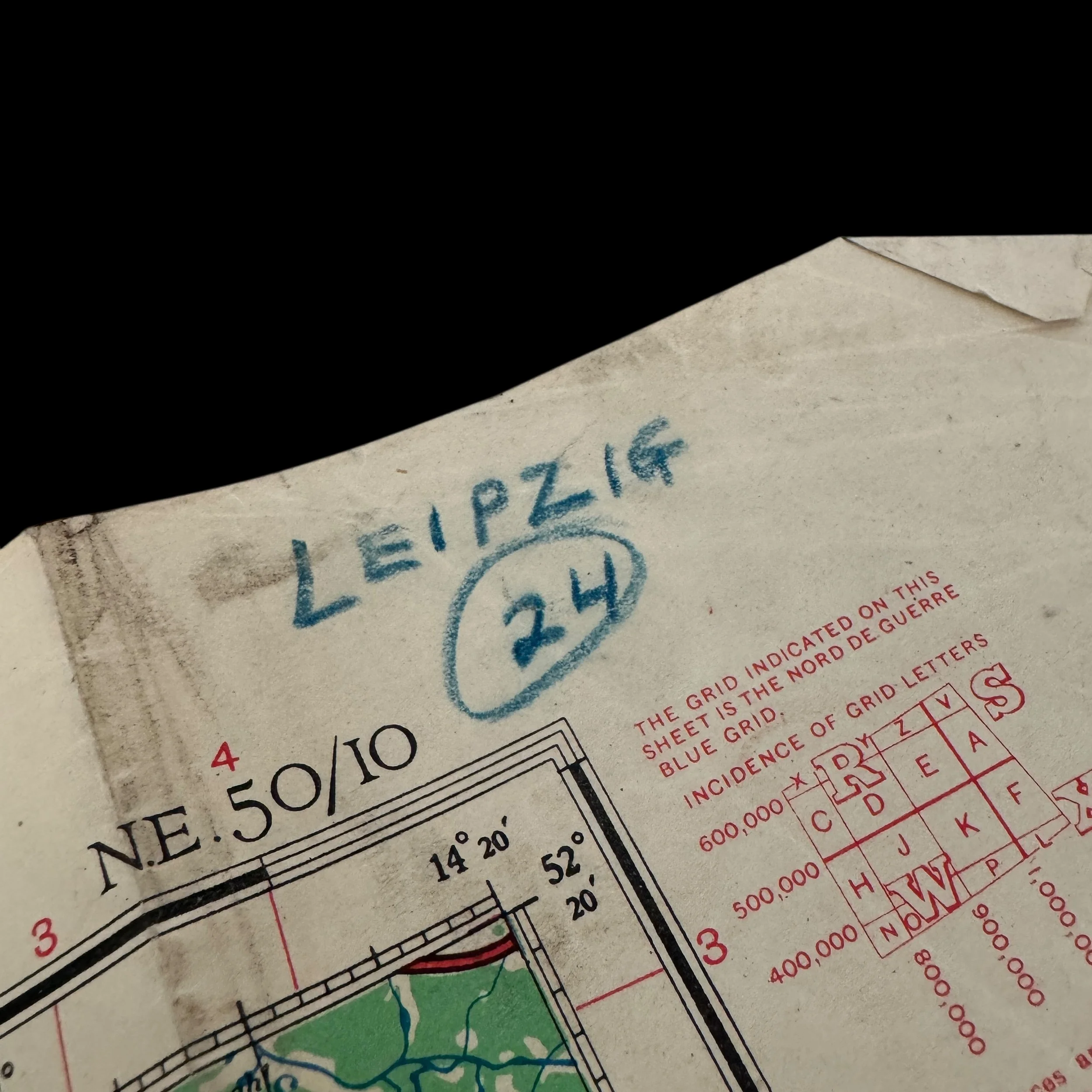
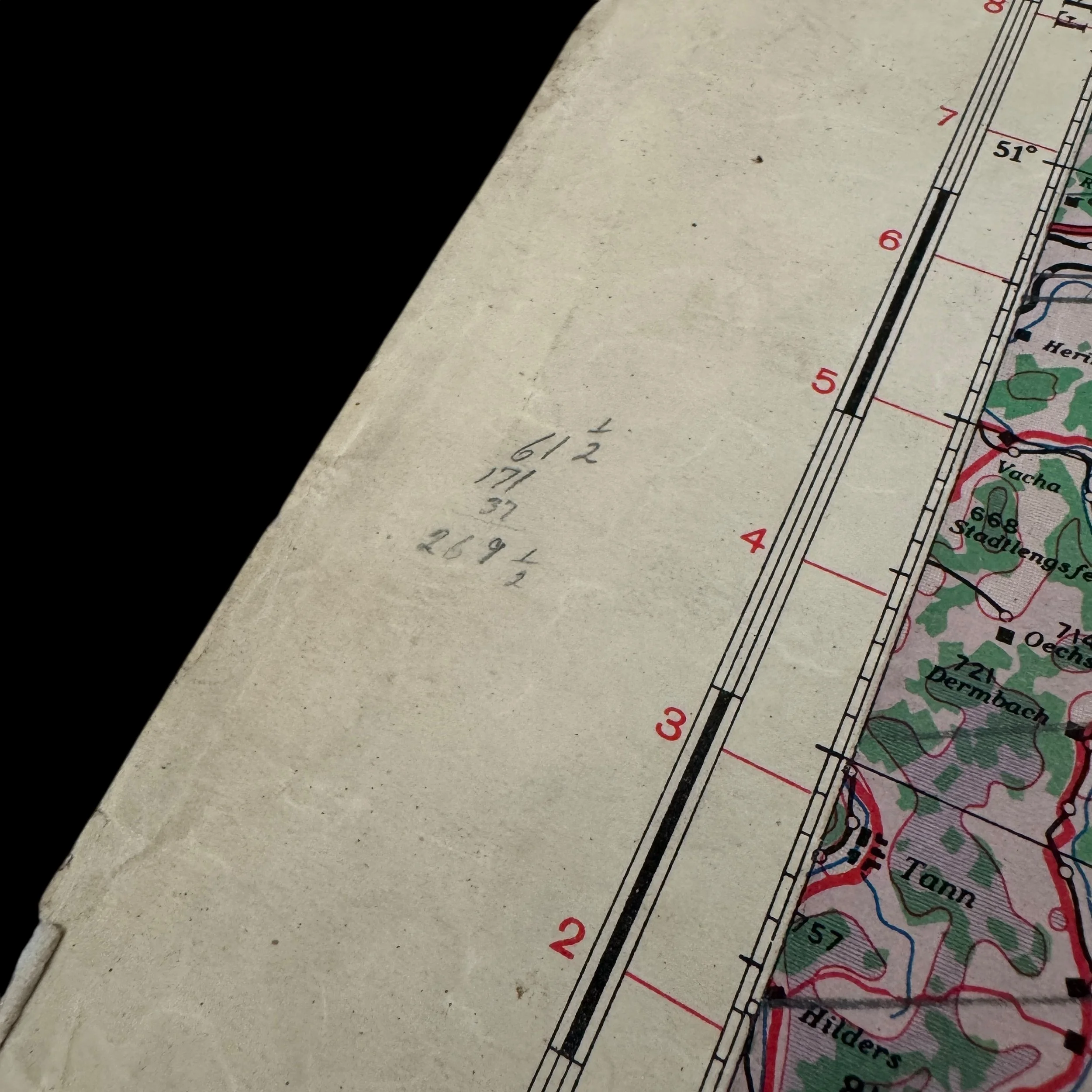
*Titled “Leipzig” (German) this heavily used and “mission marked” Douglas C-47 combat map was used by 2nd Lt. Harold Rinard (02015618) of the 85th Troop Carrier Squadron of the 437th Troop Carrier Group following Operation Varsity. In the final weeks of combat Lt. Rinard used this map as he continued flying supply and evacuation missions across Germany before transitioning after Victory in Europe to humanitarian flights evacuating prisoners of war and displaced civilians, concluding a combat career defined by sustained airborne assault, precision flying, and repeated missions flown under fire from Normandy to the Rhine.
Size: 24 × 30 inches
This exceptionally rare and museum grade World War II artifact is an original U.S. Army Air Forces airborne troop carrier combat flight map carried and heavily “mission marked” in combat by 2nd Lt. Harold Rinard (02015618), a Douglas C-47 Skytrain pilot with the 85th Troop Carrier Squadron of the 437th Troop Carrier Group under the IX Troop Carrier Command of the Ninth Air Force, whose C-47 aircraft directly supported some of the largest airborne operations of the European Theater.
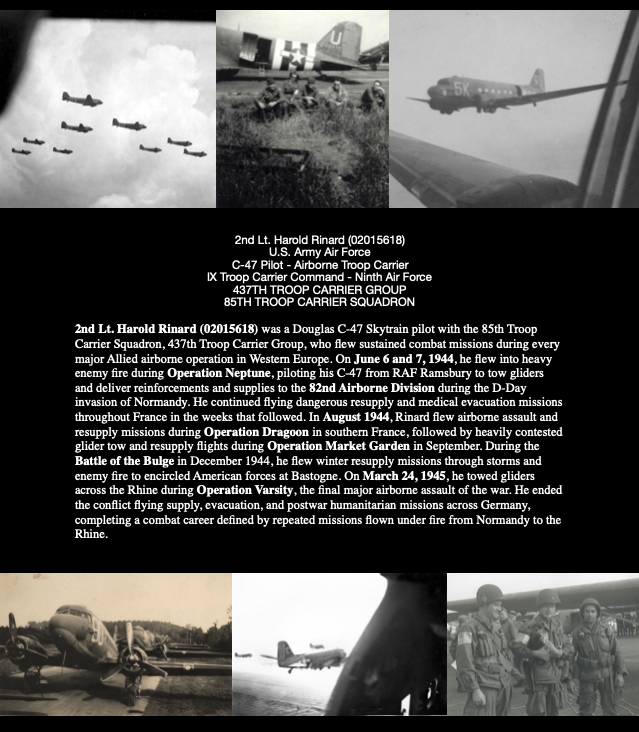
2nd Lt. Harold Rinard (02015618) served as a Douglas C-47 Skytrain pilot with the 85th Troop Carrier Squadron, 437th Troop Carrier Group, IX Troop Carrier Command, flying continuous combat missions during every major Allied airborne operation in Western Europe.
On June 6th and 7th, 1944, he flew into enemy fire during Operation Neptune, the airborne phase of D-Day, piloting his C-47 from RAF Ramsbury at low altitude across the English Channel while towing gliders into the Cotentin Peninsula in direct support of the 82nd Airborne Division, then returning on follow up sorties to deliver vital frontline equipment, rations, and medical supplies to isolated 101st and 82nd airborne units under constant flak and small arms fire.
In the weeks after the invasion, he flew repeated combat resupply and medical evacuation missions throughout France, landing in forward areas to deliver critical supplies and evacuate wounded soldiers.
In August 1944, Rinard deployed to the Mediterranean Theater for Operation Dragoon, flying airborne assault and resupply missions during the invasion of southern France before returning to England. He then flew heavily contested glider tow and resupply missions during Operation Market Garden in September 1944, sustaining airborne forces fighting deep behind enemy lines in the Netherlands.
During the Battle of the Bulge in December 1944, he flew winter resupply missions through storms and enemy fire to encircled American forces around Bastogne, delivering food, fuel, ammunition, and medical supplies that helped keep the line intact.
On March 24, 1945, Rinard participated in Operation Varsity, towing two gliders across the Rhine River and releasing them east of Wesel during the largest single day airborne assault of the war. In the final weeks of combat, he continued flying supply and evacuation missions across Germany before transitioning after Victory in Europe to humanitarian flights evacuating prisoners of war and displaced civilians, concluding a combat career defined by sustained airborne assault, precision flying, and repeated missions flown under fire from Normandy to the Rhine.
FULL HISTORY:
The 437th Troop Carrier Group was constituted in April 1943 and activated in May of that year. Equipped primarily with the Douglas C 47 Skytrain and tasked with towing unpowered combat gliders, the group trained extensively in the United States before being selected for overseas deployment. By early 1944, the group was assigned to the IX Troop Carrier Command, a specialized formation created specifically to deliver airborne forces deep behind enemy lines in direct support of major Allied offensives.
Between January and February 1944, Lt. Rinard and the 437th Troop Carrier Group deployed to England, establishing operations at RAF Ramsbury. From this point forward, their mission shifted from training to direct preparation for Operation Overlord, the Allied invasion of German occupied Europe. Aircrews trained relentlessly in night flying, low altitude navigation, formation discipline, glider tow procedures, and precision release techniques. Emphasis was placed on flying unarmed and unarmored aircraft through intense anti aircraft fire while maintaining strict timing and accuracy. These preparations were essential, as airborne success depended on delivering troops and equipment within minutes of their planned drop times and locations.
In the early hours of June 6, 1944, the 437th Troop Carrier Group flew into history during Operation Neptune, the airborne phase of the Normandy invasion. Launching from RAF Ramsbury before dawn, C 47 Skytrains towed gliders across the English Channel toward the Cotentin Peninsula. One of the lead aircraft of the invasion, the C 47 known as Feeble Eagle, departed Ramsbury piloted by senior officers of the group, symbolizing the scale and importance of the mission. The 85th Troop Carrier Squadron was among the first units to enter enemy airspace.
Flying at low altitude through heavy flak and small arms fire, the group released gliders near the Cherbourg Peninsula, delivering troops, artillery, vehicles, and critical equipment in support of the 82nd Airborne Division. These aircraft were slow, highly visible, and completely vulnerable. Despite these conditions, the missions succeeded. On June 6 and again on June 7, the 437th flew multiple follow up sorties carrying reinforcements, antiaircraft guns, ammunition, rations, and medical supplies. These resupply missions were vital to sustaining airborne units that were isolated and engaged in fierce combat. For its extraordinary performance during the Normandy operation, the 437th Troop Carrier Group was awarded the Distinguished Unit Citation.
Following D Day, the group remained heavily engaged in France. In the weeks that followed, the 437th flew 84 resupply and medical evacuation missions into forward areas. During this period, the group delivered over 420,000 pounds of cargo and evacuated at least 627 wounded soldiers to rear area hospitals. These missions were often flown into hastily prepared landing zones under threat of enemy fire, requiring exceptional flying skill and discipline.
In July 1944, a detachment of the 437th was dispatched to Italy to prepare for another major airborne assault. On August 15, 1944, during Operation Dragoon, the Allied invasion of southern France, C 47s from the group dropped paratroopers of the 1st Airborne Task Force into the assault area. A critical resupply mission followed on August 16, delivering weapons, ammunition, and provisions. After the airborne phase concluded, the detachment conducted extensive transport operations between Italian bases before returning to England on August 24, 1944.
Less than a month later, the group was again committed to a major airborne operation. From September 17 to 25, 1944, the 437th participated in Operation Market Garden, the ambitious Allied attempt to seize key bridges in the Netherlands and open a direct route into Germany. During this operation, C 47 Skytrains towed gliders carrying infantry, vehicles, artillery, and engineering equipment into heavily defended landing zones. Repeated resupply missions followed, flown under intense ground fire and often in poor weather. Losses were significant, but deliveries continued, sustaining airborne forces fighting far beyond friendly lines.
In December 1944, during the German Ardennes offensive known as the Battle of the Bulge, the 437th once again played a decisive role. As American forces, including the 101st Airborne Division, were encircled around Bastogne, C 47 crews flew dangerous resupply missions through winter storms and enemy fire. These flights delivered food, ammunition, medical supplies, and fuel to surrounded troops, directly contributing to their ability to hold the line.
By February 1945, the group relocated to bases in France in preparation for the final airborne assault of the war. On March 24, 1945, during Operation Varsity, the Allied crossing of the Rhine River, each C 47 towed two gliders across the river and released them on the east bank near Wesel, Germany. This operation involved thousands of aircraft and marked one of the largest single day airborne deployments in history. The success of Varsity effectively shattered the last major natural defensive barrier protecting the German heartland.
In the final weeks of the war, the 437th Troop Carrier Group continued flying combat supply missions throughout Germany, delivering gasoline, food, ammunition, and medical equipment to rapidly advancing Allied ground forces. When not engaged in combat supply, the group evacuated wounded personnel and maintained constant logistical airlift support.
Following Victory in Europe in May 1945, the group transitioned to humanitarian operations. C 47s evacuated prisoners of war and transported displaced civilians to relocation centers across the continent. In August 1945, the 437th returned to the United States, where it briefly operated under Continental Air Command before being officially inactivated on November 15, 1945.
General Dwight D. Eisenhower later stated that the C 47 Skytrain was one of the five most important weapons systems contributing to Allied victory in Europe and North Africa. The aircraft’s reliability, simplicity, and ability to operate from rough airstrips made it indispensable. The flight map carried by Lt. Harold Rinard is a direct survivor of this legacy. It represents the navigation backbone of airborne warfare and stands as a tangible witness to the missions that carried Allied forces into Normandy, southern France, Holland, Bastogne, and across the Rhine into Germany itself.
This artifact is not simply a map. It is a combat worn instrument of decision, risk, and precision. It embodies the courage of unarmed C-47 crews who flew directly into enemy fire so that others could fight on the ground. It is a rare and irreplaceable piece of airborne history.