EXTREMELY RARE! WWII DECEMBER 25th, 1944 "CHRISTMAS" Battle of the Bulge Bastogne Field Printed Day-By-Day Combat Situation Map (Colonel Wade C. Gatchell - 10th Armored Division)
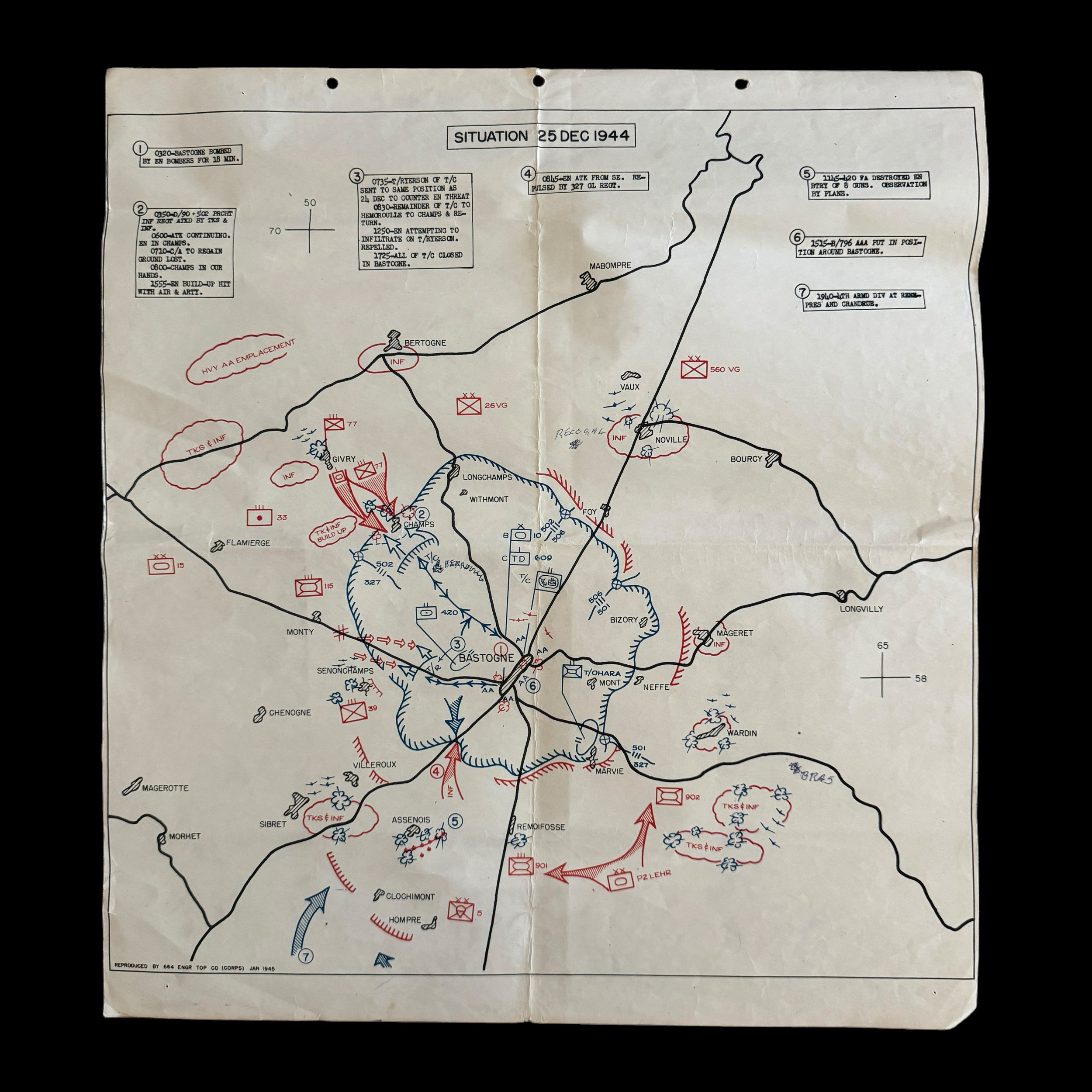
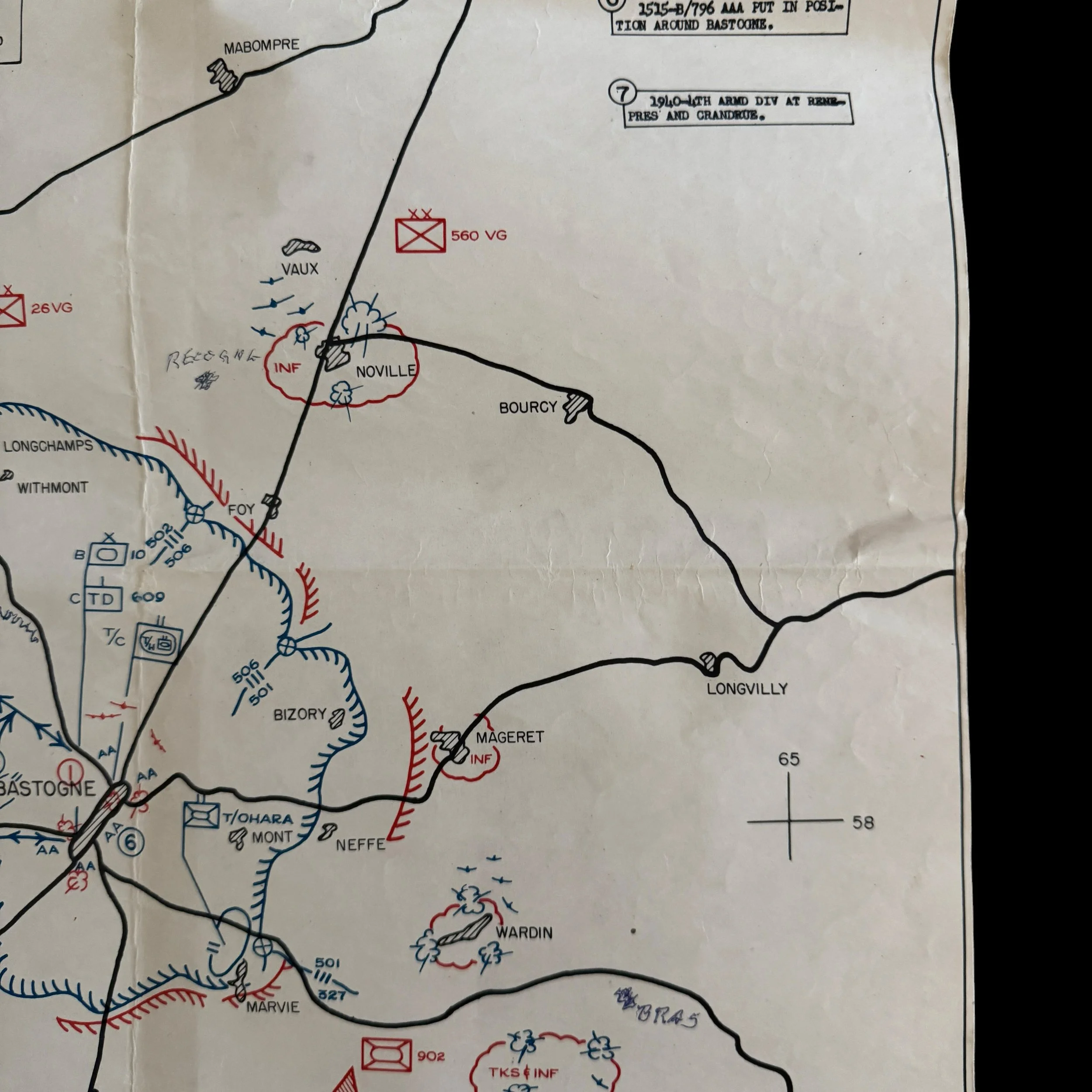
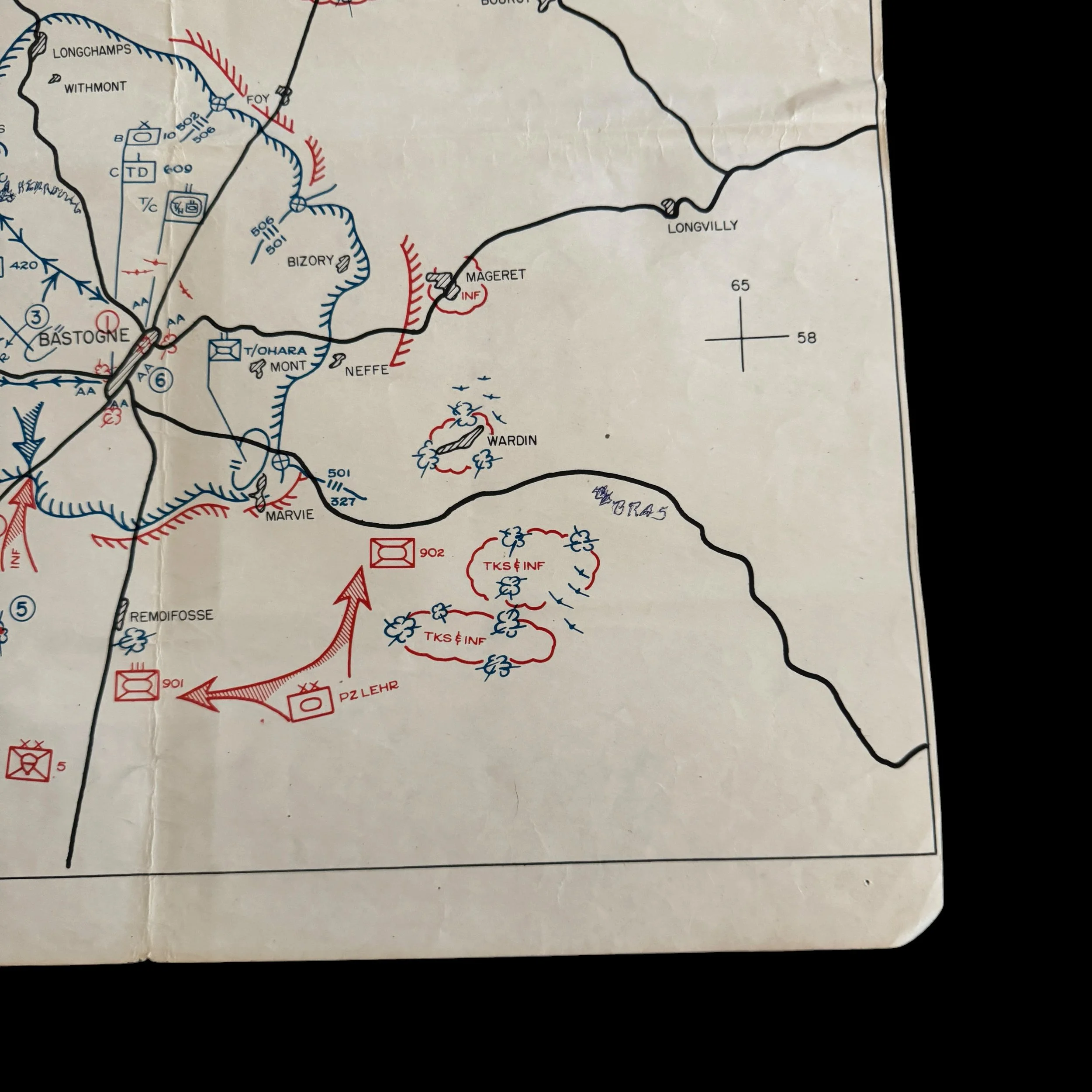
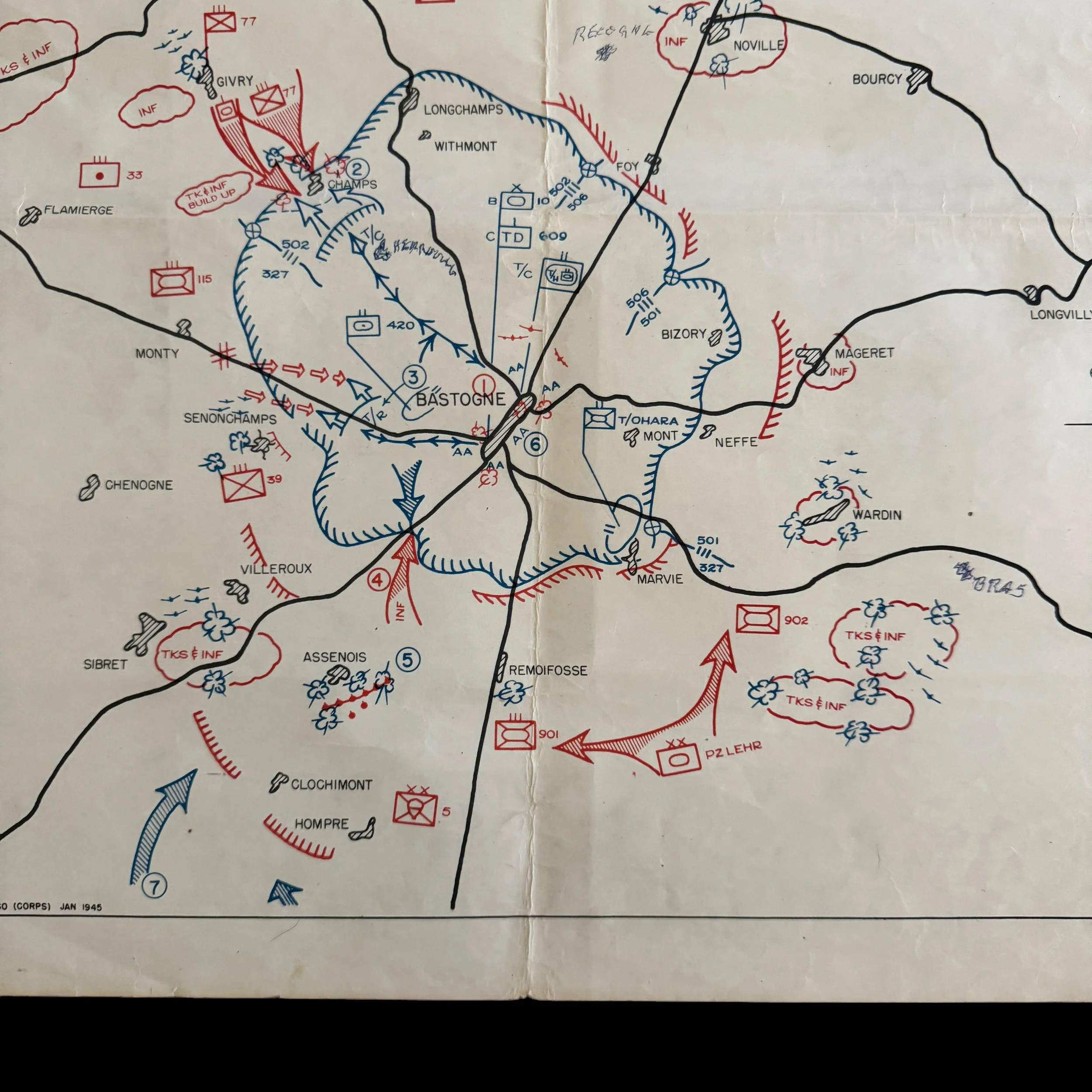
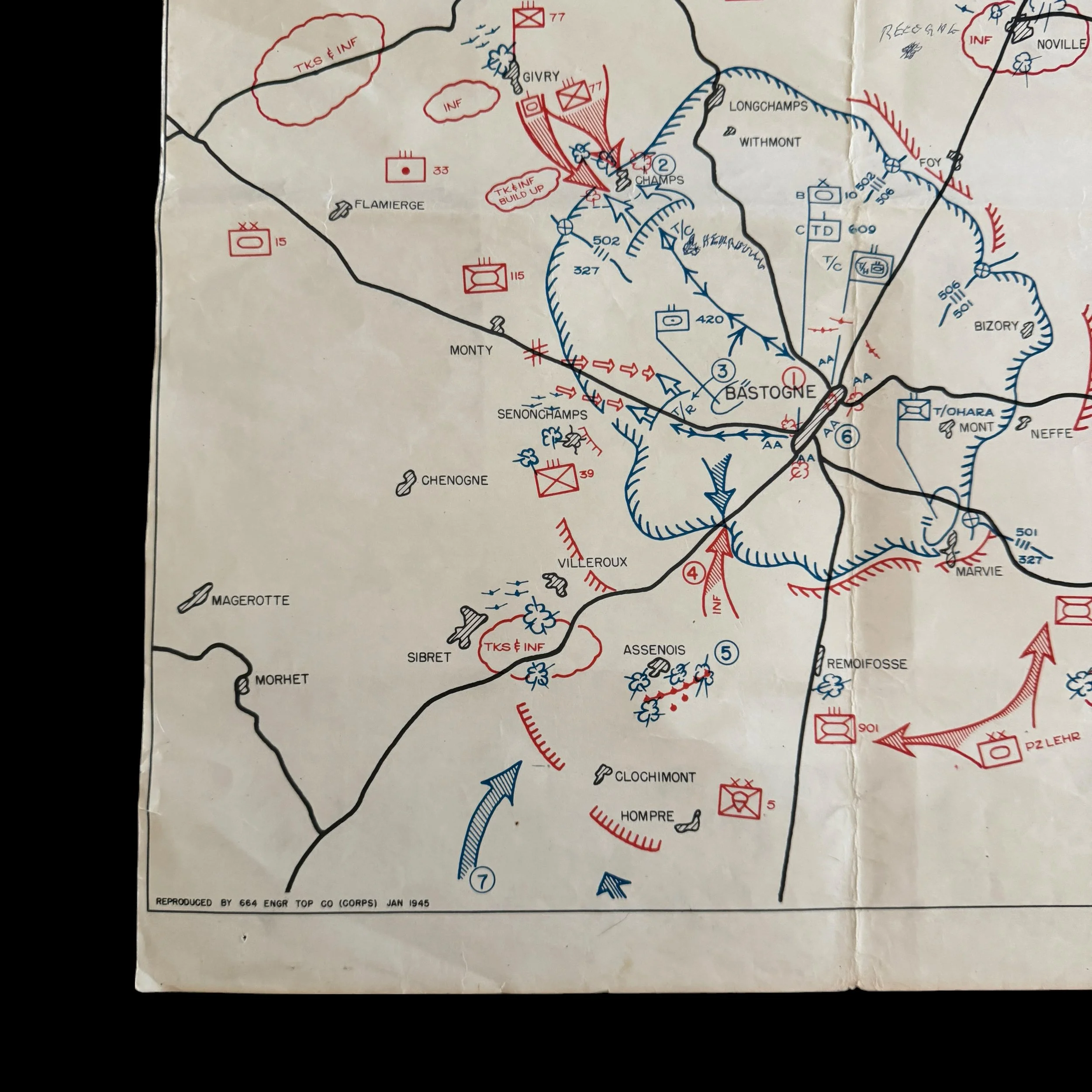
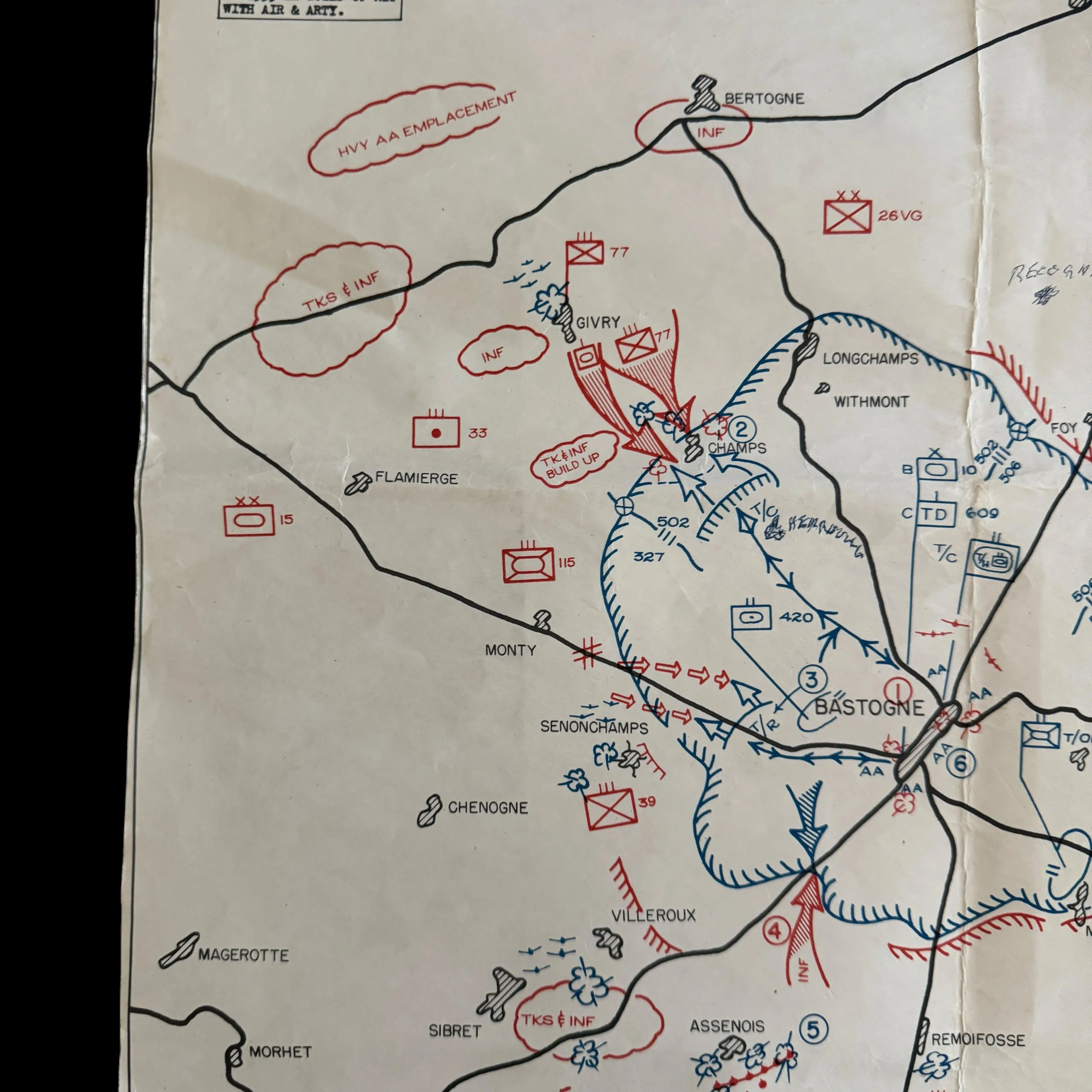
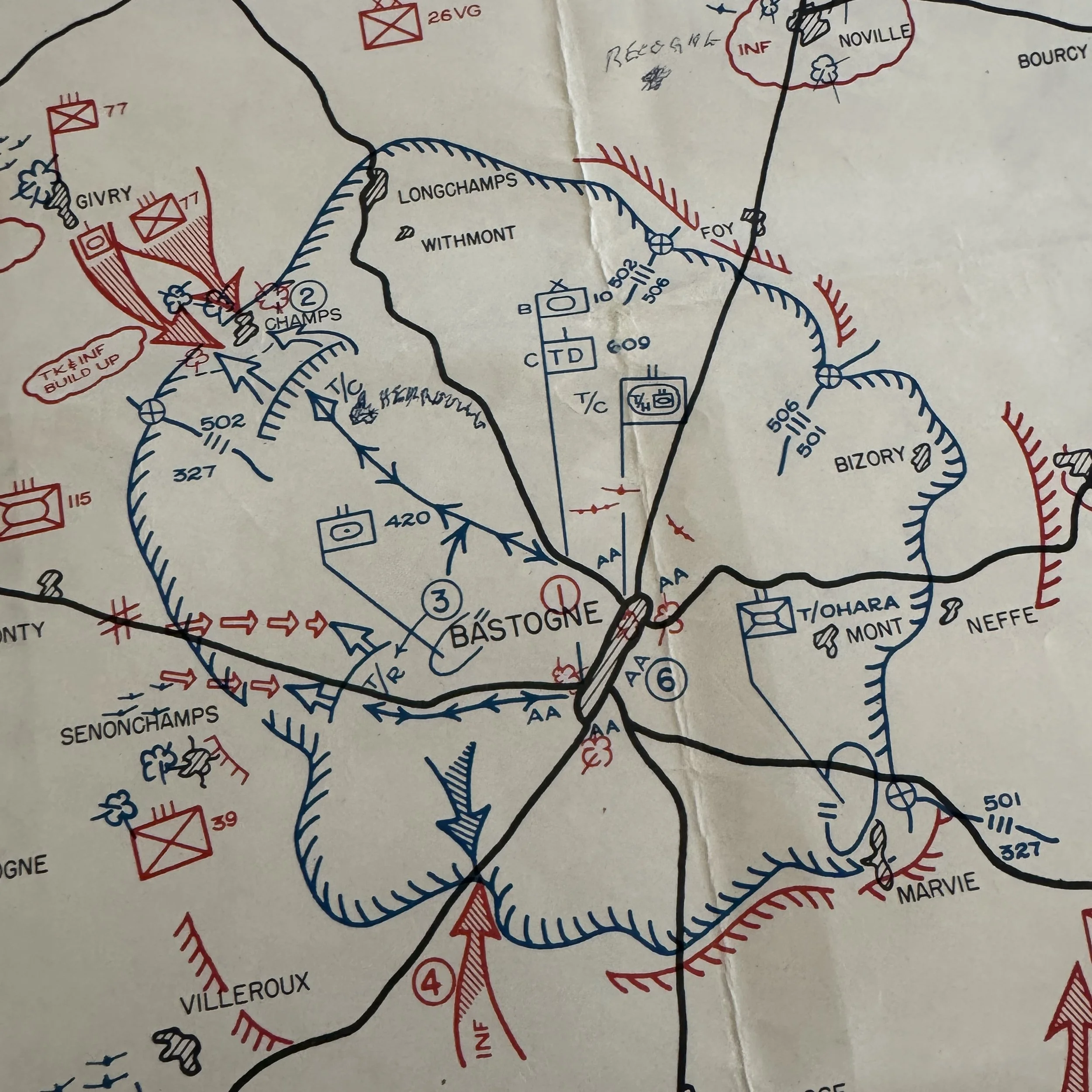
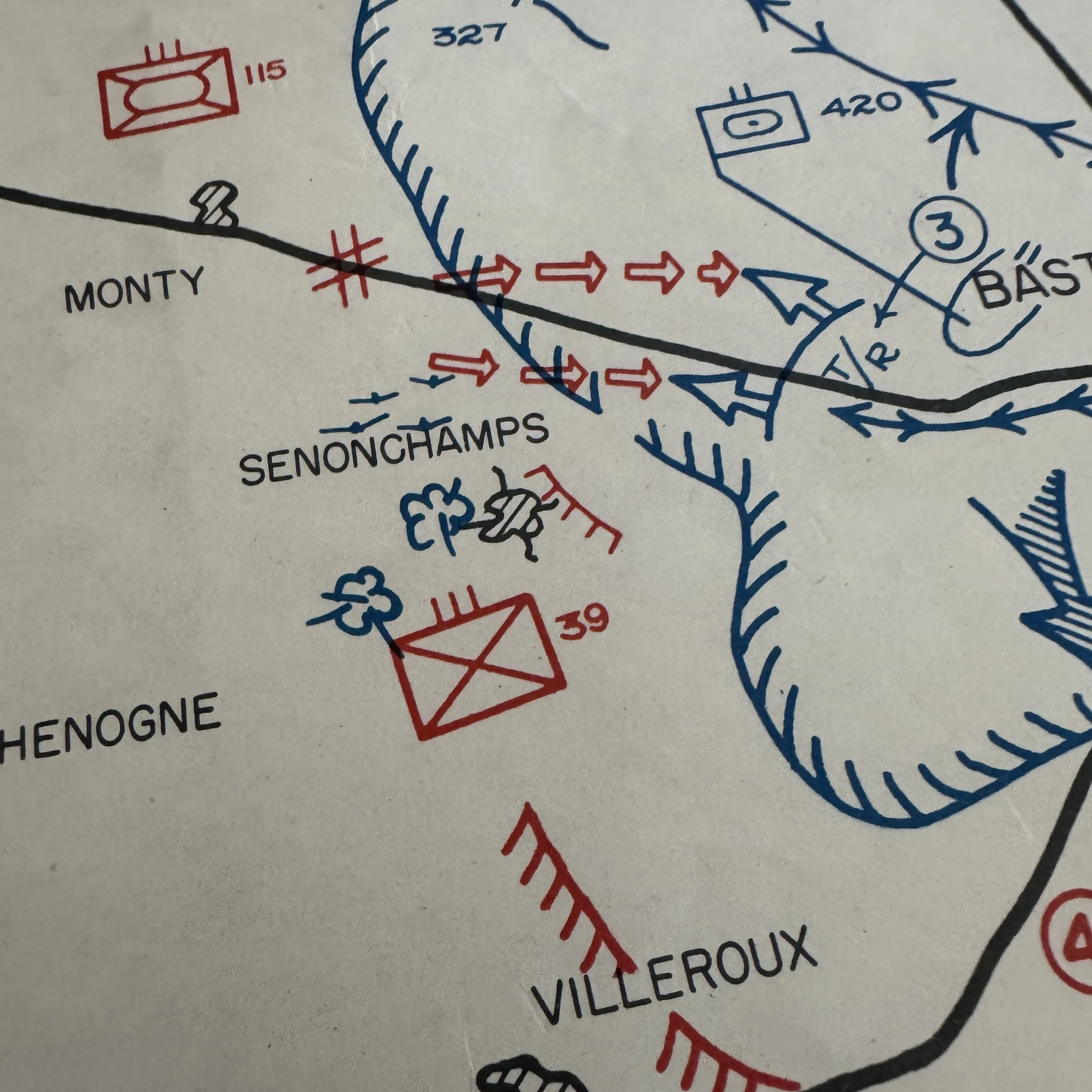
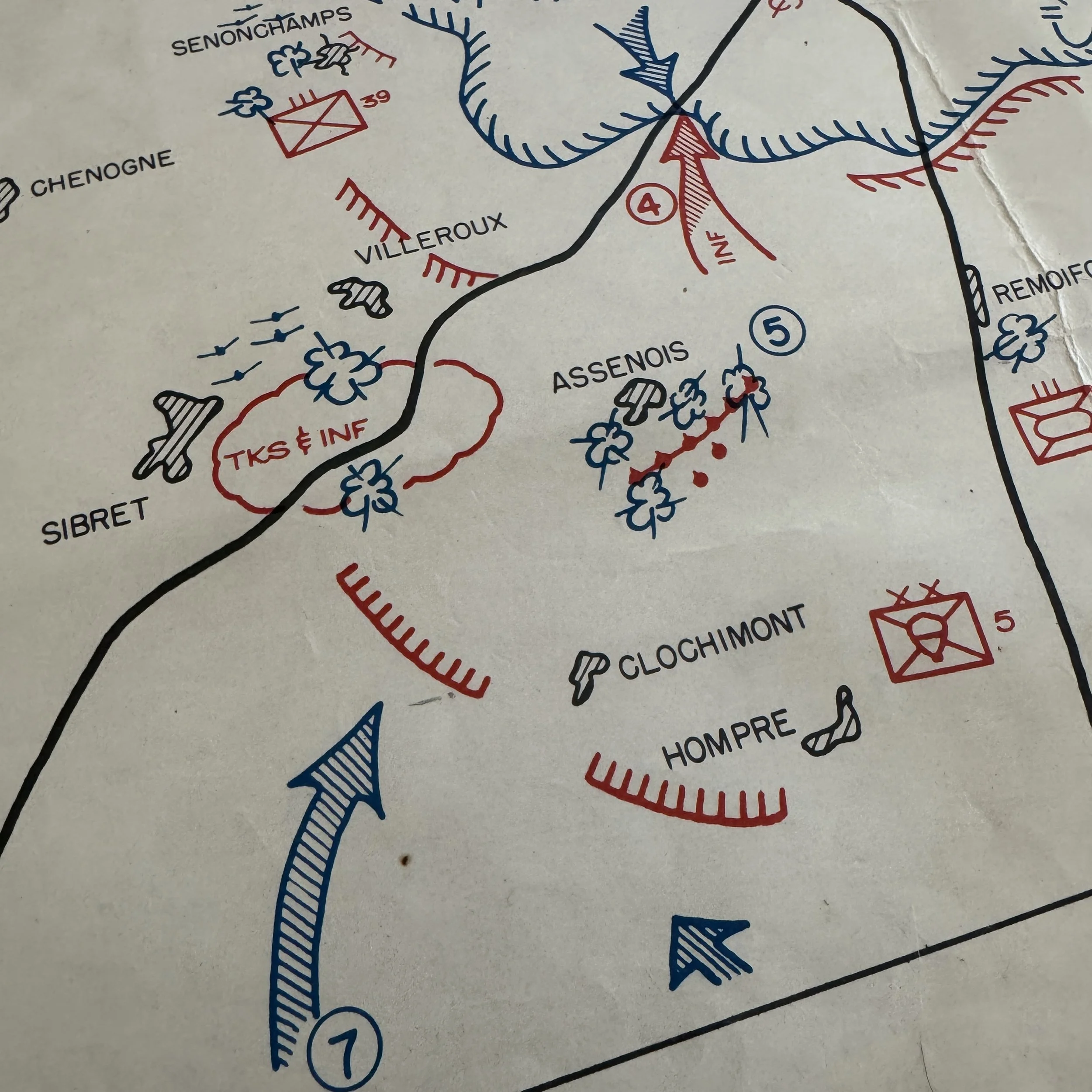
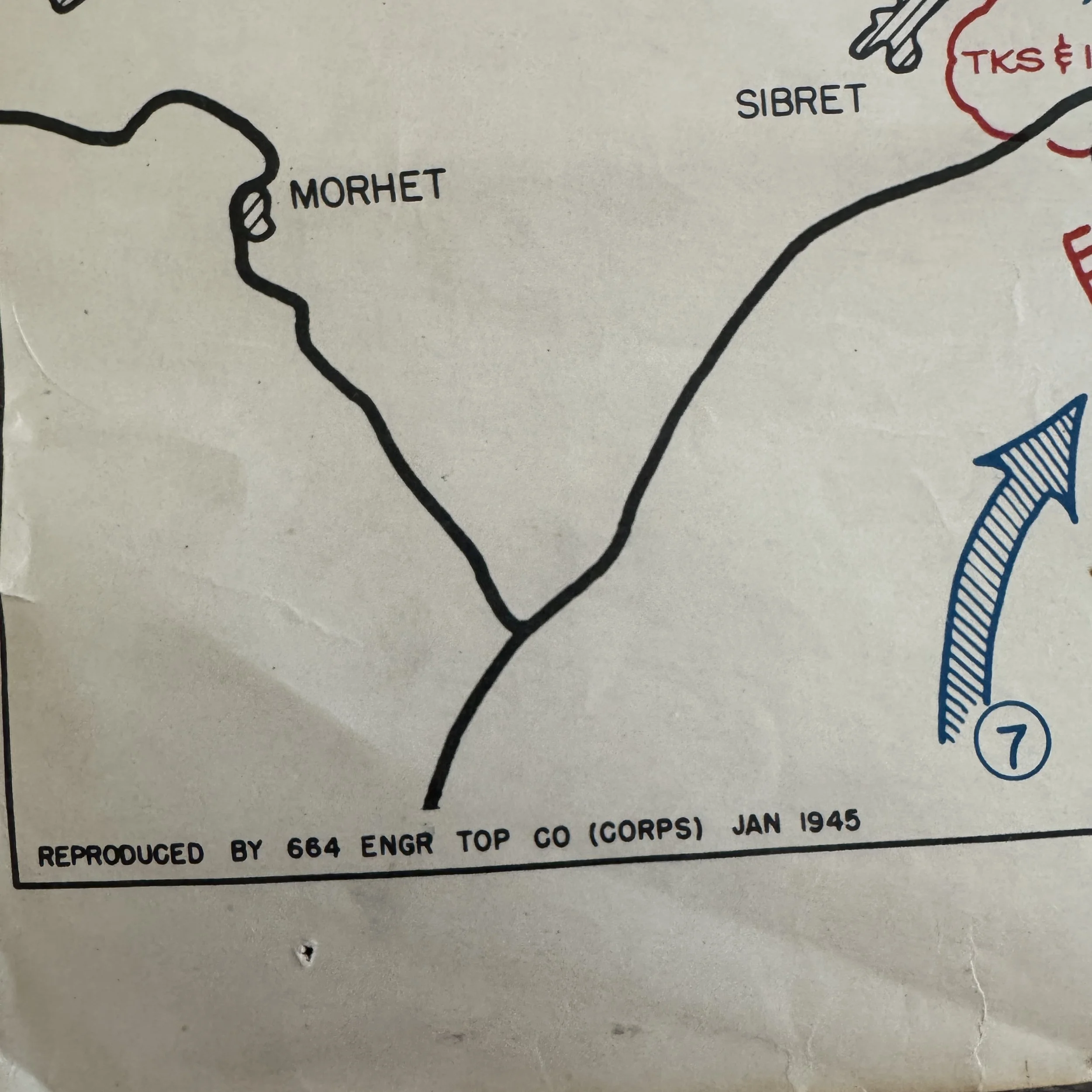
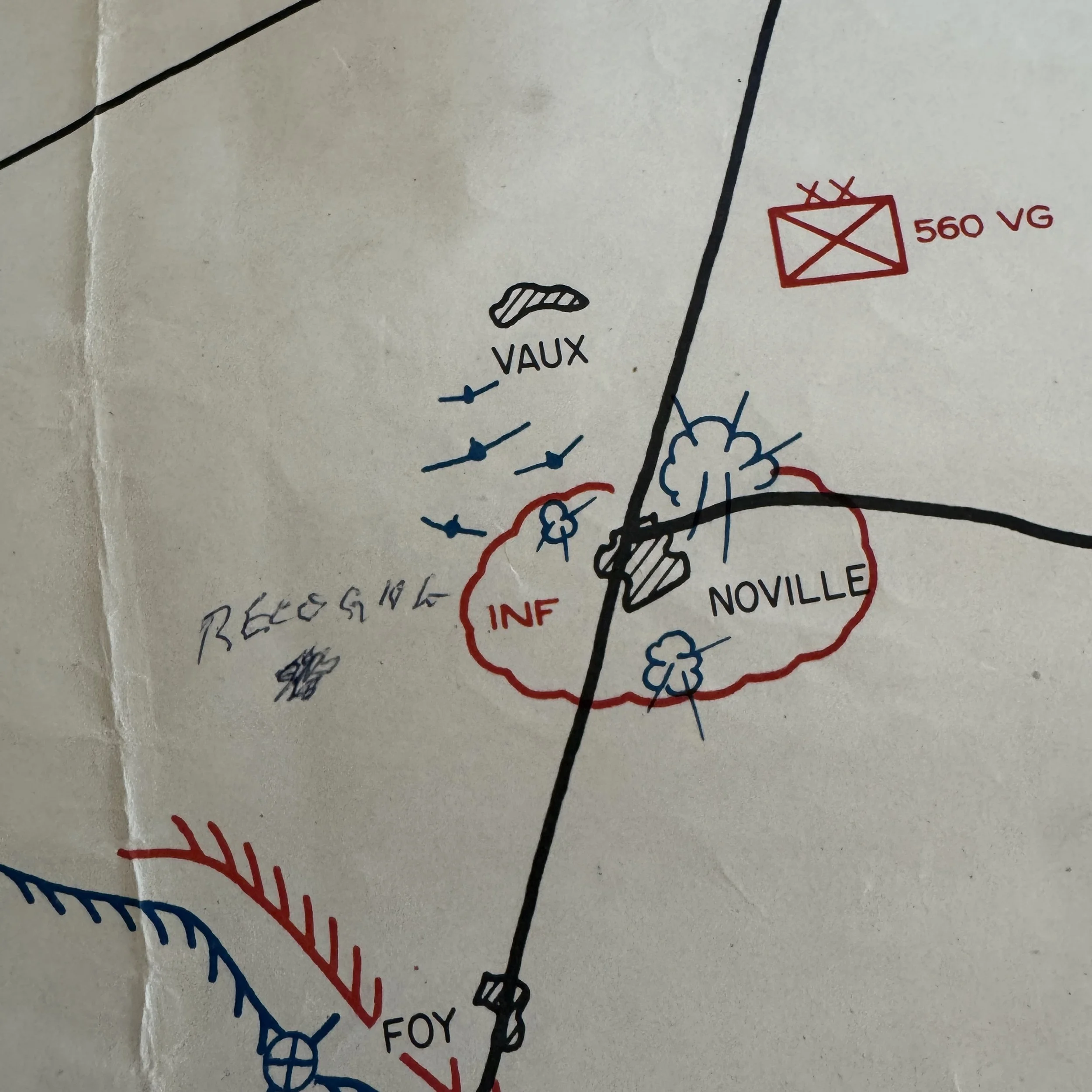
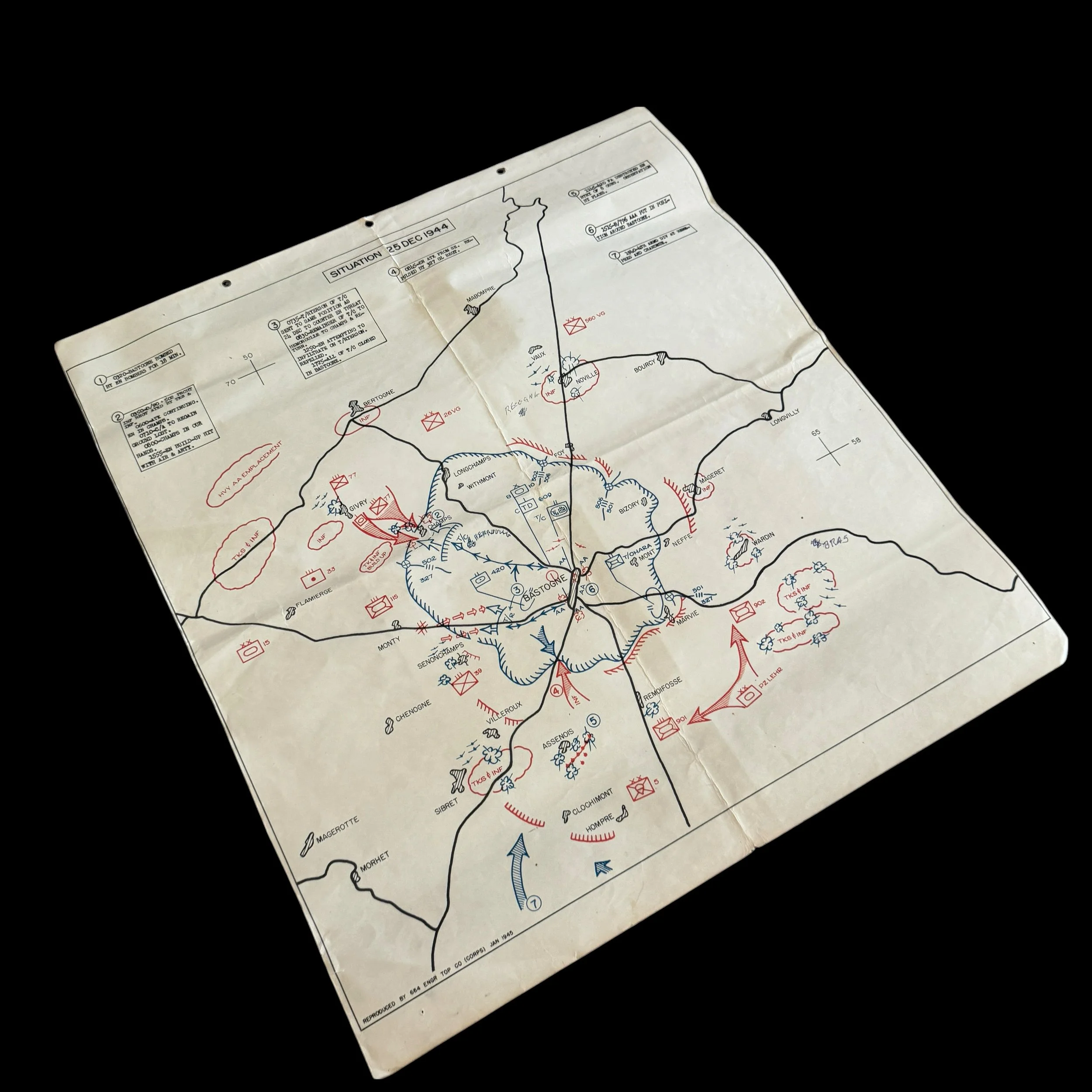
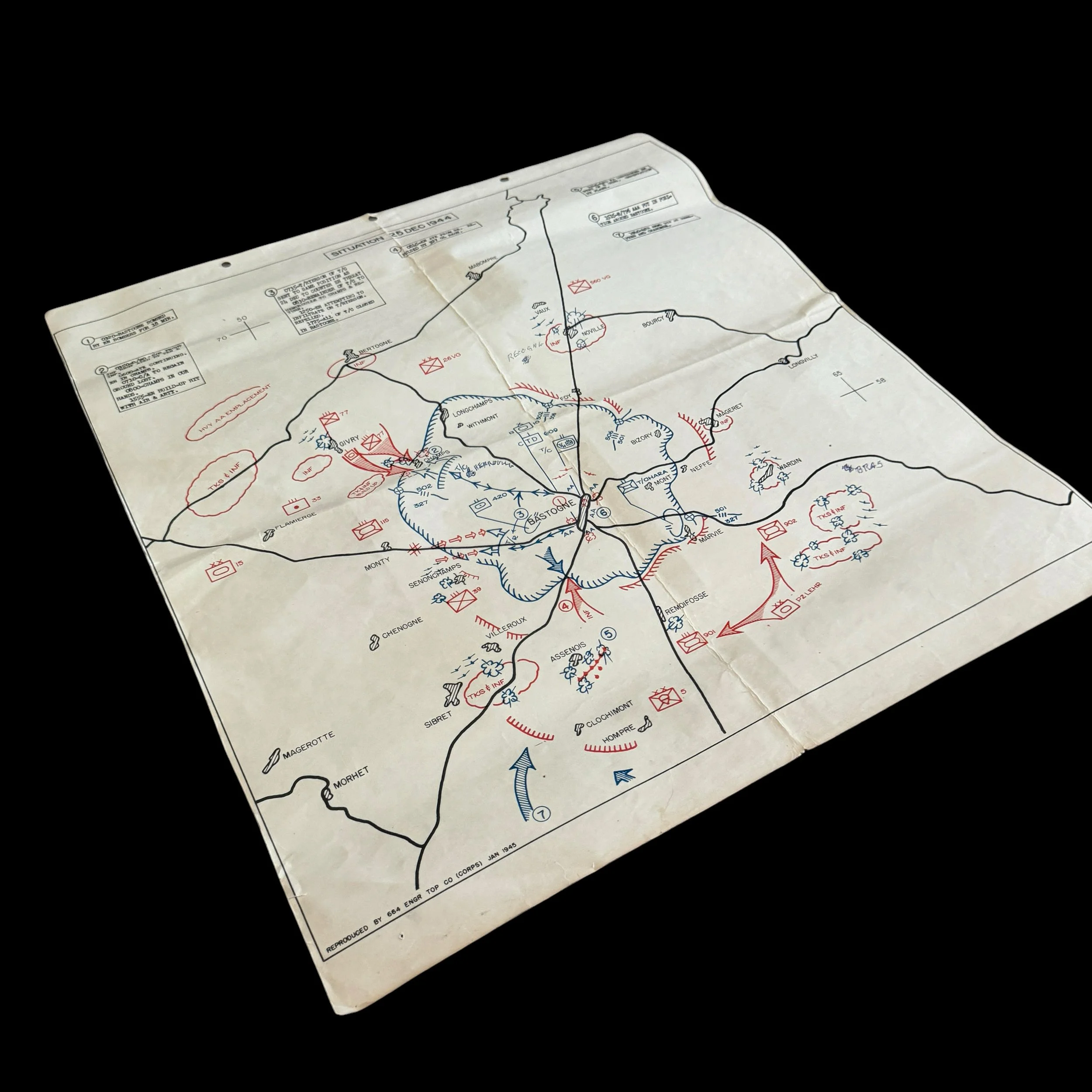
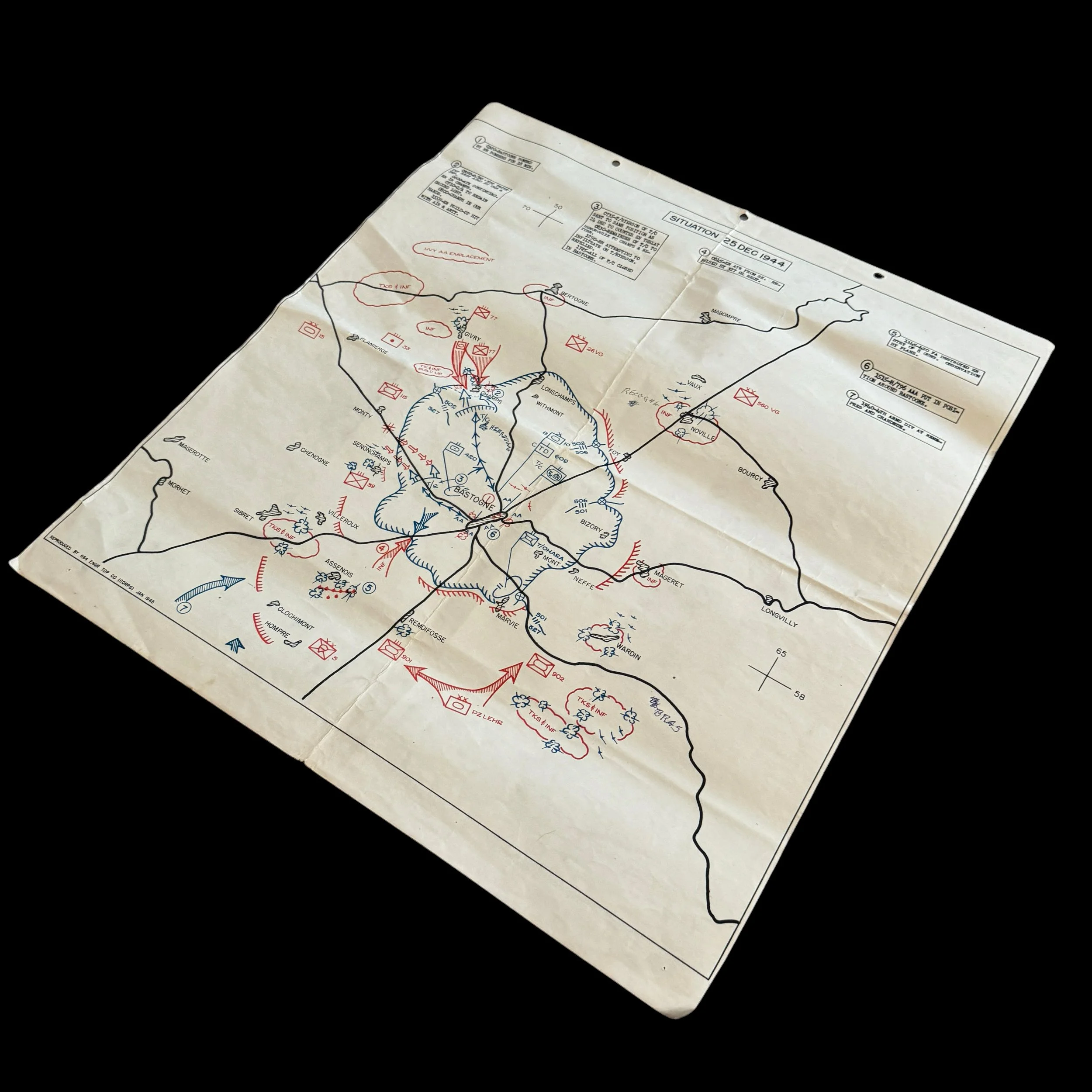
EXTREMELY RARE! WWII DECEMBER 25th, 1944 "CHRISTMAS" Battle of the Bulge Bastogne Field Printed Day-By-Day Combat Situation Map (Colonel Wade C. Gatchell - 10th Armored Division)
Comes with a hand-signed C.O.A.
Size: 18 × 20 inches
Rarity: EXTREMELY RARE
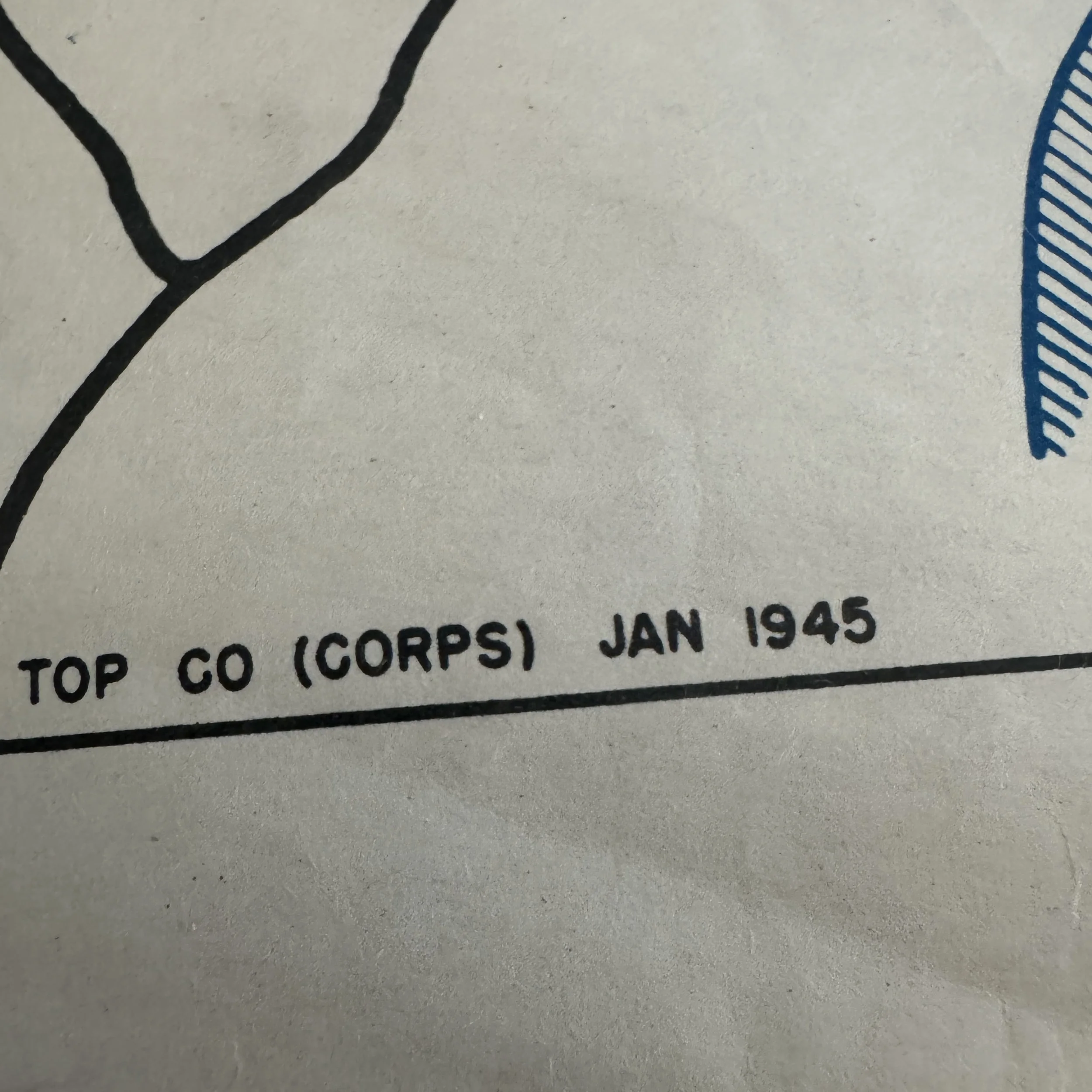
Dated: January 1945 - ETO Field Printed Only Within 5 Weeks Following the Battle of Bastogne
Created: 664th Engineer Topographic Corps, a unit attached to General George S. Patton’s Third Army
Providence: From the direct collection of Colonel Wade C. Gatchell, who served as the Commanding Officer of the Reserve Command, 10th Armored Division (the famed “Tiger Division”)
December 25th, 1944 (Christmas)
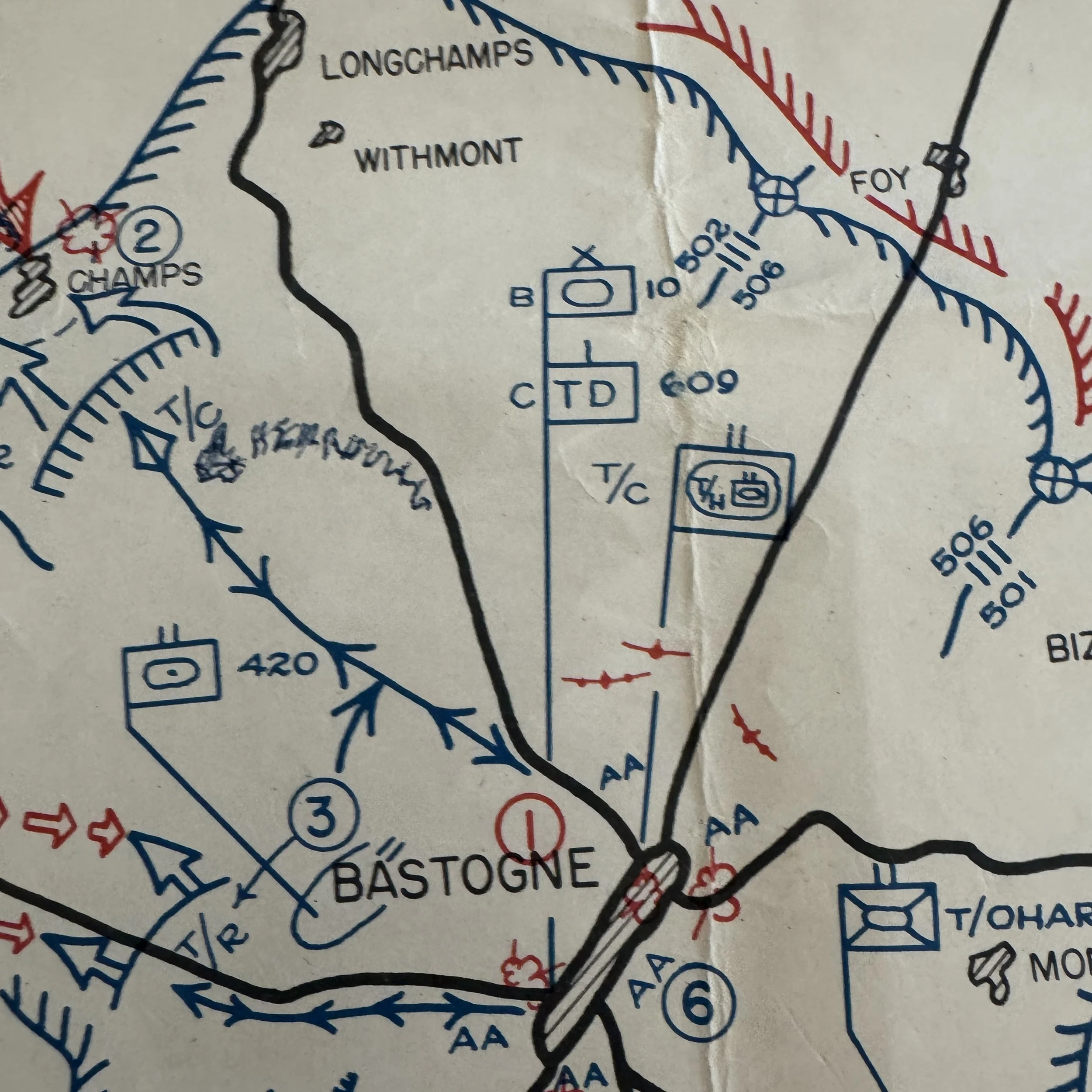
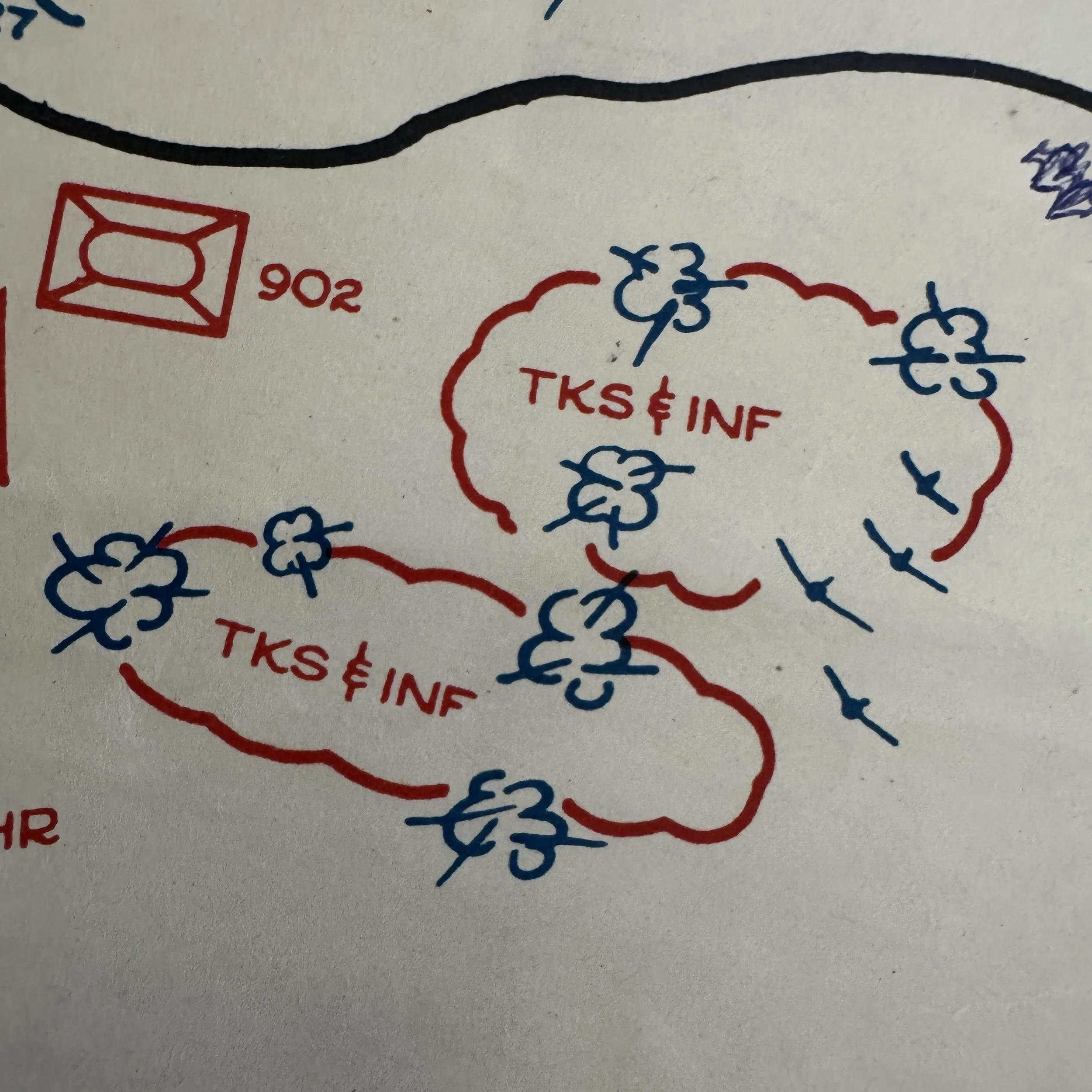
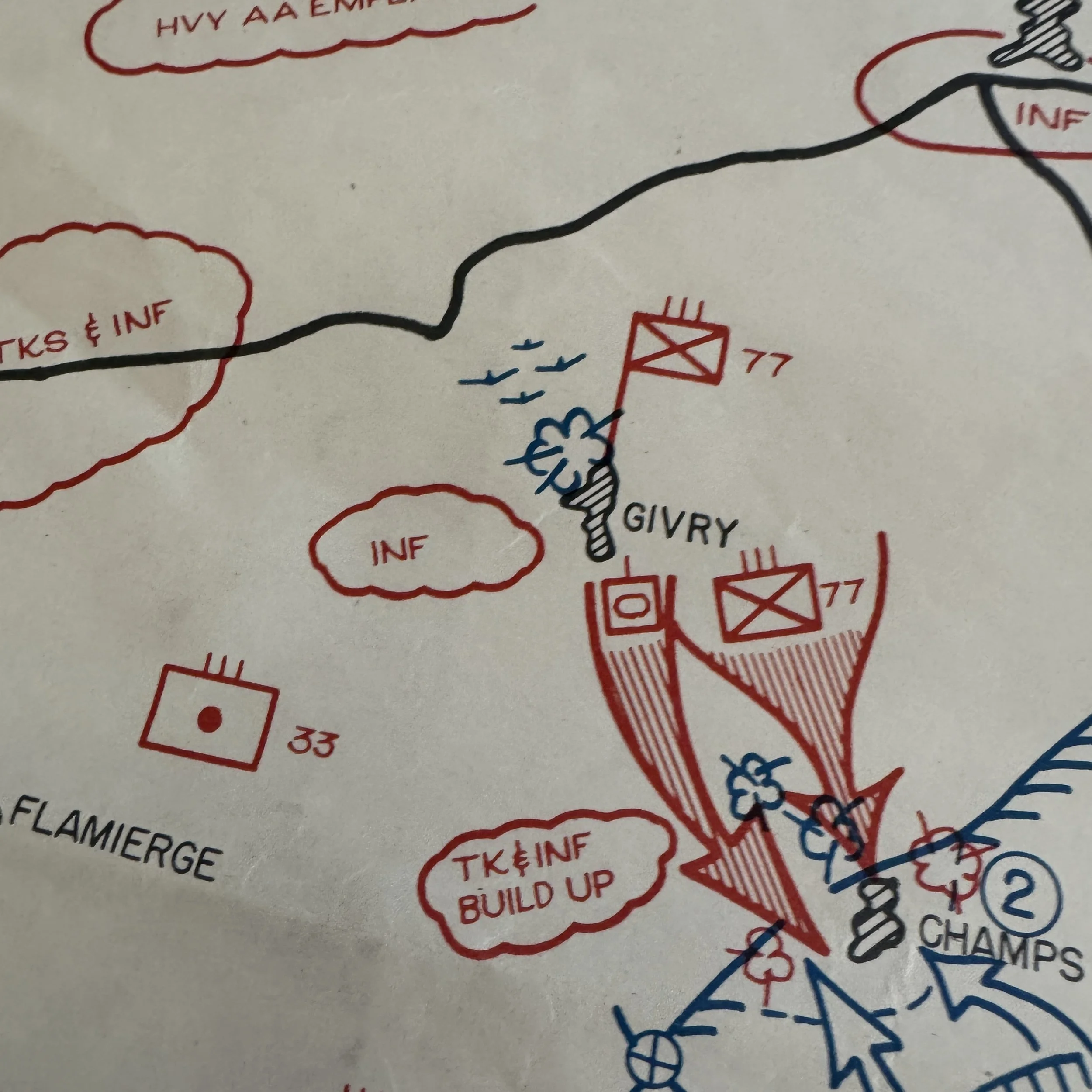
On December 25, 1944, Christmas Day brought no reprieve for the surrounded defenders of Bastogne, as the German forces launched a major armored and infantry assault aimed at breaking the pocket once and for all. Under heavy artillery bombardment, elements of the 15th Panzergrenadier Division, supported by Mark IV and Panther tanks, pierced the western perimeter near Hemroulle and Champs, defended by the 101st Airborne Division’s 327th Glider Infantry Regiment and 502nd Parachute Infantry Regiment. American paratroopers and glidermen, depleted by days of freezing temperatures, scarce ammunition, and minimal rations, held their ground in snow-covered foxholes. Coordinating with tank destroyers of the 705th Tank Destroyer Battalion and well-placed artillery fire, the defenders separated the advancing German infantry from their supporting armor. In intense, close-quarters fighting across snowbound fields and tree lines,the Americans systematically knocked out every enemy tank that breached the perimeter and destroyed the assaulting infantry units. By midday, the German attack had completely collapsed, leaving the American lines intact and cementing the legendary resilience of the "Battered Bastards of Bastogne."
This exceptionally rare and museum-grade World War II artifact is an original January 1945 Battle of the Bulge day-by-day combat situation map, printed by the 664th Engineer Topographic Corps, a unit attached to General George S. Patton’s Third Army. Created within weeks following the Battle of Bastogne, this field printed combat situation map represent an extraordinary feat of wartime cartography. To compile, design, and print such a detailed document amid the chaos of the Ardennes campaign demonstrates the precision and urgency of Patton’s engineers. Only a small batch of these Battle of the Bulge (Bastogne) situations maps were ever made, and even fewer have survived. They were printed in-theater in limited numbers for the highest-ranking commanders overseeing major infantry and armored divisions during one of the most pivotal engagements of the war.
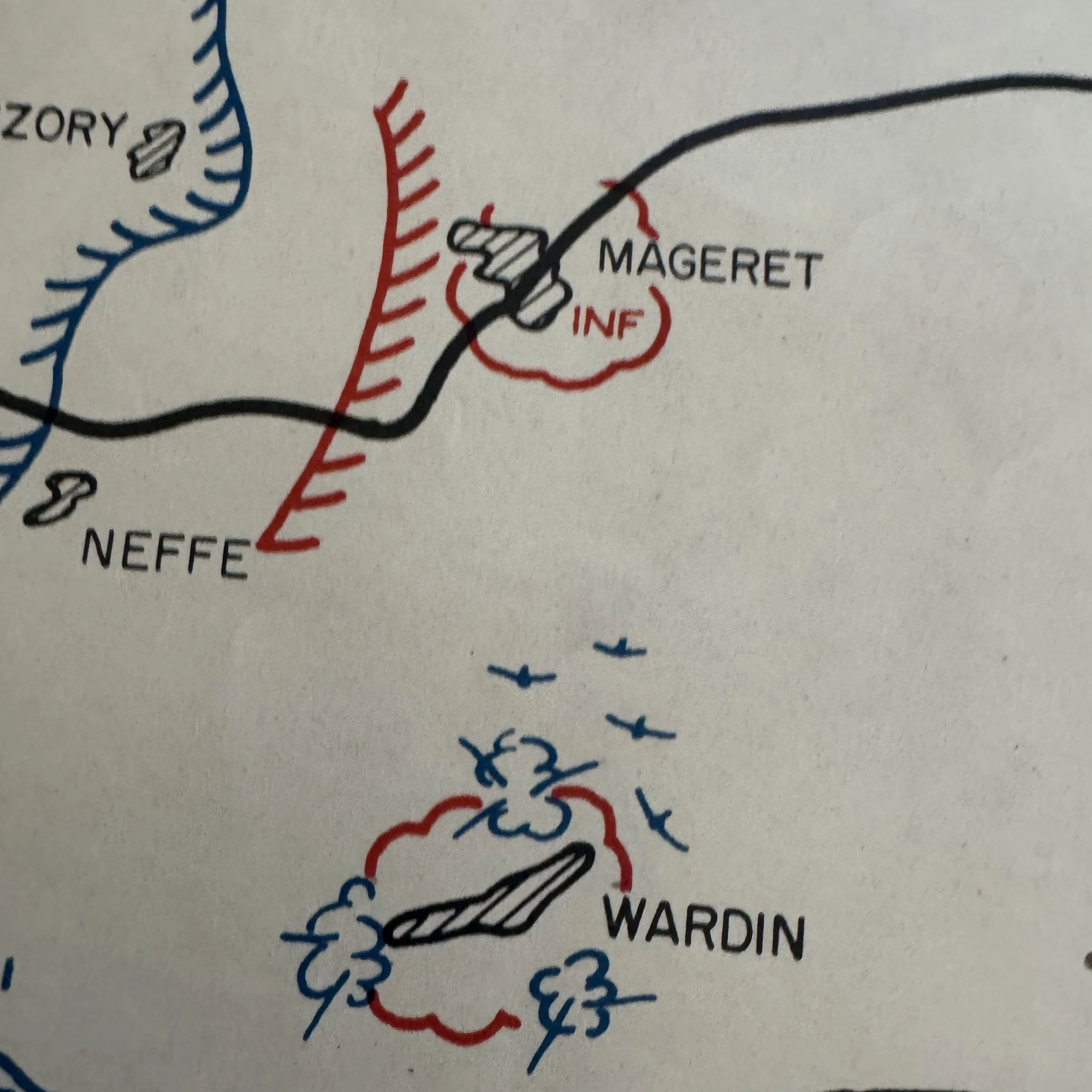
Meant to accompany the SECRET military intelligence Battle of the Bulge battle reports, this map itself captures the fierce day-by-day progression of the Battle of Bastogne, showcasing troop movements, front-line shifts, and critical engagements as they unfolded in the bitter winter of 1944–1945. Its intricate blend of technical military detail and battlefield illustration makes it one of the finest surviving examples of U.S. Army cartographic intelligence from the European Theater.
What elevates this particular map above all others is its direct provenance from the personal collection of Colonel Wade C. Gatchell, who served as the Commanding Officer of the Reserve Command, 10th Armored Division—the famed “Tiger Division.” The 10th Armored Division was resting south of Luxembourg when, on December 16, 1944, Germany launched the Ardennes Offensive. Within hours, the division was ordered north to reinforce the besieged crossroads town of Bastogne, a move that would cement its place in history.
The 10th Armored’s Combat Command B (CCB) was among the first American units to reach Bastogne. Under Colonel William L. Roberts, its tanks, tank destroyers, and infantry elements rushed into the surrounding villages of Noville, Longvilly, and Neffe, where they met the full weight of the advancing German panzer divisions. For days, they fought a desperate delaying action, buying the time needed for the 101st Airborne Division to arrive and establish a full defensive perimeter. The 10th Armored’s stand at these outlying positions, often overlooked in popular retellings, was instrumental in halting the German spearhead and ensuring Bastogne remained in American hands until Patton’s relief forces broke through.
Colonel Gatchell’s command played a key role in coordinating the division’s reserves and maintaining communication lines between the various combat commands, ensuring the division could sustain its defense under constant attack. This map, once in his possession, likely served as both a reference and a historical record of those intense operations.
In every sense, this artifact embodies the courage, precision, and resilience of the American armored forces during one of the most defining battles of World War II. It is not only a testament to the engineering skill of the 664th Topographic Corps but also a tangible link to the 10th Armored Division’s pivotal role in the defense of Bastogne, a moment when ordinary soldiers and officers alike became legends in the snows of the Ardennes.
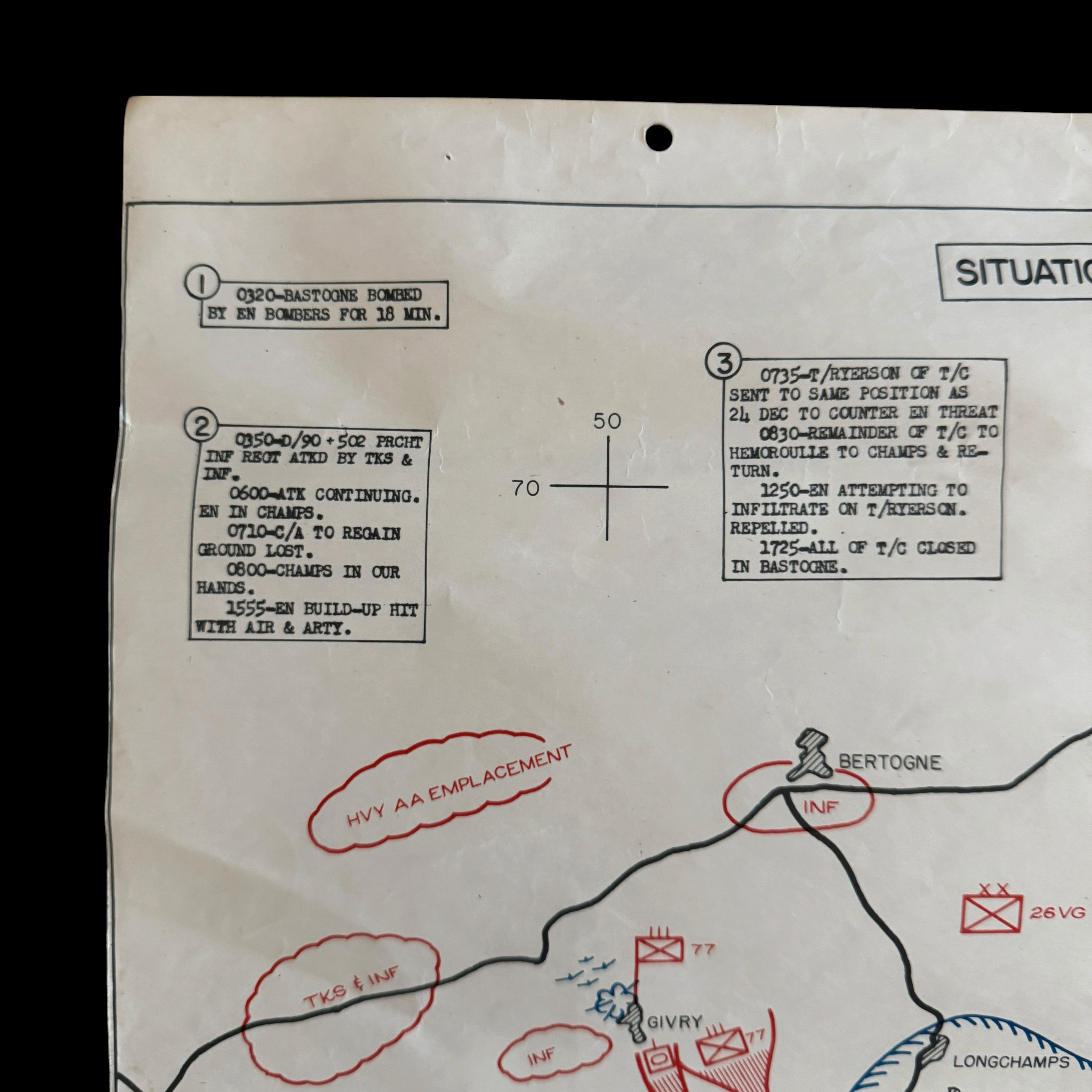
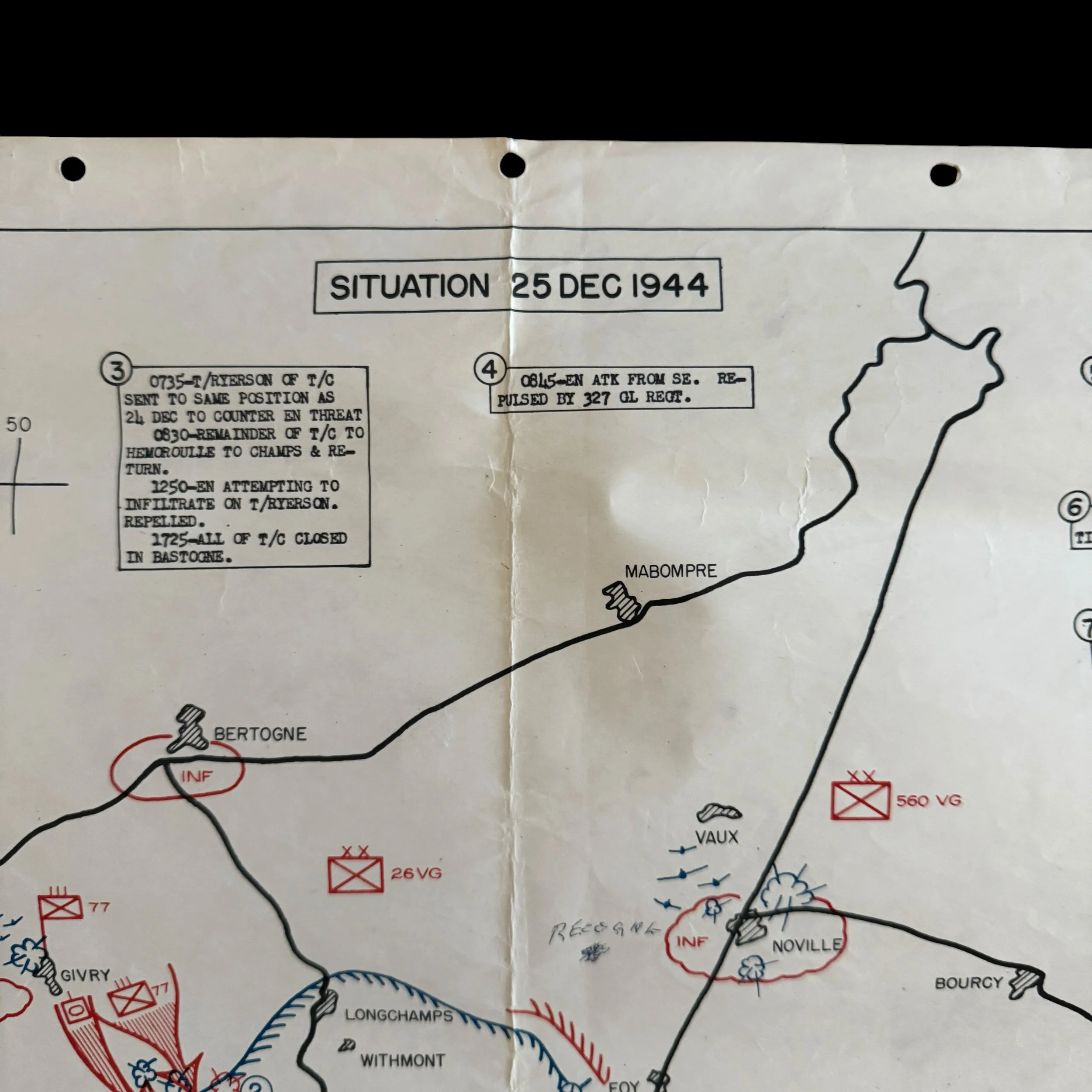
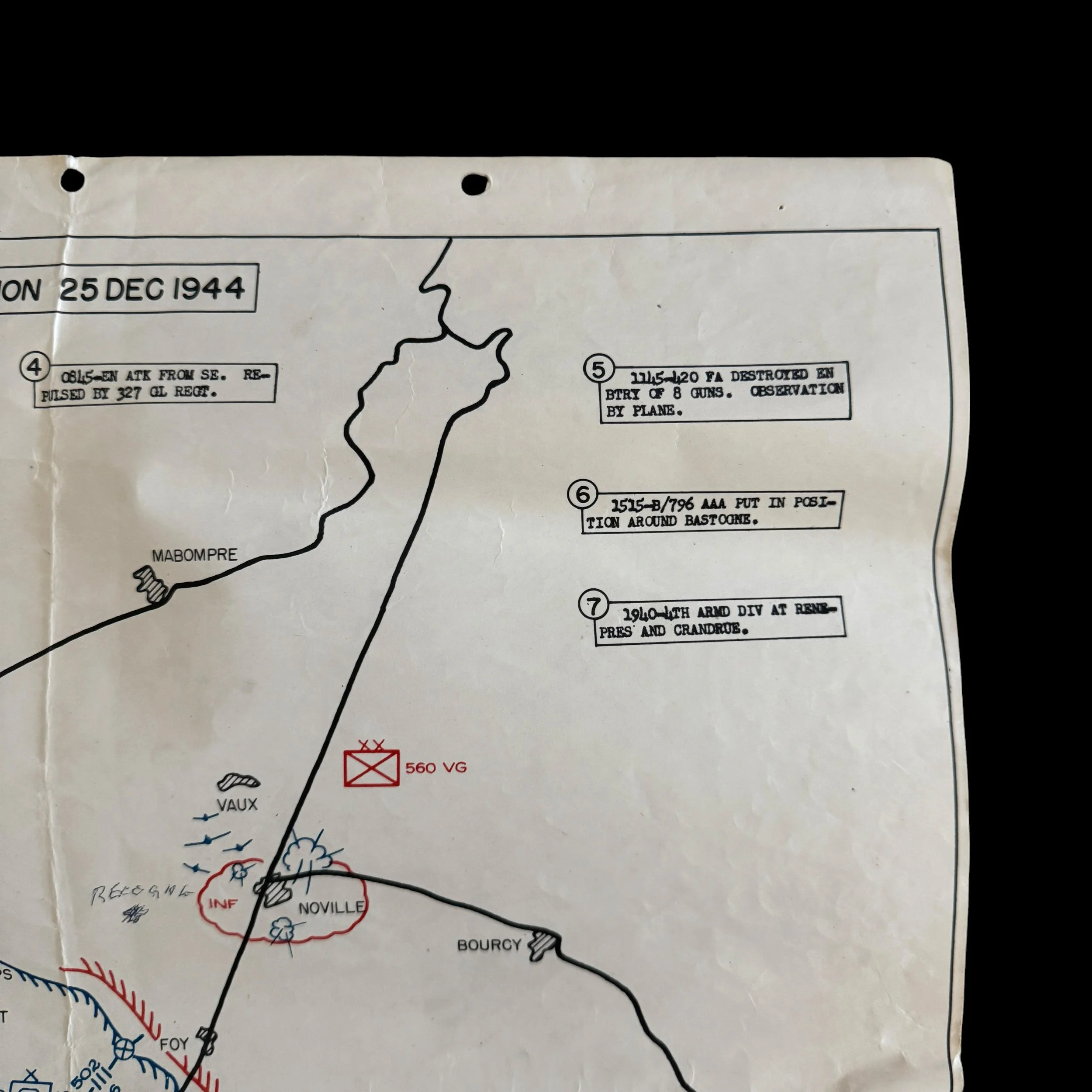
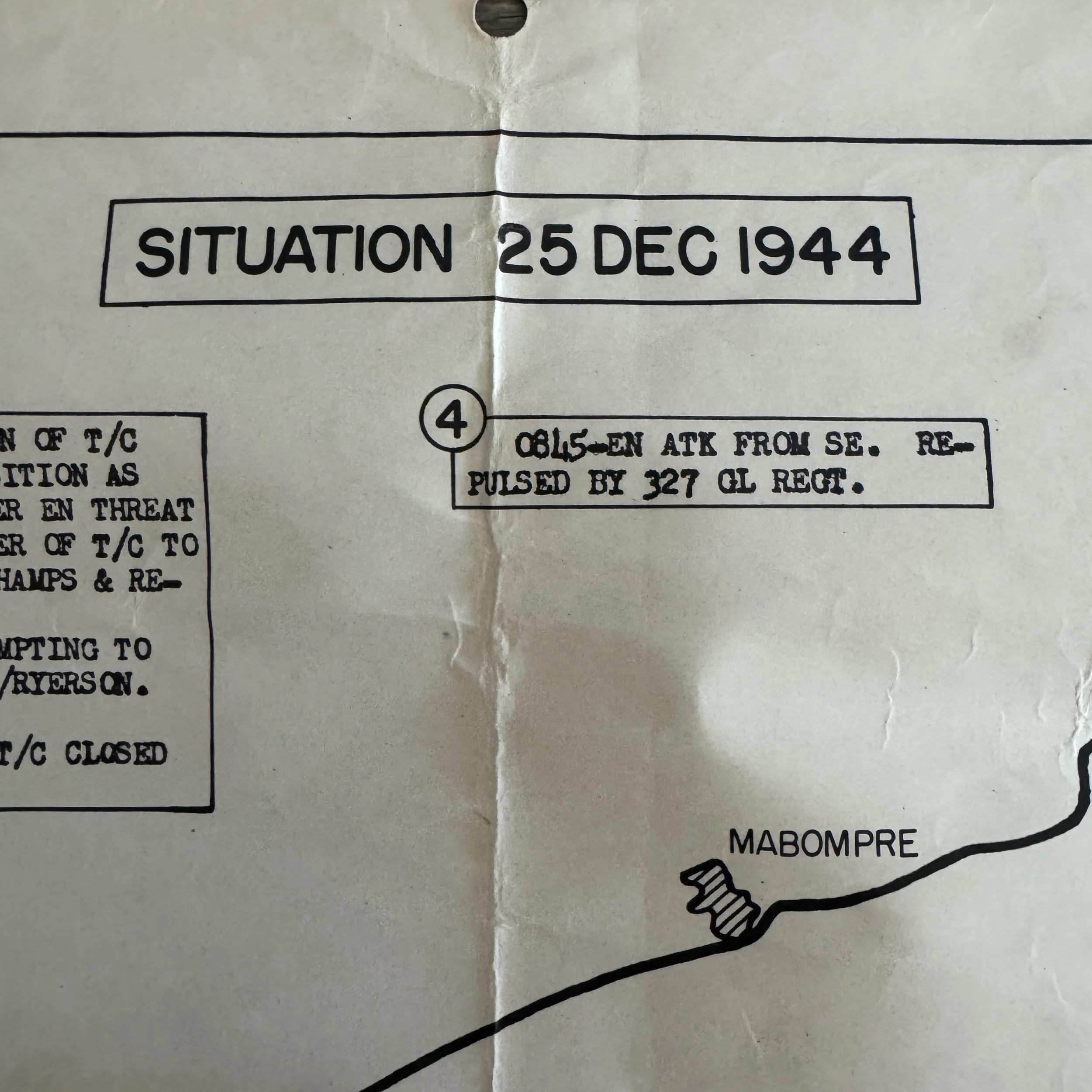
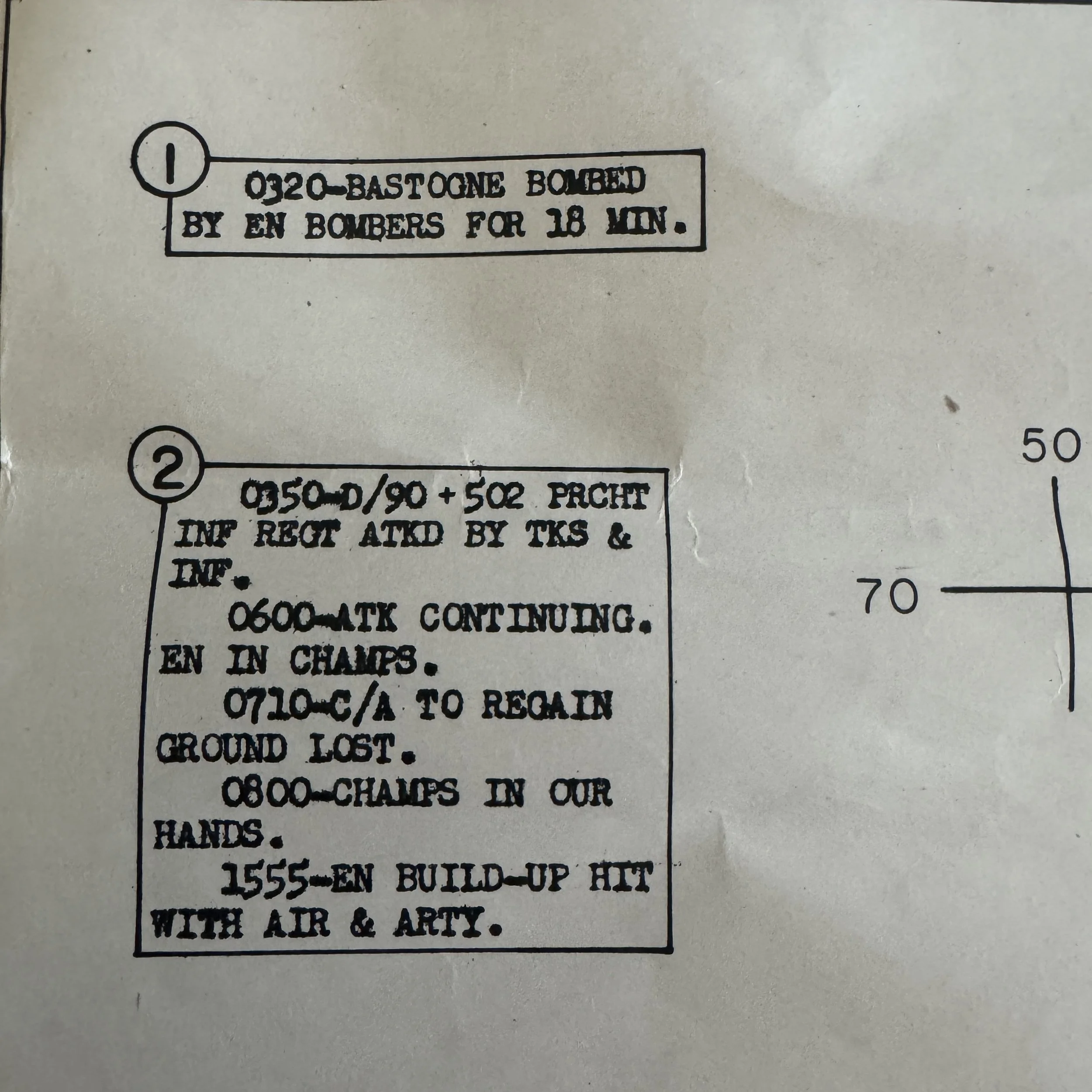
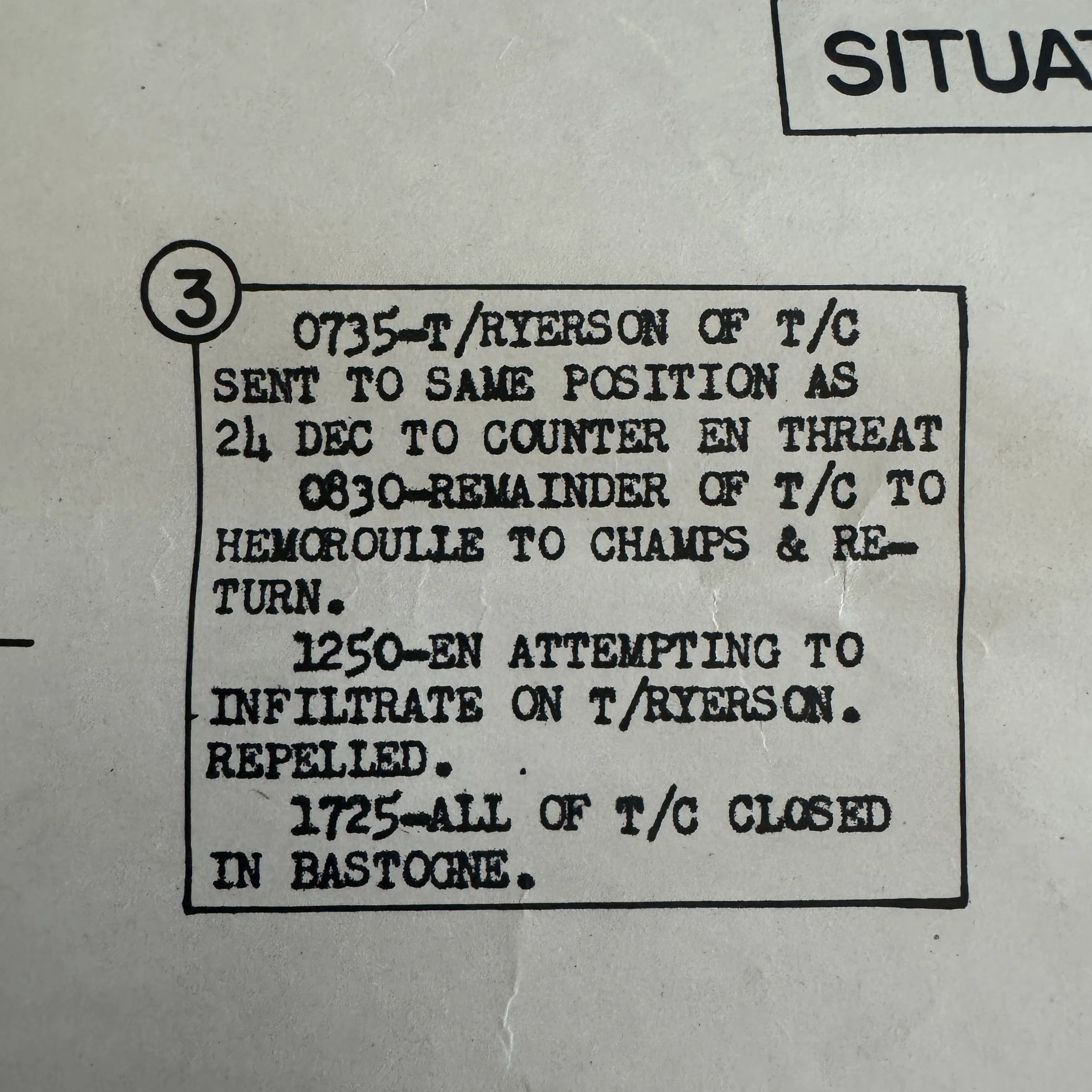
Detailed Situation Report of December 25th, 1944 (TAKEN FROM MAP):
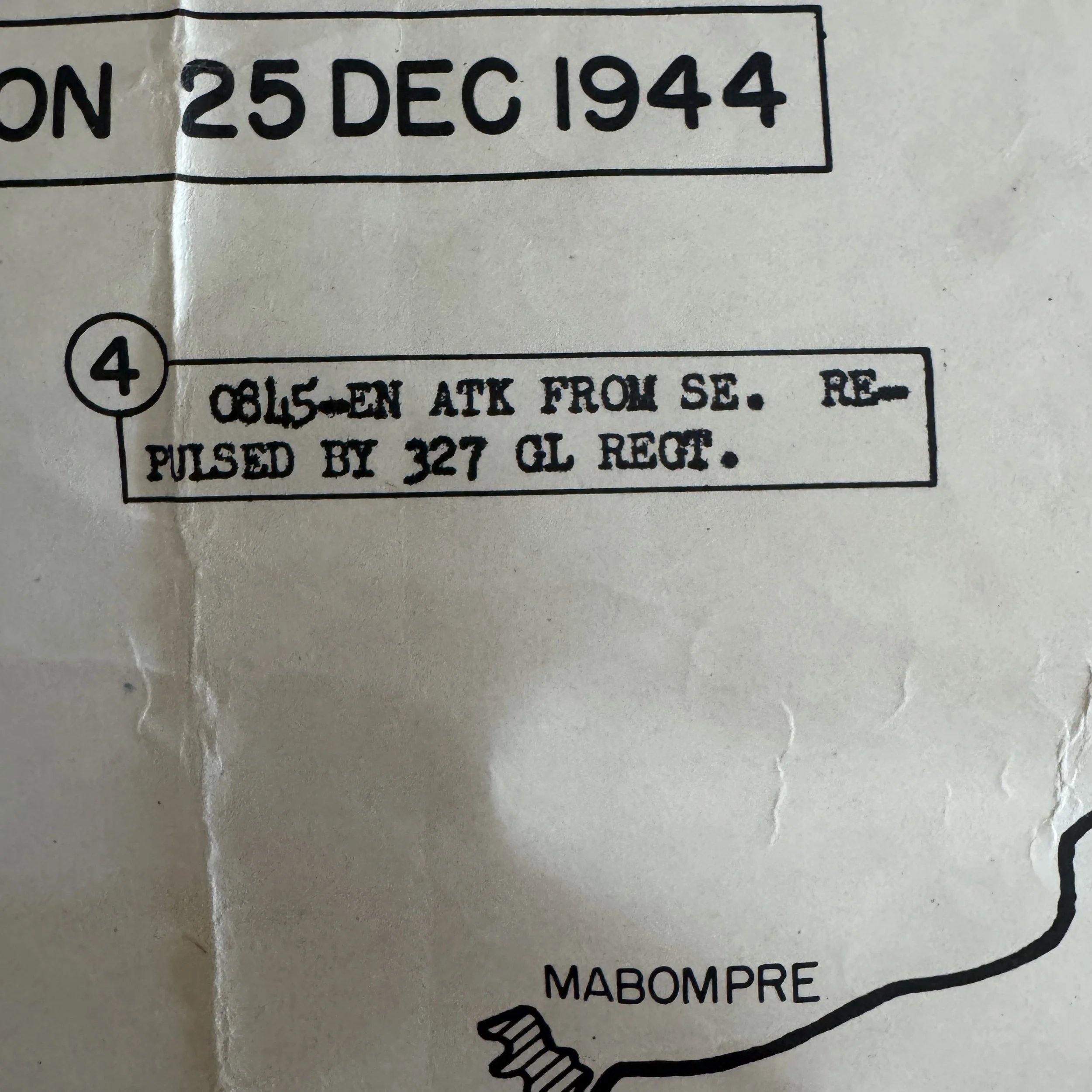
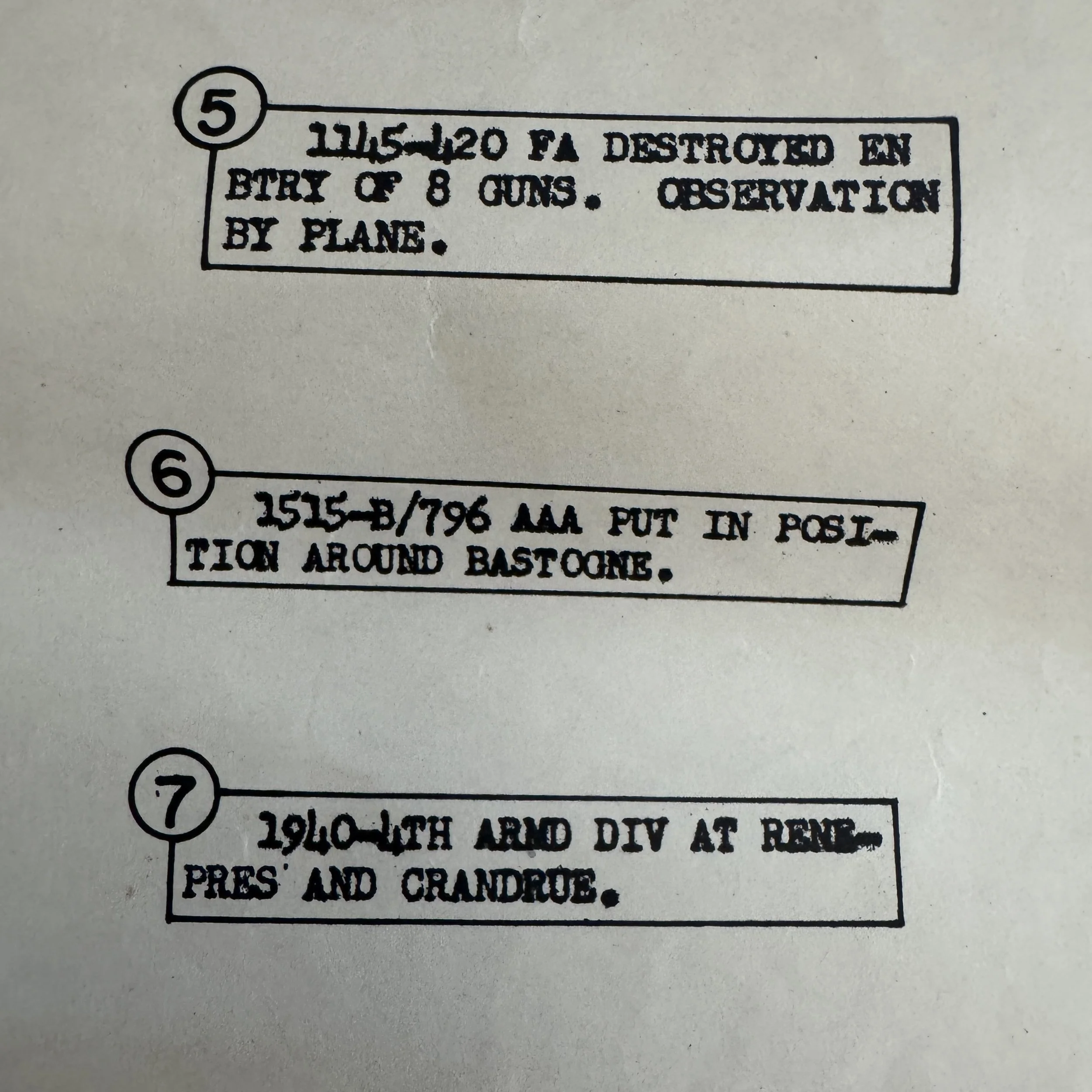
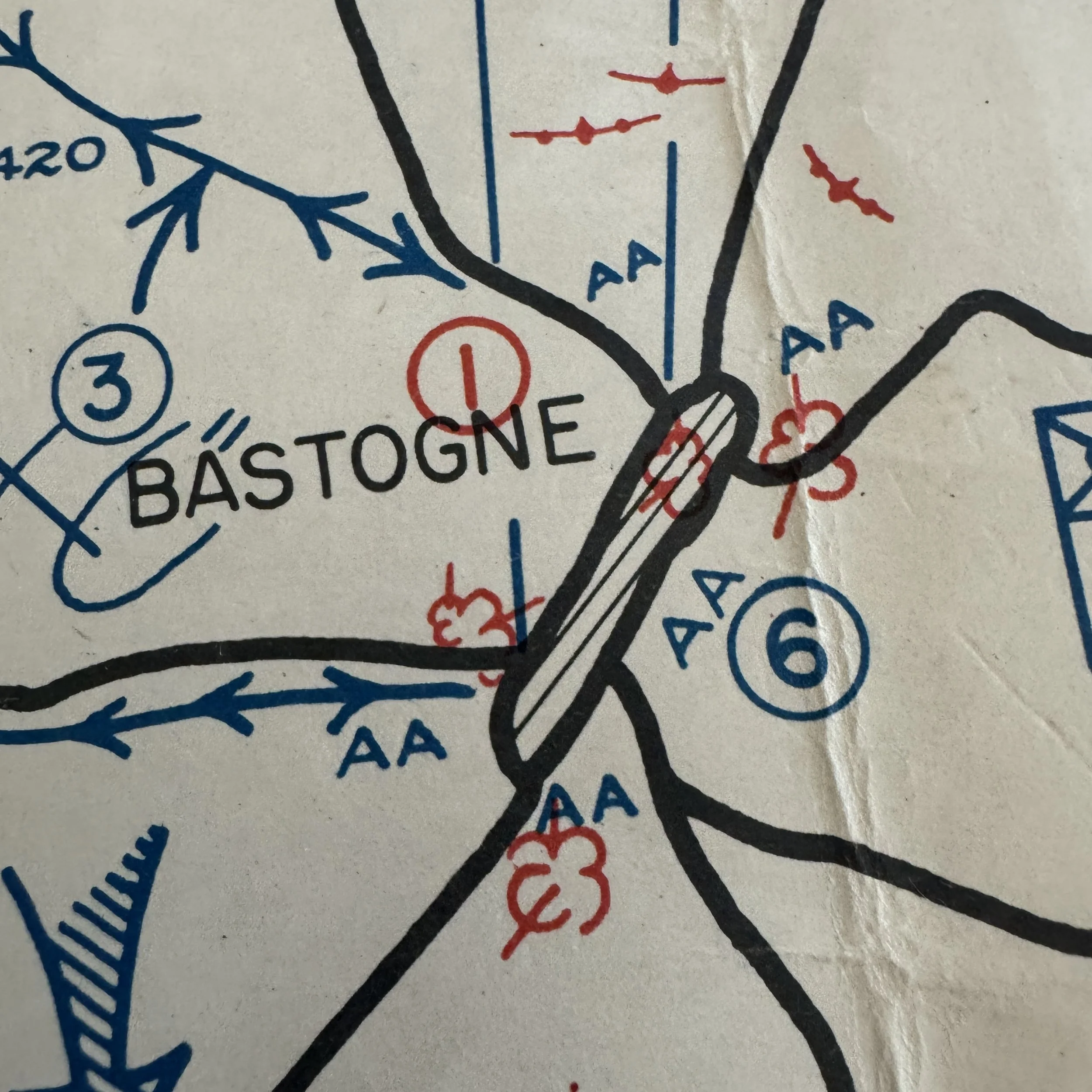
On December 25, 1944, Christmas Day began in Bastogne with no respite as German bombers opened the assault at 0320, subjecting the town to an 18-minute aerial bombardment. By 0350, enemy tanks and infantry launched a heavy attack against Team Ryerson and the 502nd Parachute Infantry Regiment. German forces pressed into Champs, but by 0710 American troops initiated a counterattack to regain lost ground, fully securing Champs back in Allied hands by 0800. Concurrently, Team Ryerson was dispatched to reinforce positions against the ongoing armor threat, repelling enemy infiltration attempts by early afternoon, while the 327th Glider Infantry Regiment successfully broke an enemy attack from the southeast at 0845. American firepower systematically dismantled the assault throughout the day—at 1145, the 420th Field Artillery Battalion destroyed an 8-gun enemy battery spotted by aerial observation, and by 1515, Battery B of the 796th AAA Battalion was positioned around Bastogne to bolster perimeter air defenses. Relief drew closer as Allied air support and artillery struck building enemy concentrations at 1555, and by 1940, leading elements of the 4th Armored Division had reached Remprez and Grandrue. By 1725, with Team Ryerson recalled and closed in Bastogne, the defenders had held every sector of the perimeter, turning back the German Christmas offensive and setting the stage for the breakthrough.