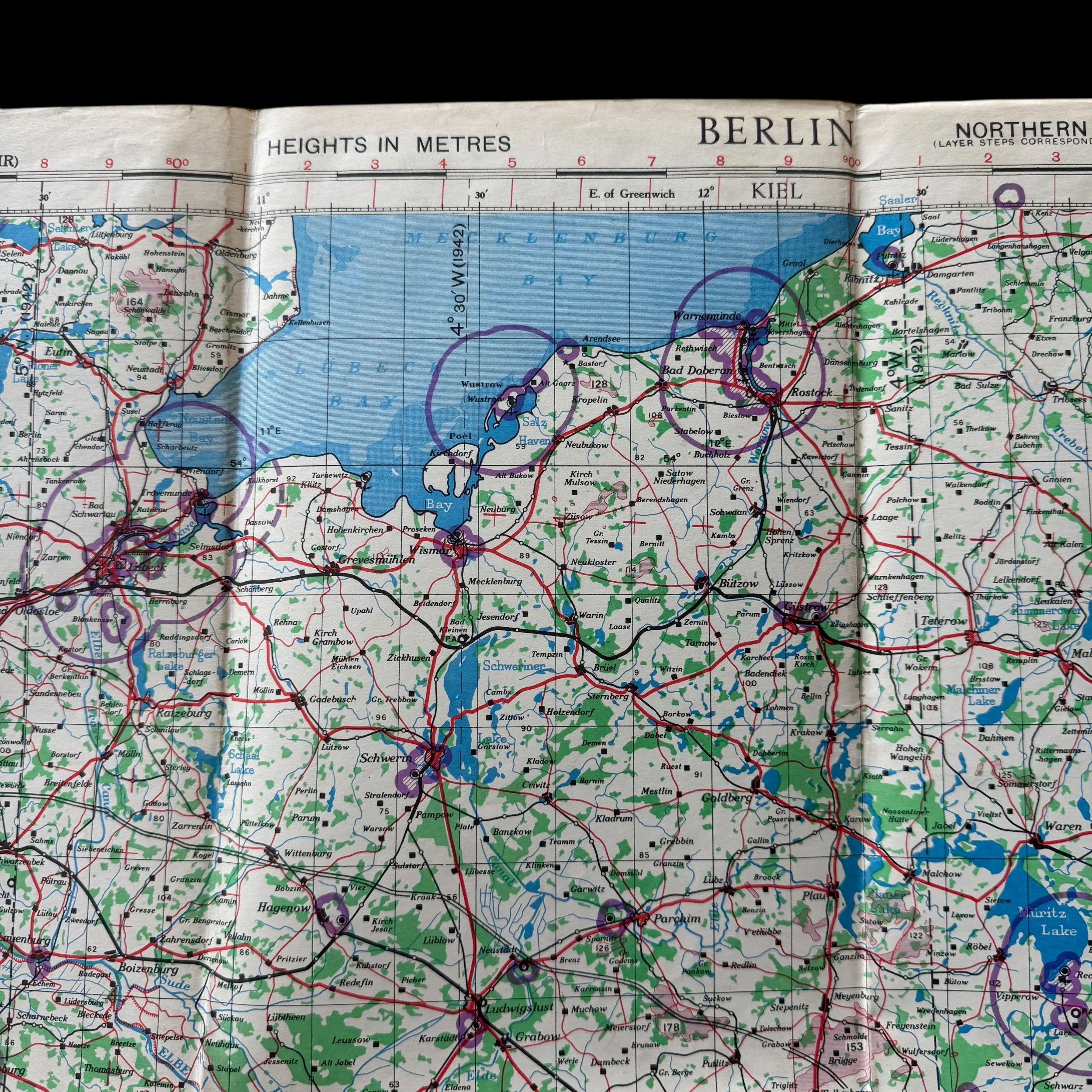
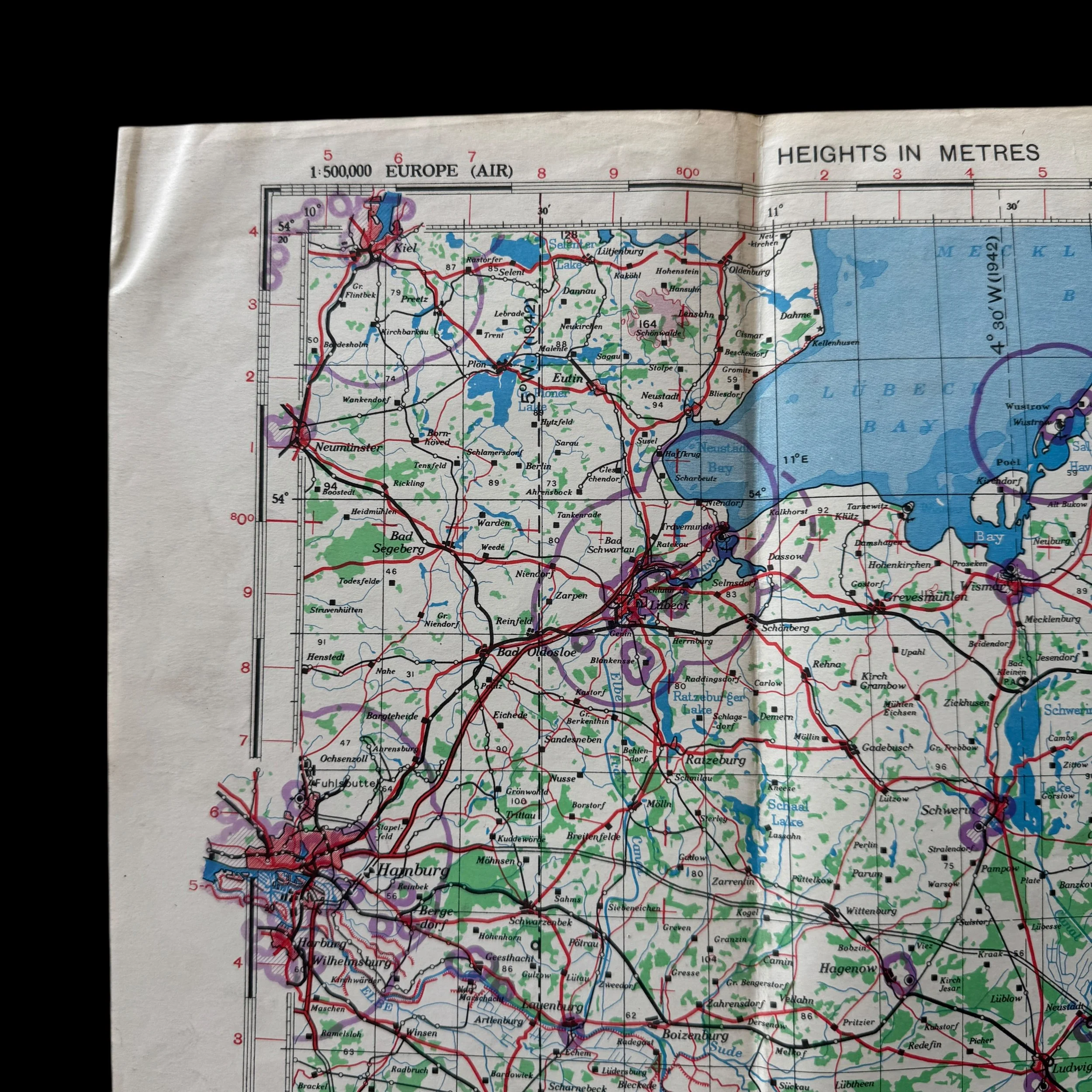
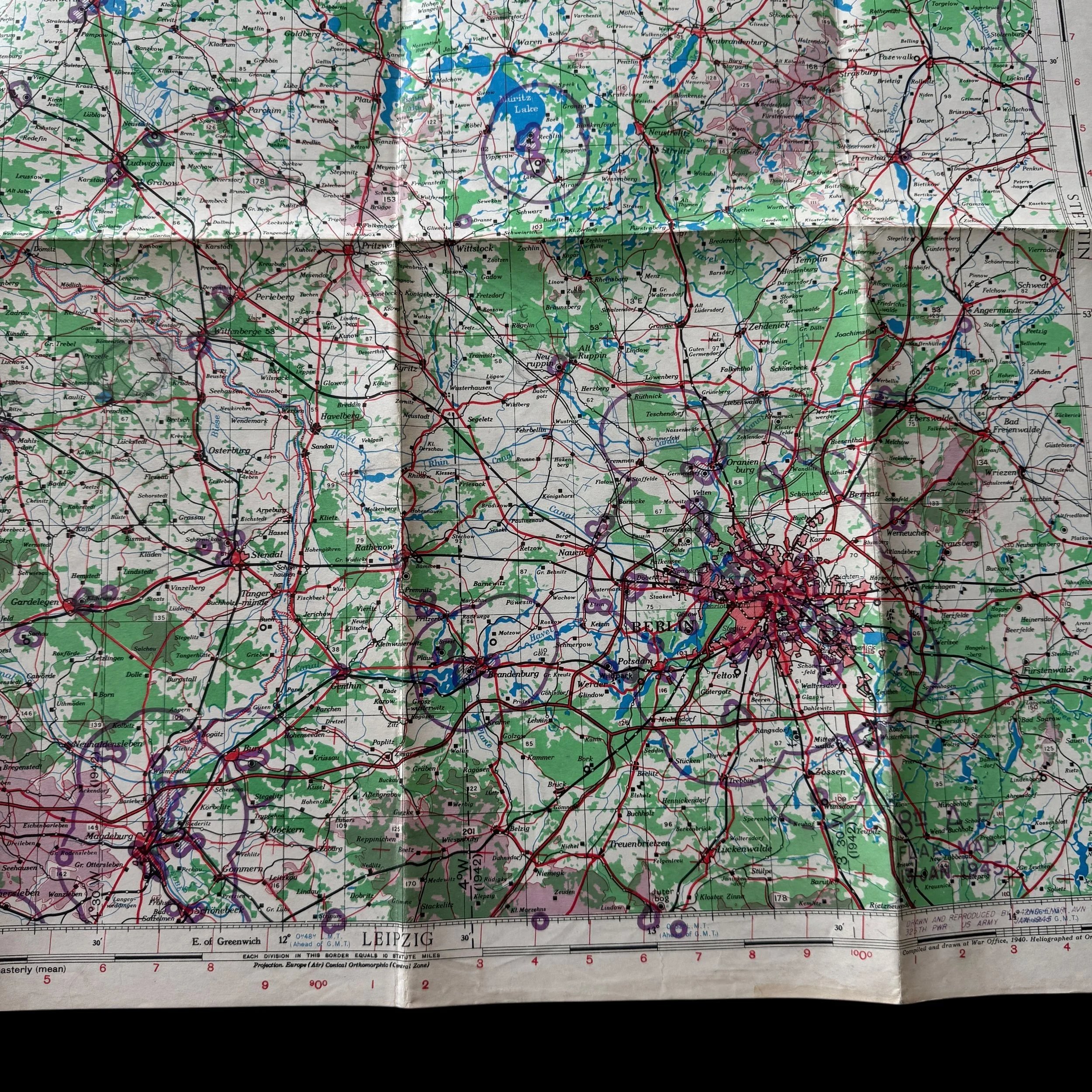
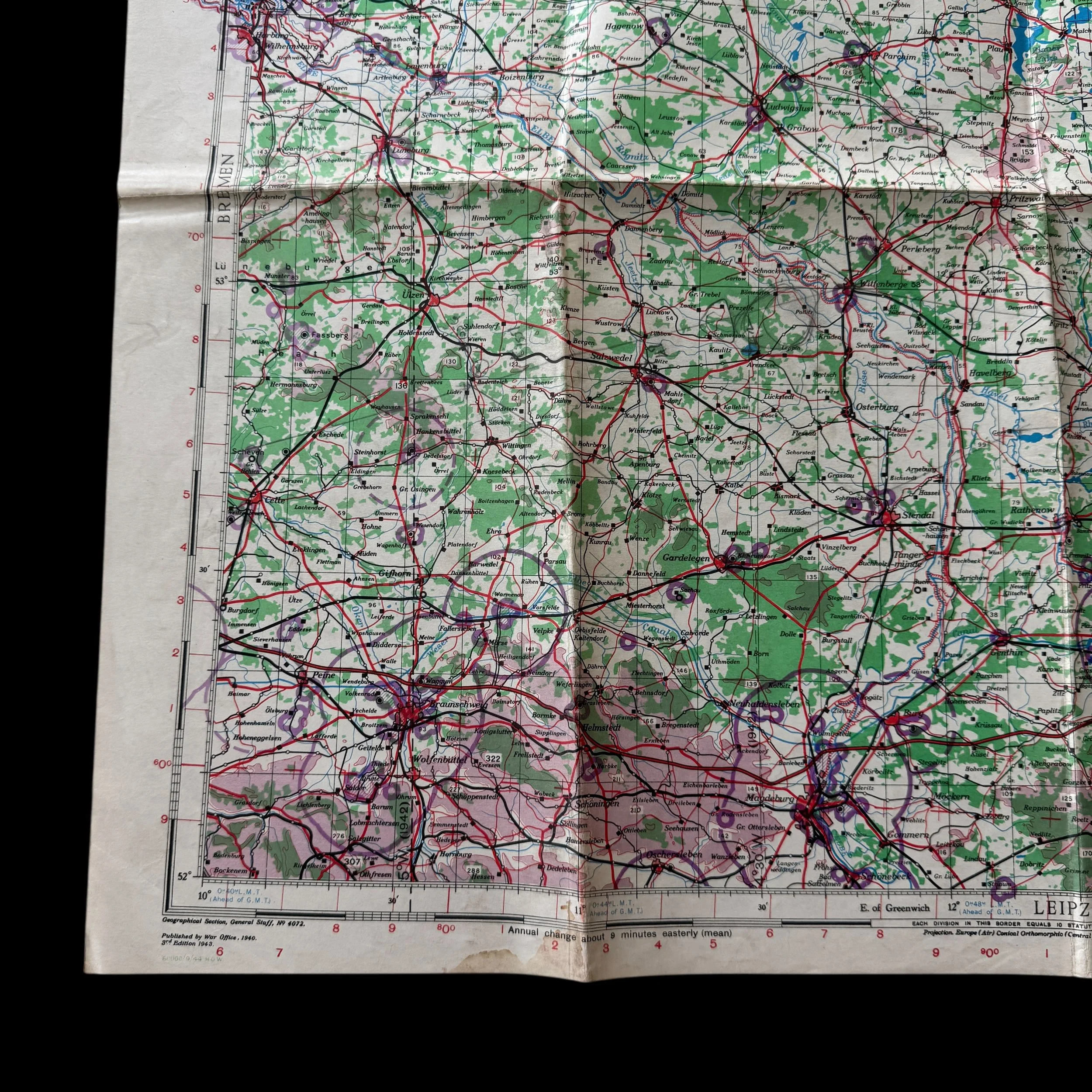
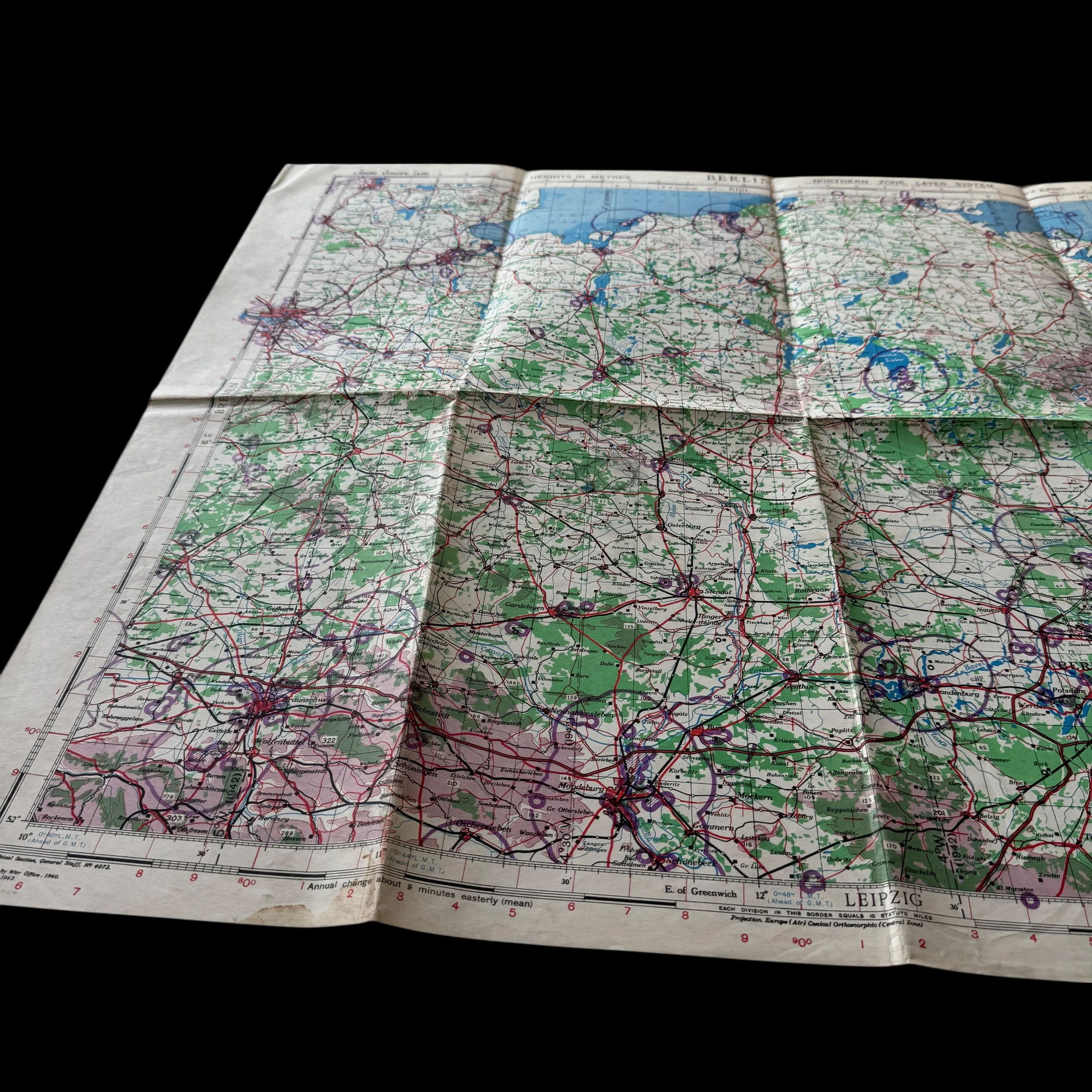
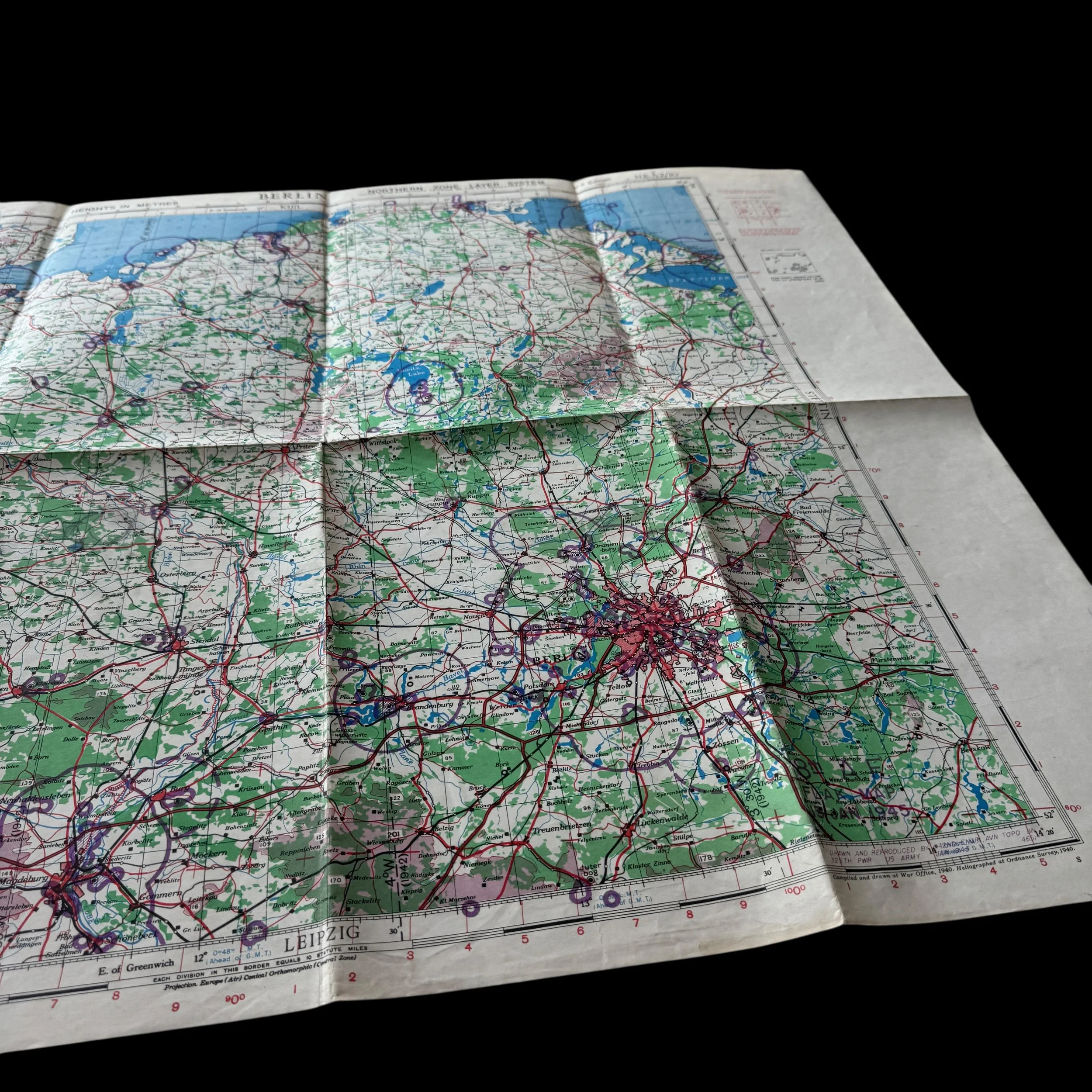
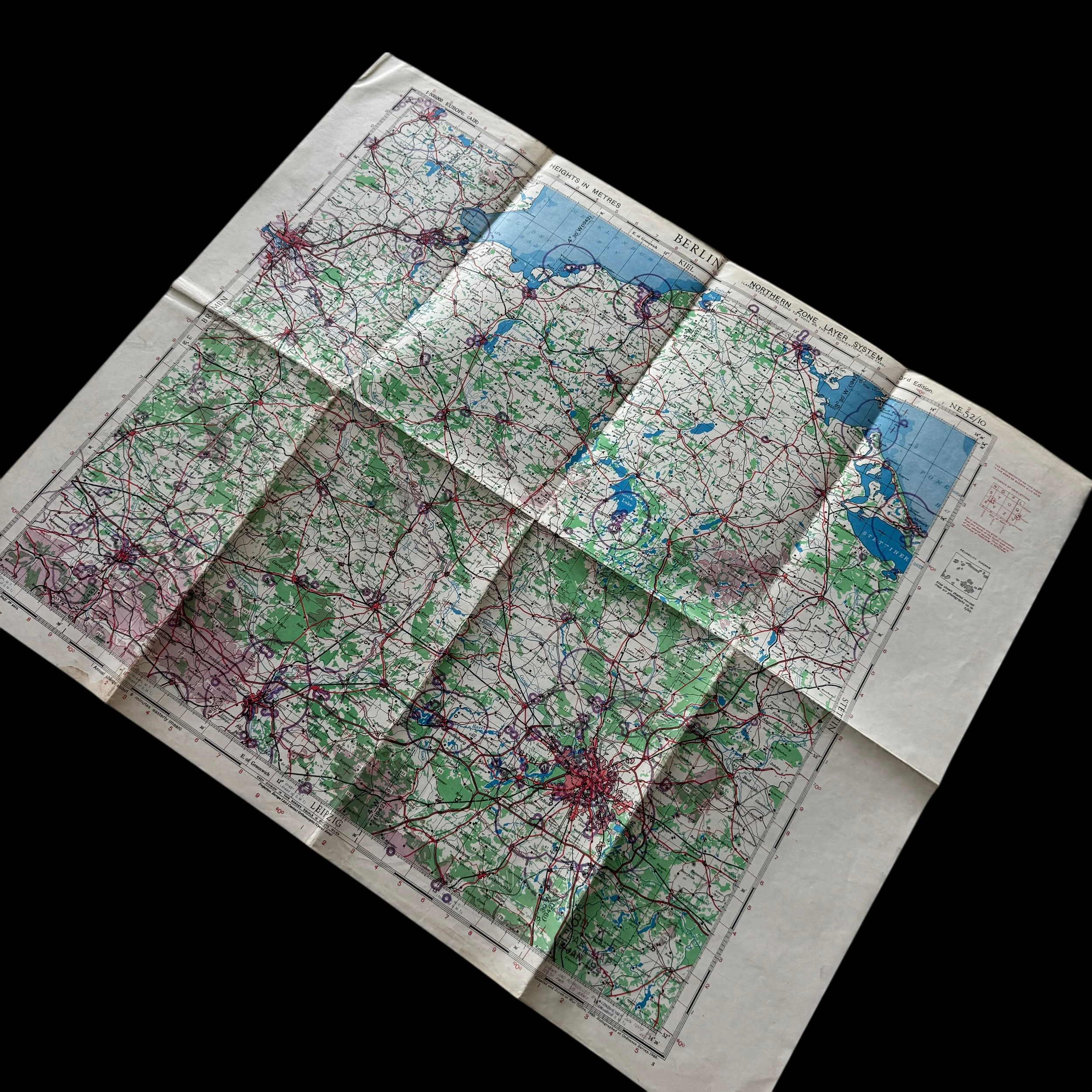
VERY RARE! WWII 1945 "BERLIN MISSIONS" Eighth Air Force B-17 Flying Fortress 8th Air Force Combat FLAK MAP (Heavily Used)
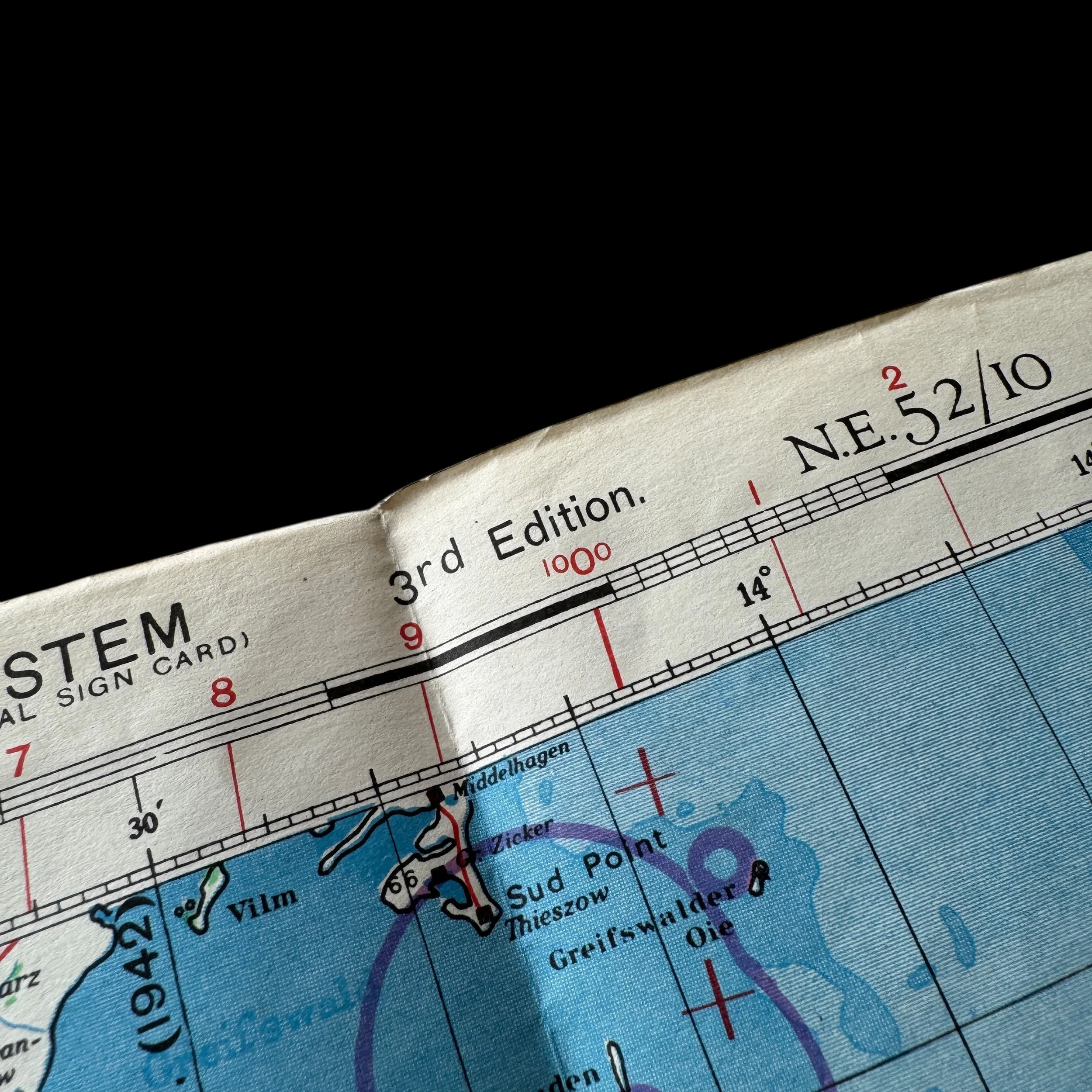
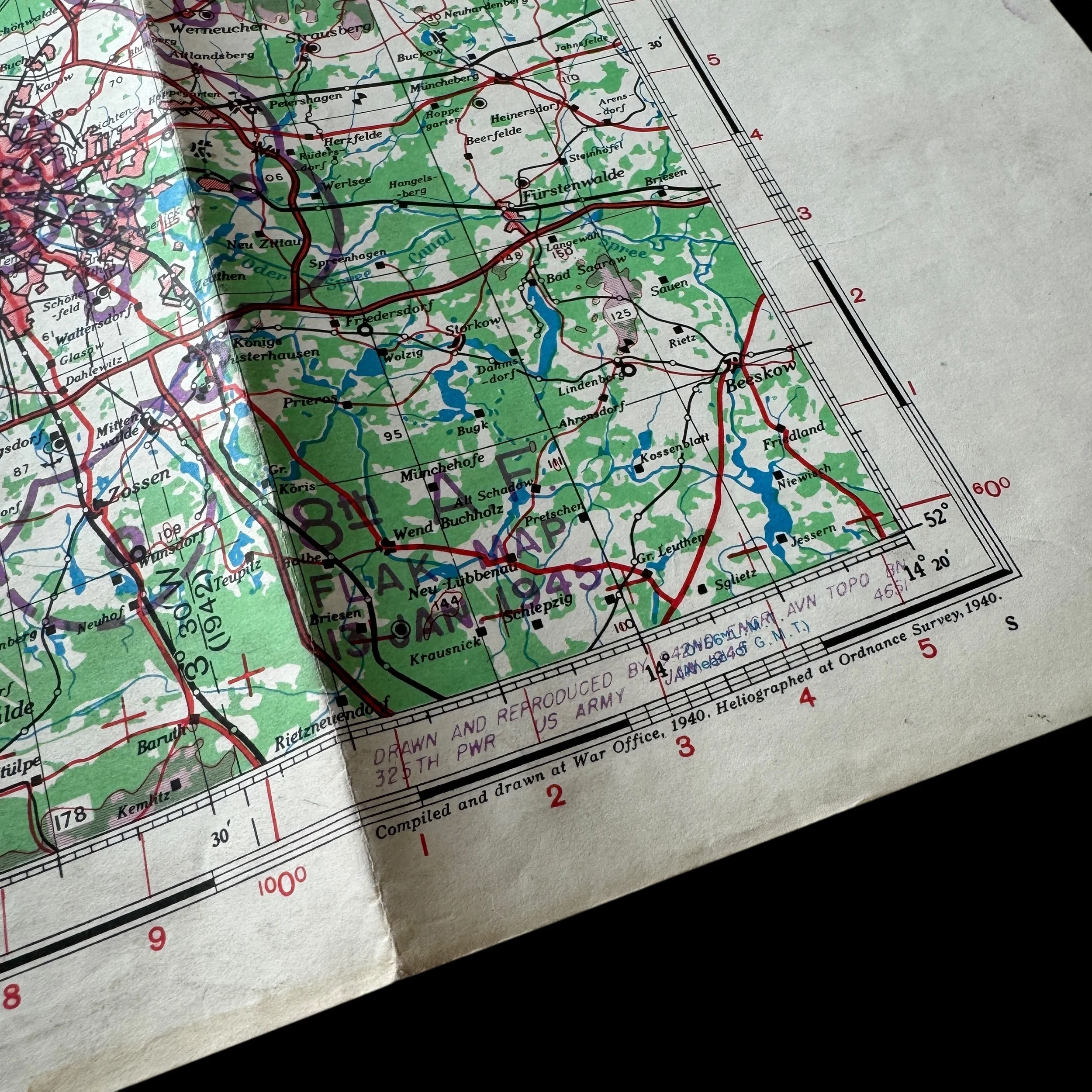
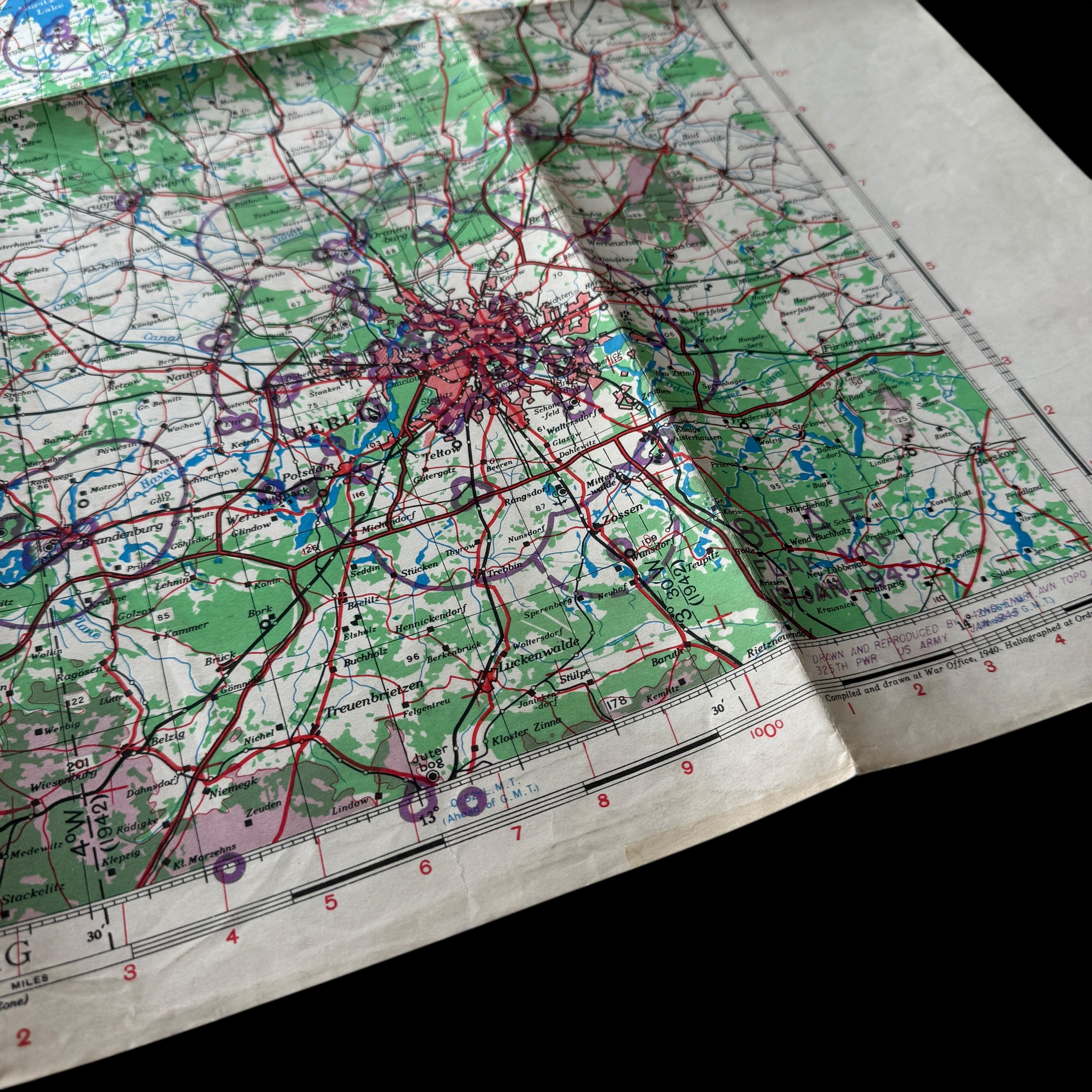
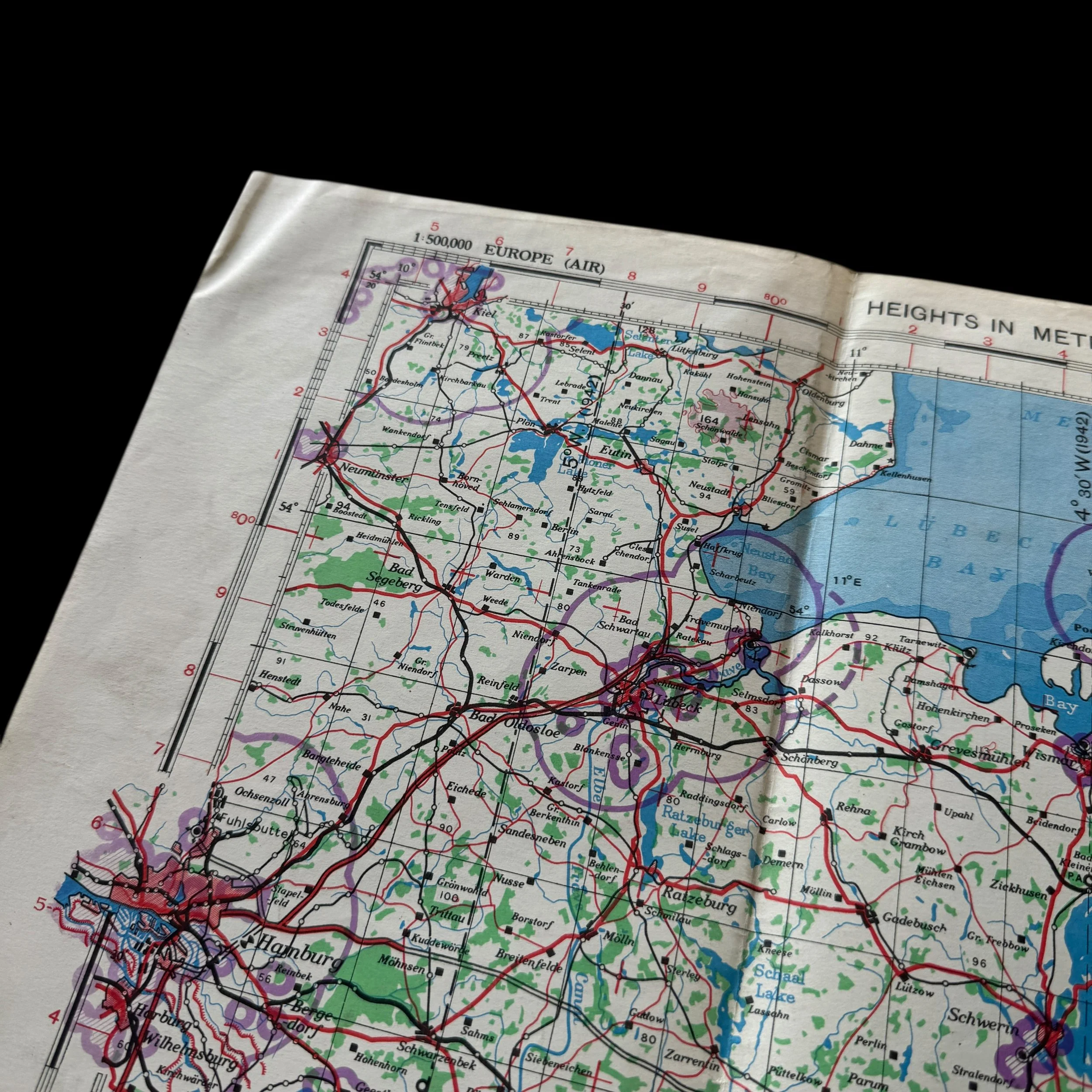
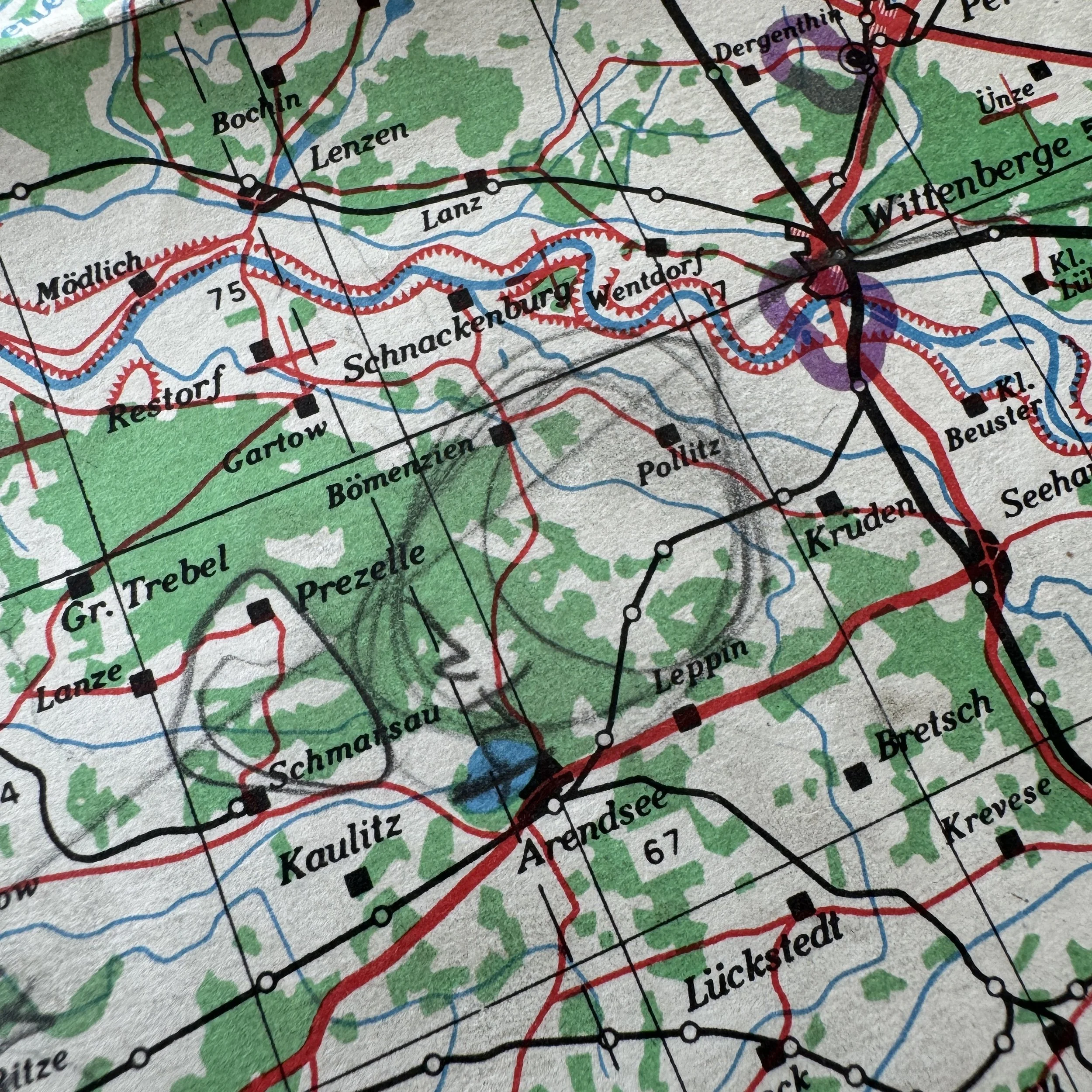
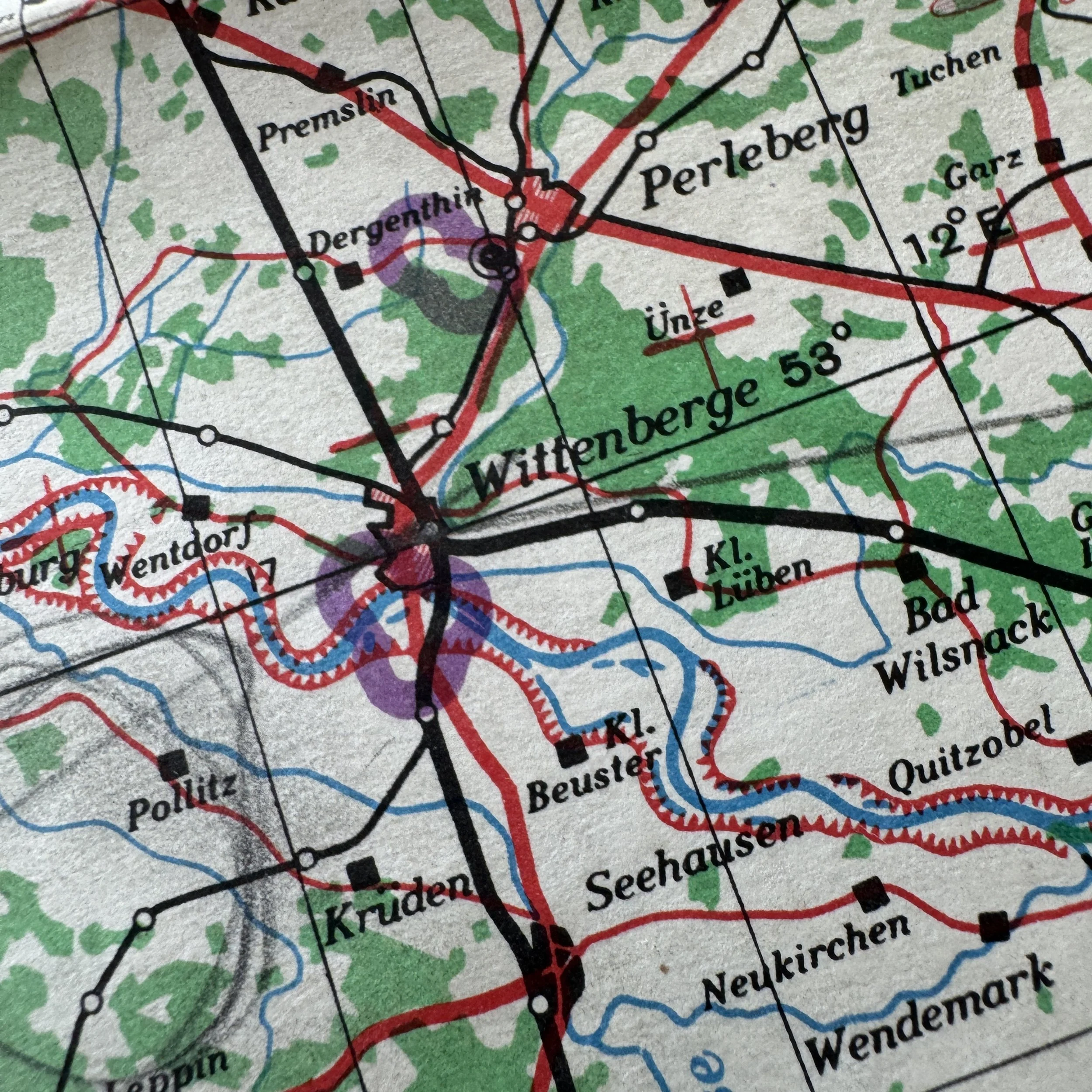
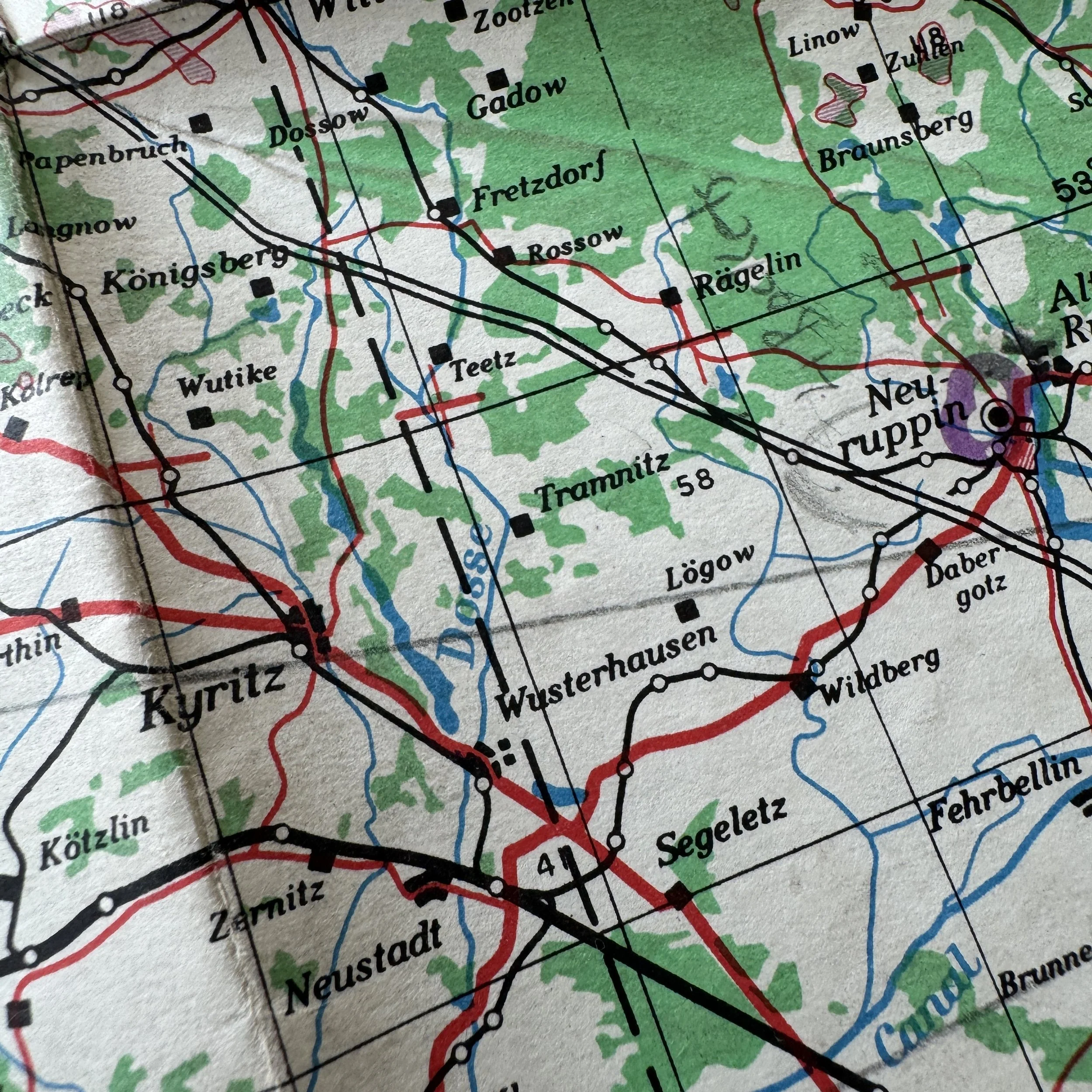
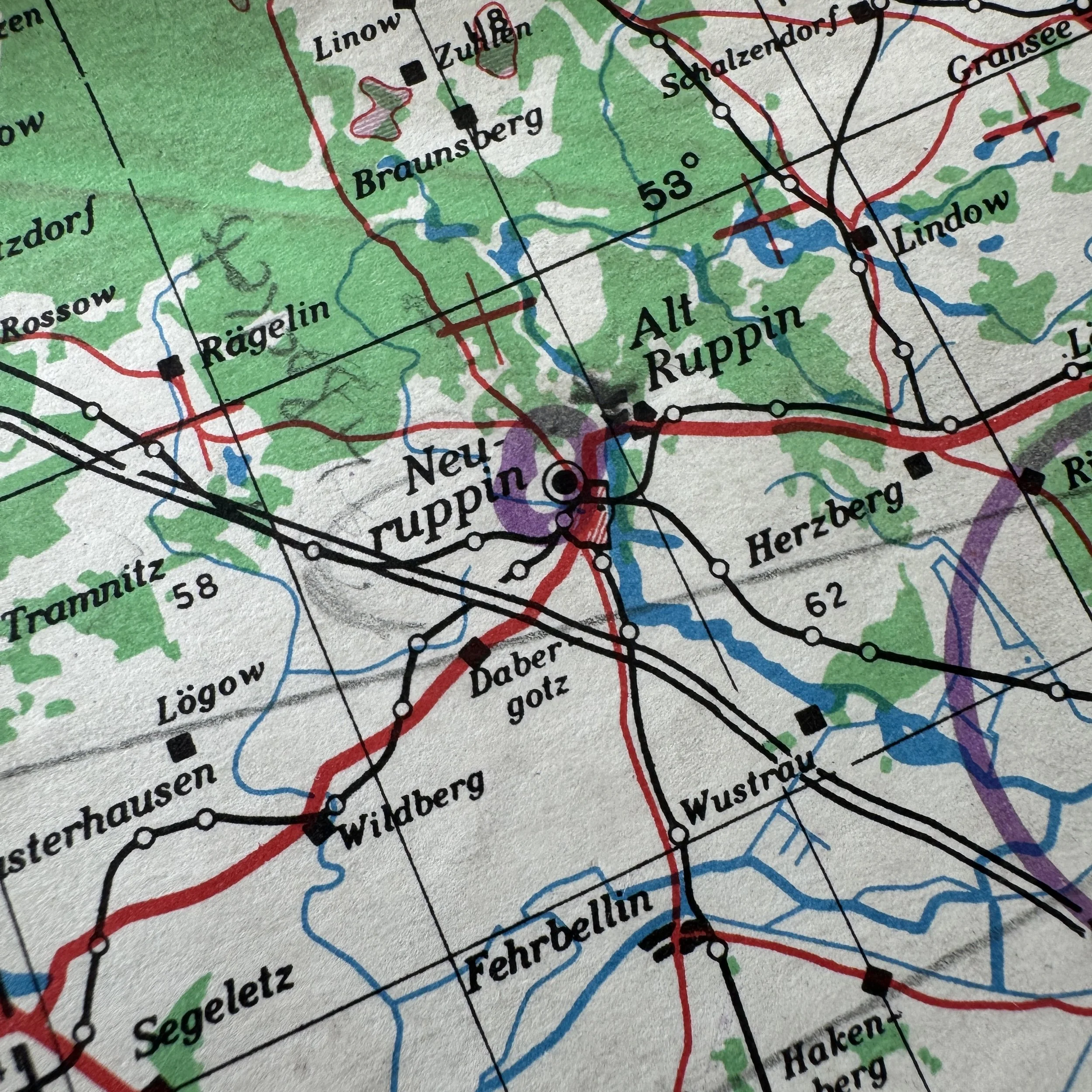
VERY RARE! WWII 1945 "BERLIN MISSIONS" Eighth Air Force B-17 Flying Fortress 8th Air Force Combat FLAK MAP (Heavily Used)
Comes with a hand-signed C.O.A.
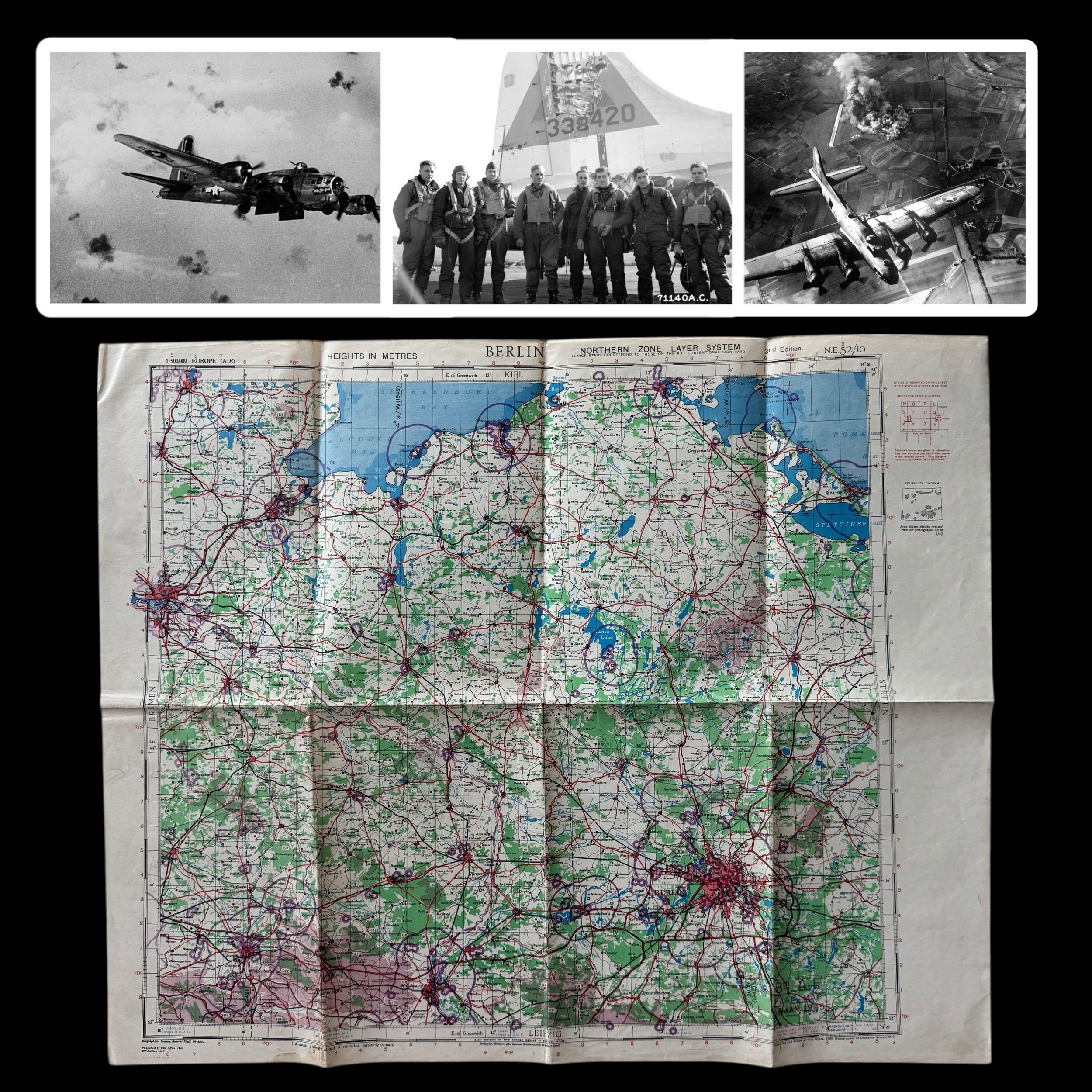
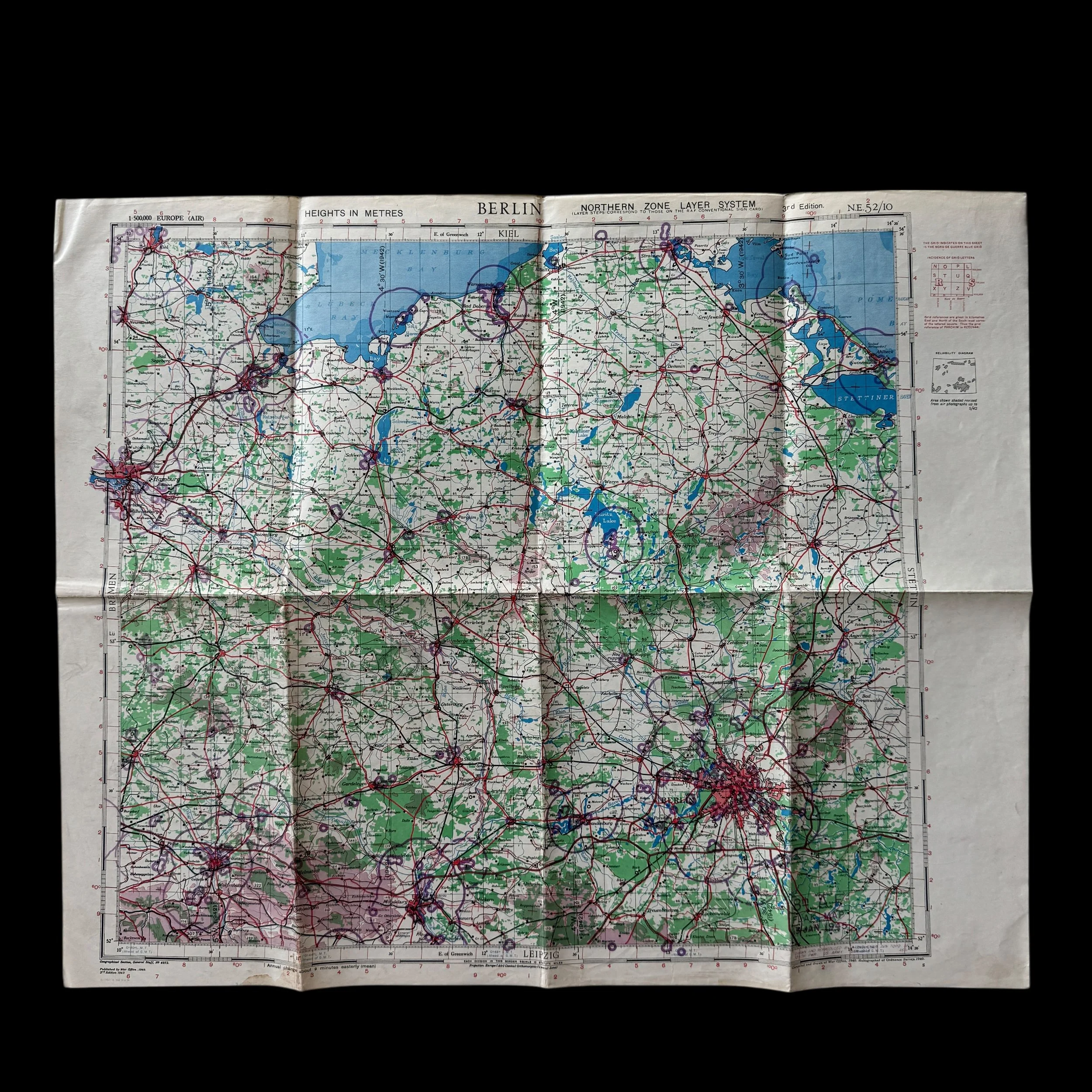
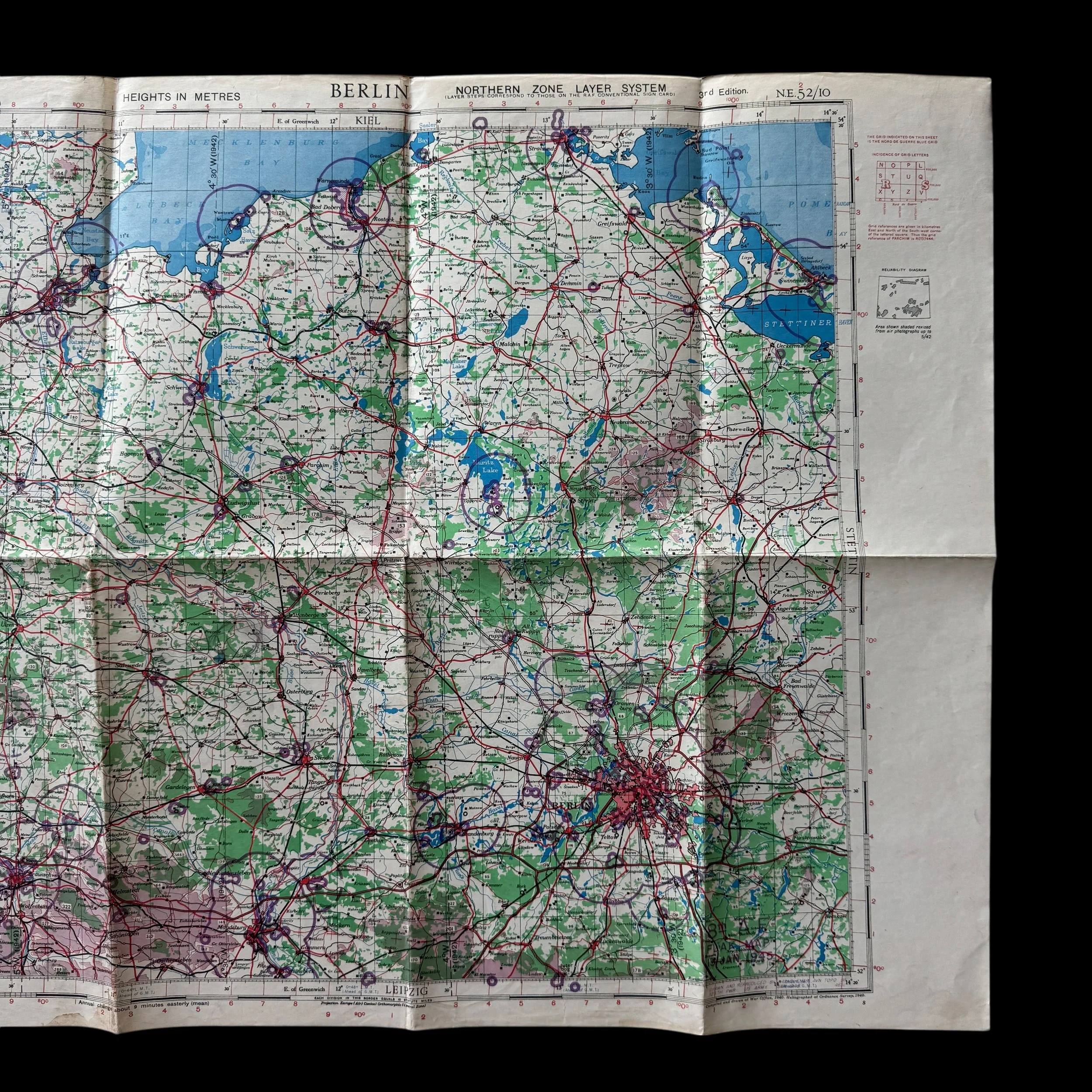
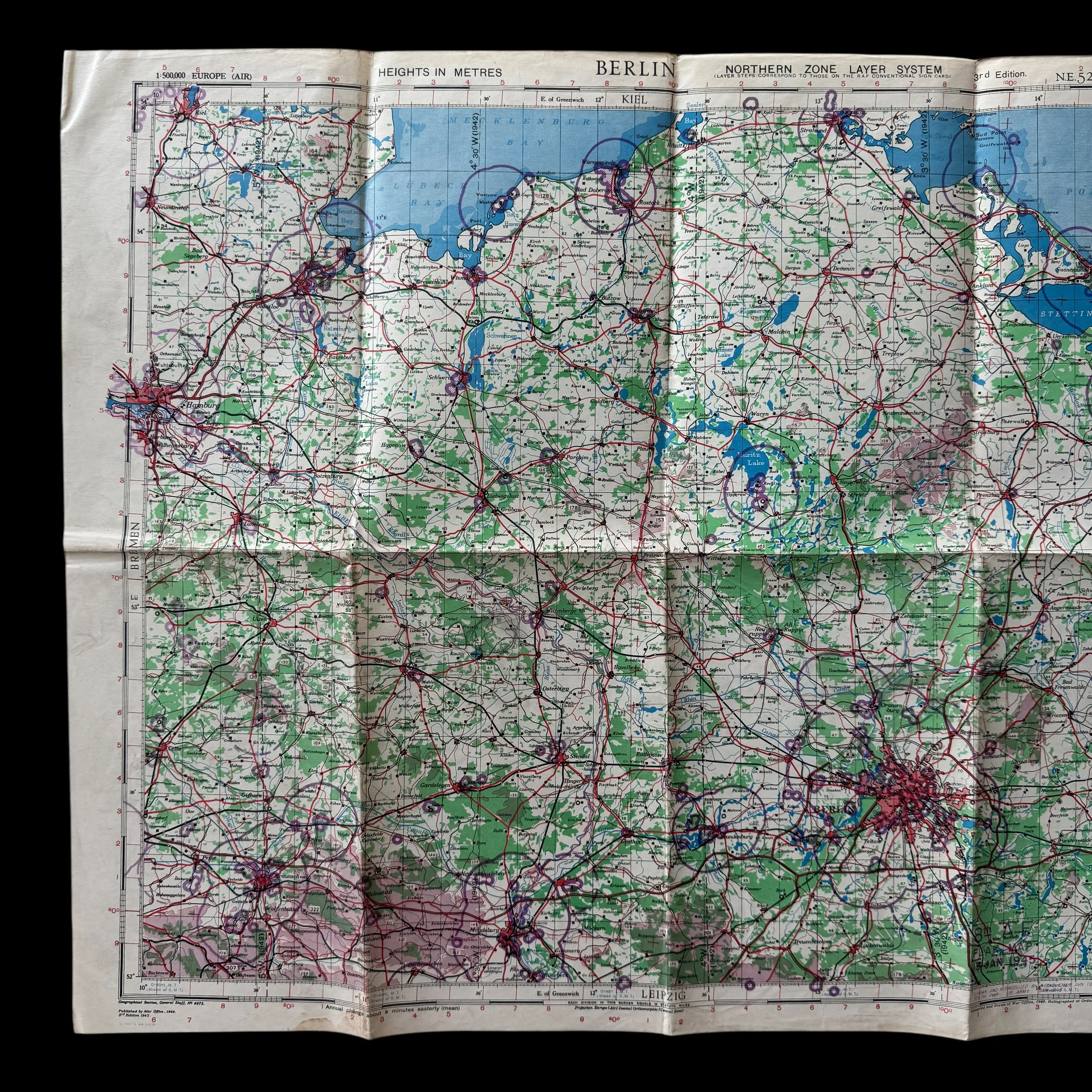
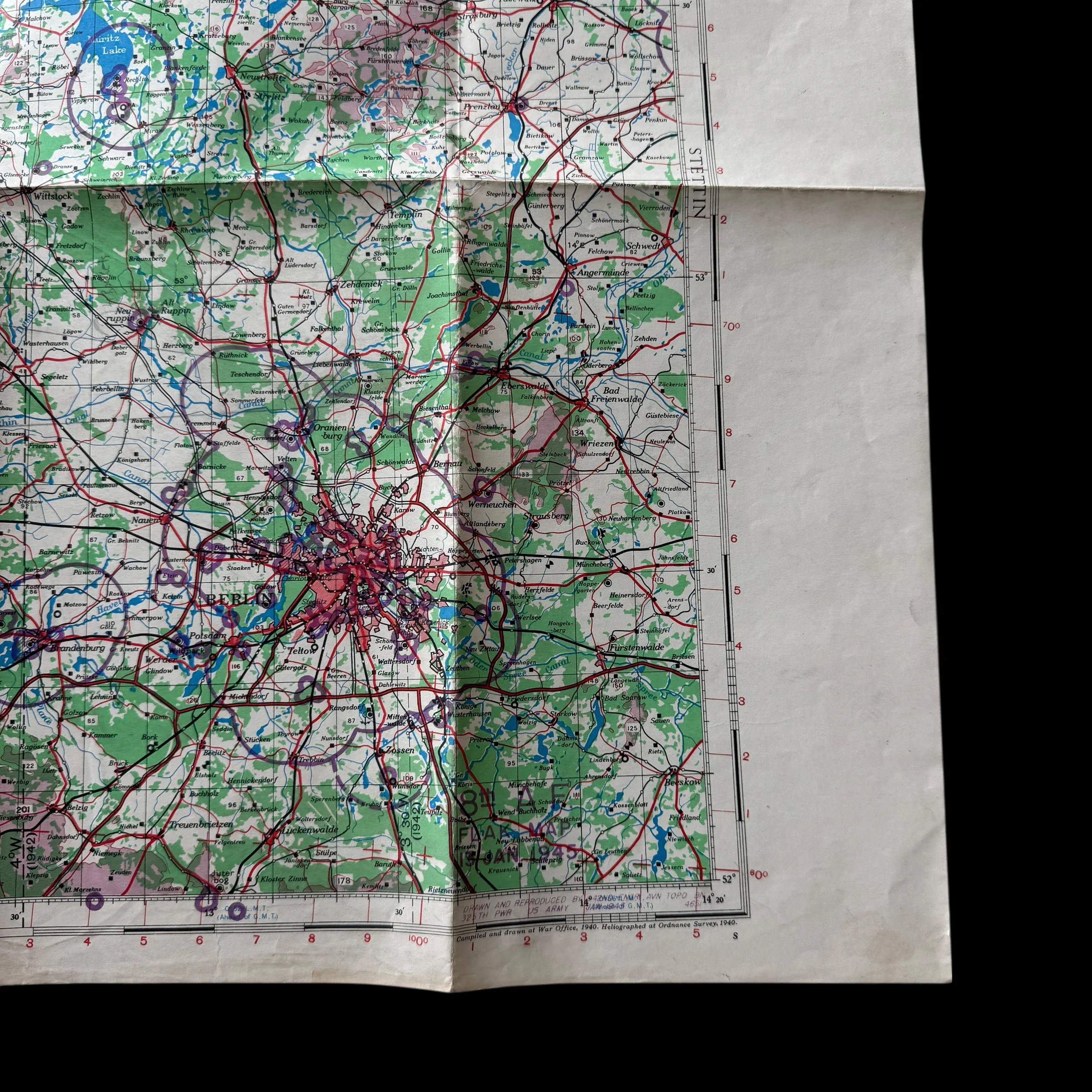
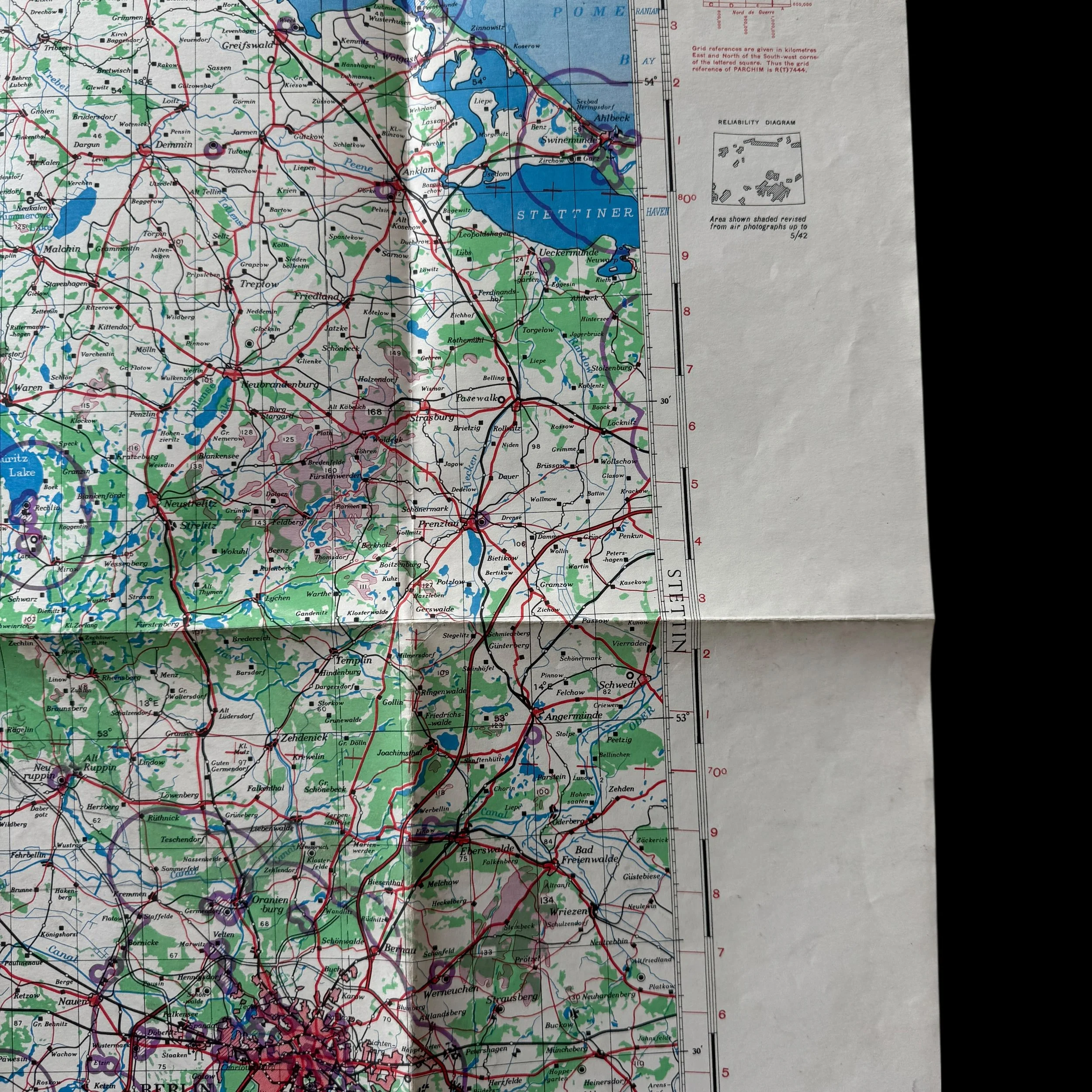
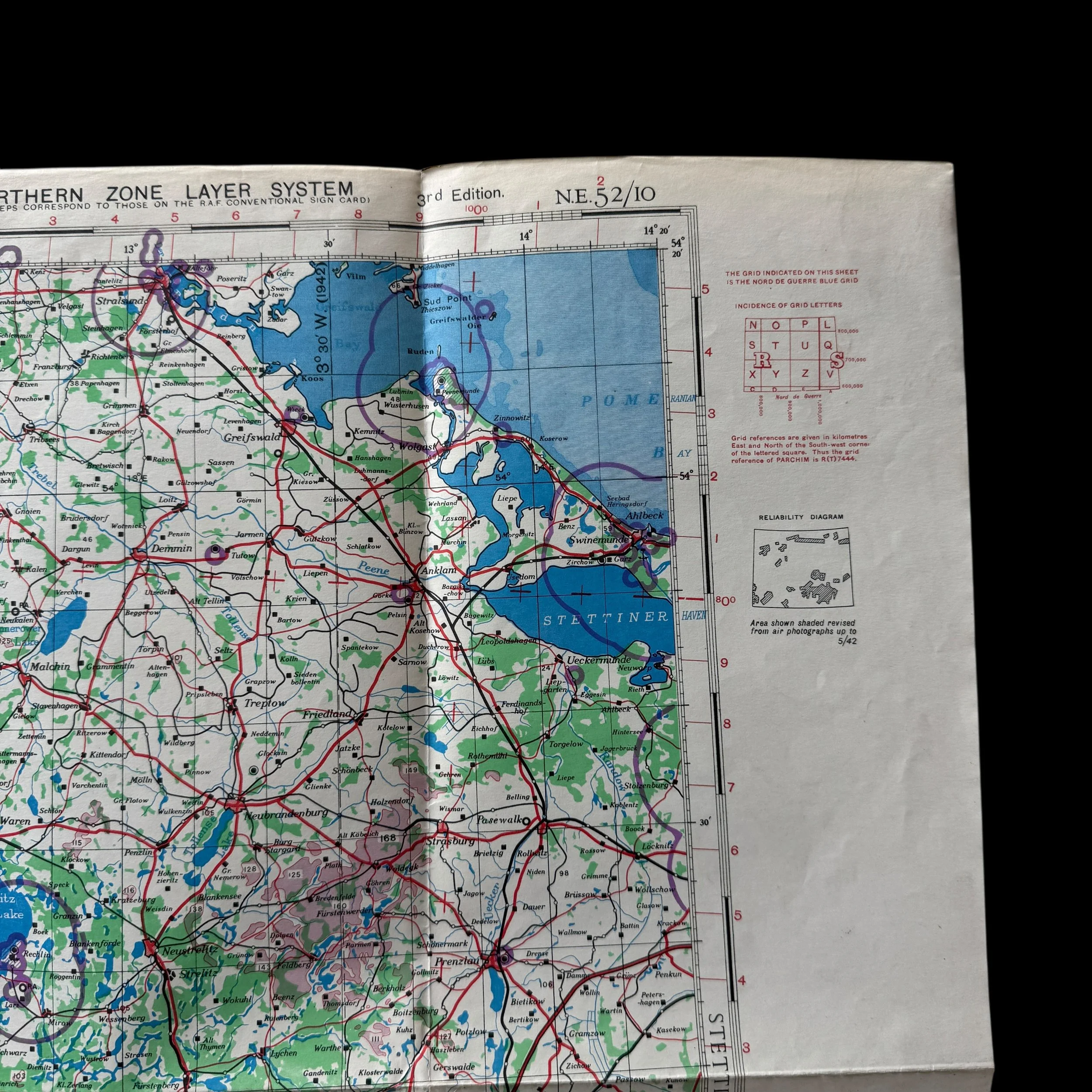
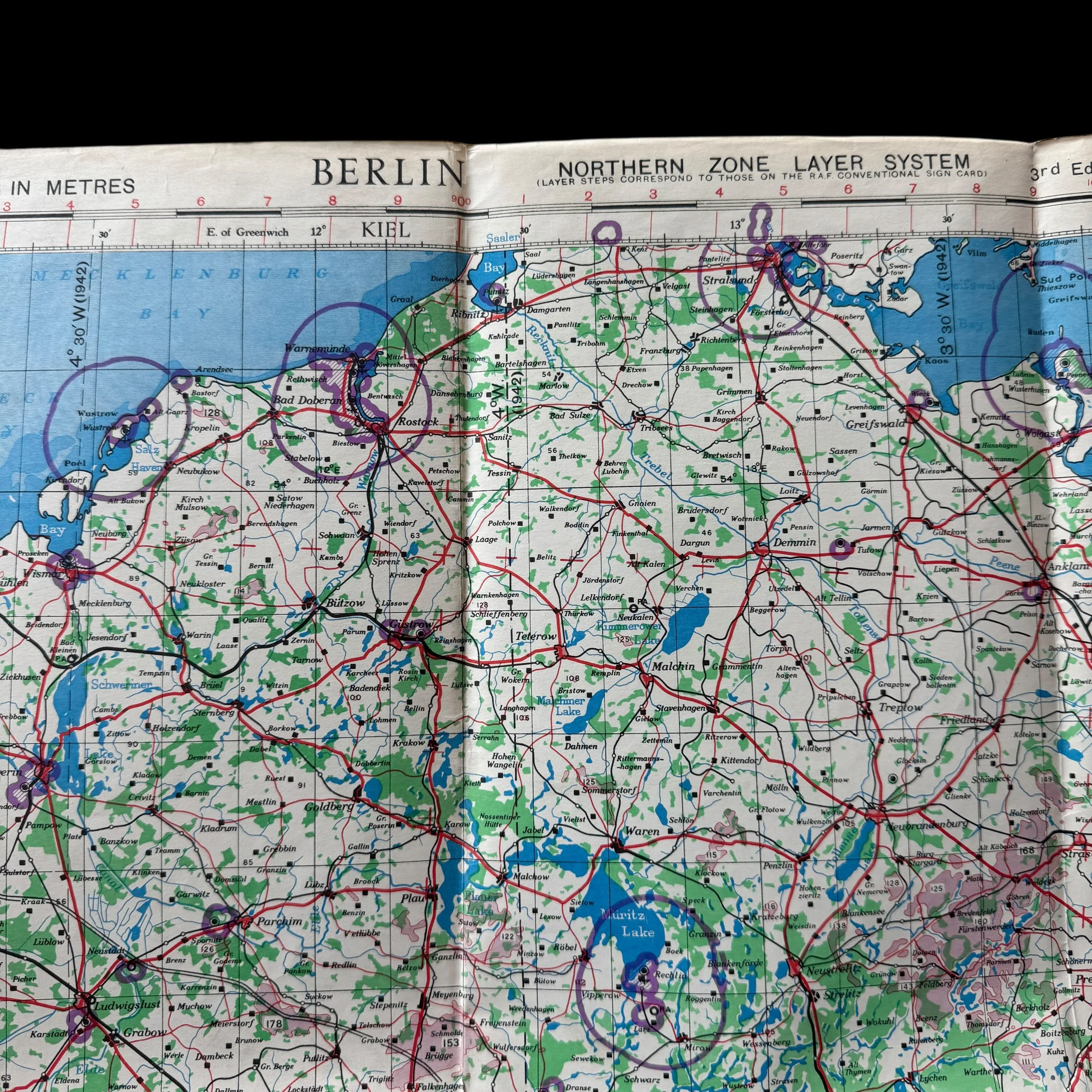
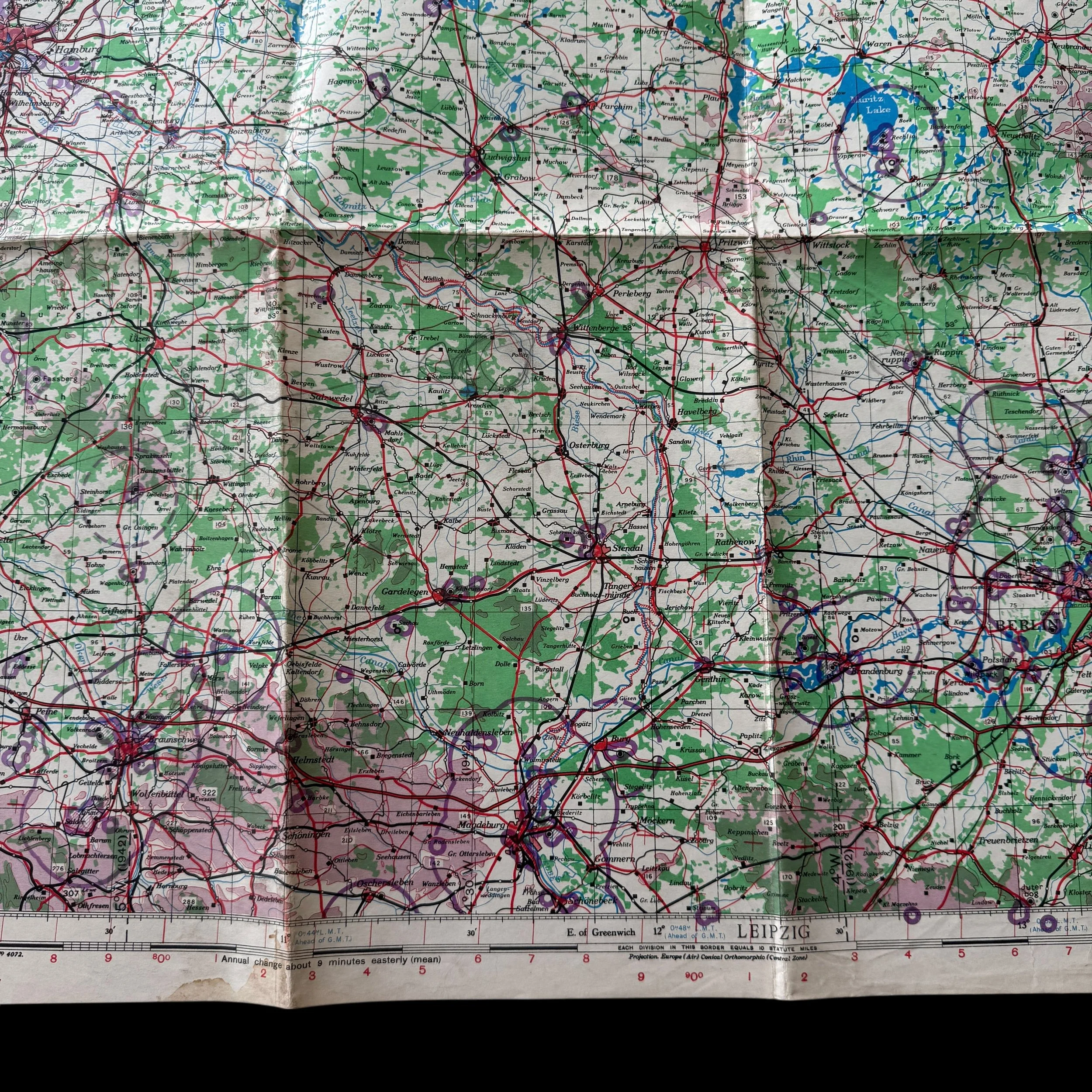
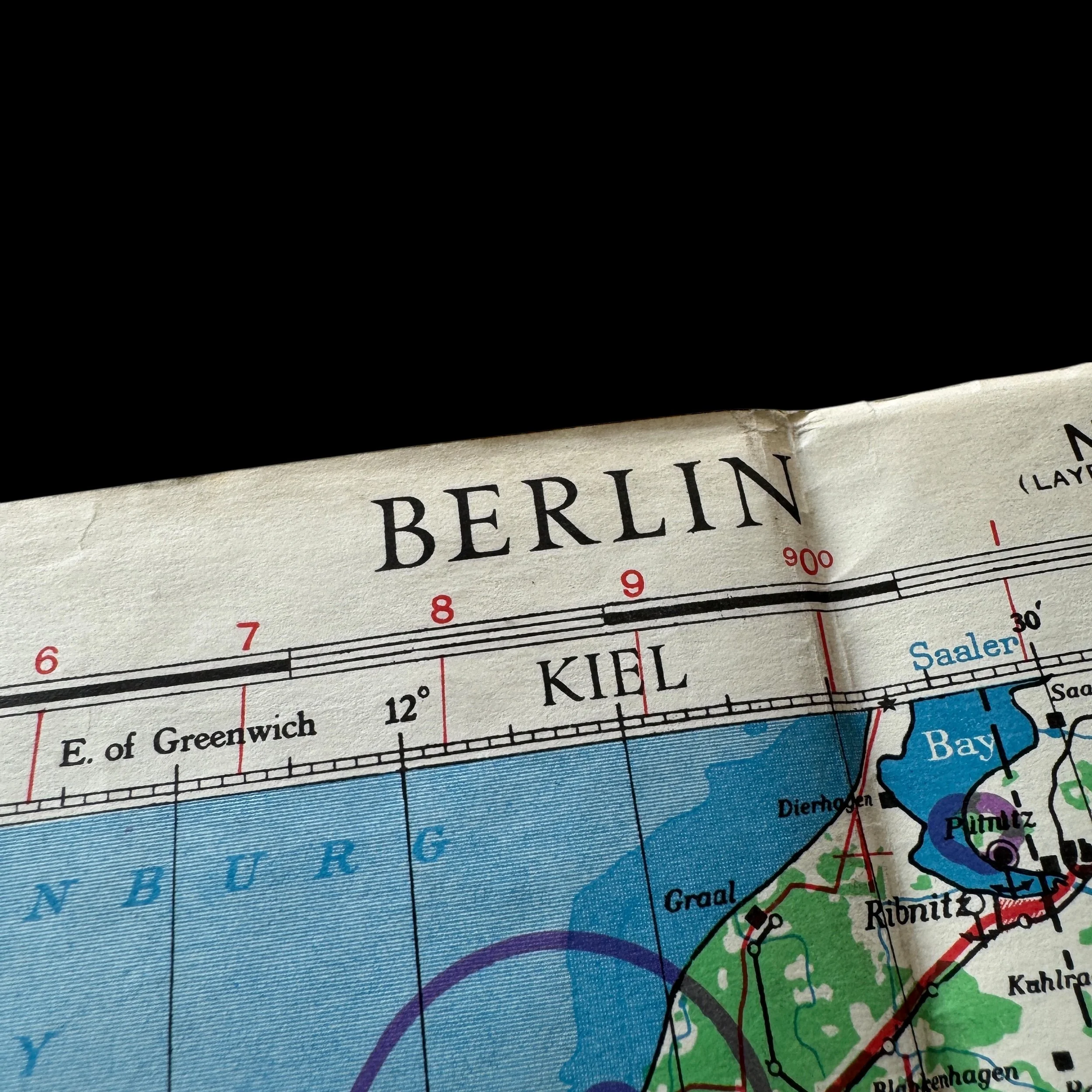
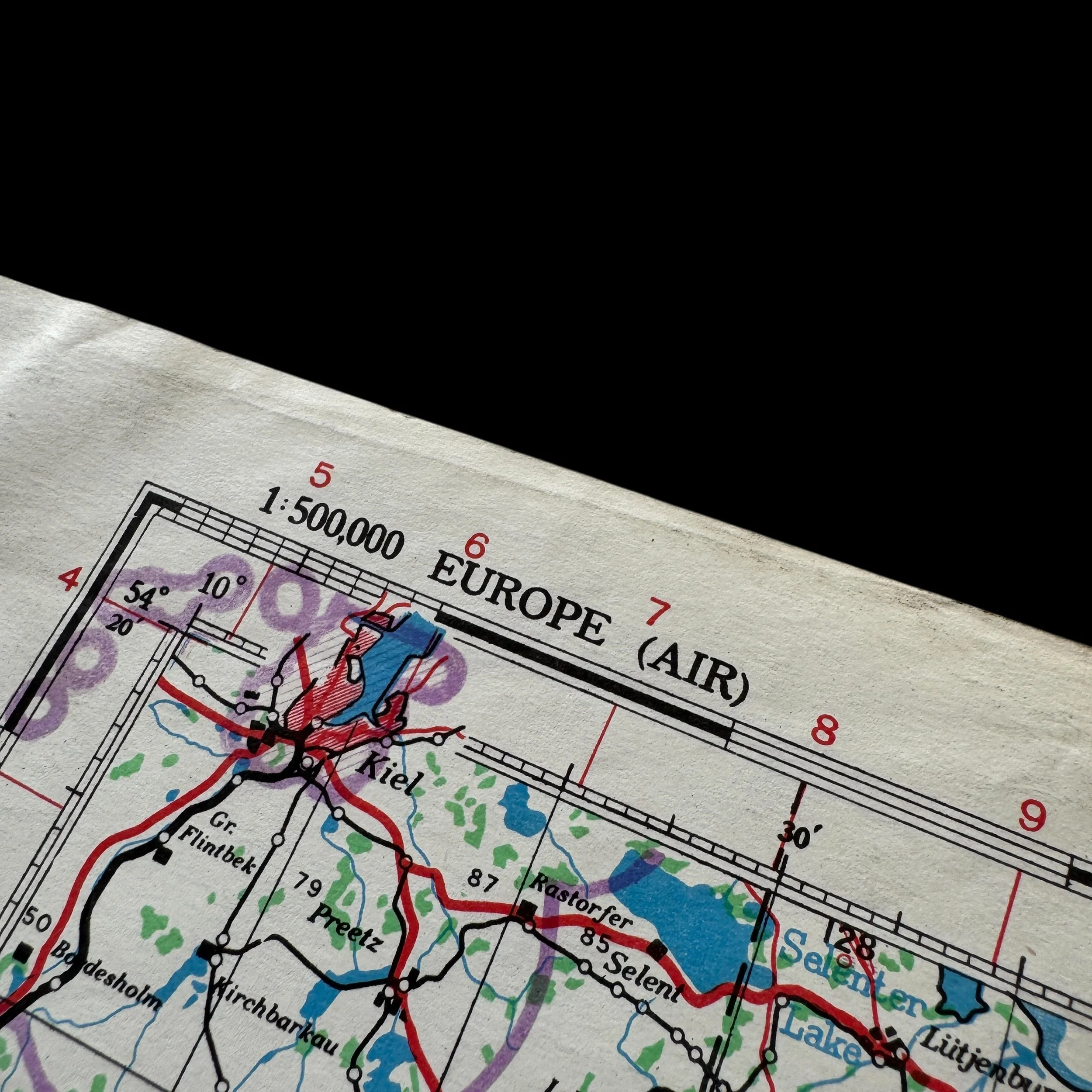
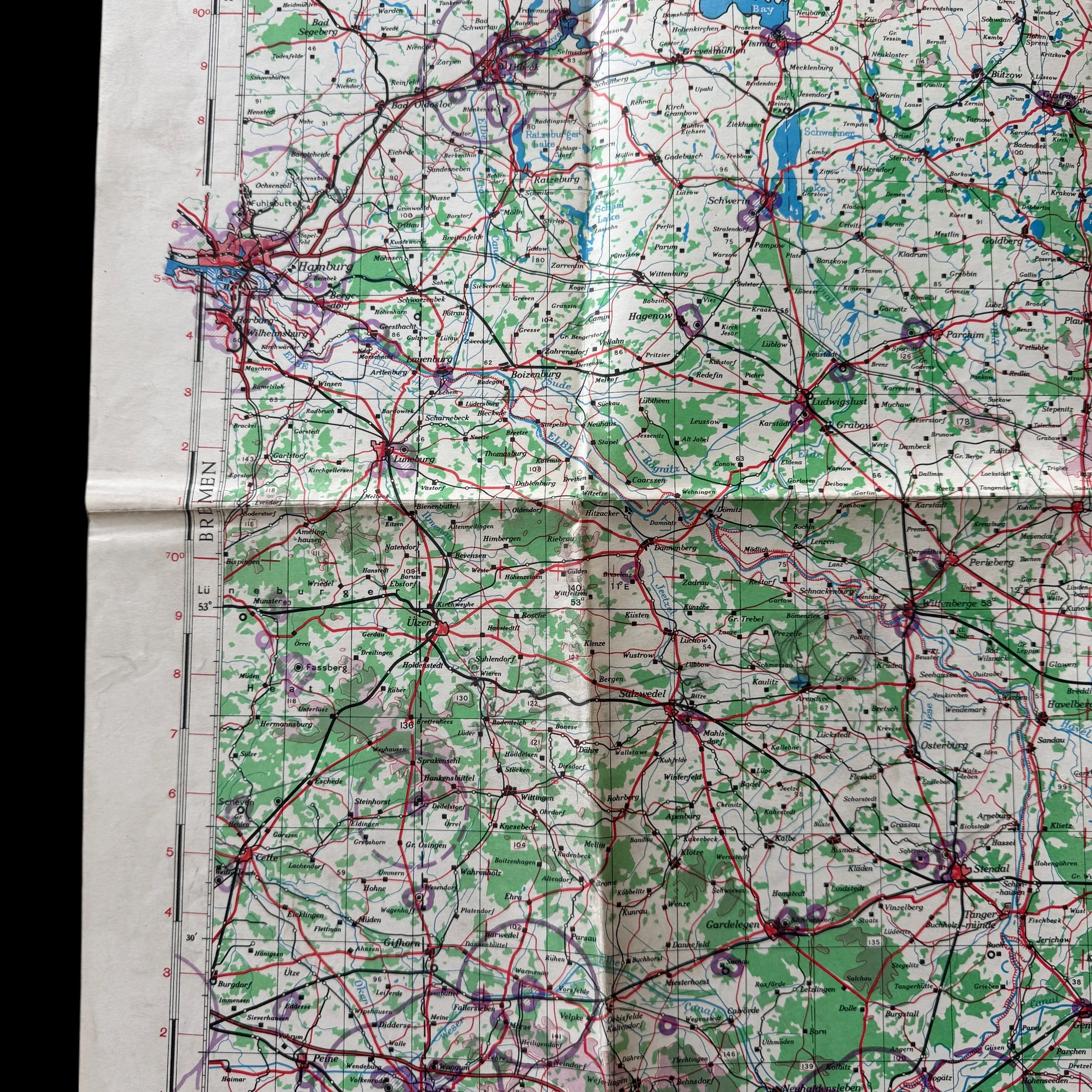
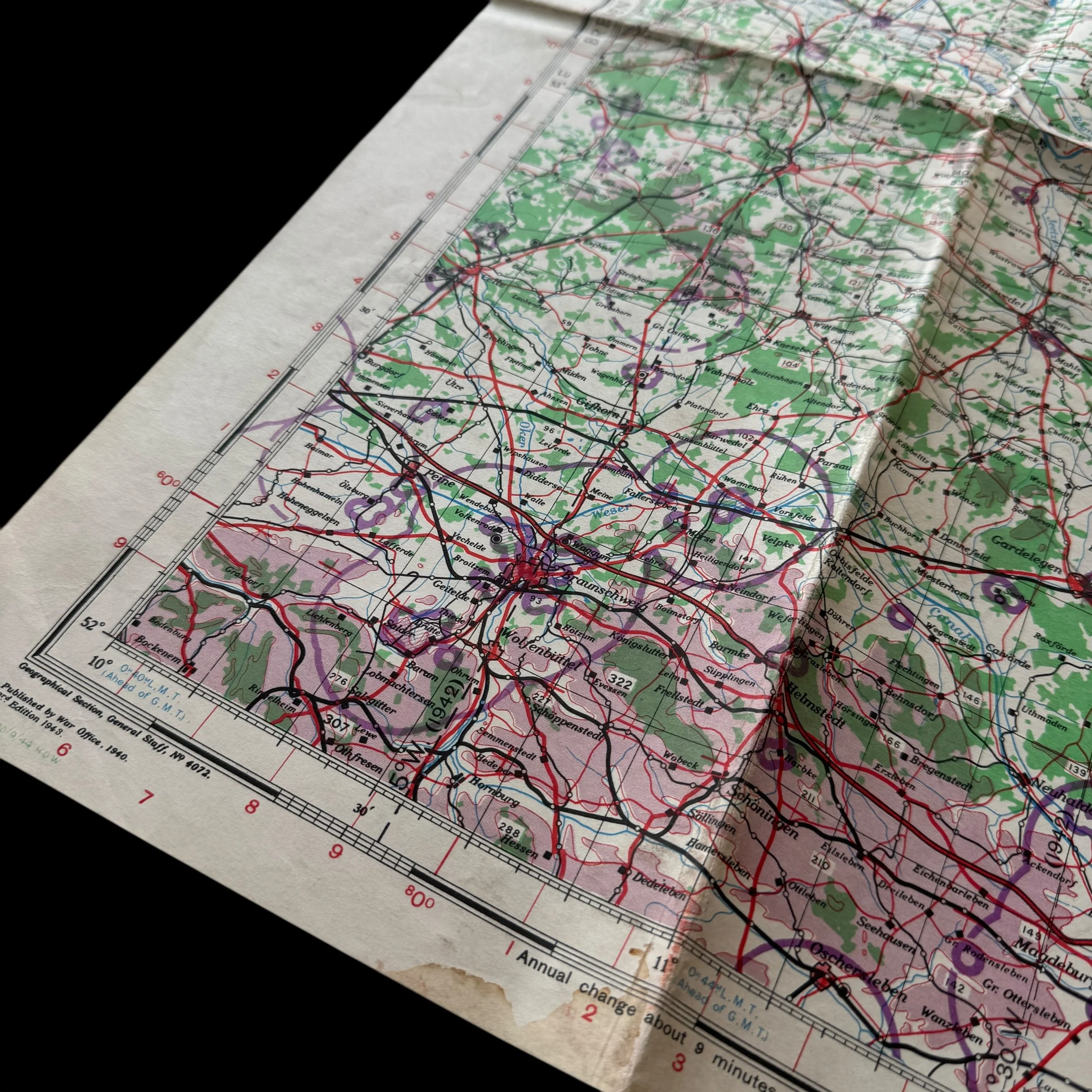
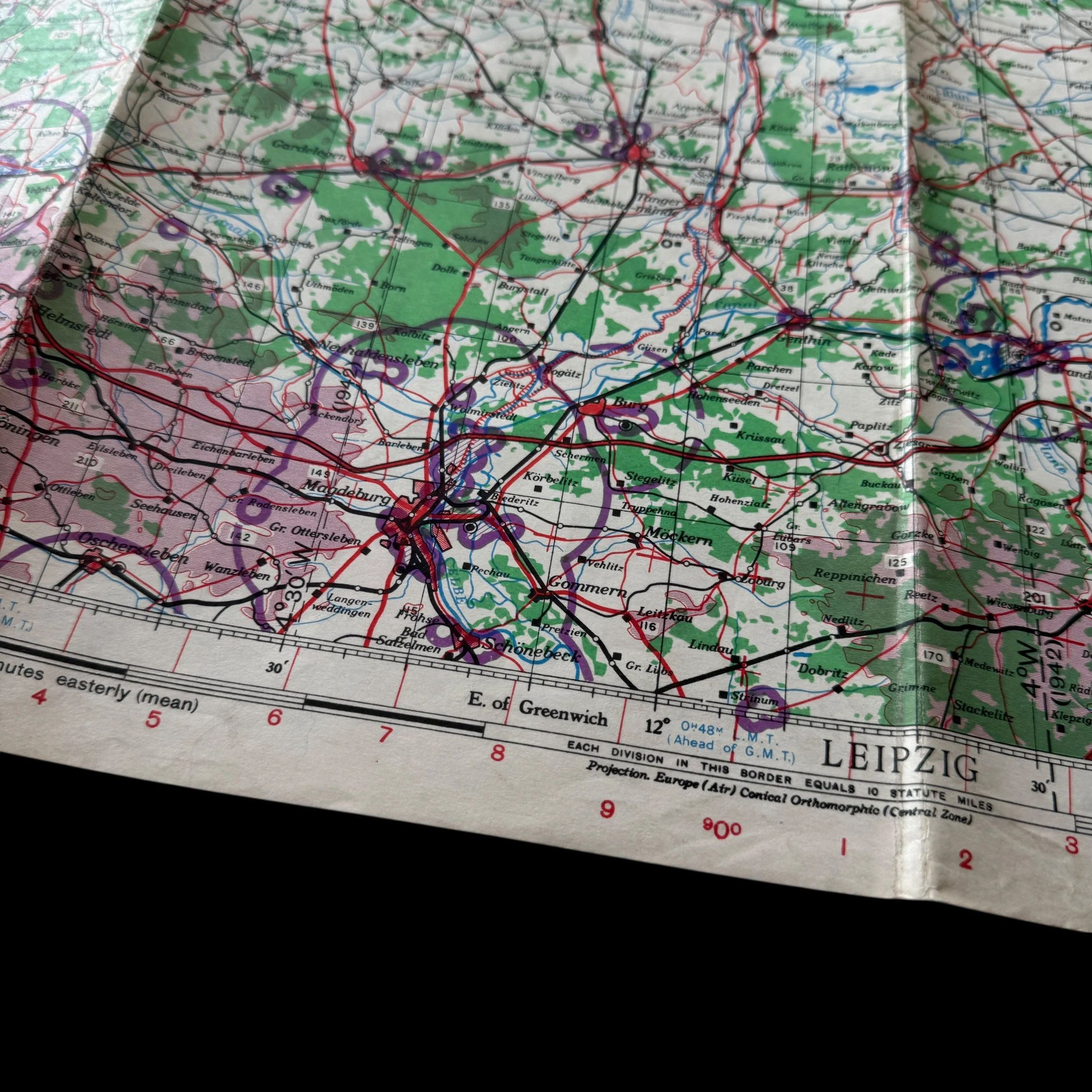
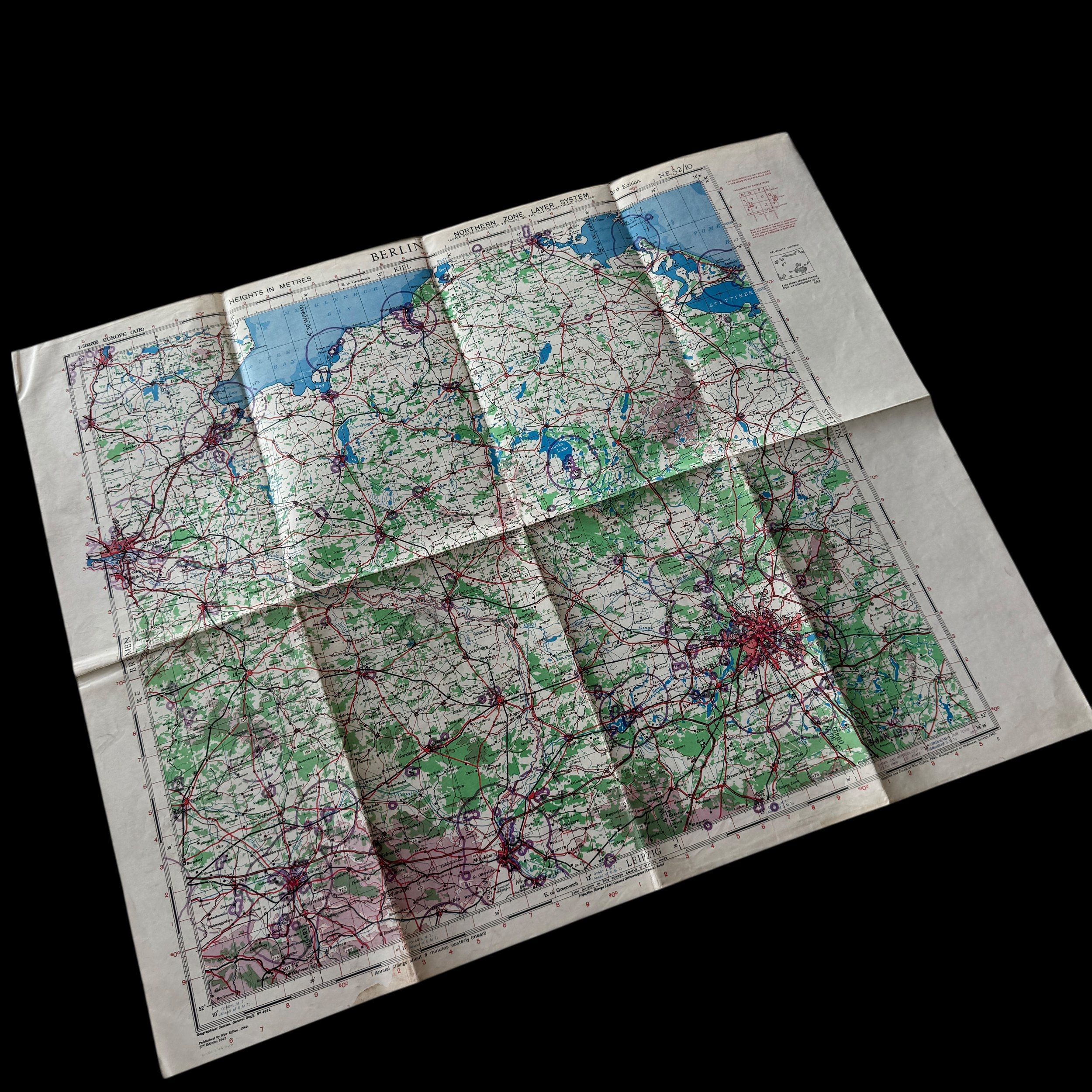
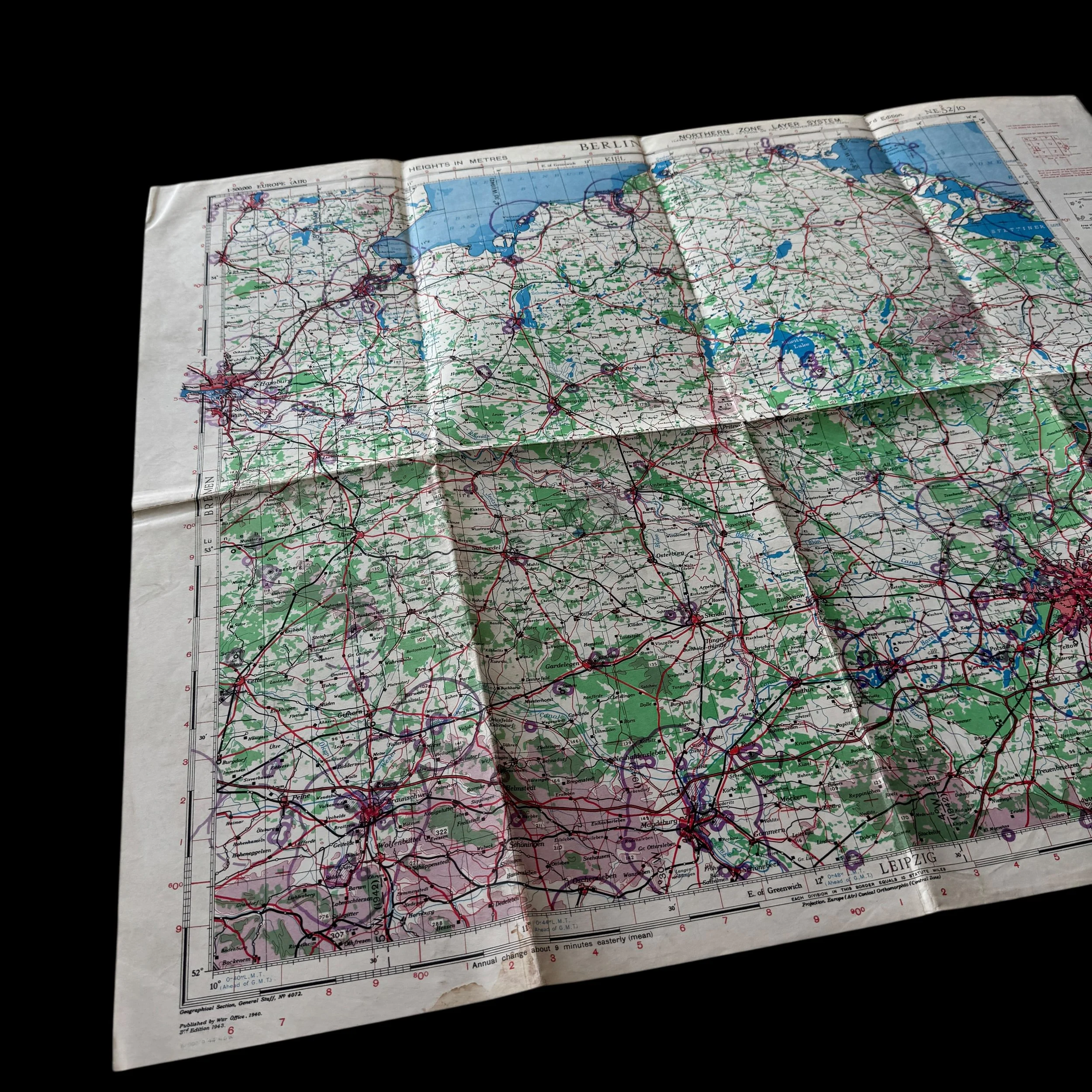
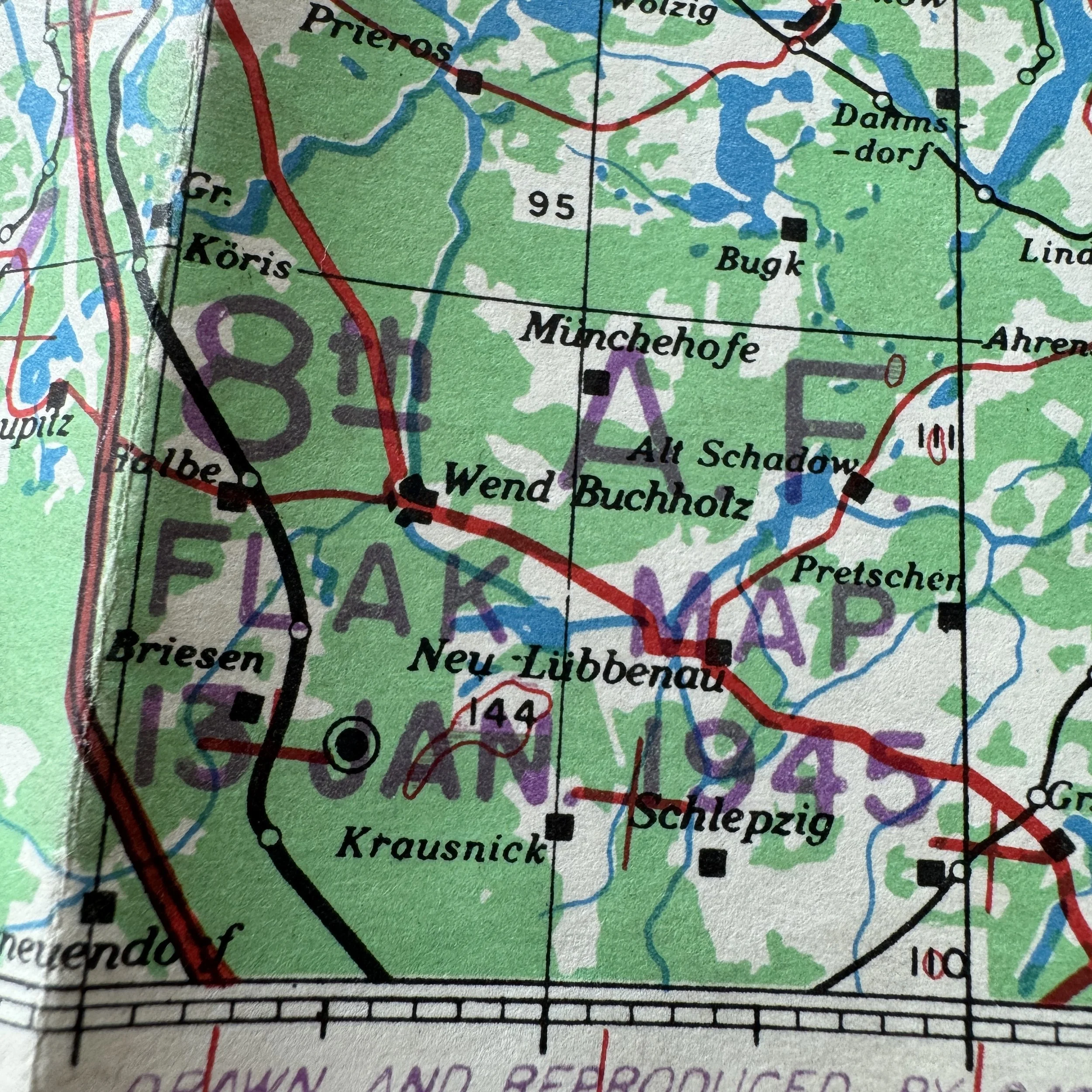
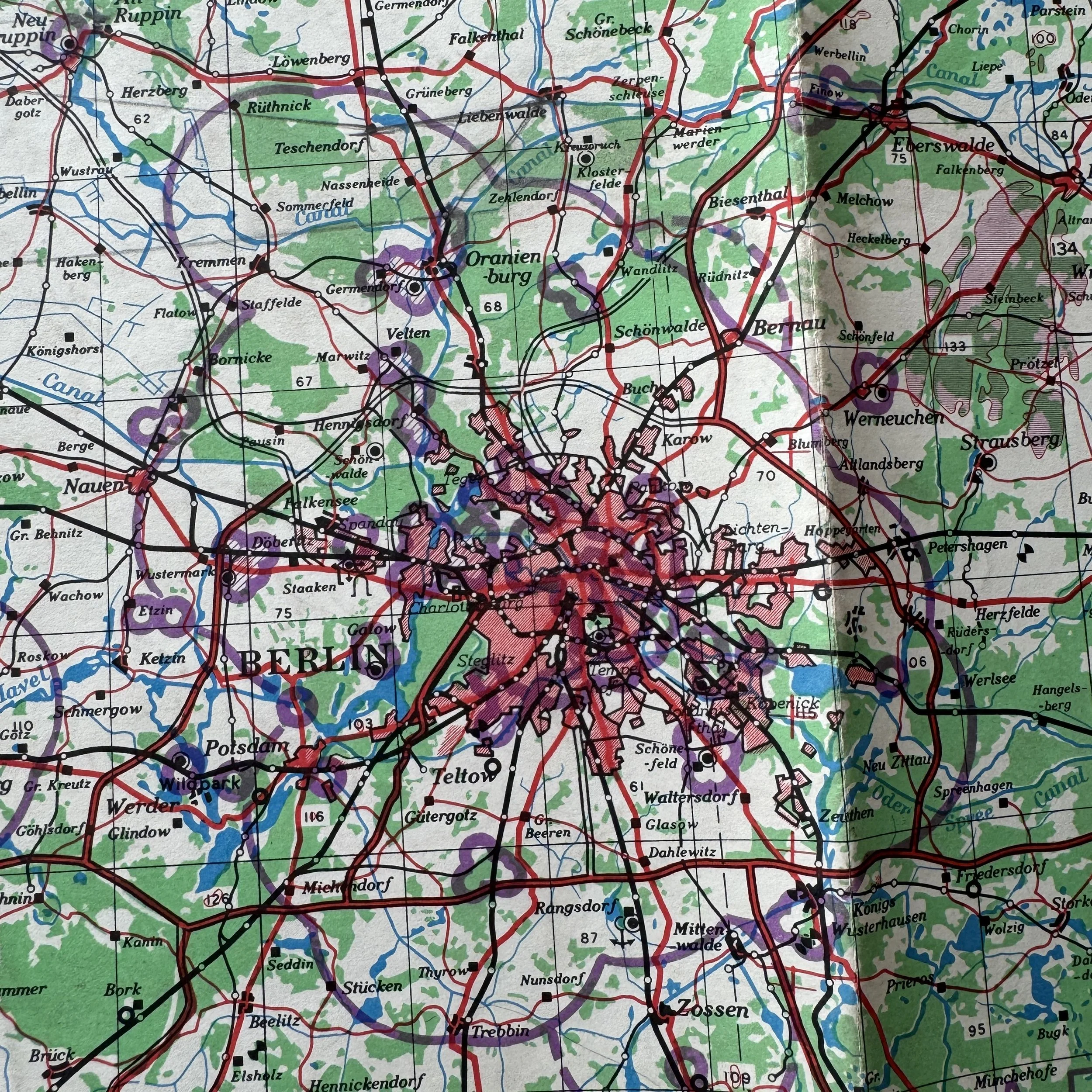
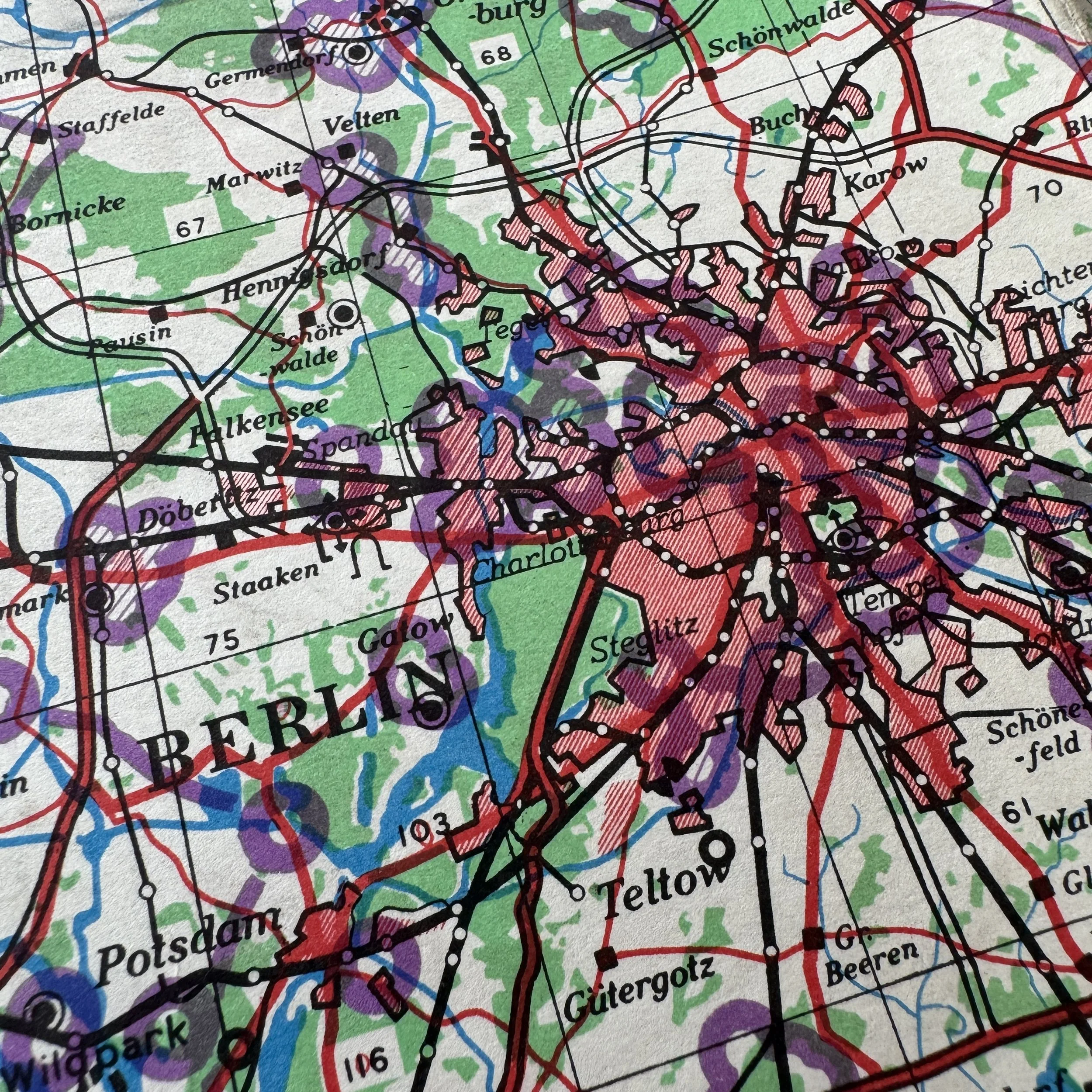
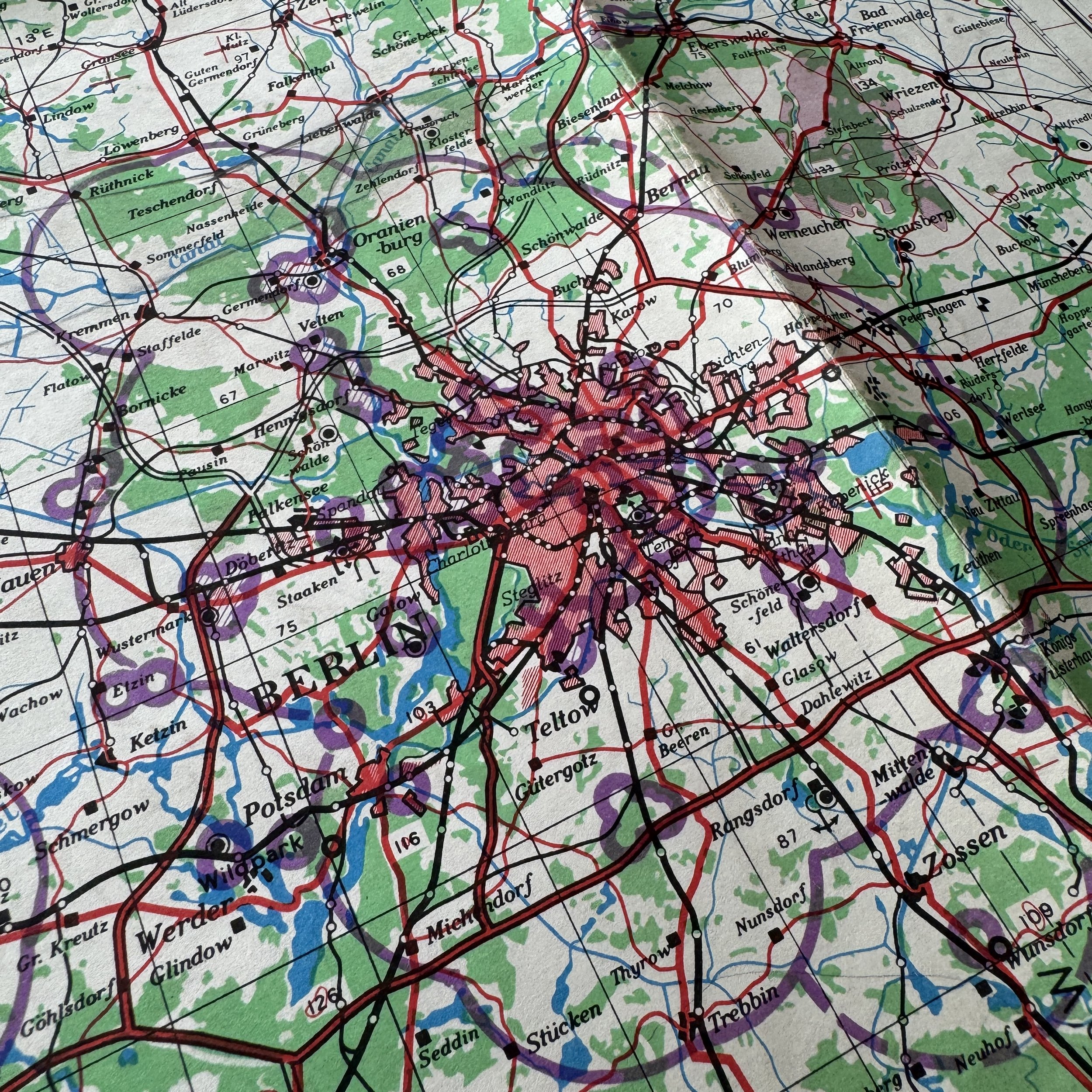
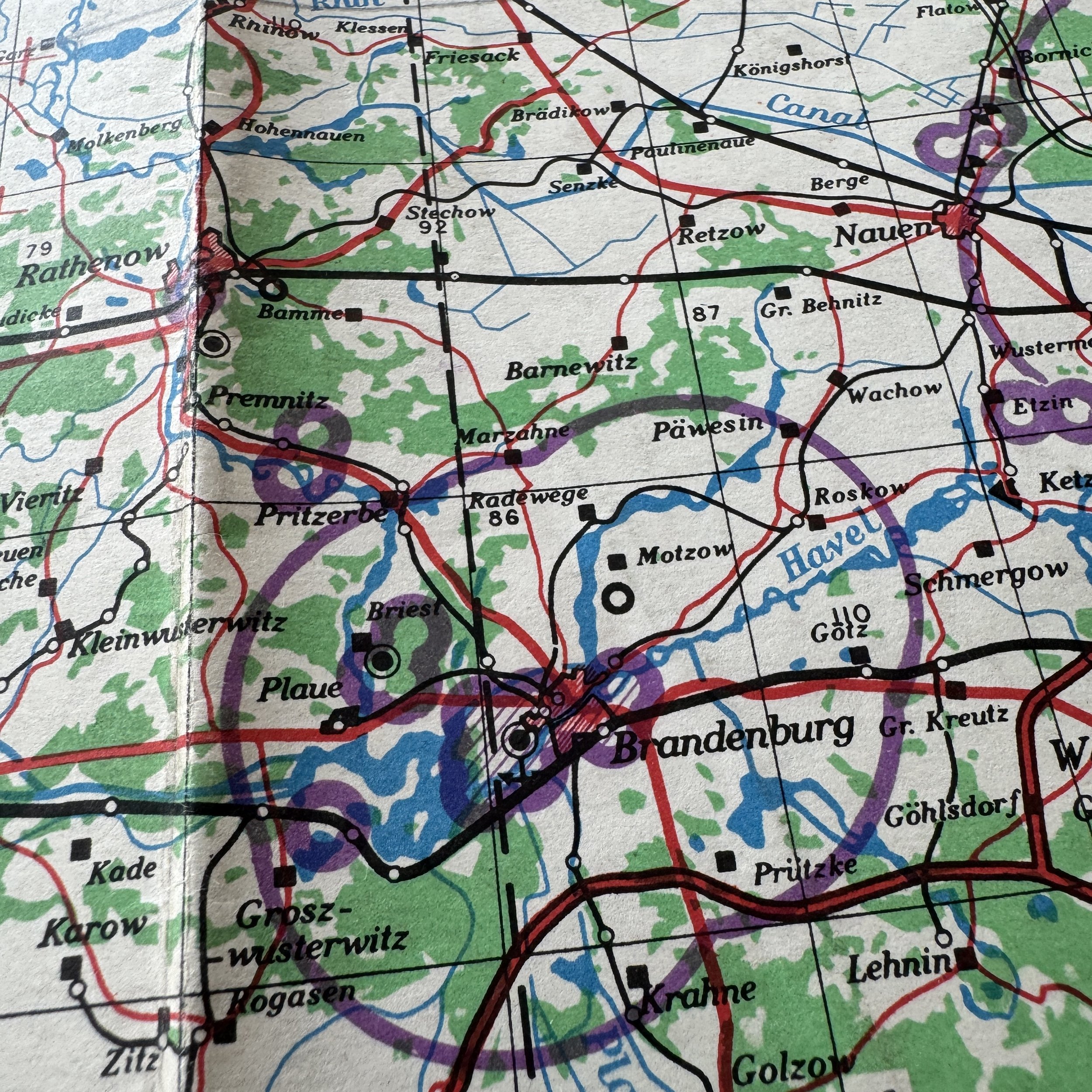
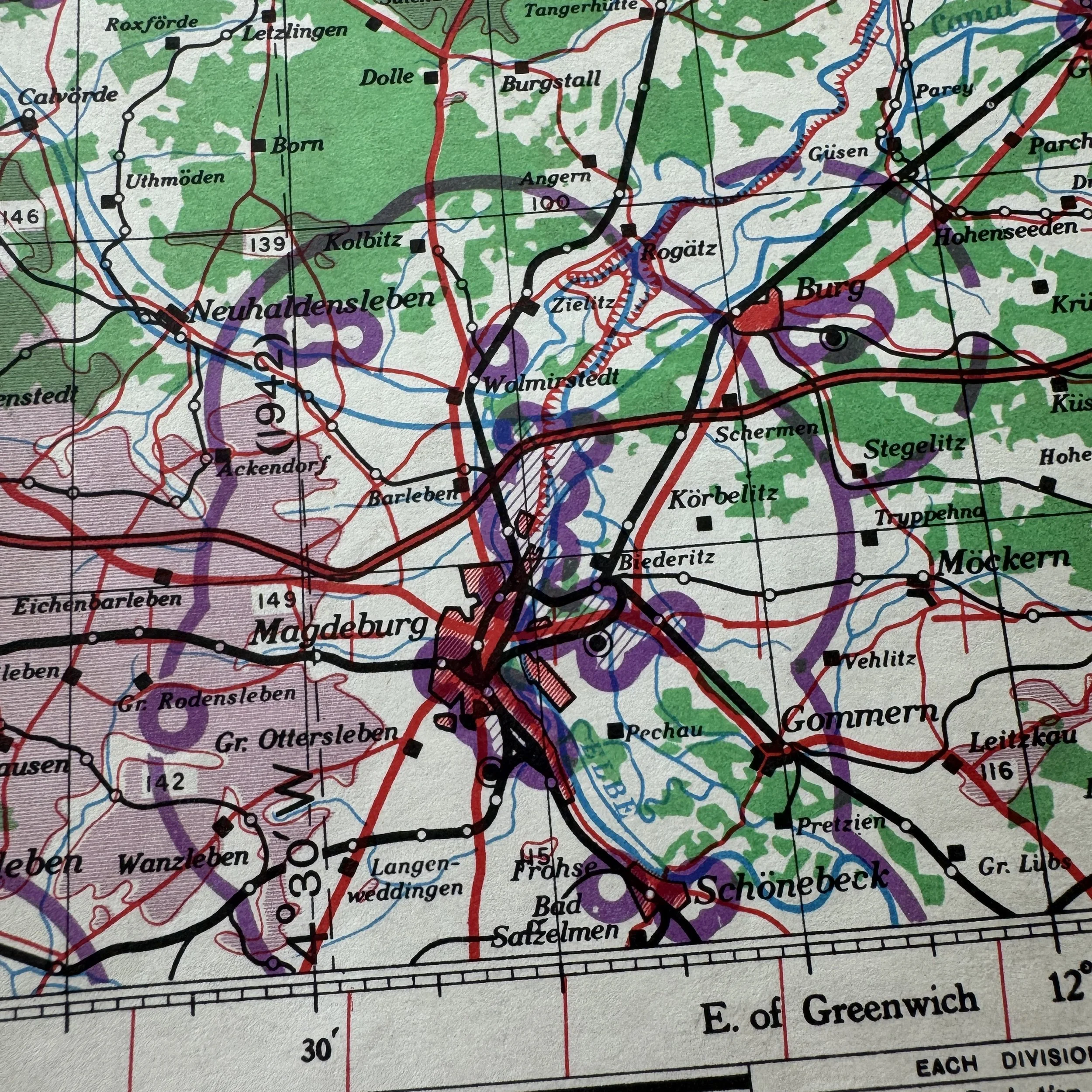
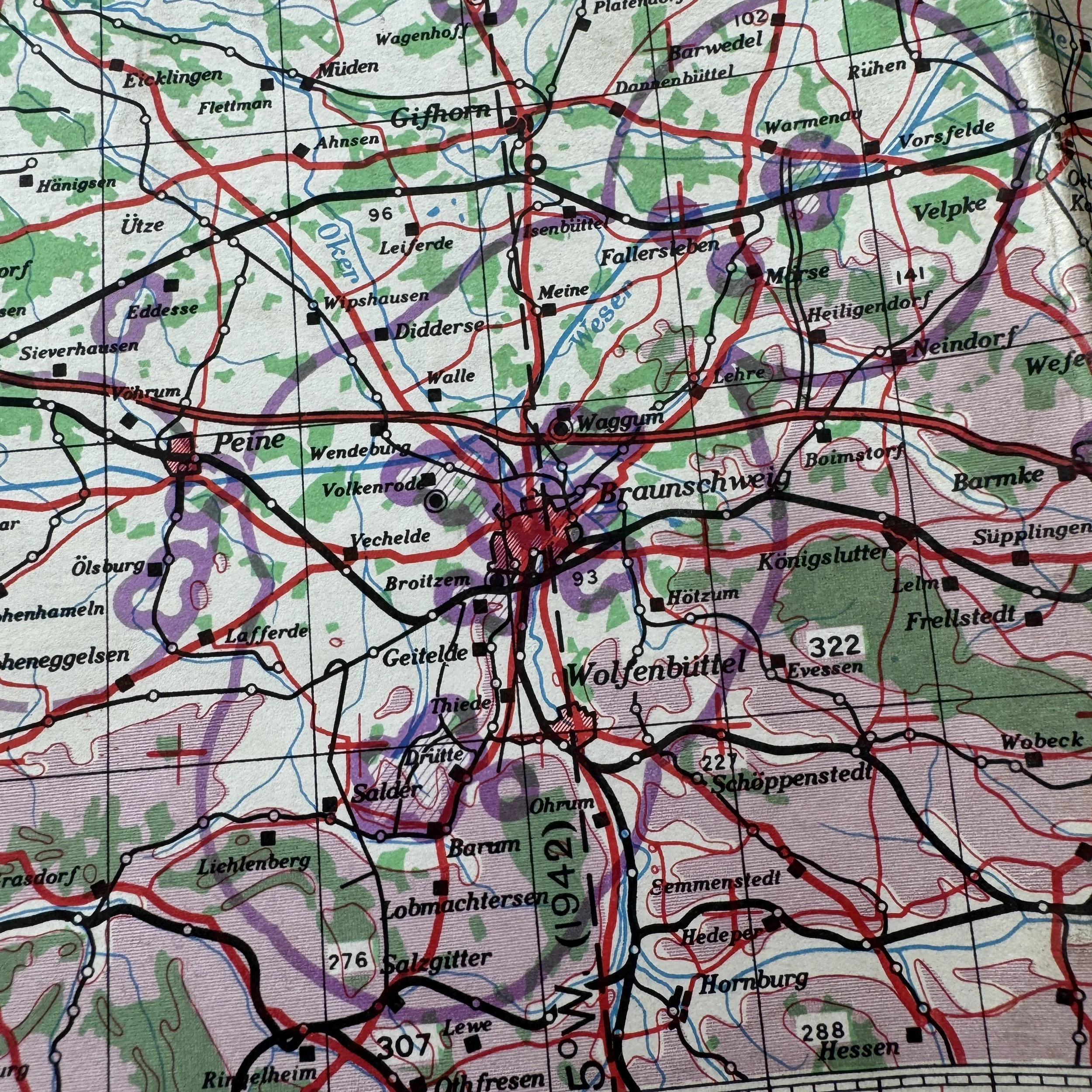
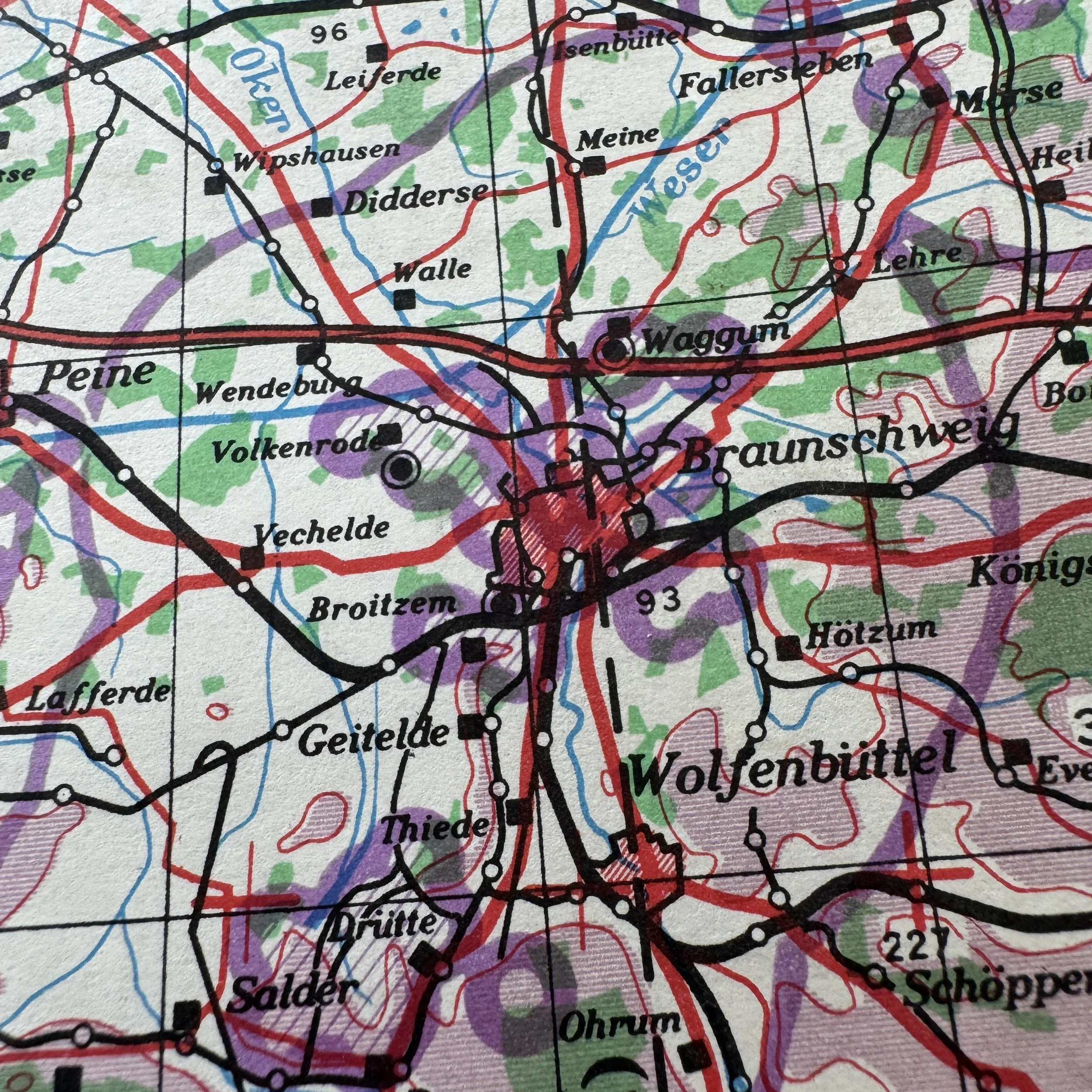
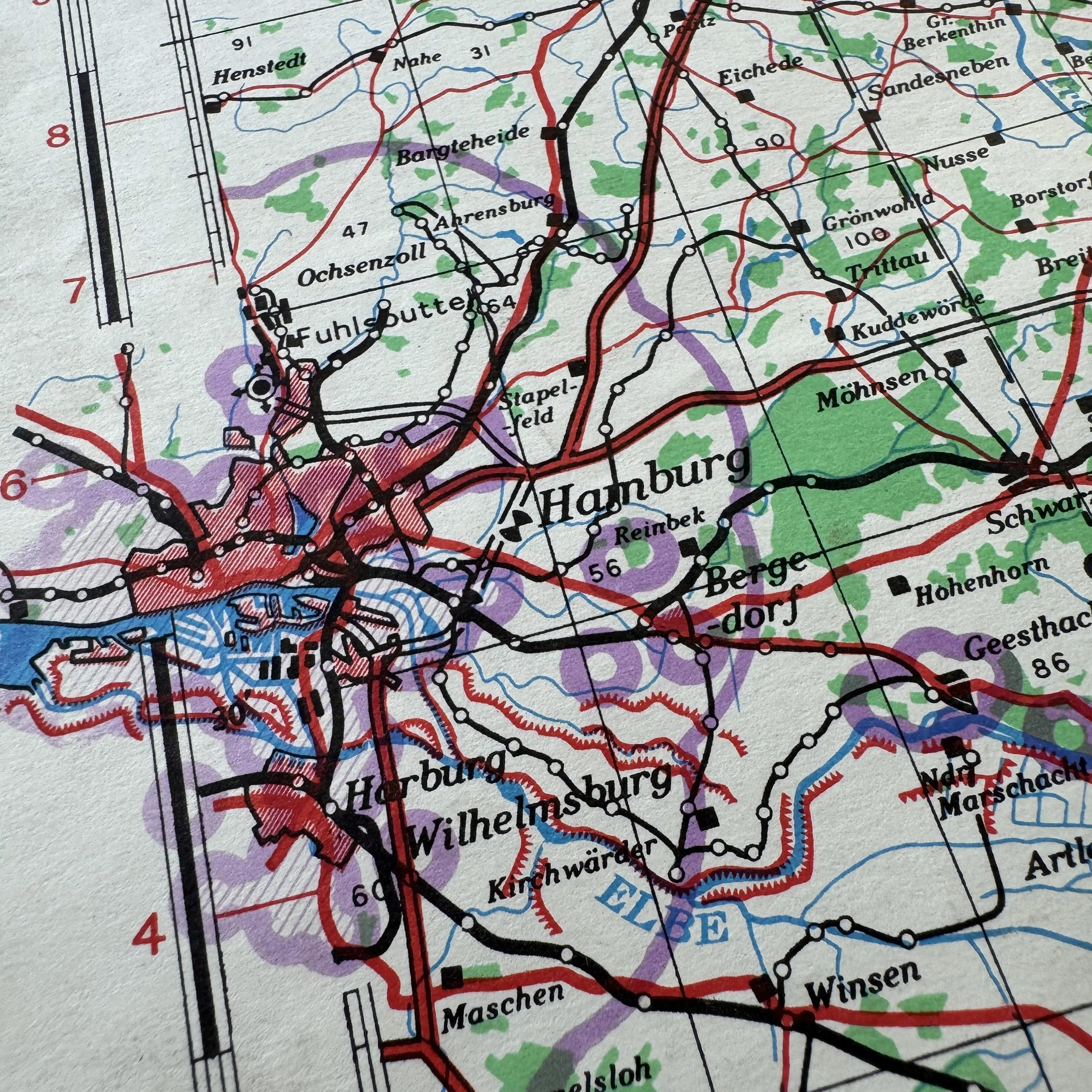
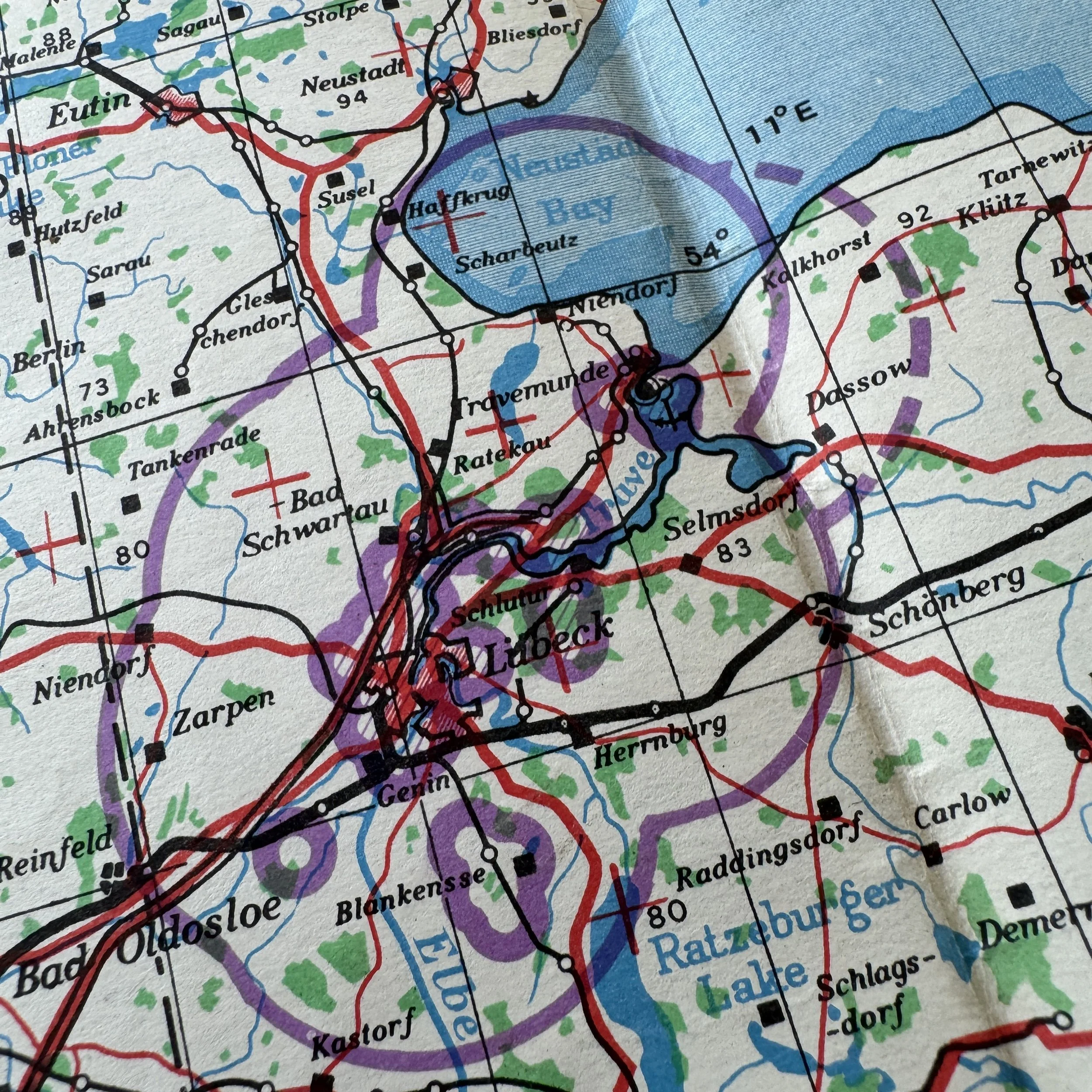
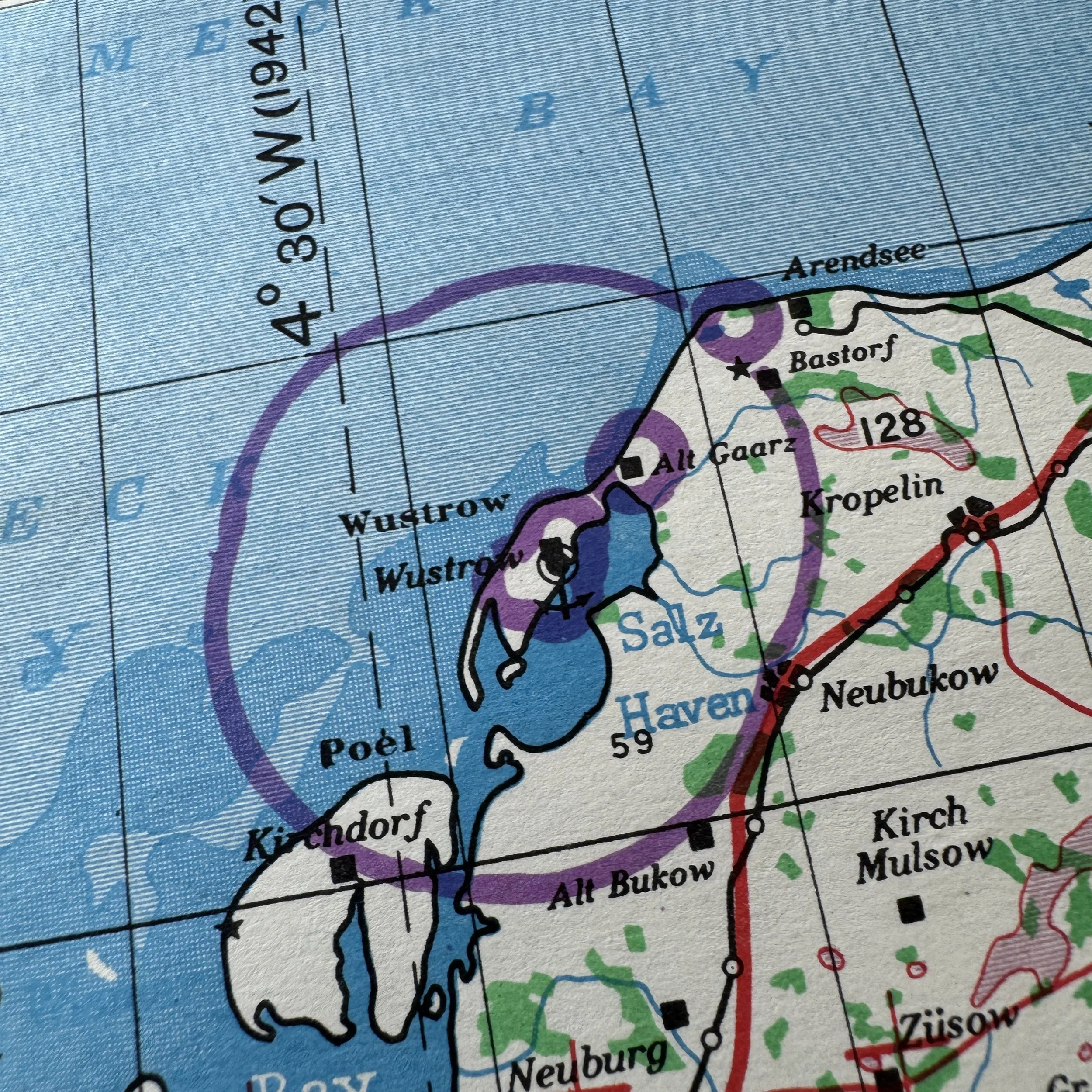
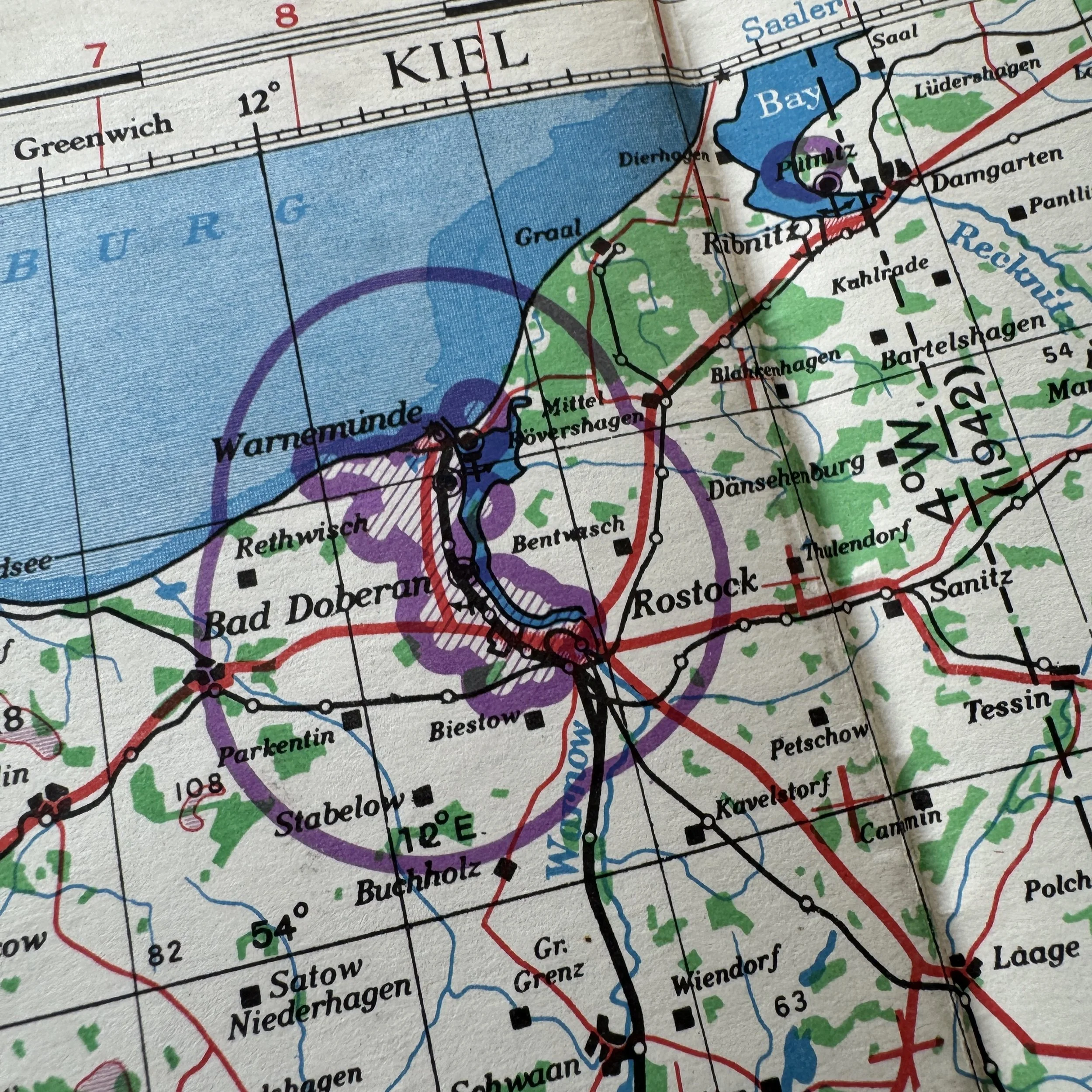
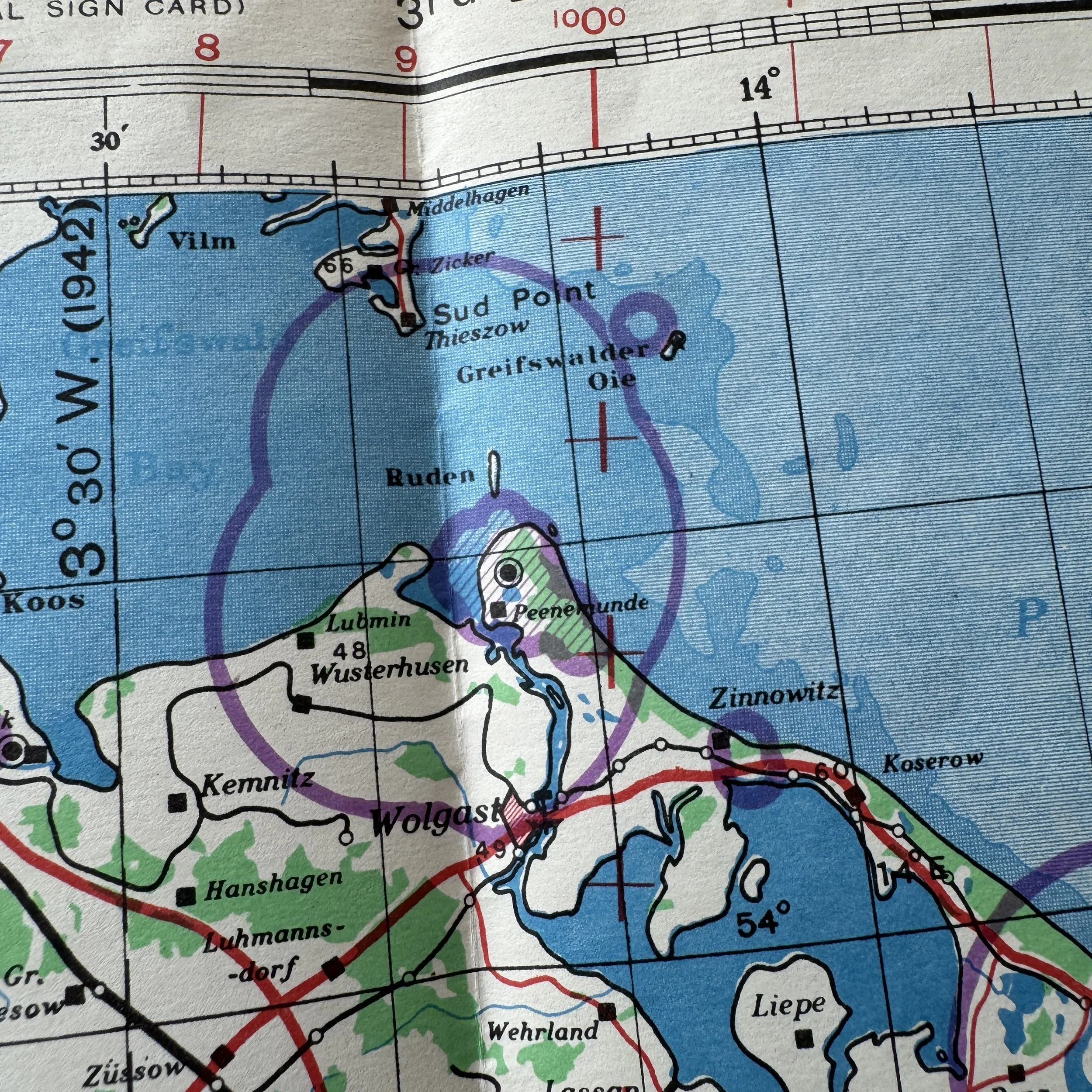
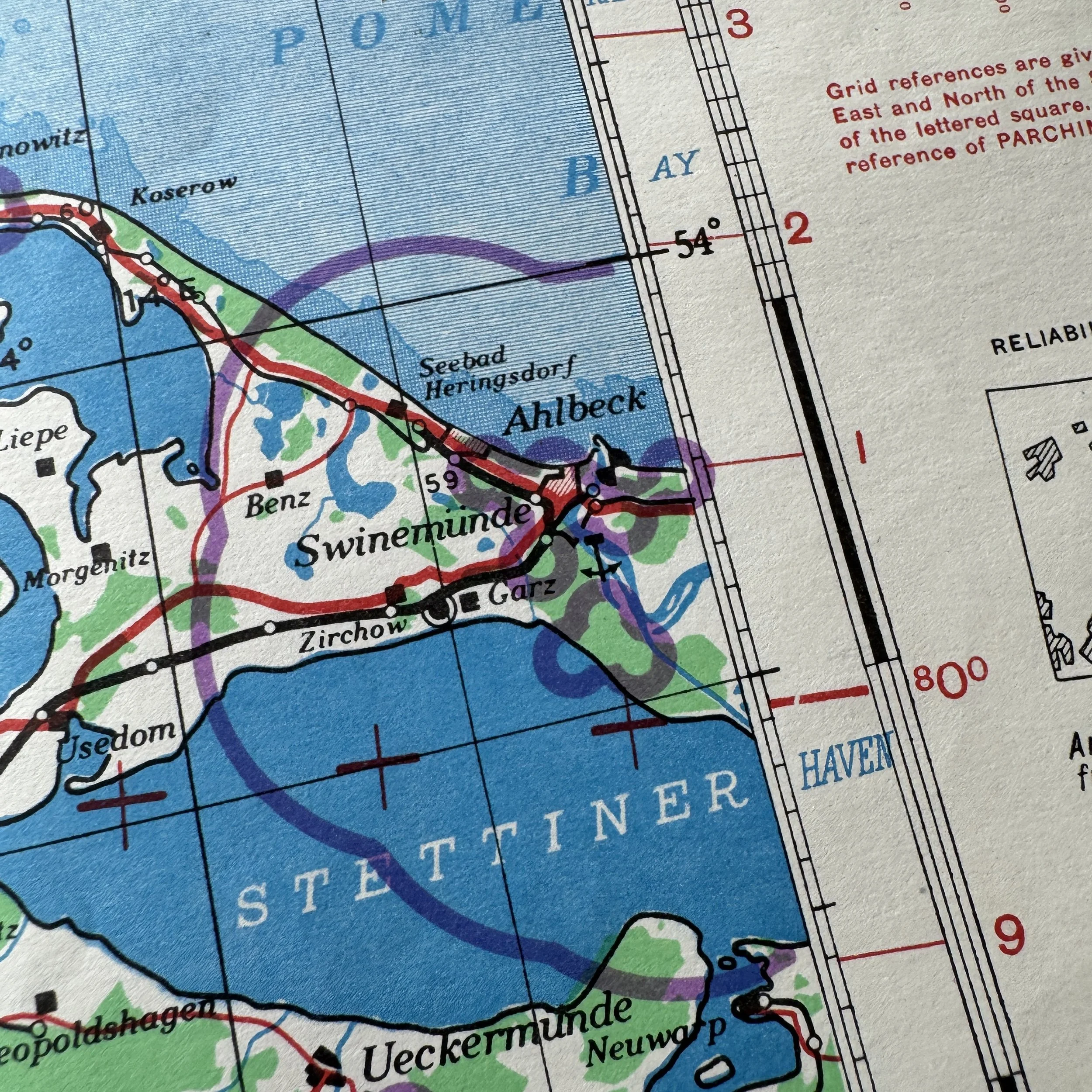
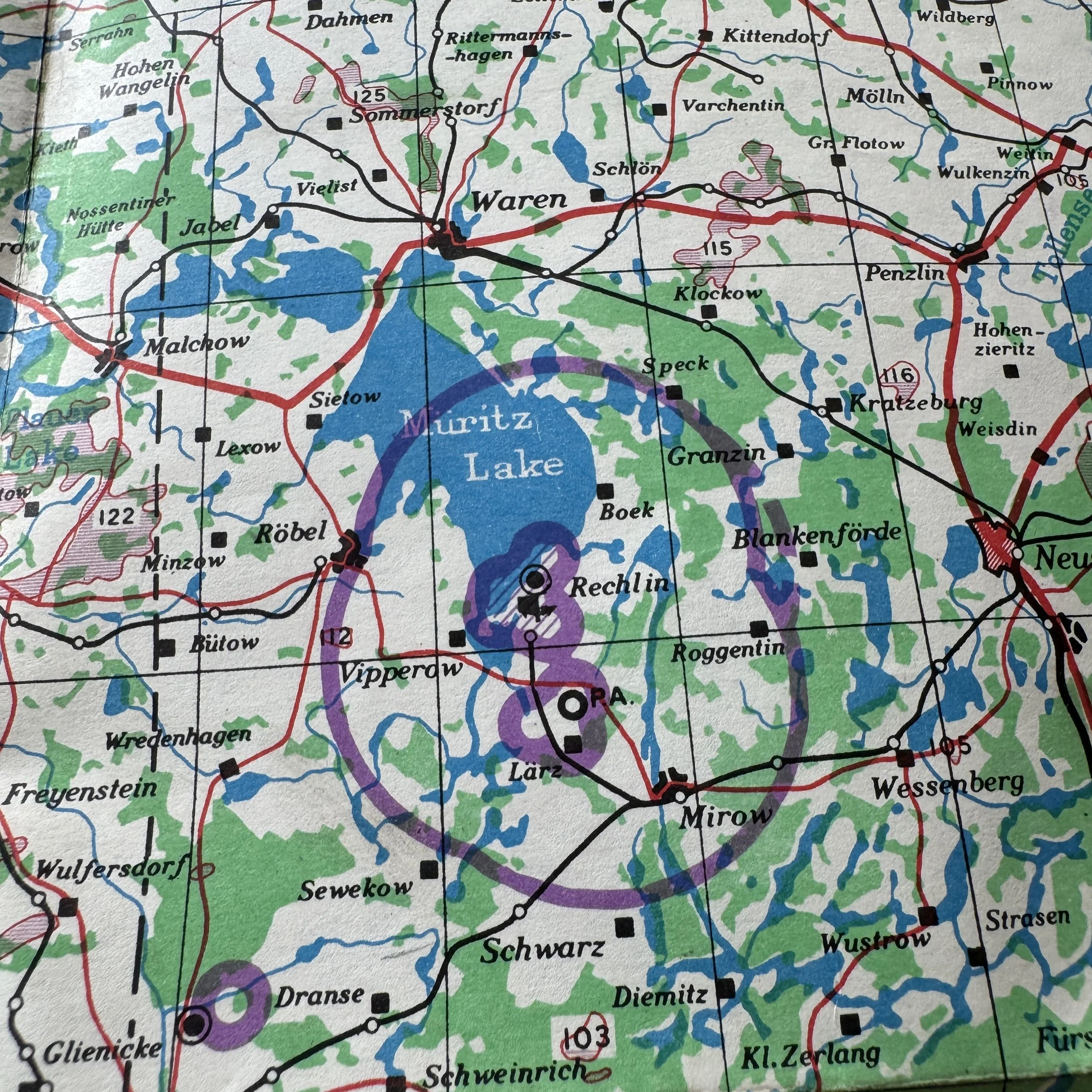
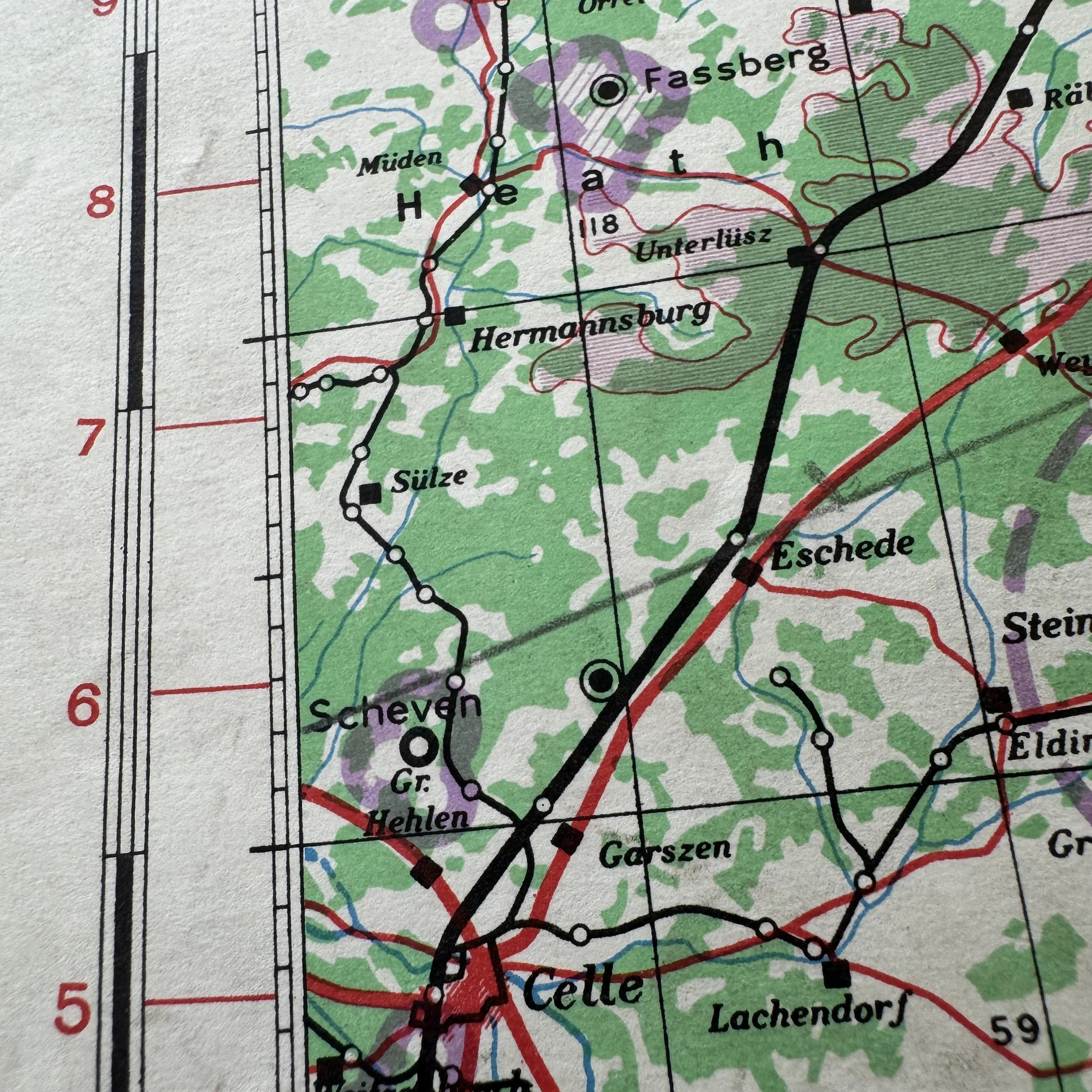
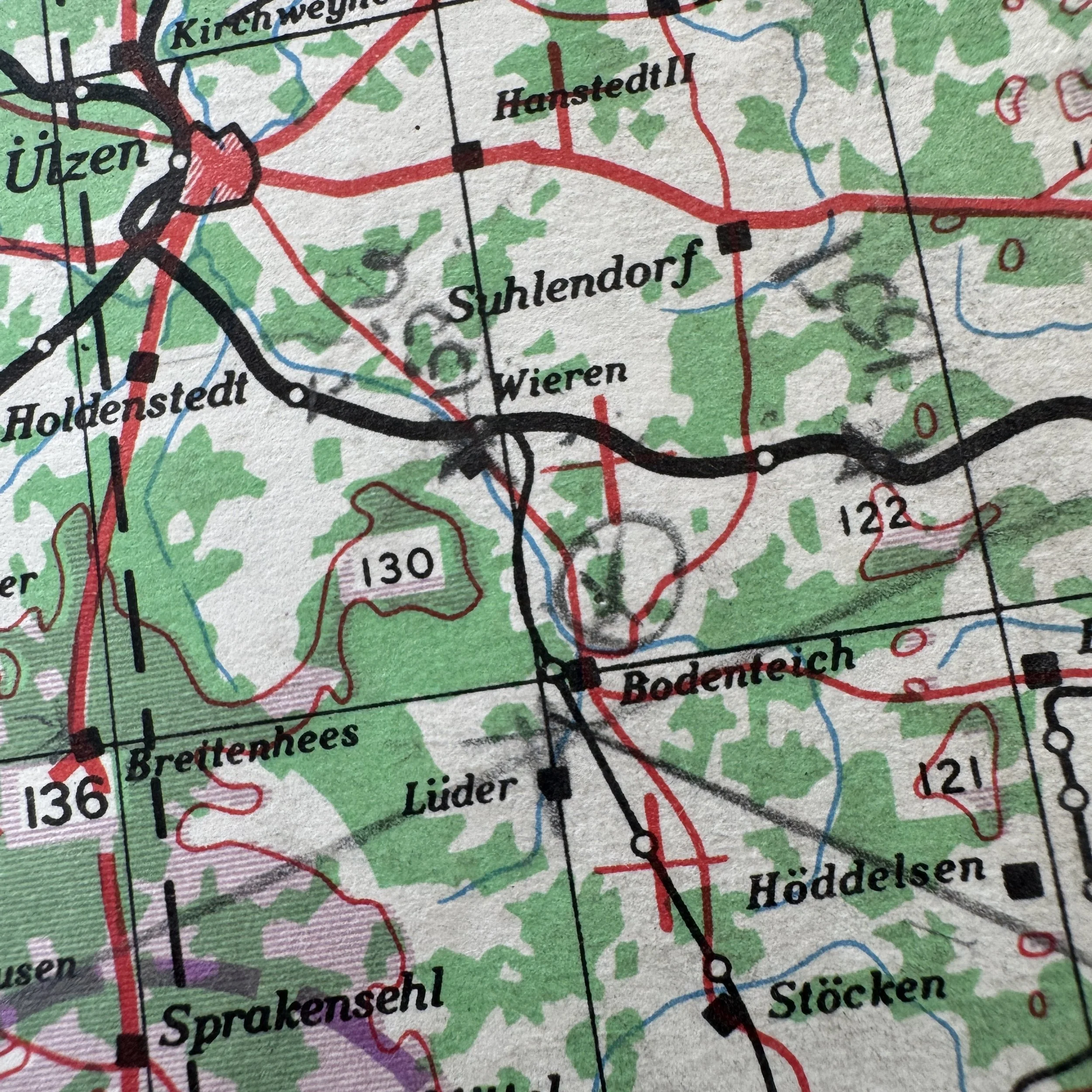
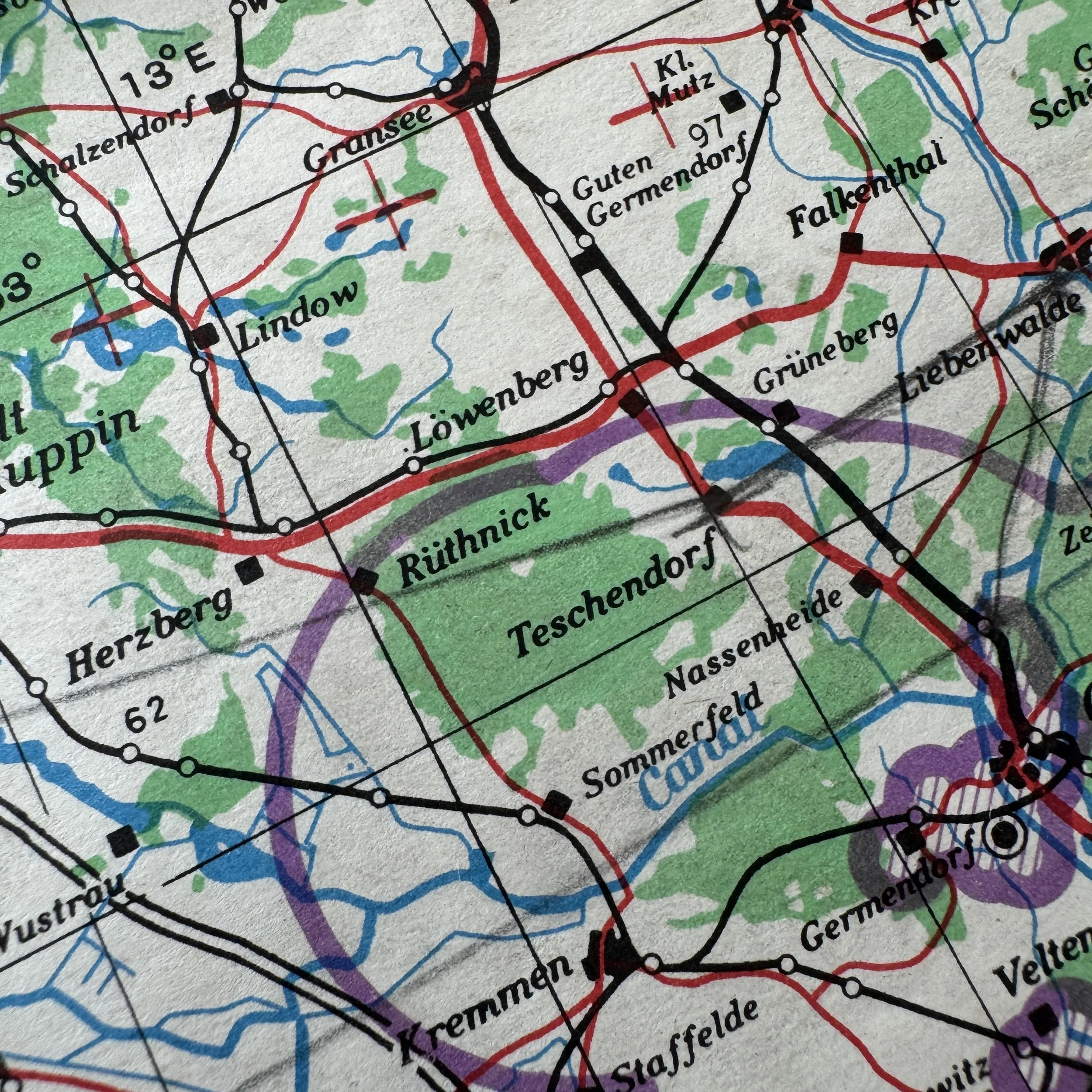
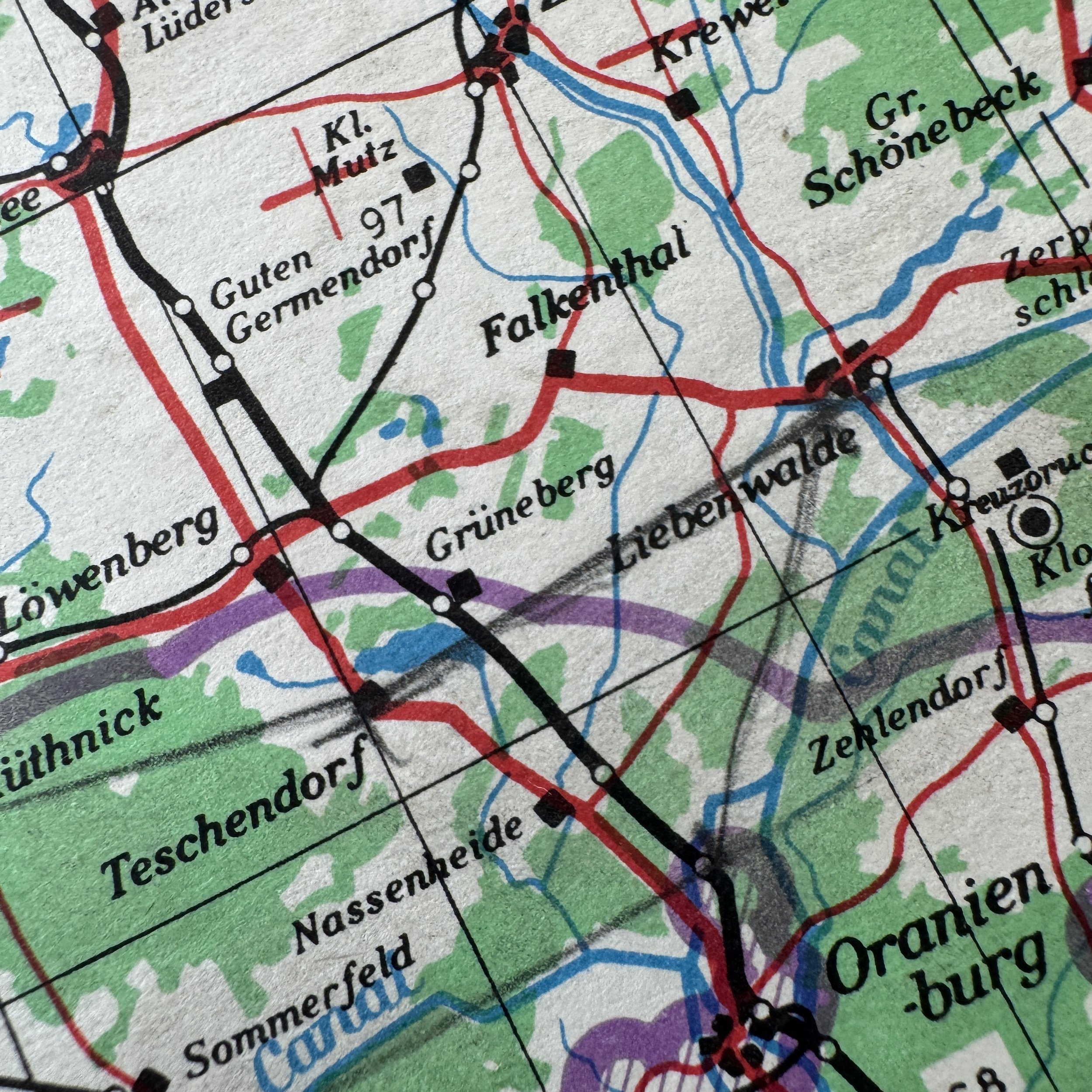
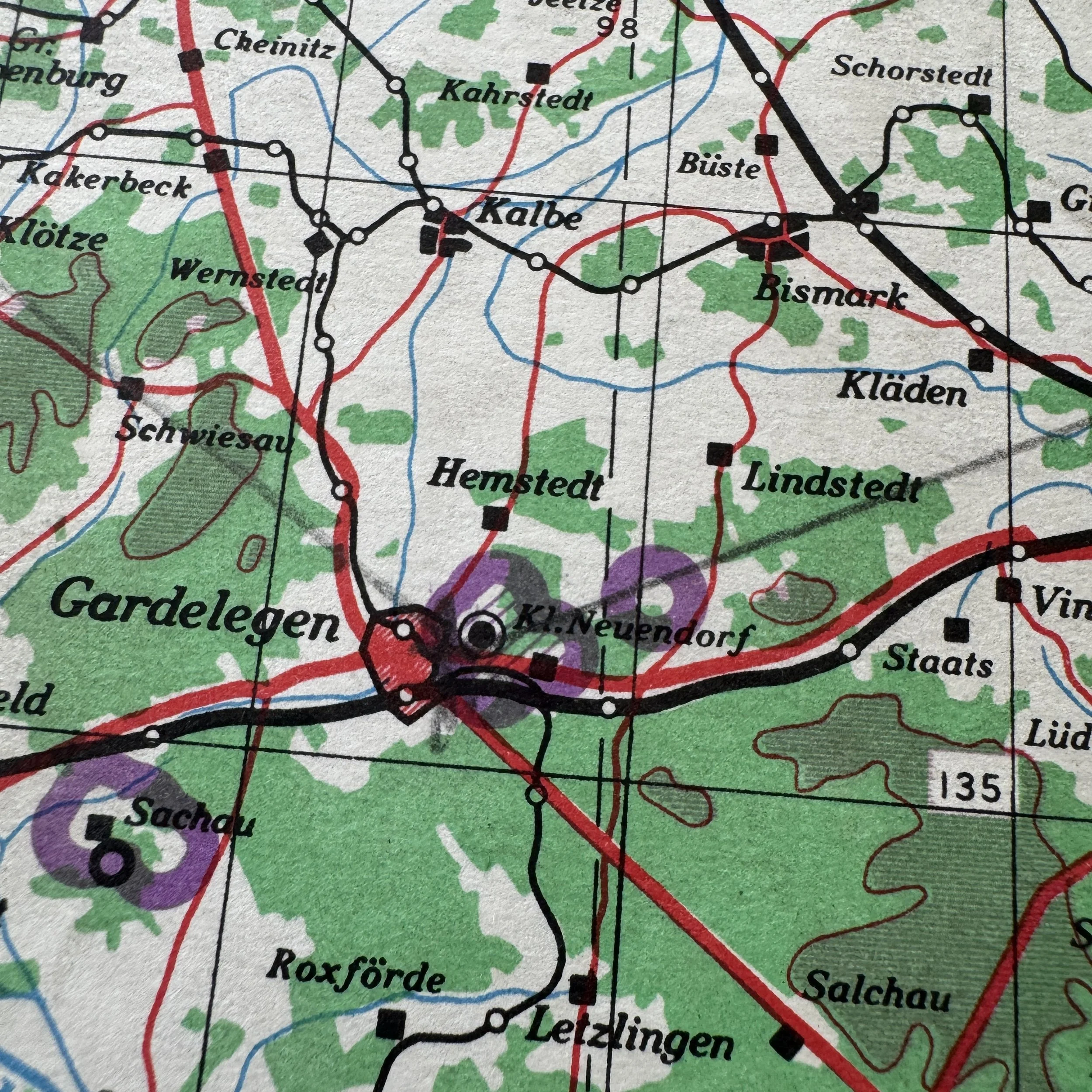
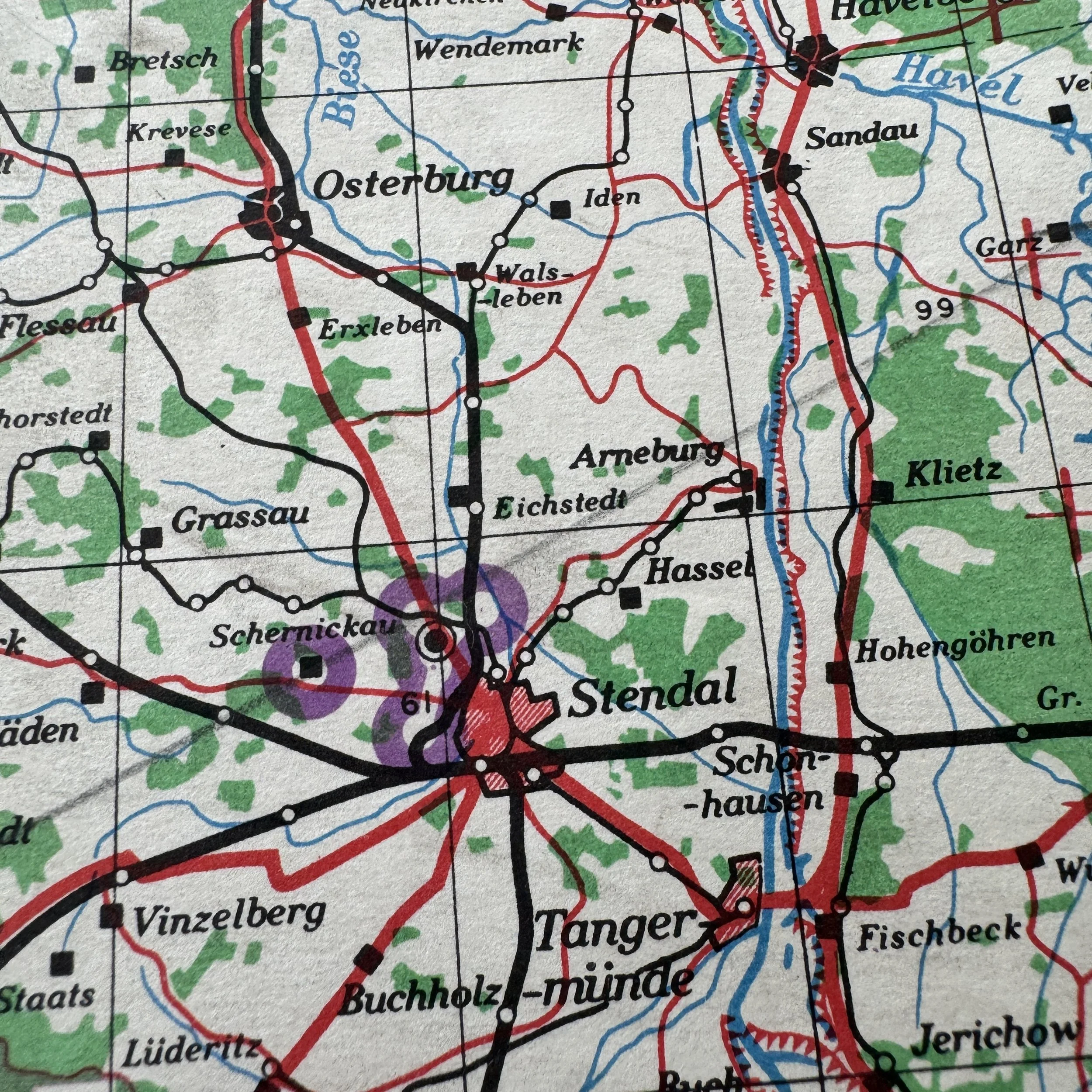
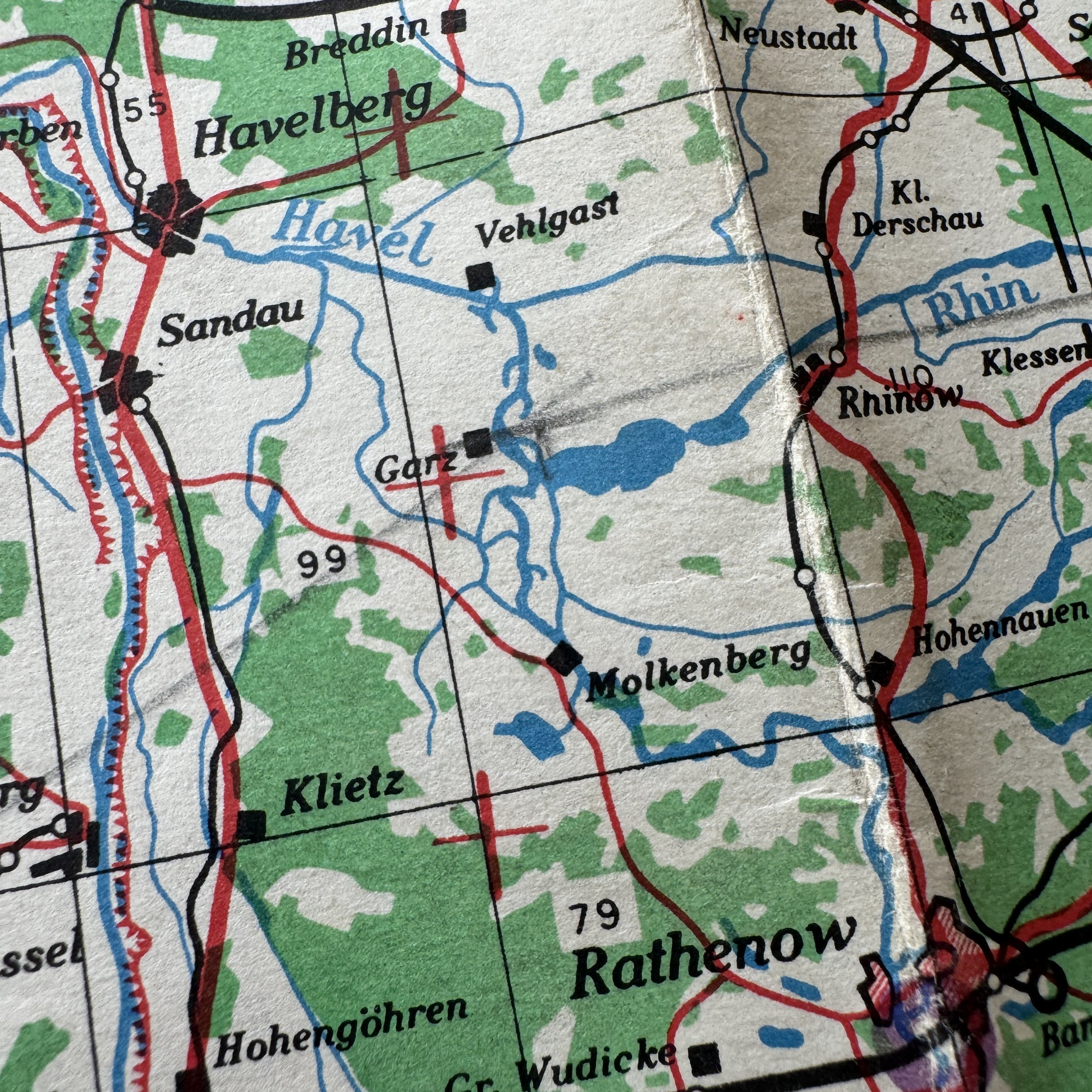
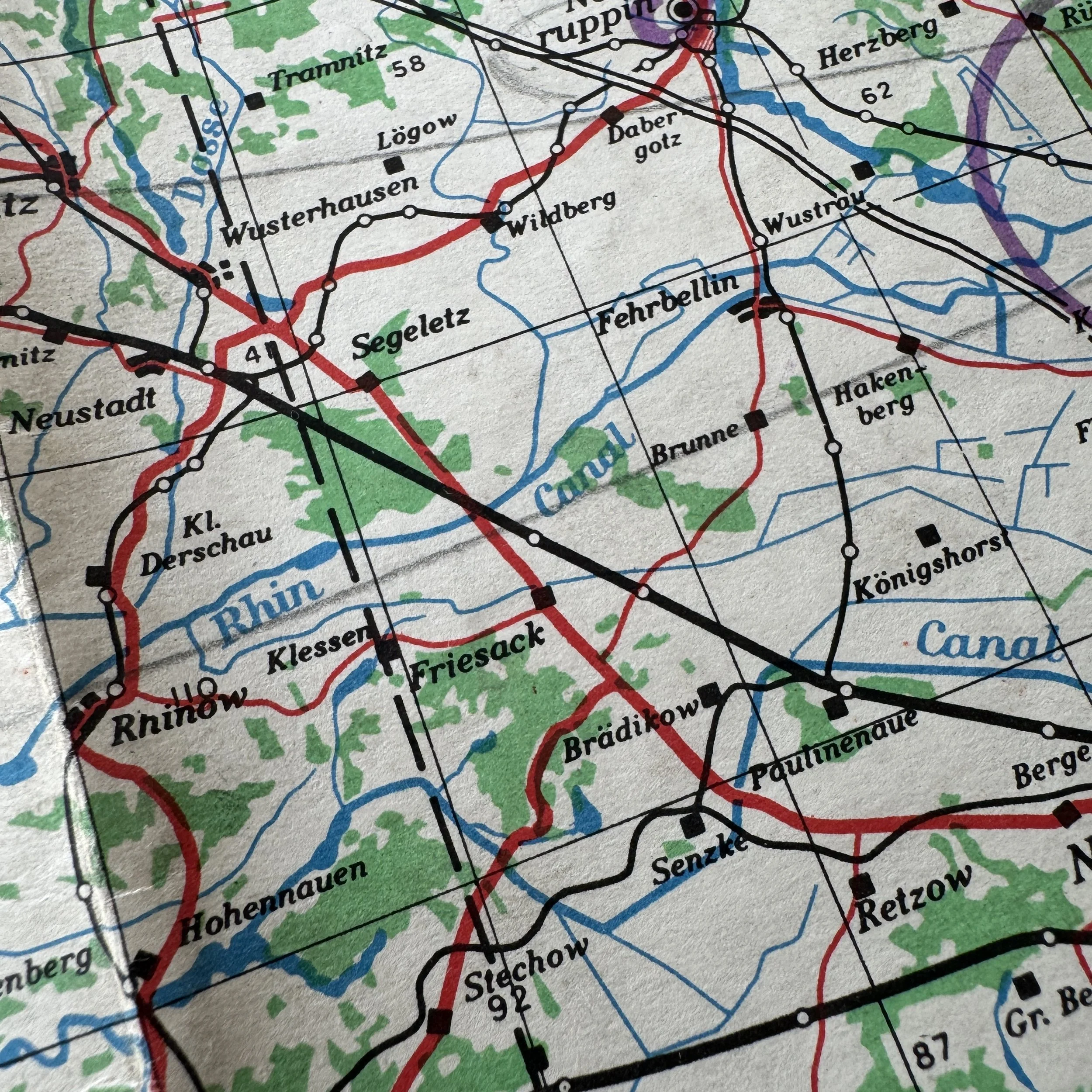
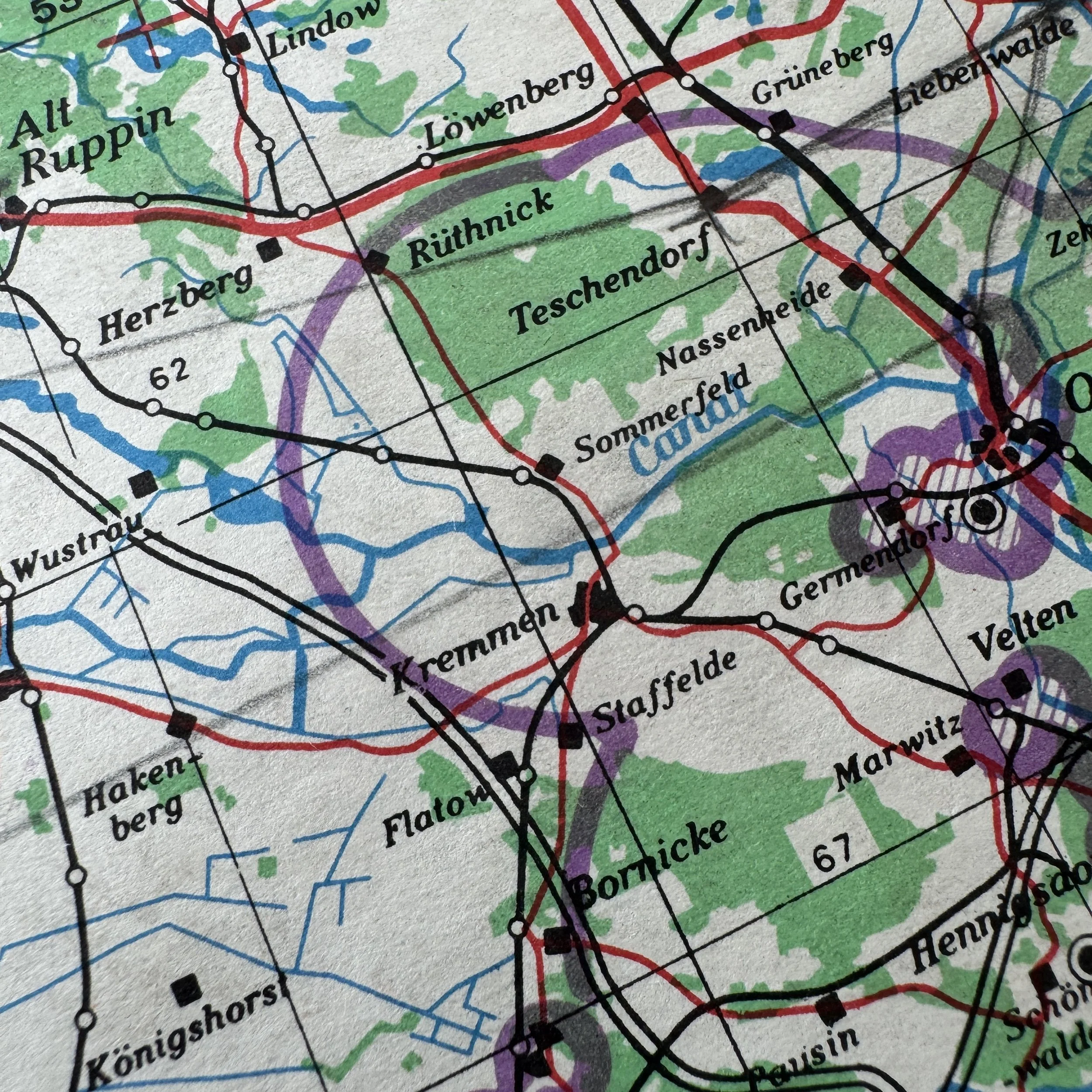
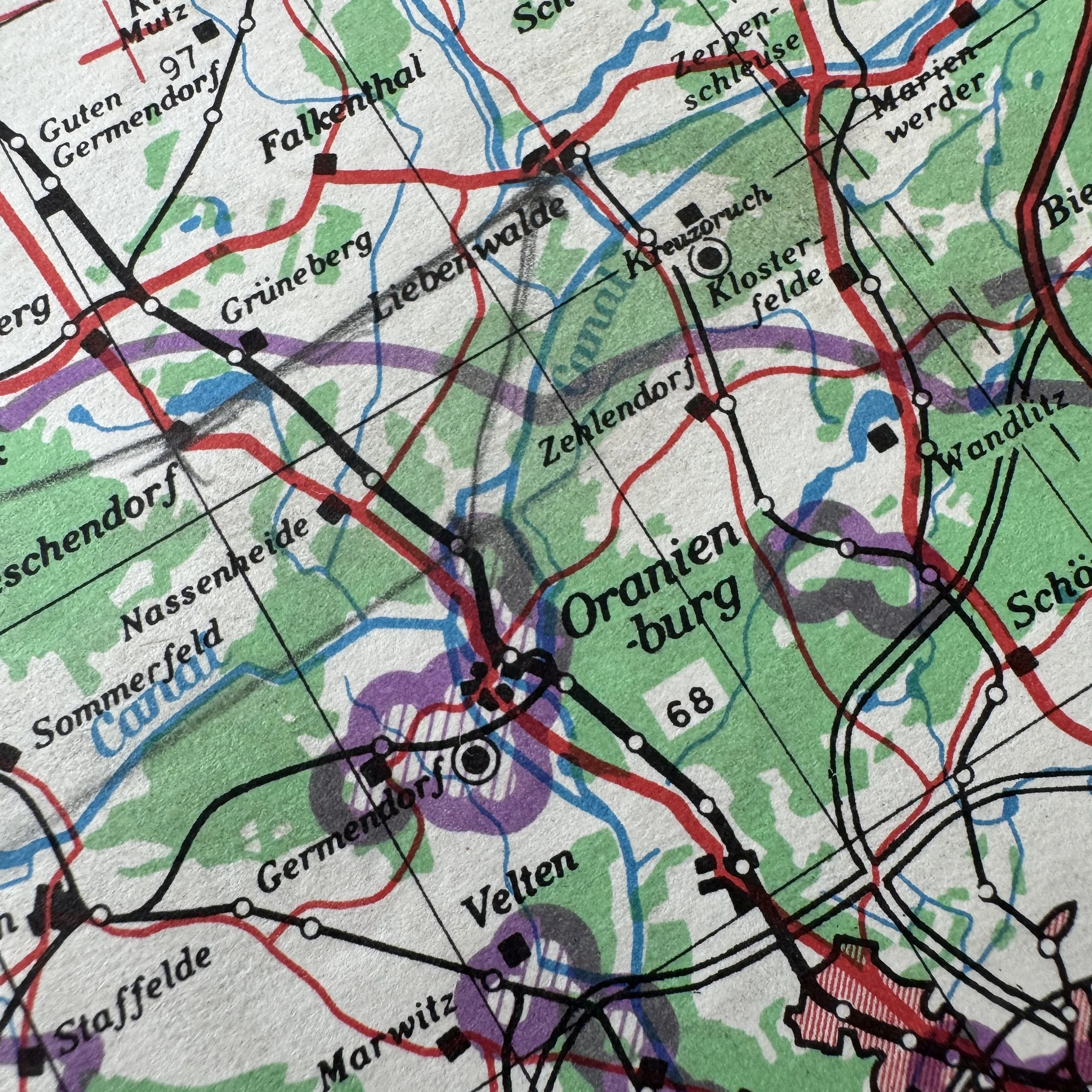
Heavily used and combat marked January 1945 dated 8th Air Force B-17 Flying Fortress combat FLAK map used during extensively used during World War II Eighth Air Force aerial bombing mission over Berlin, Germany with multiple 8th Air Force B-17 navigation flight paths to Berlin with flight paths to Berlin passing through Wittenberge Gerdelegen, and over the Rhine River.
Size: 23 × 28.5 inches
This exceptionally rare and museum grade World War II artifact is an original Eighth Air Force flak intelligence map produced for United States Army Air Forces heavy bomber operations and actively used aboard B-17 Flying Fortress aircraft during combat missions over Germany. The BERLIN German anti-aircraft flak map reflects confirmed German anti aircraft flak concentrations and effective engagement ranges as of January 13th, 1945, a moment when the air war over Europe had reached its most intense and decisive phase and when the Eighth Air Force was striking the very heart of the Third Reich.
By early 1945, Berlin had become one of the most heavily defended cities on earth. Ringed by dense belts of heavy flak batteries including the feared eighty eight millimeter and one hundred five millimeter guns, the German capital was protected by an integrated air defense system designed to inflict maximum losses on incoming bomber formations. The January 1945 attacks on Berlin stand among the most famous aerial combat missions of the war, involving massive formations of B 17 Flying Fortresses flying deep into enemy territory under constant fire. These missions were intended not only to destroy industrial and transportation targets, but also to demonstrate overwhelming Allied air supremacy as ground forces closed in from both the west and the east.
Specially produced Eighth Air Force flak maps such as this were critical tools of survival. Compiled from aerial reconnaissance, intelligence reports, and combat feedback from returning crews, these maps were used extensively during pre mission briefings to plan routes, altitudes, timing, and formation spacing. Once airborne, they were carried inside the aircraft and consulted by navigators and pilots as enemy defenses were encountered. Flak was responsible for a significant portion of Eighth Air Force losses, particularly during late war missions when German fighter strength had declined but ground based defenses remained deadly. Accurate flak intelligence could mean the difference between completing a mission and losing an aircraft and its crew.
This specific flak map shows clear evidence of heavy operational use and was carried on multiple combat missions during the dramatic expansion of the Eighth Air Force bombing campaign in 1945. It was used during aerial combat missions against Berlin, where bomber crews endured sustained barrages of bursting shells that filled the sky with lethal fragments. B 17s flying these missions often returned riddled with shrapnel holes, damaged control surfaces, and wounded crew members, yet continued to press home their attacks in tight formation to maintain bombing accuracy and mutual defense.
Artifacts of this type were rarely preserved. Most flak maps were discarded after missions, worn out through repeated handling, or lost with aircraft that failed to return. Surviving examples that can be tied to late war Berlin operations are exceptionally scarce. As a primary source combat document, this map offers a direct and tangible connection to the men who flew into the most heavily defended airspace of the war, confronting relentless flak over Berlin in missions that helped bring the air war and ultimately the conflict in Europe to its conclusion.
The Final Assault on Berlin - Eighth Air Force B-17 Bombing Missions Over Berlin, January to May 1945:
The final bombing campaign against Berlin carried out by the Eighth Air Force from January 1945 to the end of the war represented the closing act of the American strategic air offensive in Europe. By this stage of the conflict, the German capital had already endured years of aerial assault, yet Berlin remained both a symbolic and operational target. Its rail yards, industrial districts, aircraft assembly plants, and government infrastructure were still vital to the collapsing Nazi war effort. The missions of early 1945 were flown not to test whether Germany could be broken, but to ensure it could no longer function.
By January 1945, the Eighth Air Force had reached the height of its power. Hundreds of heavy bombers could be launched on a single mission, supported by overwhelming long range fighter escort. The backbone of this force remained the B-17 Flying Fortress, an aircraft whose durability and precision made it ideal for the deep penetration raids still required over Berlin. Despite Germany’s declining air defenses, Berlin remained one of the most heavily protected cities in Europe, ringed by dense flak belts and defended by the remnants of the Luftwaffe’s interceptor force.
The first Berlin missions of 1945 took place in mid January as Allied armies advanced across the western front and Soviet forces pressed in from the east. On January 11 and January 18, massive Eighth Air Force formations struck Berlin rail yards, industrial areas, and transportation hubs. These missions were designed to choke the flow of troops and supplies to the Eastern Front, where German forces were attempting to slow the Soviet advance toward the Oder River. Bombers flew through winter cloud layers, icing conditions, and heavy antiaircraft fire, yet bombing accuracy continued to improve thanks to radar assisted targeting and refined formation tactics.
Among the B-17 units that regularly participated in these Berlin raids were some of the most storied bomb groups of the war. The 91st Bomb Group, known as the Ragged Irregulars, the 100th Bomb Group, later called the Bloody Hundredth, and the 381st Bomb Group all flew repeated missions against the German capital in early 1945. These groups operated from bases in East Anglia and typically launched before dawn, forming massive bomber streams over the English countryside before crossing the North Sea and pushing deep into enemy territory.
February 1945 saw an intensification of attacks on Berlin as the Allies coordinated air power with ground operations. The Eighth Air Force targeted synthetic oil facilities on the outskirts of the city, aircraft engine factories, and critical rail junctions feeding Berlin from the west and south. Missions on February 3 and February 26 were particularly significant. On February 3, thousands of tons of high explosive bombs were dropped in one of the heaviest single day attacks on the city, crippling administrative centers and industrial districts. This raid coincided with Soviet offensives, amplifying the pressure on Germany’s already fractured command structure.
The 303rd Bomb Group, the Hell’s Angels, played a prominent role during these February missions. Known for its disciplined formations and experienced crews, the group had been among the first to strike Berlin in earlier years and now returned as the war neared its conclusion. The 305th Bomb Group and the 306th Bomb Group also contributed heavily, often assigned to bomb marshalling yards such as Lehrter Bahnhof and Tempelhof’s surrounding industrial zones. By this stage of the war, German fighter opposition was sporadic but flak remained intense, with crews reporting some of the heaviest antiaircraft barrages of their combat careers.
March 1945 marked the beginning of the end for Berlin as a functioning military and industrial center. As Allied forces crossed the Rhine, the Eighth Air Force shifted focus toward total paralysis of German transportation networks. Berlin missions in March emphasized rail yards, bridges, and storage depots. On March 18 and March 24, B-17 formations struck targets associated with troop movement and supply distribution within the city. These raids were coordinated with similar attacks across central Germany, ensuring that even if rail lines were repaired, rolling stock and fuel shortages made recovery impossible.
The 379th Bomb Group, the Triangle K Group, and the 384th Bomb Group were heavily involved in these late March raids. Their aircraft flew with reduced defensive armament in some cases, as Luftwaffe fighter threats had diminished significantly. Even so, crews remained vigilant, as low altitude flak bursts continued to claim aircraft. The experience of these missions underscored the endurance of the B-17 crews, many of whom had already flown dozens of combat sorties before the final push into Germany.
April 1945 brought the final Berlin missions of the Eighth Air Force. With Soviet forces encircling the city, American bombing was carefully coordinated to avoid interfering with ground operations while still denying German forces the ability to regroup or evacuate leadership and materiel. Targets during this period included remaining rail hubs, military barracks, and supply depots on the outskirts of the city. One of the last significant Eighth Air Force raids on Berlin occurred in mid April, marking the final heavy bomber assault on the Nazi capital.
The 401st Bomb Group and the 457th Bomb Group were among the units that flew these last missions. For many crews, these sorties were emotionally complex. They knew the war was nearly over, yet the danger remained real. Aircraft were still lost to flak, mechanical failure, and accidents during poor weather recoveries. The sight of Berlin in ruins below them served as a stark reminder of the cost of total war.
By the time Germany surrendered in May 1945, the cumulative effect of the Eighth Air Force’s Berlin missions was undeniable. The city’s industrial capacity had been shattered, its transportation system rendered unusable, and its role as a command center effectively eliminated. The B-17 groups that flew these missions in 1945 represented the culmination of years of hard earned experience in strategic bombing. Their ability to deliver sustained, precise, and overwhelming force deep into enemy territory was a decisive factor in the Allied victory.
The Berlin missions of January through April 1945 stand as some of the most historically significant operations flown by the Eighth Air Force. They were not dramatic for their novelty, but for their finality. The men of the B-17 squadrons and groups who flew these missions carried the weight of the entire air war to its conclusion. In doing so, they ensured that the air offensive that began with uncertain outcomes in 1942 ended with absolute strategic success in 1945.